With the national polls unable to put any statistical distance between the two main parties, and the guns in the air falling silent, the ground war takes centre stage. It is a moment for which Iain McNicol, the Labour general secretary, has been preparing for three or more years. He says simply: “They have the money and most of the media. We have the members and the motivation.”
Near-theological disputes exist about whether party activists knocking on doors and getting out the vote has any discernible impact on the outcome. Some older former cabinet members are openly dismissive, saying knocking up is purely designed to give activists something to do. Others say it is Labour’s hidden weapon.
But Labour has banked a great deal on its get-out-the-vote operation, not just to haul its identified supporters to the polling booth, but to alert the party in the final week to any change in mood on the doorstep. The party claims to have had 5m doorstep conversations since 1 January.
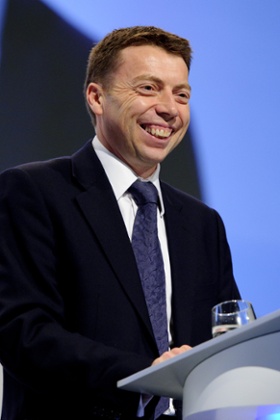
McNicol, a likable union organiser and a black belt in karate, has his fingers crossed that the network of field officers and organisers he has helped create over the past three years can make a difference. Pitted against a Tory party activist base that has withered on the vine, Labour certainly has more troops and probably the better technology.
The aim since 2011 has been to get the party finances in order and turn the party itself inside out, so its strength no longer lies at party headquarters but in a cadre of regional and constituency organisers in key seats capable of drilling activists into action. Many of these organisers are highly trained young professionals. They operate above garages as much as out of smart high street shop fronts. They report to Patrick Heneghan, director of field operations and the man who will probably be the first to know if the ground war has stopped Cameron’s advance.
McNicol says he has tried to build a campaign base using the growth in Labour councillors as a springboard to inject a new level of activism. He does not care whether the issue is street lighting after midnight, the threat to the local hospital or the efficiency of the local council – the point of contact with the voter must start with the issue that concerns them on the doorstep.
He says the party is still in the foothills of what can be achieved. In 1997 as many as 1,000 volunteers were working for Labour in some seats as it headed for a landslide victory with Tony Blair. Now the numbers are much smaller, but he hopes if the party can have 200 members on average out knocking on doors in its target seats it will be doing well.
The difficulty is distributing the activists. Many of the largest parties are in London, where Labour is strong. It has been suggested up to a third of the party membership reside in London. In seats Labour is likely to win in London as many as 5,000 will be out with the board knocking up the promised vote. In some seats in Yorkshire and the Midlands, local parties would die for that membership and activism.
McNicol is also sure digital is the critical new tool. “Everyone said 2010 would be the digital election. It turned into the debates election. This is more like a digital election, but it depends on the quality of your product for your message to spread. We cannot afford to buy space on Facebook; we just need to make the message work.” Over the campaign £3m has been raised in small donations
One of his field organisers says: “We are not just fighting the Tories or Ukip. We are fighting those choosing between staying at home or voting Labour. If all this works it is worth 3-4% of the vote. That would be the difference between a majority and minority Labour government. The metaphor I use is that we are the sprint at the end of the cycling race. We are the ones than can get the party over the finishing line.”