In the well-pruned streets of Milton Keynes, there are few outward signs of a fierce electoral “ground war”. There are no campaign billboards; the neat front lawns are placard-free.
Yet in the foothills of Britain’s fastest-growing town, an army of young political activists has descended – and they are determined to knock on every door.
Voters in Milton Keynes South may not know it, but their constituency is at the forefront of Labour’s attempt to win marginal seats by deploying boots on the ground. And the strategy appears to be working: a recent Lord Ashcroft poll put Labour two points ahead of the incumbent Conservative party and, when it comes to contacting voters, the gap is huge.
Three-quarters of voters in Milton Keynes South say they have been contacted by Labour – by leaflet, a phone call or a canvassing visit – compared with 43% for the Tories. Internal figures for each party, meanwhile, suggest that Labour has had 30,000 conversations with voters in the constituency since 1 January, with the Conservatives well behind on about 10,000 by 22 April.
On Thursday morning, this fierce ground war will enter its crucial final phase as activists from all parties zigzag the constituency in a last attempt to get out the vote.
In a Toby Carvery pub car park in leafy Shenley, south-west Milton Keynes, a handful of Tory activists are gathered. Their candidate, Iain Stewart, was elected in 2010 with a majority of just over 5,000. But, unlike five years ago, his is no longer a Tory target seat and their campaign team – today at least – is outnumbered about two-to-one by his Labour rivals. “They’re campaigning hard, as I fully expected them to, as they always do. This has been a competitive area for many, many years,” Stewart says, when asked if he feels outgunned.
Rallying the Tory troops here is Alex Walker, 23-year-old chairman of the Milton Keynes South Conservative party who, until two years ago, was a waiter at a local Best Western hotel. “The pledge target was 10,000 between January and May and I think we’ve completely smashed that apart,” he says, adding: “They probably have out-canvassed us. It was their national campaign to do 4m doors. They’re a target seat for the Labour party and we’re not a target seat for the Conservative party so we’ve been doing all we can – we’ve done extremely well – but with the resources they’ve got …” his voice trails off.
Iain Duncan Smith, the work and pensions secretary, visited the seat this week, while Eric Pickles and Liam Fox have been drafted in to give the campaign a boost. There is a rumour David Cameron will appear here before polling day. Stewart, who reckons he has walked about 14 miles a day since the short campaign kicked off, says there are plans to bring in more activists as 7 May approaches.
“You try and build up your support to crescendo on polling day and make sure your vote turns out,” he says, adding that he enjoys the team spirit of canvassing but is suffering from a case of “candidate-itis”. “One day you’re soaring with optimism, the next day you’re petrified. Every candidate in every seat, no matter how big their majority is, will suffer from it.”
The big issues on the doorstep here are the size of Milton Keynes hospital (it is full to bursting), a chronic shortage of doctors, school standards and childcare. Like its northern neighbour, the population is younger than average and a large chunk of people are employed in the retail sector – thanks, in part, to a gigantic Amazon distribution centre just off the M1.
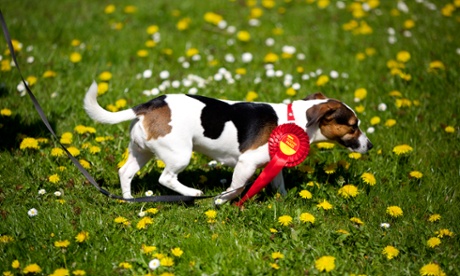
A four-minute drive away in Furzton, a neat residential area comprising hundreds of new-build houses, a rival band of activists form around a red rosette-wearing jack russell named Darcy. The mood is ebullient. “We’ve got the momentum on the ground,” says Andrew Pakes, Labour’s parliamentary candidate for this seat. “We’ve got more activists than the Lib Dems and the Tories put together.”
Poised for another day’s canvassing are 15 Labour activists, about half of whom are in their 20s. They compare tans while a clipboard-carrying whiz-kid, Jack Jenkins, outlines the morning’s battle plan. Jenkins, 24, is one of the well-drilled organisers parachuted in to marginal seats across the country by Labour’s general secretary, Iain McNicol.
Jenkins’ political experience may be slim, but veteran Labour figures think his presence has been key to the Milton Keynes South campaign. “I’ve been involved in campaigns round here for 20-odd years,” says Brian White, 57, who was MP for North East Milton Keynes under two Blair administrations before losing his seat in 2005. He describes this as the best-supported campaign in his memory. “In 2010, [the Tories] had a whole influx of young people and wiped us off the radar, whereas this time we’re way ahead of them in terms of numbers.”
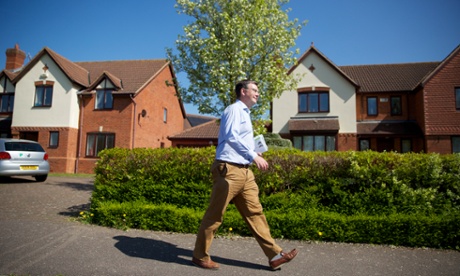
The main difference to campaigns past, says White, is the target-driven canvassing and the full-throated backing from Labour HQ. As part of McNicol’s election war plan, Labour aims to make “1,000 extra contacts” – meaning face-to-face conversations – each week in this constituency of about 94,000 voters. In the past month alone, 11,000 voters have had a Labour activist on their doorstep. (In contrast, the Tories say they aimed to speak to 10,000 voters between January and April and are “on target to do that plus slightly more”.)
The American campaigner Arnie Graf, who is credited with Barack Obama’s movement-like presidential campaign in 2008, has visited Milton Keynes several times to train young activists, some of whom attended a Labour party summer school last August. “It feels a more positive relationship with the national party than I’ve seen in the last two elections,” Pakes says, admitting that the party retreated from door-knocking in tight seats such as Milton Keynes South in the dying days of the Gordon Brown government. “About two years ago we started door-knocking in places like this because we’ve got the volunteers to do it again.”
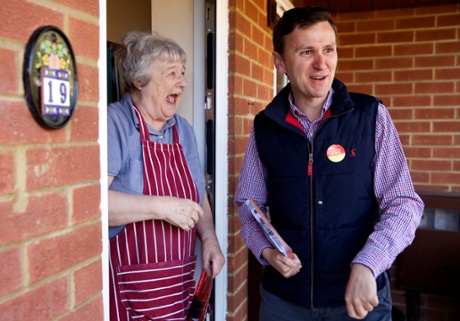
But no amount of community organising can prepare Pakes, 41, for his first meeting of the day. Opening the front door of her neat terraced house, 76-year-old Lynda Hardern barely takes in breath before launching into a 10-minute rant about her “favourite bugbear”. “This business of running parliament like it was a senior common room in a public school – it’s appalling,” she fumes. “If I vote for you and you get in will you promise to do something about stopping those ghastly men behaving like bloody public-school boys and running parliament as if it was an efficient business?” Pakes assures her that he will and that he is the governor of a nearby primary school. “And they behave better than the parliamentarians do!” she shoots back.
It remains to be seen whether Stewart can retain his seat or whether Labour’s door-to-door blitz will have paid off. Perhaps only Jenkins, Labour’s wunderkind organiser, knows with any certainty what his future holds come 8 May: “I’ll find another job. The end of my contract is the general election.”