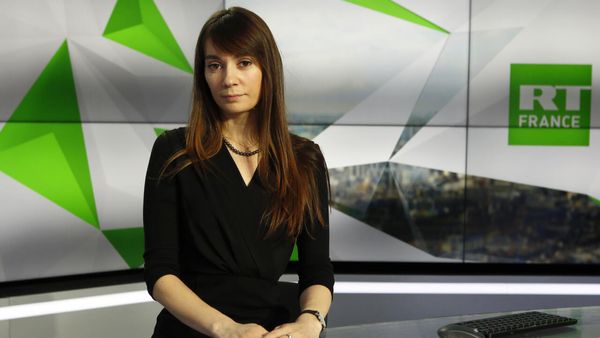
An MP has opened up about her teenage battle with anorexia, aiming to shed light on the experiences of disabled women grappling with eating disorders.
Marie Tidball revealed that many disabled women, much like herself, find their struggles "linked to their own body image and identity".
The Labour MP for Penistone and Stocksbridge, who is also a prominent disability campaigner, developed anorexia at 14 following the amputation of her leg.
The illness persisted for four years, leading to hair loss and the cessation of her period.
Speaking in the Commons during a debate to mark International Women’s Day, she said: "My frustration about my physical form turned into obsession."
She said she felt like surgeons "amputated a part of me" when they amputated her leg.
"I see my body and I feel disgust, repulsion. I fear that my amputation took away my femininity, my ability to be yearned for, my womanhood pauperised, trapped in a body that does not reflect my mind or myself."
She described anorexia as an addiction that "crept upon me", driven by a desperate wish that "nobody would notice my disability and I would simply disappear".
The eating disorder offered a sense of control, she said.
"For the first time in my life, the eating disorder gave me control over my body the way it looked, the way it felt. My frustration about my physical form turned into obsession.
"The obsession fed me, where food did not. It gave me power."
The illness eventually consumed her entirely, she said.
"Anorexia was about the relationship between a despised body and a disciplined mind. Eventually, that mind was consumed too."
However, a turning point came when her period stopped.
"My desire to be a mother gave me a reason to get better, signalled a future, and made me know choice, once again," she said.
Ms Tidball said that she wrote those passages two decades ago, in her early 20s, while recovering from major leg surgery.
While her physical condition had improved by university, it took until her mid-20s to forge a healthy relationship with food, she said.
She had also heard from other disabled women, whose experiences of eating disorders were linked to their own body image and identity, she said.
"Social attitudes towards sex, relationships and disability remain an enormous taboo," she said, with the stigma meaning that "disabled women are still going through this anguish, damaging their mental health, causing them to self harm and eroding their self esteem".
For anyone struggling with the issues raised in this article, eating disorder charity Beat’s helpline is available 365 days a year on 0808 801 0677.
NCFED offers information, resources and counselling for those suffering from eating disorders, as well as their support networks. Visit eating-disorders.org.uk or call 0845 838 2040.
Starmer's pick of Epstein 'pal' as top British envoy haunts prime minister
Labour MPs are furious about Mandelson files but won’t move against Starmer for now
Unite to cut affiliation with Labour by more than £500k amid bin strike anger
Expert explains the subtle signs of an eating disorder that parents might miss
‘I was told I’d die if I didn’t overcome my eating disorder. Starting my own bakery saved me’
‘Too thin for help’: Eating disorder patients turned away because their BMI is too low