A Labour MP has criticised the BBC for running a news report that he said amounted to a “polemic” against Jeremy Corbyn.
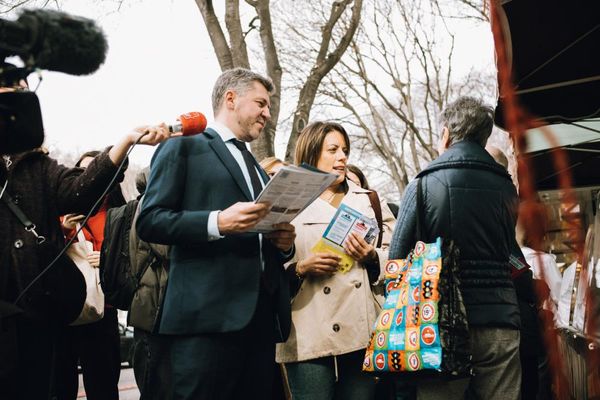
Clive Lewis, who was elected MP for Norwich South in May, said a series of vox-pop interviews used by Radio 4’s Today programme were “so one-sided it was an absolute outrage”.
In a heated exchange with the presenter Nick Robinson, he added: “The leading questions that were in that report were quite outrageous.”
Robinson interrupted: “Hold on a second, Sima Kotecha is a very professional reporter, she’s been to Slough, and she’s reported on what she’s seen.” Lewis responded: “I’ve been a journalist myself for 12 years, Nick. I know a leading question when I hear one.”
The MP was on the programme to discuss possible airstrikes against Islamic State in Syria. The interviews he was referring to were with Labour supporters in Slough, who expressed concerns about divisions within the party.
The MP agreed with John McDonnell, the shadow chancellor, that any upcoming vote in the House of Commons would be a “matter of conscience”.
McDonnell said on Friday night that MPs should use their own judgment on whether to support airstrikes. “There are some issues, like going to war, that should be above party politics, and I think we are moving to a situation where, hopefully, in all parties on issues like this, a moral conscience should be above the whip as well,” he said.
But tensions within the Labour party have been increasing after Corbyn expressed his opposition to airstrikes, putting him at odds with much of his shadow cabinet. Several senior Labour MPs are reportedly preparing to break ranks and challenge the leader to stand down over the issue.
Also appearing on the Today programme on Saturday was the Labour backbencher John Woodcock, who said it had been a particularly bad week for the party.
“We have to be honest that the last week has been, by anyone’s standards, a shambolic mess. It has not shown us in the right light,” he said. “Of course there are strongly held disagreements within the Labour party as there always would be – as there are in every party. The way in which we conduct ourselves within those disagreements on policy is really important.
“This has not been a good week for the party but I think we have the chance to set that right now, starting I think from the continuation of the shadow cabinet discussions on Monday.”
Lewis said: “There are people within the PLP [parliamentary Labour party] who, quite simply put, have not accepted the leadership of Jeremy Corbyn. I think that is a very separate matter.
“When he says shambles, I know for example that during the shadow cabinet meeting there were people who were texting and briefing journalists. That doesn’t imply to me that there was discipline … There is a collective responsibility here for that shambles.”
Woodcock dismissed calls for Labour moderates to keep tensions with the leadership private. “Let me be absolutely clear … I do accept the leadership of Jeremy Corbyn of the Labour party. He won a substantial mandate. But that does not mean all of us take a vow of silence of how we conduct ourselves as a party,” he said.
“Aside from the question of how these next few days go, which is really important, we do have a big question to face as a party: do we want to face outwards to the public, to be a credible opposition to the Conservatives, or do we want essentially to become a pressure group for a particular point of view?”
David Cameron has said he will not call a vote on airstrikes in Syria unless he is sure of securing a majority in favour. Were Corbyn to allow a free vote – an outcome that is looking increasingly likely – as many as 100 Labour MPs could disagree with him and back the prime minister’s plan.