Is the Labour brand dying? The party’s defeated Blairite modernisers fear so; George Osborne hopes so. Jeremy Corbyn, they argue, is the Gerald Ratner of politics, a chief executive who will do so much damage with a few fateful words, past positions or, say, an ill-chosen silence during the national anthem, that he will reduce his brand to electoral “crap”, to use the former jewellery seller’s infamous description of his company’s products.
The only way ahead is for moderate Labour MPs to abandon the brand and start a new one – or so some former Blairites whisper. But as someone who covers the business world close-up, I’d suggest they think again. People die, buildings fall down, oil runs out but strong brands endure – even brands that seem so deep in crisis that they are near death.
Take Jaguars, Land Rovers and Range Rovers. You see so many on the road it’s hard to believe that as recently as a decade or so ago, the venerable old marques were running out of road because their leaders were looking in the rearview mirror instead of forwards.
Today, the newly combined Jaguar Land Rover company (JLR) sells so many cars that its home, the West Midlands, is the only region of Britain that has a trade surplus with China. New foreign leaders have transformed the firm’s fortunes by creating products that remind people all over the world why they still love and admire the marques.
Cars might not seem to have much to do with politics, especially with a Labour leader who does not even own a car. But both car companies and political parties are in the mass popularity game. Create a brand that people like and sales – or votes – will follow in their millions.
Politicians describe and target voters using cars. Blair chased Mondeo man. US politicians court “soccer moms”, who spend their days driving their children to and from football training in minivans. What’s more, carmakers, like political parties, often find themselves facing existential crises.
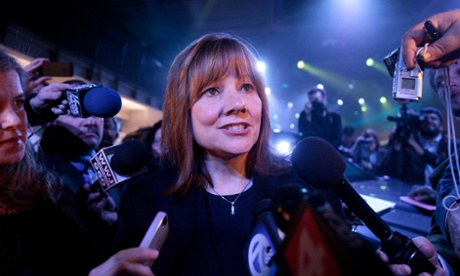
Just ask Mary Barra. Two years ago she became the first woman to run a global car company – General Motors, maker of Vauxhalls in Britain. She had barely finished celebrating smashing the glass windscreen when her firm was hit by the worst scandal in its history. GM cars in the US had faulty ignition switches which, it turned out, had caused accidents in which 124 people had died and hundreds more had been injured.
Her response has been to do something as bold as any great political leader. She is turning the disaster to her advantage. She has admitted her firm’s mistakes and has pledged to make GM cars the safest in the world. The latest sales figures suggest her strategy is working.
Not once did she think of rebranding the firm, which is almost exactly the same age as the Labour party. She knew it was bigger than any crisis.
The same goes for Volkswagen, the latest marque to confront corporate mortality. I’m willing to bet that it will put the diesel scandal behind it far more quickly than many think. Why? Because deep down, consumers respect and admire what VW, maker of “the people’s car”, does.
The people’s party is just the same. Those tempted to think Corbyn will drive the party the way of Rover or British Leyland forget that there are millions of people who want it to get back to doing what it does well: promoting fairness and equality in everyday practical ways, rather than through flights of unrealistic theoretical fancy.
What’s more, creating a new brand is tough, as many of the biggest car companies have found to their cost. Toyota and Nissan launched spiffy new brands – Lexus and Infiniti – to take on BMW and Audi. They’ve failed. The mighty Mercedes revived the storied Maybach badge to take on Rolls-Royce. It soon scrapped its limousine.
The message is clear. Those who want ordinary voters to love Labour again should re-engineer the party from under the bonnet, not rush off in search of a shiny new model.