The Guardian Interview at the Labour party conference
Katharine Viner, editor-in-chief of the Guardian, will be in conversation with John McDonnell MP, Shadow Chancellor, at 7:30pm tomorrow (Tuesday) in Room GB2 The Grand Hotel, Brighton.
Updated
Guardian Labour fringe - Summary
- Deborah Mattinson, the former Labour party pollster, has revealed what focus group research says about Jeremy Corbyn. She has written it up in an article for the Guardian. Here’s an excerpt.
It’s a shame, in some ways, that Jeremy Corbyn was not sitting the other side of a one-way mirror. He’d have liked a lot of what he heard. Voters told us, as they have done for years, of their deep disillusionment with modern politics. Corbyn, fresh and different, might just be the antidote to that. Describing his appeal voters chose vocabulary rarely used to for politicians: he’s “principled”, “passionate”, “decent”, “down to earth”, “honest” and, most of all, “authentic”.
However, other aspects of the discussion make less comfortable listening. Asked what they would most like to change about the condition of Britain, our swing voters talk about the economy and immigration. They believe there has been some recovery, but remain worried about their own families’ future financial security, and are also genuinely worried about the impact of immigration, particularly to public services already squeezed by cuts.
We’re reminded that many abandoned Labour in May because they did not trust the party to manage the economy. Specifically, they still blame Labour for the financial crisis. They also believe that Labour “let in” too many immigrants. TheSyrian refugee crisis has led some to be a little shy about talking about this. They pick their words more carefully and preface their comments with heartfelt sympathy for little Alan Kurdi whose death they found upsetting. But their views have not changed. These are problems facing Britain and they want them fixed.
Here, the focus group mood changed, getting much trickier for Corbyn. Voters don’t know where he stands on immigration. They are also unsure where he stands on the economy and what little they have heard suggests his diagnosis of the problem may not precisely chime with their own. Some are unsettled by stories they’ve picked up about Corbyn’s past. Can it really be true that he supported the IRA? After discussion, many remain concerned, their anxiety given credence by his reluctance to sing the national anthem.
- Caroline Flint, the former shadow energy secretary, has said Labour should stop going into denial when it has an unpopular leader. Party members knew that Ed Miliband was a liability, she says, but MPs refused to get rid of him. She implied that the party should also depose Jeremy Corbyn if he turns out to be unpopular. But she also said she welcomed some of what he and John McDonnell have been saying in recent weeks.
That’s all from me for tonight.
Thanks for the comments.
Updated
Q: So how does Labour win back power?
Mattinson says it is important to remember that target voters are twice as likely to have voted Tory.
Dugdale says Labour has to give away power. And that means giving her freedom in Scotland.
Siddiq says, as a candidate, she gave feedback to HQ. No one responded. People in her constituency were unhappy about Ed Miliband and the mansion tax. So the party needs to listen to people on the ground.
Flint says Labour needs a 10% swing to win. It only achieve that in 1997. Labour needs to show some humility. And it needs to take its time over policy. Come 2020 we could be in a different place. We need credible policies.
Abbott says Corbyn is attractive even to Ukip voters. And he is popular with younger voters. We need to have a narrative about what we stand for. Miliband sacked her, but she is more loyal to him than other people. He had good policies. But her polices were less than the sum of their parts. And you have to offer leadership. Churchil said about scientists they should be on tap, but not on top. She says she feels the same about pollsters.
Starmer says Labour needs a big, ambitious project. Arguing about micro-projects is a waste time. When Labour has projects like that, on infrastructure, on housing etc, it can win appeal.
And that’s it. The fringe has finished. I will post a quick summary in a moment.
Q: It will be hard for you to urge people to be loyal, given your record of rebelling. [To Abbott]
Abbott says she supported the party on issues in the manifesto. But on issues that weren’t, like Iraq and tuition fees, she did not support the party line.
She says party members do not want to see MPs waiting for Corbyn to fail. MPs who complain about the result, and try to get him out, won’t get any credit with members.
Flint says there has been a contest. She does not think people want to leave the party.
Q: But you imply Corbyn will be bad.
Flint says she is saying what she has said for decades. Labour needs to get into power, and it needs wide appeal. That means winning back Tories. Some of the things Corbyn and John McDonnell have said in recent weeks have been helpful, such as McDonnell’s comments about the deficit.
Flint says Labour should stop going into denial when it has an unpopular leader
Mattinson says, according to focus groups, the biggest challenge that Corbyn faces is the fear that he cannot unite the party.
Q: So should people in the party with concerns about Corbyn voice those concerns, and run the risk they could make his position worse? Or should they keep quiet?
Flint says during the deputy leadership contest she said the next leader had to show they could reach out.
She says Corbyn can use his style and character to reach out.
But in the past Labour has gone into denial when it has had an unpopular leader.
Activists were not in denial in the last parliament. They told the party HQ that Ed Miliband was not “cutting through”. But no one acted to get rid of him, she says.
- Flint says Labour should stop going into denial when it has an unpopular leader
Updated
Siddiq says bringing back educational maintenance allowances would help to attract young voters. That idea gets a lot of support from the audience.
Q: What can we do to win over the youth vote?
Starmer says we need to do much more on vocational educational.
Dugdale says addressing concerns about rents would help. She is running an essay competition for young Scots.
Mattinson says Starmer is right to highlight the importance of apprenticeships. In focus groups people always call for proper apprenticeships. Housing is important too, she says. And youth services is another issue.
But it is not just about young people, she says. By the time of the next election more than half of voters will be over 55, she says.
Updated
A member of the audience asks the panel why, if they know how to win election, they did not stand.
Abbott says she stood in 2010. Siddiq says she will stand in 2020. It’s a joke, she adds.
Q: How can Corbyn defend Labour’s record when he voted against it so much?
Abbott says he voted for the Labour government more than against it.
She says David Miliband had the right approach to Labour’s record. In the 2010 leadership contest he used the line that the party should be proud of its achievement, and humble about its mistakes. She says that is why, in her conference speech, she made a point of saying that she would vote against bombing Syria.
Q: It has been said that Labour offered the electorate ham and beans at the election, and the voters said no. Now, under Corbyn, it is offering double ham and beans.
Siddiq says she does not want to get into the subject of ham. (That’s the obligatory pig-gate joke.)
She says Labour’s problem was that it allowed the Tories to create the myth that it ruined the economy.
Mattinson says she thinks Labour was already starting to have problems with its record on the economy before the 2010 leadership contest.
Updated
Starmer says Labour should be seen as a party almost beyond politics, acting in the interests of all people.
It has slipped into party politics too much, he says. It needs to be able to speak on behalf of the nation.
Look at housing or social care, he says. Addressing these problems could take 20 years. They need an approach beyond party politics.
Dugdale says Corbyn is coming to Scotland on Thursday, straight after the conference.
Flint says she campaigned in Scotland. In politics people have to have an emotional connection with the cause they are voting for.
She says the debates were clever. Nicola Sturgeon was given a platform, but she was in English towns, and no one asked her about her record.
Dugdale says that in the Scottish debates Sturgeon was booed when asked about her record.
Abbott says Corbyn received massive support in Scotland. She thinks having Corbyn as leader will not be sufficient for victory in Scotland, but it will help.
Abbott also said this a few minutes earlier. No prizes for guessing who she meant.
Diane Abbott at Guardian fringe event has a go at "so-called Labour supporting" papers piling into Corbyn #lab15
— Graeme Demianyk (@GraemeDemianyk) September 28, 2015
Kezia Dugdale says she respects Corbyn. But, if Labour wants to win in Scotland, it is not just about being more leftwing. First, the SNP are not actually leftwing anyway. And, second, this argument ignores the referendum.
She says she needs to close down the debate in Scotland around the constitution, and get it onto the record of the SNP. If you ask people about schools and hospitals, only one person in three thinks they have done a good job.
Sir Keir Starmer says what happened was less about Corbyn, and more about a political moment. For years people have been increasingly feeling that politicians are out of touch.
Caroline Flint says it is not just the eight people in Mattinson’s focus groups who have reservations about Corbyn. She says it is important to realise that there is a difference between metropolitan opinion, and opinion in places outside London, such as coastal towns.
Tulip Siddiq says she nominated Corbyn so he could get onto the ballot paper, even though she did not support him. But she has had a lot of feedback from people who liked the way he did PMQs. David Cameron kept going on about the economy; he sounded like a conventional politician.
Mattinson says the economy is a key issue for people.
She also says being seen as authentic is positive. But on its own it is not enough, she says.
Diane Abbott goes next. She says she respects Mattinson, but there were only eight people in each focus group. She says she is the only person on the panel who supported Corbyn. It is not surprising that people have doubts about him; he has had an extraordinarily negative press. But as people see him they will get to like him, she says. She says his Marr interview was excellent.
She also says she thinks it is a mistake to just follow public opinion. She has been campaigning on race equality for years, she says. In the 1970s if people had just accepted public opinion on race, there would have been no progress, she says.
Mattinson says people do not know much about Corbyn. They are not even sure what it means when it is said he is leftwing. And they had heard he supports the IRA; they don’t like that, she says.
She says they liked the new way he did PMQs. But they thought Corbyn looked a bit scruffy. And a bit old-fashioned. One person said he looked as though he did not own an iPad. That was not intended as a compliment.
(Caroline Flint wonders whether the woman actually said he did not own an iron.)
The focus group members also thought David Cameron looked managerial at PMQs.
Mattinson says people do wonder whether Corbyn could represent Britain. They have also heard that he did not sign the national anthem.
She says this poses a problem for Corbyn, If he tries to change his image, he risks losing his reputation for authenticity.
She says people want leaders who are authentic. But they want people who can authentically represent their views, and they wonder whether Corbyn does.
She also says that loss of trust in Labour on the economy was the key factor in explaining why Labour lost the election.
Deborah Mattinson is now presenting some research based on focus group studies looking at the reasons for why Labour lost.
She says her team started by asking about people’s top concerns. They were: the economy (people accept there has been a recovery, but they worry about it); immigration (the refugee crisis has made people more sympathetic to refugees, but, overall, it is still a big concern); and the state of politics (one woman suggested there should be a law against political lying).
Mattinson says they then asked about Jeremy Corbyn. He strikes a chord, even with Ukip voters. People see him as honest and idealistic. He represents hope, and a different way of doing politics.
Guardian fringe event: How can Labour win back power?
The Guardian fringe is starting.
Jonathan Freedland is chairing the event.
And the members of the panel are: Diane Abbott, Caroline Flint, Tulip Siddiq, Deborah Mattinson, and Kezia Dugdale.
Sir Keir Starmer is due too, but he has not arrived yet.
Corbyn says he will do his 'persuasive best' to get Labour to commit to scrapping Trident
Jeremy Corbyn was due to attend a CND fringe tonight. He did not go, but he sent a message.
Corbyn pulls out of CND fringe sends text: As committed as ever to nuclear free world & non renewal of trident. I will do my persuasive best
— Peter Henley (@BBCPeterH) September 28, 2015
That does not sound as if he is particularly confident of being able to commit Labour to scrap Trident.
Afternoon summary
- John McDonnell, the shadow chancellor, has said that Labour will launch an “aggressive” attack on Starbucks, Vodafone, Amazon and Google to make them pay their share of corporate taxes. The CBI and Vodafone have both criticised his comments, which came in a serious and well-received speech setting out the broad planks of his anti-austerity strategy.
- Labour has taken a small step closer to backing airstrikes in Syria, but only as part of a wider, UN-sanctioned diplomatic and humanitarian package. As Patrick Wintour reports, the shadow foreign secretary, Hilary Benn, who has been battling to maintain party unity on the issue of airstrikes, told the party conference on Monday that the party would support effective action in Syria, while ruling out backing UK troops on the ground. John McDonnell, the shadow chancellor and a close ally of Jeremy Corbyn, has suggested Labour MPs may be a given a free vote if Cameron brings a fresh motion to the Commons supporting airstrikes in Syria alongside those in Iraq. Diane Abbott, the shadow international development secretary, by contrast departed from her speech script to say explicitly that she opposed airstrikes.
- Michael Meacher, a Labour MP who supports Corbyn, has suggested that Lord Mandelson should be expelled from Labour. (See 2.53pm.)
Later, at 6.30pm, I will be covering the Guardian fringe at the conference. The speakers include Kezia Dugdale, the leader of the Scottish Labour party, Diane Abbott, the shadow secretary of state for international development, Keir Starmer, the former director of public prosecutions and newly-elected Labour MP, Deborah Mattinson, the pollster, Tulip Siddiq, the Labour MP and Caroline Flint the former minister and shadow energy secretary until Corbyn’s election as leader. They will be debating how Labour can win back power.
Here’s the official Conservative response to John McDonnell’s speech. It’s from David Gauke, the Treasury minister.
Labour’s tax rises would hurt hardworking people, threatening every family’s security.
And as Mark Carney has said, Labour’s policy to end the Bank of England’s independence and print money would drive up the cost of living.
That’s why Labour are a serious risk to Britain’s economic security.
The Press Association has filed a story saying the Labour MP Dan Jarvis “has warned the party that it must be ruthless about removing failing leaders”. That sounds dramatic, not least because Jarvis is seen as a favourite to become Labour leader if Jeremy Corbyn is replaced in around 2017 or 2018, but his actual words were not quite that strong.
Asked if the party should have got rid of Ed Miliband before the election, when people were questioning his leadership, Jarvis replied:
I think it is a good thing that we are instinctively loyal as a Labour Party, as a Parliamentary Labour Party. But in the end politics has got to be about giving our party the opportunity to change this country for the better using our values. It is a Labour prime minister, it is a Labour government that we have got to work towards.
Jarvis also strongly criticised the comments John McDonnell made in 2003 paying tribute to the IRA for which McDonnell recently apologised. He said:
It is clearly not something I am personally comfortable with at all. I spent all of my life standing against terrorism, at some considerable risk and cost to myself. I am not comfortable with people expressing those sentiments in that way.
At a separate fringe Tristram Hunt, the former shadow education secretary, also criticised McDonnell for what he had said. Hunt suggested McDonnell’s apology had not gone far enough.
I do have much stronger concerns about some of the language around the IRA and those earlier statements. If you said something wrong you should retract it and say it was wrong and not have this stuff about ‘if I have caused offence’. You have got to be clear about what was wrong. The Labour Party played a very strong and powerful role in the history of peacemaking in Northern Ireland and Ireland and it would be a grave error to jettison that.

And in his speech Owen Smith, the shadow work and pensions secretary, said Labour was now committed to fighting the welfare bill unequivocably.
It penalises children.
It takes money from the poorest workers.
It drives families from their homes.
And we will oppose it, line by cruel line.

In his conference speech Michael Dugher, the shadow culture secretary, announced a review into arts and culture.
We will develop a comprehensive National Plan for the publicly funded arts and culture sector.
This is something Jeremy Corbyn called for before his election as leader of our party.
This is something I know that he is passionate about.
And that’s exactly what we intend to deliver.
He also said Labour would campaign to defend the BBC.
Because no one should be in any doubt that this Tory Government presents a clear and present danger to the future of the BBC.
It could be the end of the BBC as we know it.
Here’s a Labour video of Jeremy Corbyn explaining how he is changing the party and appealing for people to join.
Here’s Jeremy Corbyn helping a wheelchair user speaking at the conference off the platform.
The Labour MP Keith Vaz is chairing this afternoon’s session of conference. He has just urged delegates to attend tonight’s diversity night event. For the first time in 19 years the party leader will be attending, he said.
Until very recently Jeremy Corbyn was chair of the Stop the War Coalition. It is convenient that he has stood down, because this afternoon it has put out a statement criticising Hilary Benn’s stance on Syria. (See 11.35am.) Here’s the key extract.
Stop the War Coalition is disappointed that Hilary Benn, the shadow Foreign Secretary, has indicated support for air strikes in Syria. There is now much experience of such air strikes in Libya, Iraq, Syria and elsewhere.
“These airstrikes achieve nothing, except further misery for the local populations,” said Stop the War’s convenor Lindsey German. “And they have only exacerbated the threat of terrorism, as we are seeing across the Middle East.”
Jarvis says Labour should delay Iraq apology until after Chilcot report published
Dan Jarvis, the MP for Barnsley Central and a former British Army officer, has been speaking at a fringe event hosted by the Huffington Post. The room was packed with journalists, reflecting the fact that he is the bookies’ favourite to be Labour’s next leader.
It was an eventful conversation. Jarvis confirmed that he still has a piece of shrapnel in his head from his time in the armed forces; he said he’d take the food blogger Jack Monroe’s brother, who’s in the RAF, for coffee to persuade him that Labour is the party of the armed forces; and he talked about losing close friends is battle.
Jarvis was asked about reports that Corbyn will use his conference speech tomorrow to apologise for Labour’s role in the Iraq war. “I think it’s important and legitimate to have a debate about that conflict on Iraq and on the wider Middle East,” he said.
I also think it’s legitimate and sensible to draw on lessons from that campaign, specifically whether enough had been done to prepare for what happened after the initial movement into Iraq.
I often reflect back on whether it was the right thing or the wrong thing. It’s not unreasonable to be asking those kind of questions. But what I’d say is – seeing as we’ve waited quite some considerable time for John Chilcot to report – it would be prudent to wait for John Chilcot to report [before making an apology].
He continued: “Whatever [the report] says about Iraq, as a party, we should be very clear about the fact that we sent thousands of young people – men and women – to serve our country in Iraq and they did serve in good faith and they served under the most exceptionally bad circumstances and they served with real distinction ... And I think we have to be incredibly careful abut the message that might go out of this place this week to ensure that we continue to value their service, the service they’ve done in the past and the service they will do in the future.”
Updated
Vodafone says McDonnell wrong to criticise it for avoiding tax
Vodafone has rejected John McDonnell’s suggestion that it is avoiding tax. (See 12.33pm.) It has issued this statement.
It is disappointing that this has been raised again. There was no truth in the allegations in the past and there are none now. As we have made clear on numerous occasions, Vodafone has always paid its taxes and for the last financial year (2014/15) we paid around £360 million in direct taxes in the UK.
It requires huge investment to build and maintain our network, which is relied upon by businesses and consumers up and down the country and we have invested heavily in the UK over the last few years, spending more than £1bn on our network and services last year. As a result of that investment and the very competitive market, we make minimal profits (£41m) in the UK. As the Government wants to promote investment in essential infrastructure like ours, the UK tax rules mean that reliefs for our investment are set against the profits we make. In addition the Government understands that we have to borrow huge sums of money to be able to invest for the long term, so they allow us to take the interest we pay on those borrowings off our profit too. Corporation tax is then paid on any balance – this is the same rule that applies to all UK companies large and small.
Here’s a Guardian video with excerpts from John McDonnell’s speech.
Caroline Flint, the Blairite the shadow energy secretary, made a veiled criticism of the Labour leadership at a packed fringe saying that closing the loopholes that allowed billions of unpaid taxes to go uncollected could not “sustain” a economic programme.
Speaking at a Respublica fringe on business, Flint said that there were 1,100 tax allowance schemes and most “were honed for tax avoidance” but said no one could be sure how much would be raised if all of them were closed.
I would scrap most of them. The question is what do to with the proceeds. We don’t know how much (the Treasury would get). It’s wishful thinking to say that (it) would sustain an economy. I think it should be used to pay down debt.
Flint’s analysis is at variance with the shadow chancellor John McDonnell who called a review of HMRC’s tax collection. Last night he had explained to delegates that the measure would examine how it can retrieve £25bn in tax avoidance, claiming this was a fraction of the total £120bn “tax gap” between taxes due and sums collected.
In a striking contrast Flint, who failed to become deputy leader of the party, said that she wanted Labour to get back “to be on the side of job and work and the private sector is such an important part of that. We need to talk as much about creating wealth, as distributing it.”
She said that many businesspeople had become disillusioned by Labour saying when they tried to help with policy, too often they were directed to the “fundraising team ... we didn’t promote a good business message”.
After she had spoken, shadow business secretary Angela Eagle who arrived late for the event responded to criticism saying that: “We need to create a prosperous society and then have the arguments about how to distribute.”

Westminster Public Affairs, a lobbying firm, has conducted a survey which probably gives some insight into what key people in the party think of Jeremy Corbyn. It surveyed 48 people who stood unsuccessfully as Labour candidates at the election, and asked them what they thought of their new leader. A third of them voted for Corbyn as their first preference.
Here are some of the key findings. The full details are on Westminster PA’s website.
- 44% said they were proud to have Corbyn as party leader, while 33% said they were embarrassed about him.
- 60% said they expected him to lead the party into the election, while 22% said it was highly unlikely.
- 41% said having Corbyn as leader would damage the party’s election chances, while 28% said it would help them.
Stewart Hosie, the SNP’s deputy leader, has responded to John McDonnell’s speech on behalf of his party. He says that, because of McDonnell’s comments at the weekend accepting the fiscal charter, Labour is by implication accepting Tory cuts.
Labour’s economic plans are all over the place. While the SNP went into May’s election opposing austerity and campaigning for a real terms increase in public spending, Labour ran scared of the Tories and backed their draconian cuts and welfare reforms.
While the SNP remain firmly opposed to George Osborne’s pro-austerity fiscal charter, John McDonnell just last week mandated Labour MPs to troop through the lobbies with the Tories yet again to back the plans, just as they did when they voted for £30bn of cuts in the last parliament. Labour have now lost all credibility and no one will take these claims remotely seriously.
But McDonnell is not endorsing the fiscal charter in full. As the Guardian reported on Saturday, Labour is only committed to balancing the budget for current spending, leaving open borrowing for capital spending. George Osborne’s fiscal charter would balance the budget for all spending.
Meacher suggests Mandelson should be expelled from Labour
The Labour MP Michael Meacher is suggesting that Lord Mandelson should be expelled from the party. He made the case in a post on his blog.
It is one thing for those who opposed the election of Jeremy Corbyn as leader to make their concerns and objections known and to argue for them within the Big Tent which is the Labour Party. It is quite another thing, when a new leader has just been elected with 60% of the vote (higher than Blair’s 57% in 1994), for a well-known Labour public figure to openly incite insurrection to have him promptly overthrown. When the party has spoken with such unprecedented decisiveness, such behaviour is coming close to traitorous. The Labour party has a rule, introduced by Blair himself, that anyone who brings the party into disrepute can be expelled. Many would think that Mandelson, who no doubt was deeply involved in the machinations behind the new rule designed to get rid of inconvenient left-wing activists, has now put himself in a position to be hoist on his own petard.
Meacher was infuriated by this report in the Guardian, revealing what Mandelson has said about Jeremy Corbyn in a private paper.
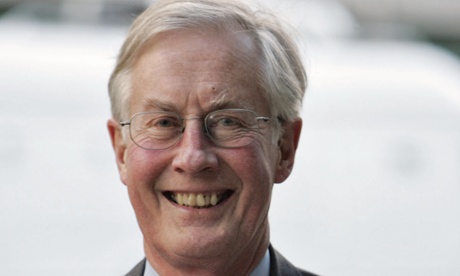
Jonathan Freedland and economics editor Larry Elliott discuss John McDonnell’s #Lab15 speech https://t.co/4SX0k8Ctzi
— Comment is free (@commentisfree) September 28, 2015
In its response to John McDonnell’s speech, the Social Market Foundation says Labour has not avoided the trap set by George Osborne with his fiscal responsibility charter. Here’s an excerpt.
John McDonnell said he was avoiding the attempt by George Osborne to play political games with fiscal charters. He wasn’t falling into the trap apparently. Well, he didn’t tumble into it in this speech, because he cleverly skirted over whether his position is to run a current surplus or an overall surplus. It sounds like a technicality, but it makes £40billion worth of a difference. He’s postponed falling into the trap rather than avoided it: at some point he is going to have to decide where his vote lies in parliament.
Updated
IFS says McDonnell's stance on the deficit, tax rises and cuts 'slightly confusing'
Paul Johnson, director of the Institute for Fiscal Studies, was on the World at One talking about John McDonnell’s speech. He said McDonnell was rather vague as to how he would raise taxes.
There was quite a lot of nodding towards things, or directions that he would like to take. So, unlike what I had understood him to say on Saturday [that he would accept George Osborne’s fiscal charter], he didn’t say that he would be in favour of balancing the books by the end of the parliament. He didn’t say anything specific about a Tobin tax [the financial transaction tax]. He didn’t say anything specific about people’s QE. But he did talk in general terms about the need to support growth, to reduce corporate welfare, to raise money from people like Starbucks and Google and so on.
So what one got the sense of was a desire to raise taxes, as is often the case with politicians, from other people , be they multinational companies, or the 1%, or the rich or whatever. But, to make what he’s saying balance, that is a significantly large amount of tax in that.
Johnson also said that McDonnell’s decision to talk about accepting the fiscal charter at the weekend, but without accepting the need for cuts, was “slightly confusing. This is what Johnson said when asked what the speech implied about cuts.
That was the slightly confusing thing in a way. He did not really talk very much about spending cuts at all. To meet the fiscal charter, certainly to meet the government’s fiscal plans to get to balance by the end of this parliament, you either need really very significant spending cuts - and that’s what this government has laid out, and let’s be clear they are very significant spending cuts, we saw some of them announced in the budget, we are going to see some more in the spending review - or you need some really, really big tax increases. So, if he really does want to go down that route, then there’s a lot more to spell out.
CBI criticises McDonnell for his attack on Amazon and other firms over tax
The CBI has criticised John McDonnell for his attack on Amazon and others over tax. (See 12.33pm.) This is from John Cridland, the CBI director general.
The shadow chancellor was strong on intent but has not yet provided great detail on how he intends to deliver his plans. The overall impression of this speech was of rather more intervention in the world of business and the economy.
What’s clear to us is that you can’t be pro-growth and pro-jobs without being pro-business. And a thriving private sector is essential for raising living standards and paying for high-quality public services.
We share the aim of seeing more people getting into higher-paid jobs but pay rises need to be sustainable and affordable - and based on rising productivity.
Mr McDonnell talks of working in partnership with businesses and entrepreneurs, and recognises the importance of deficit reduction, infrastructure, and skills. But this is best achieved by liberating entrepreneurs to create wealth and jobs.
Most companies pay the right amount of tax and in the last financial year business paid £174bn into the Treasury - singling out individual companies from the podium is not the best way of signalling a partnership approach with business.
John McDonnell's speech - Verdict from the Twitter commentariat
And this is what journalists are saying about the speech on Twitter. Generally they like it. Even a reporter from the Financial Times - the Bible of capitalism, which McDonnell once vowed to overthrow - says the speech was “grown-up, thoughtful and measured”.
From the BBC’s Kamal Ahmed
McDonnell aimed for serious and sober, whether you agree with him or not. This conf seems to be about tone - "no rants please" #labour2015
— Kamal Ahmed (@bbckamal) September 28, 2015
From the Guardian’s Michael White
Mature & impressive Labour conference speech by new shadow chancellor, John McDonnell. We cd pick holes in it, but that's true of them all
— MichaelWhite (@MichaelWhite) September 28, 2015
From the FT’s Jim Pickard
The McDonnell speech was grown-up, thoughtful and measured. But his Achille's Heel remains the comments he made years ago elsewhere.
— Jim Pickard (@PickardJE) September 28, 2015
From the Times’s Michael Savage
Many blanks to fill in for McDonnell on raising tax take. Danger is spending years working them out before an election not about austerity.
— Michael Savage (@michaelsavage) September 28, 2015
From Sky News’s Faisal Islam
McDonnell promised a stultifyingly boring speech ... certainly no policy fireworks and few rhetorical ones... More strategy/reviews etc
— Faisal Islam (@faisalislam) September 28, 2015
...it went down very well in the hall among the membership who loved the shift in political strategy, even if there wasn't much policy meat
— Faisal Islam (@faisalislam) September 28, 2015
From Jenni Russell
Find McDonnell's 'boring' speech much more interesting than most - no tricks, thoughtful, much to say. And short! #lab15
— Jenni Russell (@jennirsl) September 28, 2015
From the Times’s Patrick Kidd
Quite impressed by John McDonnell's speech. He's no fool. The Tories might have to think about beating him with ideas rather than ridicule.
— Patrick Kidd (@patrick_kidd) September 28, 2015
From the New Statesman’s Stephen Bush
I think that may be the first time that "David Blanchflower" has been used as an applause line. #lab15
— Stephen Bush (@stephenkb) September 28, 2015
Clever by McDonnell, I thought to wheel out big names - makes him look more serious. #lab15
— Stephen Bush (@stephenkb) September 28, 2015
McDonnell's speech - Snap verdict
McDonnell’s speech - Snap verdict: In presentational terms John McDonnell did sound as if he were delivering new politics, and this was a welcome change. Conventional party conference speeches are often a leaden mix of low-grade argument, weak jokes, corny personal references, faux indignation and boiler-plate soundbites. McDonnell abandoned almost all of that, and instead we got a plain, straightforward manifesto. It was not stirring, or even especially memorable, but there was a basic authenticity and integrity there that was appealing.
Yet, in terms of substance, this was all far less novel than McDonnell suggested. In fact, almost all of it could have come from Ed Balls. Perhaps Balls would have been a bit more reluctant to criticise conditionality in the benefits system, but he also argued for an alternative approach to deficit reduction, with more focus on growth, he argued for more progressive taxation, and he repeatedly asked George Osborne to let the Office for Budget Responsibility scrutinise Labour’s plans. And getting a former head of the civil service to conduct a review of the Treasury - the one surprise announcement left in the speech by the time McDonnell delivered it - was a classic Balls-style manoeuvre.
That is not to say that Balls and McDonnell share the same politics. They don’t, and the gap probably lies in the space where McDonnell talked about the measures to tackle “corporate welfare” and tax avoidance. Balls would have used more temperate language, but he was also keen on tackling corporate tax avoidance and the last Labour manifesto contained specific proposals on this. McDonnell would probably go much further. But, beyond saying that his approach would be “aggressive”, he did not give any real detail at all about how much further. For example, “cuts to £13bn tax breaks for landlords” could mean anything from cuts worth £500m, or cuts worth £13bn. Just as with the old politics, we are left asking for a bit more detail.
McDonnell is winding up now.
As socialists we will display our competence with our compassion
Idealists yes but ours is a pragmatic idealism to get things done, to transform our society.
We remain inspired by the belief and hope that another world is possible.
This is our opportunity to prove it.
Let’s seize it.
McDonnell urges Labour MPs who left the front bench because of Corbyn’s election to return.
I admit that I was disappointed that after Jeremy’s election some refused to serve.
In the spirit of solidarity upon which our movement was founded I say come back and help us succeed.
McDonnell says people are fed up with being patronised.
I believe the British people are fed up of being patronised and talked down to by politicians with little more than silly slogans and misleading analogies.
McDonnell summarises the Corbyn economic project.
First we are throwing off that ridiculous charge that we are deficit deniers.
Second we are saying tackling the deficit is important but we are rejecting austerity as the means to do it.
Third we are setting out an alternative based upon dynamically growing our economy, ending the tax cuts for the rich and addressing the scourge of tax evasion and avoidance.
Fourth having cleared that debris from our path we are opening up a national discussion on the reality of the roles of deficits, surpluses, long-term investment, debt and monetary policy.
Fifth we will develop a coherent, concrete alternative that grows a green, sustainable, prosperous economy for all.
McDonnell says he is not going to play political games any more.
You know the narrative George Osborne wanted to present of us this week.
Deficit deniers risking the security of the nation etc.
It was so obvious you could write it yourself blindfolded.
He has brought forward his grandiose fiscal charter not as serious policy making but as a political stunt.
A trap for us to fall into.
We are not playing those games any more.
McDonnell says “pre-crash warning signs” could be reappearing.
George Osborne fought the last election on the myth that the slowest economic recovery from recession in a century has been some sort of economic success.
In reality the Tories presided over the longest fall in workers’ pay since Queen Victoria sat on the throne.
A recovery based upon rising house prices, growing consumer credit, and inadequate reform of the financial sector.
An imbalanced economy overwhelmingly reliant on insecure jobs in the service sector.
Our balance of payments deficit, which is the gap between what we earn from the rest of the world and what we pay to the rest of the world, is at the highest levels it’s been since modern records began.
I worry that the same pre-crash warning signs are reappearing.
Former civil service chief Kerslake to review the operation of the Treasury for Labour
McDonnell announces two new reviews.
I want us to stand back and review the major institutions that are charged with managing our economy to check that they are fit for purpose and how they can be made more effective.
As a start I have invited Lord Bob Kerslake, former head of the civil service, to bring together a team to review the operation of the Treasury itself.
I will also be setting up a review of the Bank of England.
Let me be clear that we will guarantee the independence of the Bank of England.
It is time though to open a debate on the Bank’s mandate that was set by Parliament 18 years ago.
- Lord Kerslake, former head of the civil service, to review the operation of the Treasury for Labour.
Updated
McDonnell says the Tories’ attack on Jeremy Corbyn’s plans to nationalise the railways i hypocritical.
At this stage let me say that I found the Conservatives rant against Jeremy’s proposal to bring rail back into public ownership ironic when George Osborne was touring China selling off to the Chinese State Bank any British asset he could lay his hands on.
It seems the state nationalising our assets is ok with the Tories as long as it’s the Chinese state or in the case of our railways the Dutch or French.
McDonnell names the members of the new economic advisory committee.
I give you this undertaking that every policy we propose and every economic instrument we consider for use will be rigorously tested to its extreme before we introduce it in government.
And we will demand that the Office of Budget Responsibility and the Bank of England put their resources at our disposal to test, test and test again to demonstrate our plans are workable and affordable.
These bodies are paid for by taxpayers and therefore should be accessible to all parties represented in Parliament.
McDonnell promises 'a radical departure from neoliberalism'
McDonnell promises “a radical departure from neoliberalism”.
We’ll also turn the Department for Business, Innovation and Skills into a powerful economic development department, in charge of public investment, infrastructure planning and setting new standards in the labour market.
This is a radical departure not just from neoliberalism but from the way past administrations tried to run the economy.
Why?
Well we just don’t think the current model can deliver.
We don’t think that destroying industries and then subsidising a low pay economy through the tax system is a good idea.
McDonnell explains how Labour would tackle the deficit if it still exists in 2020.
If we inherit a deficit in 2020, fiscal policy will be used to pay down the debt and lower the deficit but at a speed that does not put into jeopardy sustainable economic growth.
McDonnell says his measures to balance the books will be “aggressive”.
Labour’s plan to balance the books will be aggressive.
We will force people like Starbucks, Vodafone, Amazon and Google and all the others to pay their fair share of taxes.
Let me tell you also, there will be cuts to tackle the deficit but our cuts will not be the number of police officers on our streets or nurses in our hospitals or teachers in our classrooms.
They will be cuts to the corporate welfare system.
There will be cuts to subsidies paid to companies that take the money and fail to provide the jobs.
Cut’s to the use of taxpayers money subsidising poverty paying bosses.
Cuts to £13 billion tax breaks given to buy to let landlords for repairing their properties, whether they undertake the repairs or not.
And cuts to the housing benefit bill when we build the homes we need and control exorbitant rents.
Where money needs to be raised it will be raised from fairer, more progressive taxation. We will be lifting the burden from middle and low-income earners paying for a crisis they did not cause.
Updated
McDonnell criticises the Tories for using cuts to tax credits to fund an inheritance tax cut that benefits the rich.
The national living wage will not make up for this, he says.
McDonnell turns to the SNP.
I was devastated by Labour’s losses in Scotland.
The SNP has now voted against the living wage, against capping rent levels and just last week voted against fair taxes in Scotland to spend on schools.
So here is my message to the people of Scotland:
Labour is now the only anti-austerity party.
Now’s the time to come home.
McDonnell says Labour accepts the need to tackle the deficit. But it won’t take lectures from the Tories, who have missed their deficit targets.
We will tackle the deficit but this is the dividing line between Labour and Conservative.
Unlike them, we will not tackle the deficit on the backs of middle and low earners and especially by attacking the poorest in our society.
McDonnell says the Tories have decided to protect the rich.
The leadership of the Conservative Party made a conscious decision 6 years ago that the very richest would be protected and it wouldn’t be those who caused the economic crisis, who would pay for it.
Although they said they were one nation Tories, they’ve demonstrated time and time again, they don’t represent one nation, they represent the 1%.
McDonnell says austerity is a political choice
McDonnell says austerity is a political choice.
Austerity is not just a word for the women and families across the country being hit hardest by cuts to public services.
Women still face an average 19.1% pay gap at work.
Labour will tackle the pay gap, oppose the cuts to our public services and end discrimination in our society.
Whenever we cite examples of what austerity really means the Conservatives always argue that no matter what the social cost of their austerity policies, they are necessary to rescue our economy.
Let’s be clear.
Austerity is not an economic necessity, it’s a political choice.
Austerity is also not just a word for the 100,000 children in homeless families who tonight will be going to bed not in a home of their own but in a bed and breakfast or temporary accommodation.
On behalf of this party I give those children my solemn promise that we will campaign for and when we return to government we will build you all a decent and secure home in which to live.
McDonnell is now into the body of his speech. He is using the text that the Telegraph has published.
At the heart of Jeremy’s campaign, upon which he received such a huge mandate, was the rejection of austerity politics.
But austerity is just a word almost meaningless to many people.
What does it actually mean?
Well, for Michael O’Sullivan austerity was more than a word.
Michael suffered from severe mental illness.
He was certified by his GP as unable to work but despite the evidence submitted by 3 doctors, he was assessed by the company given the contract for the work capability assessment as fit for work.
Michael killed himself after his benefits were removed.
The coroner concluded his death was a direct result of the decision in his case.
- McDonnell says Labour will end the “brutal treatment of disabled people” under the current sanctions regime.
John McDonnell's speech
John McDonnell is speaking now. He says, for those how know his normal speaking style, this will be different. He won’t be ranting. And there won’t be jokes; they get him into trouble, he says.
He says he has some important messages for the British people.
The Telegraph has published what it says is a copy of John McDonnell’’s conference speech on its website. Labour has not confirmed yet that it is the proper text, although it would be surprising if it isn’t.
McCluskey likens Tories to Nazis in relation to trade union restrictions
Len McCluskey, the Unite general secretary, compared the government’s trade union bill to Nazi attempts to victimise trade unionists. In his speech, he said the proposals to force trade unionists to to wear armbands when they are on picket lines justified the comparison. He also said he would ignore this aspect of the law.
Let me make one thing clear.
Whatever the law says, I will be on the picket line when Unite members are on strike.
And I will not be wearing an armband with a red triangle - conference, remember, that’s what the Nazis did, trade unionists at the concentration camps at Dachau, made to wear arm bands with red triangles. We won’t be doing that.
He also said that the trade union bill had been strongly attacked by others - including by the Tory MP David Davis.
I could tell you the new law proposed by the government is not fit for purpose. But the official Regulatory Policy Committee has already done so.
I could say it’s unnecessary – as the Police Federation have done. I could argue that it breaches fundamental human rights, including the right to free speech and free assembly. But I would only be repeating what Liberty and Amnesty International have stated publicly.
Or, if I really wanted to give wings to my rhetoric, I would tell conference that some of the Tory plans were more appropriate for a fascist dictatorship. But David Davis MP, a Tory who believes in freedom, has beaten me to the punch there too. He has said some of the new measures would be more suitable to a Franco regime than a democracy.

Redcar steel plant to close with 1,700 job losses
SSI Steel has announced it is closing its plant at Redcar, my colleague Sean Farrell reports. Here is an extract from the story he’s just filed.
SSI Steel has announced it will close its iron and steel making plant at Redcar on Teesside indefinitely with the loss of 1,700 jobs.
The Thai-owned company, which put production on hold on 18 September, said that after reviewing the business it had no choice but to close the operations. Coke ovens and a power station at the site will continue to function, it said.
SSI blamed falling steel prices this year for its decision to “mothball” the plant. The company said it would talk to the government about reopening the plant in the future but that this was unlikely to happen in the short term.
SSI has been struggling to pay outstanding debts to its parent company dating back to a buyout from previous owner Corus, leading to speculation about how long it could keep going while employing 2,000 staff and 1,000 contractors at Redcar.
This afternoon there will be an emergency debate at the conference on the threat hanging over the SSI steelworks in Redcar, where production has been stopped. Angela Eagle, the shadow business secretary, said government policies were contributing to problems at the plant.
The latest announcement from SSI shows how critical the situation in Redcar is. Unless the government acts, 1,700 jobs will be lost.
It is unacceptable that the government is allowing strategic industries to fail. This government’s ideological decision not to have an industrial strategy is putting jobs at risk.
Hilary Benn, the shadow foreign secretary, did not say whether or not Labour would back air strikes against Islamic State in Syria in his speech to the conference a few minutes ago. Instead he focused on calling for a UN security council resolution on this issue.
This week the United Nations General Assembly is meeting in New York for the world leaders’ debate.
Presidents Obama, Putin, Xi Jinping and Rouhani will be among those speaking, but it seems that the UK’s contribution will be made by the Foreign Secretary and not by David Cameron.
I say to the prime minister today that that’s just not good enough. Given the scale of the crisis in Syria he should be staying on in New York and straining every sinew to secure a comprehensive United Nations security council resolution under Chapter VII of the UN Charter calling for:
Effective action to end the threat from ISIL/Daesh [Islamic State, or Isis];
The creation of safe zones in Syria to shelter those who have had to flee their homes; The referral of suspected war crimes to the international criminal court;
Increased humanitarian aid to those who have fled to neighbouring states;
An international agreement for countries to welcome their share of Syrian refugees; and
A major international effort bringing together Russia, Iran, the neighbouring countries, the Gulf states, the United States of America and Europe to agree a post-civil war plan for Syria.
It is no longer good enough for the world to say “this is too difficult.”
Instead we must say “this has got to stop” so that the people of Syria can go home, rebuild their country and give hope to their children for a better future.
But, as Nicholas Watt reports, Labour sources have said the party would not agree to extending British involvement in airstrikes against Isis targets in Iraq to Syria.

Diane Abbott says she won't vote in favour of bombing Syria
In her speech to the conference Diane Abbott, the new shadow international development secretary, said that she would not vote in favour of bombing Syria.
Interestingly, this line does not appear in the text of the speech released by the Labour press office.
She also attacked Ukip, and called for “women-centered” development policies.
Barbed wire, armed troops and letting people drown is not the solution to waves of economic migration. Still less is it the politics of UKIP. Ultimately the only way to check the flows of economic migration is international development promoting growth and prosperity worldwide.
We need “woman centered” development policies.
Around the world 62 million girls are not in school. Globally one in three women will experience gender-based violence in her lifetime. And this includes female genital mutilation. In the developing world one in seven girls are married before their 15th birthday, with some child brides as young as eight or nine. Each year more than 287,000 women, 99 per cent of them in developing countries, die from pregnancy and childbirth-related complications.

GMB's Paul Kenny criticises Labour for 'blindly embracing Europe at any price'
Here are more quotes from the speech from Paul Kenny, the GMB general secretary
- Kenny said the free movement of labour in the EU had become “the right to exploit workers”.
Free movement of labour has become the right to exploit workers in one member state by employment of people through the now notorious umbrella agenceis to work in other member states at wages 25% or even 50% below the market rates. Not the vision of raising living standards for all, but good old-fashioned, naked exploitation of working people.
- He criticised Labour for “blindly embracing Europe at any price”.
And, frankly, even our own party, by blindly embracing Europe at any price, merely encouraged Cameron and the CBI to push for even more attacks on working people.
- He said Labour should not campaign alongside the Tories in the EU referendum.
It is ridiculous and stupid suggestion that we as a movement, facing vicious attacks on trade unions and democratic freedoms, as well as moves to destroy the funding base of our party, how could we possible know all that but campaign alongside the same people who attack our very existence ... Unless we’ve learnt nothing from what happened in Scotland, we should not be fighting on any platform alongside the bloody Tories. How would we expect our members and working people to understand why we would work alongside those who have proposed weakening and removing their very rights.
This became an issue during the leadership election, when Liz Kendall argued strongly for Labour to participate in the cross-party campaign.

John McDonnell, the new shadow chancellor, has said that the fact that he is personally opposed to Heathrow expansion does not mean that the party as whole could not support a third runway there. He would oppose a third runway not as shadow chancellor but in his capacity as MP for Hayes and Harlington, he told the Press Association.
As a constituency MP I will be opposed to Heathrow. The decision on Heathrow itself will be a democratic decision within our party itself. If there is a difference between me and the rest of the party, just as we always do, we respect the individual constituency MP’s view to protect his constituency.
The Davies Commission has recommended the building of a third runway at Heathrow, but the government has not yet said whether it will accept that proposal. A decision is due soon.
We may not have had a debate about Trident at this conference, but Maria Eagle, the new shadow defence secretary, did mention it in her speech. She acknowledged that she and Jeremy Corbyn disagreed on this, but said that the party would hold a debate about what policy should be.
For decades our policy has been that the UK should have responsive, high-tech armed forces with the capability to respond to emerging threats.
And it has been our position for decades too that Britain needs a credible independent nuclear deterrent while taking a lead internationally to push for a world without nuclear weapons. Labour in government reduced the numbers of nuclear warheads and gave up our free fall nuclear bomb option – as part of multilateral disarmament efforts.
I know that some people have always disagreed that Britain should have an independent nuclear deterrent.
But we all agree that more must be done to rid the world of nuclear weapons.
I recognise and respect the different views in our party on the future of our nuclear deterrent.
Jeremy knew that I disagreed with him about this when he appointed me. And he still asked me to do the job.
At the last election, we were committed to having a much more transparent and public facing debate about our place in the world and how best we should fulfil it.
Jeremy Corbyn has asked me to facilitate such a debate.
She stressed that the debate would involve workers in the defence industry, as well as members of the public.

Alan Johnson says Labour might need to use EU law to defeat trade union bill
The Labour split on Europe, such as it is, largely focuses on the issue of workers’ rights. Those on the left who dislike the EU worry that deregulation is bad for workers. Paul Kenny, the GMB general secretary, was reflecting that in his speech. (See 10.05am.)
So one of the creative features of Alan Johnson’s speech was that he made a pro-worker case for staying in the EU. He said that Labour would run a principled campaign for EU membership, and that it would start now. He said that the EU was not perfect, but that Labour should work to change it from within.
There is no progressive case for leaving the EU.
Then he used the trade union bill - the Tory legislation imposing new requirements on strike ballots - as an argument for staying in the EU. A Labour government might have to use EU law to overturn it, he claimed.
We know how this government feels about workers’ rights. The trade union bill did not come from Europe. That nasty, spiteful, repressive bill would not have emanated from any other mainstream, right of centre party anywhere in Europe other than the Conservative party in Britain. The problem with the EU for the Tories is that it consists of their two least favourite words, European and union ...
And let me say this: if we cannot defeat the trade union bill in parliament, we may well need the European Court of Justice to restore the basic democratic rights of British workers that this bill removes.
Kenny says the real scandal in the Ashcroft biography of David Cameron is what it says about Ashcroft hoping to get a government job after donating to the party. And (in the obligatory pig joke) he says he does not know if “porkies” were told about Ashcroft’s non-dom status.
Kenny says it is a mistake to suggest that Labour should campaign alongside the Tories to stay in Europe. “We should not be fighting on any platform alongside the bloody Tories”, he says. They put the interests of money and exploitation first, he says.
Paul Kenny, the GMB general secretary, is speaking now. He says free movement of labour in the EU has become a vehicle for exploitation.
In the conference hall Alan Johnson has just finished speaking in the Britain and the World debate in his capacity as head of the Labour for Europe campaign. I will post quotes from his speech shortly.
The GMB proposed a motion to the conference saying that the party should not commit itself to backing the in campaign in the EU referendum until after David Cameron’s renegotiation. There should be a special Labour conference then to decide the party’s position, the GMB motion said.
But the composite motion being debated today does not contain that proposal. It is fairly straightforward pro-EU motion, saying the party “supports the membership of the EU as a strategic as well as an economic asset to Britain”.
Alan Johnson, the Labour former home secretary, told the Today programme this morning that he expected Jeremy Corbyn to remain as leader until the election. Johnson also came close to saying that he should have been willing to stand himself. Asked about how long Corbyn would survive, Johnson said:
[Corbybn will] perhaps be the servant of the party that I never was, that perhaps I should have been. Many people criticised me for that. I think he will be the leader at the next election, yes.
Anyone who is voted in that emphatically should be there for, I think Tom Watson said ten years. I think that’s probably true.

John McDonnell's morning interviews - Summary
Here are the key points from John McDonnell’s interview with Today and other broadcasters. I’ve taken some of the quotes from the Press Association and from PoliticsHome.
- McDonnell defended the use of non-violent direct action in some circumstances, saying that the government only started to address corporate tax avoidance seriously after the protests from UK Uncut. This came when he was asked about speeches he has given in the past defending “insurrection”. He said:
I will give you one example, on tax justice. Years ago I was part of a tax justice campaign where we had meeting after meeting about how we make sure we tackle tax evasion, tax avoidance in this country. Along come a group of young people called UK Uncut and they took some direct action - they protested in the street, they occupied a couple of offices that were not paying their taxes. Eventually that meant that we started addressing the issue and even George Osborne then had to start addressing the issue. So sometimes, in addition to parliamentary debates, we do need a bit of protest in this country. That is exactly what I have been advocating. But it is purely non-violent protest.
- He dismissed as “absolute rubbish” a report saying Unite is organise to kick out moderate MPs. This is reported in today’s Times.
Monday's Times front page: Secret plot to oust Labour moderates #tomorrowspaperstoday #bbcpapers #lab15 pic.twitter.com/Soxf4vr8V9
— Nick Sutton (@suttonnick) September 27, 2015
Here’s an extract from the Times story (paywall).
A plot to target Labour MPs who refuse to serve under Jeremy Corbyn has been revealed in a leaked email from a senior officer in Britain’s biggest union.
The plan is the first concrete evidence of moves to mobilise Mr Corbyn’s supporters against moderate MPs.
The day after Mr Corbyn’s election as Labour leader this month, Tony Woodhouse, a member of Unite’s executive council, wrote to fellow officials that the “hard work starts now”. He added: “We know what the right of the party who will try to undermine him and we also know what the media will do I [think] we should do a massive recruiting drive in the CLPS [constituency Labour parties] where MPs have said they wouldn’t serve in his shadow cabinet.”
And this is what McDonnell said about it.
It’s absolute rubbish. I don’t know where these fantasies are coming from. This is not about deselecting anyone, it’s about making sure we all come together. The message from this conference and from Jeremy’s speech will be unity - come together, everybody come back together and engage in this debate, but more importantly respect each other’s views. No deselections, let’s just get on with the job of winning the next election.
Unite has also said, in response to the story, that it “does not and will not support any moves to target MPs.”
- McDonnell said he speech was going to be “stultifyingly boring” and that it was going to be “like talking to your local bank manager in the old days”.
- He dismissed claims that he was proposing massive tax rises for the middle classes as “fantasy”. He was responding to these headlines.
Monday's Daily Mail front page: Tax war on middle class #tomorrowspaperstoday #bbcpapers pic.twitter.com/VqOVoeD27a
— Nick Sutton (@suttonnick) September 27, 2015
Monday's Daily Telegraph: Corbyn and comrades reveal plot to hammer middle-class with tax raids #tomorrowspaperstoday pic.twitter.com/AHXqX5ppTu
— Nick Sutton (@suttonnick) September 27, 2015
In response, McDonnell said:
I have heard some of the rumours about massive tax increases - I think the Tory party must have been affected by the lunar eclipse last night, we have said nothing whatsoever. We are actually not making any major statements on tax today. What we are saying is we recognise there is a deficit and we are going to tackle that deficit. Yes, we are going to vote against some of the tax cuts for the rich that the Conservatives are introducing, our main thrust is around making sure that we tackle tax evasion, tax avoidance. But more importantly, we want to start growing the economy. So where they have got these fantasy figures about increases in taxes from, I have got no idea.
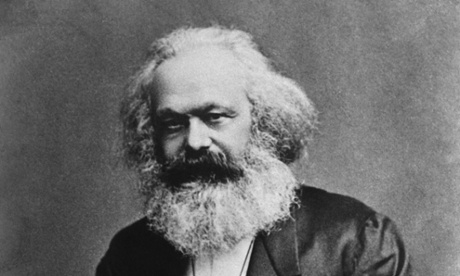
- He said Karl Marx has “come back into fashion”.
If you look at our capitalist system, one of the definitive analysts of how it works - not whether it is condemned, or whether it is right or wrong, just the mechanics of how it works, when it was first formed and how it would be developed - actually was Marx. If you look at most of the institutions that are teaching economics today, Marx has come back in to fashion because people have gone back to his analysis of just the basics of how the system works.
People might disagree with his conclusions about what to do with the system, but actually to understand how the system works he comes up with some interesting analyses that have been built in to traditional and fairly classical economics.
- He confirmed that he would be announcing a review of HM Revenue and Customs.
- He said he wanted to start “the most engaging debate about the state of our economy and the future of our economy that I think this country has ever seen.”
- He said he would review the mandate given to the Bank of England. It was failing to meet its inflation target, he said.
- He said that he regretted the fact that the Labour conference decided not to have a debate on Trident.
- He said he would only propose using quantitative easing (QE) for investment at the right time in the economic cycle.
- He said he would announce a review of the case for a financial transaction tax, but that current policy was for it to be introduced globally, not unilaterally.
- He said people should not “confuse democracy with disunity”.
This new politics that’s been introduced since Jeremy Corbyn’s election is basically saying our members are the people who own this party, it’s our members who will make the policy. But all of us - MPs, members of the shadow cabinet - will all be participating in our debate and our policy making. We believe in equality and that’s what we’ve got now. We’re all equal now and we will all be involved in this debate and it will be democracy. Don’t confuse democracy with disunity.
Updated
The interview ended with Sarah Montague mistakenly thanking John McConnell. McDonnell laughed.
I will post a summary of the highlights shortly.
Q: You said in a speech a few years ago that direct action, or insurrection, could change society.
McDonnell says he is thinking of publishing his old speeches, because everyone else is publishing them now.
He has said that people have the right to take non-violent direct action when politicians are not listening.
As an example, he cites UK Uncut. Previously no one listened when he said firms should pay tax. After their protest, the situation changed.
Q: You gave a speech defending the student who threw a fire extinguisher off a roof into a crowd.
McDonnell says that what he did was wrong. But he was making the point that he thought the three-year jail sentence was excessive.
Q: Will you support protesters who take direct action to stop the third runway at Heathrow?
McDonnell says he and Boris Johnson have both said they will lie down in front of bulldozers. He is going to hold him to that, he says.
Q: Would you introduced the financial transaction tax unilaterally?
McDonnell says the party’s policy is to introduce it globally. That has not changed, he says.
He says he made this clear at a fringe last night. He is surprised at how this is being reported.
Q: Is People’s QE dead as a policy?
McDonnell says the government should borrow when interest rates are low.
Normally, when the economy slows, a government cuts interest rates. That is not an option now, so QE would be a good measure.
He objects to the idea that QE is appropriate to help the banks, but not to help the poor.
He would only use it in certain circumstances, he says. It would have to be at the right time in the economic cycle.
Q: What would you do if the Bank of England governor said this would be inflationary?
McDonnell says he would try to persuade the governor. He would perserve the Bank’s independence.
Q: You said in 2012 you would take control of interest rates from the Bank.
McDonnell says policy has moved on from that.
The Bank is given a remit, he says.
But the Bank is not meeting it.
There needs to be review of the Bank’s role. It is missing its inflation target.
He also says he would invest in the Bank, to allow it to improve its economic modelling. Labour wants access to that.
Q: Do you admire the economy in France?
No, says McDonnell.
He says the self employed are not being looked after properly.
Q: You have also talked about removing subsidies worth £93bn from companies.
McDonnell says where these subsidies are delivering, they should be kept. But if they are not delivering, they should be up for review.
Q: You are talking as if the economy is not growing. But it is.
It is not growing fast enough, McDonnell says.
McDonnell says he wants to study how much of this tax money could be collected.
Updated
John McDonnell's Today interview
Sarah Montague is interviewing John McDonnell.
Q: How will you make the economy grow?
John McDonnell says he is looking at three areas: measures to grow the economy; measures to tackle tax evasion and tax avoidance; and fairer taxes.
Q: In the leadership campaign Jeremy Corbyn said there was £120bn of tax uncollected.
McDonnell says his speech is going to be boring. He is going to propose a review of HM Revenue and Customs and their practices. This figure came from the Tax Justice Campaign. Their estimate is that you can collect around £20bn of that. He says he wants to test that. That is partly why he has brought in some of the most significant economic thinkers in the world to advise the party.
Q: So why did the Corbyn campaign suggest you could recover the £120bn.
McDonnell says how much of that can be collected is open to debate.
Q: So it is meaningless.
No it is not, says McDonnell.
According to the BBC, John McDonnell has said his speech today will be “stultifyingly boring”.
Never mind. I’ll try to liven it up.
Summary
After the leader’s speech, the most important event at a main party conference is normally the speech from the chancellor or shadow chancellor and just before lunch we will be hearing from John McDonnell, the hard-edged leftwinger whose move the Treasury job was the most controversial appointment in Jeremy Corbyn’s reshuffle.
There has been some briefing of the speech in advance. Here is Patrick Wintour’s preview story, and here is how it starts.
John McDonnell, the shadow chancellor, will promise to match Jeremy Corbyn’s new politics with a new economics, including a pledge that the next Labour government will live within its means but run a different kind of economy.
McDonnell’s promise will come after his predecessor Chris Leslie told him to tone down his negative rhetoric to business and spell out what he planned to do to make Labour an anti-austerity party.
In his first setpiece speech to the party conference, McDonnell will propose a review of the major economic institutions, a new remit for the Bank of Englandand a bigger economics role for the business department as opposed to the Treasury.
McDonnell faces a stiff task to overhaul Labour’s reputation on economic competence and advance a tougher anti-austerity agenda.
A group of 10 leading trade union leaders said McDonnell must not tone down Corbyn’s leadership campaign promises, urging him to “stand up to any attempts to undermine his democratic right to lead the Labour party and the programme he has supported”.
McDonnell has been giving interviews this morning and he is about to appear on the Today programme. I will be covering that interview in full, as well as posting highlights from his other interviews this morning.
I will also be looking at the main Labour stories in today’s papers.
Here is the agenda for the day.
9.30am: Conference opens with a debate on Britain and the World, including speeches from Hilary Benn, the shadow foreign secretary, and Diane Abbott, the shadow international development secretary.
11.10am: Debate on work and business, with a speech from Angela Eagle, the shadow business secretary.
After 12pm: John McDonnell’s speech.
2.15pm: Further debate on work and business, with a speech from Owen Smith, the shadow work and pensions secretary.
3.20pm: Michael Dugher, the shadow culture secretary, speaks.
3.30pm: NEC treasurer’s report and debate on NEC and CLP rule changes.
If you want to follow me or get in touch on Twitter, I’m on @AndrewSparrow.