John McDonnell's Guardian fringe - Summary
Here are the main points from what John McDonnell said.
- McDonnell criticised Michael Dugher, the shadow culture secretary, for saying that the “punishment beatings” against non-Corbynites had to stop. Dugher said that in a comment to the Sunday Times. McDonnell says stories about some Labour MPs facing deselection were “absolute rubbish”. And he went on:
And then someone said something about “punishment beatings”. That’s laughable.
- McDonnell said Labour should consider changing its rules so that the leader and deputy cannot both be men. The party should try for gender balance, he said.
- He said he hoped Ed Miliband would in time return to the Labour front bench to serve under Jeremy Corbyn.
- McDonnell cast doubt on Chuka Umunna’s account of why he refused to serve in the shadow cabinet. Umunna said a key factor was Jeremy Corbyn’s stance on Europe. But “Chuka never spoke to us on that”, McDonnell said
- He said Labour MPs should be offered a free vote on military intervention in Syria. He would vote against, he said.
That’s all from me for tonight.
Thanks for the comments.
Updated
McDonnell says it is hard for people to cope with change. They have to assure people that there is room for everyone. Producing policy through rumbustious debate will produce better policy.
And that’s it.
I will post a quick summary soon.
Q: Tell us about yourself?
McDonnell says he was brought up in Liverpool, in a working class family. He worked on the shopfloor, then went to Brunel, then worked for the NUM. Then he was on the GLC. And then he became an MP. But he never had a career plan.
Q: Have you got an allotment?
McDonnell says his garden is a mess. His wife said they should take up a hobby. He tried dinghy sailing. It was freezing. Then they tried in Sardinia, and that was better. Now he has a small boat that he sails on the Norfolk Broads. They are crap sailors, he says. But the Broads are great; you cannot get a signal on a mobile phone, he says.
McDonnell says that, for the first time, a majority of people in the shadow cabinet are women.
He says the notion of top jobs never came into it. The idea of their being four top jobs in government is based on 19th century thinking, when the Foreign Office just invaded places, and the Home Office just repressed people.
He says there might be a case for changing the rules so that there is gender balance on the leader/deputy leader ticket.
McDonnell says Labour has to build a movement again. The party will rise to the challenge, he says.
Q: What about the fears that MPs will be deselected?
McDonnell says some of the reports this week, including the one about “punishment beatings” (Michael Dugher in the Sunday Times) are nonsense.
The mood has been very positive, he says.
And he says that, contrary to reports, the mood at the first PLP was friendly.
McDonnell says Syria and Trident are the two difficult issues for Labour.
Nato and Europe have not been divisive issues.
Q: But Chuka Umunna refused a job over Europe?
McDonnell says Umunna “never spoke to us” about Europe.
He says some MPs were resigning from positions they had not been offered on the basis of policies they had not seen.
On most issues the party will be able to find a compromise, he says.
He says MPs will also find that they have much bigger constituency parties because of the increased membership.
McDonnell calls for free vote on Syria for Labour MPs
Q: How will the party deal with issues where it is split?
McDonnell says on many issues the party will be able to compromise. On others that will not be possible.
He says he has been in the Commons on five occasions when a decision has been taken to send troops into action.
This is a conscience issue, he says.
He thinks sending troops to war should be a conscience issue. MPs should have a free vote.
- McDonnell calls for free vote on Syria for Labour MPs
McDonnell says he won’t back bombing Syria.
McDonnell says at times he was “brimming over with anger” at the wasted opportunity of New Labour.
Jeremy Corbyn is different. McDonnell says he can be aggressive. Corbyn is more consensual.
Q: When will you use your aggression in your new role?
It is a matter of channelling it, he says.
Economic credibility is key. No party can be elected unless it is seen as credible on the economy.
Every time Labour discovers a policy, it will have to test them and test them, he says.
It needs to get its views accepted as common sense.
McDonnell says he learnt a huge amount about finance at the GLC from one of the officials, who was one of the best public servants he has met.
McDonnell says the Eastern Daily Press put a notice in the paper asking if anyone knew anything about him. A woman wrote in, saying she used to sit next to him at primary school, and that he used to whisper the maths answers to her.
McDonnell says they started booking halls. And far more people than expected turned up.
Q: You used to be seen as a revolutionary. And now you want to be seen as a bank manager.
McDonnell says he is a bureaucratic. After university he wanted to manage the Co-op. He wanted to show that socialism could work in practice.
Q: Why did Labour lose?
McDonnell says Labour’s message was not clear enough.
After the election he drew up plans to radicalise the parliamentary Labour party over the next five years. He thought he might be able to get more leftwing candidates in, and get 30% of the PLP to be filled by leftwingers by 2020.
He saw himself moving into an elderly statesman role.
But the left were under pressure to run a candidate. He convened a meeting, and McDonnell said they would not be able to run a candidate. He thought they would only get 22 nominations. They had a meeting. McDonnell said he had run twice. Diane Abbott said she had tried. They all looked to Jeremy Corbyn. He cracked and agreed to run. He says that is the leader you should have - someone who does not want to serve.
Then he and Jon Lansman started working on getting nominations. On the day nominations closed they only got the names at the very last minute. Andrew Smith and Gordon Marsden were the two last MPs to sign.
McDonnell says he hopes Ed Miliband returns to Labour front bench
McDonnell says that he wanted Ed Miliband to stay on. He says he admired Miliband a great deal.
Miliband is planning to get involved in a think tank. Miliband is taking a year out, he says. (Out from frontbench politics.) He says he hopes Miliband comes back to serve in a Corbyn administration.
(It is not clear whether he means a Corbyn administration in Number 10, or a Corbyn shadow cabinet.)
Katharine Viner is interviewing John McDonnell now.
Q: How do you feel about the fact that you are now shadow chancellor?
It’s either a dream for me, or a nightmare for the Daily Mail, John McDonnell says.
Updated
Back to the McDonnell fringe. We’re in a room in the Grand Hotel, and it’s packed.
We’re about to start.
Speaking at a fringe event, shadow business secretary Angela Eagle said that party members didn’t want Labour to “hedge around marginal differences with the Tories for tactical reasons” and they’d chosen “the most high risk way possible” to make that point.
You can’t keep banging your head against a brick wall with someone else’s narrative, someone else’s ideas that weren’t designed to help you.
You have to change the narrative and that’s what John [McDonnell] tried to do in his speech yesterday. He was pointing out that there are economists who don’t think the neo-liberal system is the only way of doing things.
John McDonnell interviewed at Guardian Labour fringe
John McDonnell, the shadow chancellor, is about to take part in a Guardian fringe. He’s being interviewed by Katharine Viner, the Guardian’s editor-in-chief, and it will be starting in about 10 minutes.
Afternoon summary
- Jeremy Corbyn has served notice on shadow cabinet ministers who have challenged him over defence policy that he has a mandate from the Labour party to oppose the renewal of the Trident programme. As Nicholas Watt reports, in an hour-long speech to the Labour conference on Tuesday, the party leader announced that he is prepared for a fight over Britain’s independent nuclear deterrent. Corbyn told delegates in Brighton it was wrong to fund a replacement for Trident.
- Corbyn has suffered embarrassment after it was revealed that a key passage from his speech had been offered to, and rejected by, every Labour leader since Neil Kinnock. Richard Heller, who used to work for Denis Healey in the 1980s, even posted it on his blog four years ago when he was offering it to Ed Miliband for inclusion in his conference speech. Labour say Corbyn used the passage because he liked it and agreed with it. Corbyn seems to have been unaware that it had been rejected by previous leaders and that it had been posted in the public domain.
Heller says passage used by Corbyn was first offered to Kinnock for a speech when he was leader
Richard Heller has now written for the Guardian about his involvement in Jeremy Corbyn’s speech. He says he first offered this passage to Neil Kinnock. Here’s how this article starts.
I discovered in a Karachi traffic jam today that Jeremy Corbyn intended to make use in his conference speech of a passage I wrote some years ago with the theme of “you don’t have to take what you’re given”. I have always been proud of that passage, both for its content and its cadences, so much so that I have offered it regularly to every Labour leader from Neil Kinnock onwards and to other Labour speakers. Four years ago, I published it on my website along with some other zingers and exordiums.
Updated
Back to the speech, and here are two more videos with reaction from Labour members in the hall.
Michael Crick has more on Richard Heller.
Richard Heller, who gave Corbyn long passages of his speech, was Denis Healey's special adviser 1981-3 when DH fighting Bennites like Corbyn
— Michael Crick (@MichaelLCrick) September 29, 2015
Jeremy Corbyn's key speech line was "You dont have to take what you are given", but it emerges you can, if it works as a line in a speech.
— Patrick Wintour (@patrickwintour) September 29, 2015
Here’s Damian McBride, Gordon Brown’s former spin doctor, has been tweeting about the Heller lift. I particularly like “unforeseen external fuckarama” - presumably a comms technical term.
All you ever want is the speech reported straight. The nightmare is an unforeseen external fuckarama, and plagiarism is as bad as it gets.
— Damian McBride (@DPMcBride) September 29, 2015
The plagiarism charge is wrong. Corbyn and his team did not lift the material without permission. They were offered the words as a contribution to the speech. (Presumably Heller did not tell them that he had offered the same passage to Ed Miliband four years earlier, and posted it on his blog, but that is not clear at this point.)
This is what McBride posted after this was pointed out to him.
If that's right @wifimarxist, then phew, and that might kill it. The fact it wasn't used by Ed M isn't great but could be made a positive.
— Damian McBride (@DPMcBride) September 29, 2015
Here is another quote from a Labour spokesman on the Heller/Corbyn story.
Heller was consulted and gave permission for his material to be sourced as Jeremy Corbyn felt it captured perfectly what he wanted to say to the British people.
My colleague Hugh Muir has spoken to Richard Heller. Heller told him this:
I sent it to Team Corbyn as I have sent it to each and every Labour leader before him. I am very proud of that passage. I had no idea they were going to use it until today, but I am delighted that they have. It is a very fine passage. I sent it by post two weeks ago, to the leader of the opposition’s office.
I offered it to him as Labour leader, because I felt it was a passage applicable to anyone with the values of the Labour party. I also published it on my website, probably about four years ago. It may look like they took it from there but that isn’t the case and to say it was stolen or plagiarised is nonsense.
A Labour spokesman has just been touring the press room in the conference centre. He said Neale Coleman, Jeremy Corbyn’s head of policy and one of the authors of the speech, spoke to Richard Heller a while ago and told him he liked some of his ideas and that he was going to use some of his material.
When it was put to him that Coleman seemed to have lifted some of the material word for word, the spokesman that Coleman liked the ideas and that there were limits to how you could reword them.
Corbyn accused of lifting some of speech from words written for Miliband four years ago
In a remarkable blog for the Spectator, Alex Massie says the passage in the Jeremy Corbyn speech about inequality existing since the “dawn of history”, and it being Labour’s job to fight it, seems to have been largely lifted from something offered to Ed Miliband in 2011.
The original draft was written by Richard Heller, a former Labour party adviser. Heller has a blog where he posted suggestions for things that Miliband could say in speeches. In 2011 he suggested Miliband use “You don’t have to take what you’re given” as a theme. And he drafted a long passage, starting like this.
Since the dawn of history, in virtually every human society there are some people who are given a great deal and many more people who are given little or nothing. Some people have property and power, class and capital, status and even sanctity, which are denied to the multitude. And time and time again, the people who receive a great deal tell the multitude to be grateful to be given anything at all. They say that the world cannot be changed and the multitude must accept the terms on which they are allowed to live in it.
Massie says Miliband ignored this proposal four years ago. But this afternoon a very similar passage popped up in Corbyn’s speech. Corbyn said:
Since the dawn of history in virtually every human society there are some people who are given a great deal and many more people who are given little or nothing. Some people have property and power, class and capital, status and clout which are denied to the many.
And time and time again, the people who receive a great deal tell the many to be grateful to be given anything at all. They say that the world cannot be changed and the many must accept the terms on which they are allowed to live in it.
The similarities go beyond that.
I’ll get some reaction to this from Labour as soon as I can.
Here is some more reaction to the speech from Labour members in the hall.
Ipsos MORI has done a Twitter sentiment analysis of tweets about Jeremy Corbyn’s speech. They looked at 41,000 tweets and classified almost 20,000 of them as positive or negative. Some 76% were positive. By comparison, when Ed Miliband gave his last conference speech as leader in 2014, only 24% were positive.
The two bits of the speech that got the most positive reaction on Twitter were the reference to social media becoming increasingly important in the future, and the Keir Hardie quote at the end.
Michael Gove, the justice secretary, has put out a statement about the speech on behalf of the Conservative party.
Labour have confirmed that they are a threat to our national security, our economic security and to the security of every family in Britain.
The Labour leader’s policies to borrow more, print money and put up taxes on people’s jobs and incomes would wreck our economy. That would weaken our nation’s defences, damage our NHS and hurt our country’s working people – with the poorest hit the most.
Only by continuing to build a stronger economy can we deliver strong defences for our country and stability, security and opportunity for working people.
In an unprecedented move, Jeremy Corbyn’s speech was broadcast live on Iran’s national television. Iranian state TV has become more relaxed in showing such speeches by foreign political figures after the nuclear agreement struck in July. It also showed Barack Obama’s address to the UN general assembly live on Monday. They were both broadcast on the news channel of the Islamic republic of Iran’s broadcasting (IRIB) network.
Corbyn’s views on the Middle East and Iran makes it more easier for the Iranian state television to give his speech an airtime. “Parts of Corbyn’s speech were broadcast live by Iran’s state TV. I bet they loved what he said on foreign policy under his leadership,” said one user on Twitter.
Iran’s state-run English language television, Press TV, also reported on Corbyn’s speech. “Britain’s opposition Labour leader, Jeremy Corbyn, said on Sunday that Iran needs to be part of a solution to the conflict in Syria and the wider Middle East,” Press TV’s report said before quoting the Labour leader’s speech at the conference.
Updated
Here is Owen Jones’s take on the speech.
Two business organisations, the CBI and the Institute of Directors, have criticised Jeremy Corbyn for being over-negative about the economy.
This is from John Cridland, the CBI director general.
We share Labour’s aim of ensuring the benefits of growth are spread more evenly across the UK, but we don’t recognise Mr Corbyn’s characterisation of the economy. While there’s still more to do on exports, the recovery is more balanced than Mr Corbyn argues. It is not based on a house price-fuelled asset bubble, but on business investment, which is spurring stronger wage growth and rising living standards.
And this is from Simon Walker, the IoD director general.
There was not much space for business in this speech, with the new Labour leader striking a largely pessimistic tone on the economy. The recovery after the financial crash of 2008 has been difficult, but we would have liked to see more acknowledgement of the vital role the private sector has played in creating jobs and driving growth.
While we are more positive about the UK’s current economic performance, Jeremy Corbyn did identify several areas of concern that will chime with businesses.
Improving our broadband infrastructure, stimulating manufacturing and building more houses are all goals we share.
Only a few weeks into the job, we would not expect the new leader to be able to spell out the detail of his party’s policies, but until he does, it will be hard to judge whether he has credible solutions to the problems.
And here are verdicts on the speech from some Guardian readers.
There are another 3,000 BTL.
Here is reaction to the speech from two Labour members in the hall.
Here is Mark Serwotka, the PCS general secretary, on the speech.
This was a speech of a real leader, someone who lives and breathes democracy and solidarity. Jeremy has brilliantly answered his critics, setting out a vision of a country where honesty and decency replace greed and conflict. We now have the opportunity to build a genuinely formidable opposition to Tory austerity inside and outside parliament.
And here is an excerpt from Gary’s contribution.
The speech was clear. It had purpose. It anchored a party that has for too long been adrift by reminding it of its core principles and core mission. Corbyn spoke in unequivocal terms about his support for the weak against the strong and fairness against inequality. He voiced support for refugees, trade unions, council housing, peace, international law and human rights. Amazingly, for a Labour party leader, this already made it an exception.
Here are some audioBoom clips from the speech.
Here is Corbyn on Trident.
Corbyn's speech - Verdict from the Twitter commentariat
And here are some tweets about the speech from political journalists.
Some of them liked it, but generally the verdict is negative.
From the Economist’s Jeremy Cliffe
Just amazed anyone can think that was anything but terrible. Labour's left - let alone party as a whole - can do so much better. #lab15
— Jeremy Cliffe (@JeremyCliffe) September 29, 2015
Not one mention of general elections (fighting, winning, losing, significance of), Labour's only means of changing anything much #lab15
— Jeremy Cliffe (@JeremyCliffe) September 29, 2015
From the Guardian’s Michael White
Authentic Corbyn conference speech:wholesome/innocent, warm/unstructured, modest/policy lite/sweet. But he addressed party more than country
— MichaelWhite (@MichaelWhite) September 29, 2015
From Sky’s Adam Boulton
COMMENT Corbyn's speech managed to give both the Labour Conf and the Tories everything they were hoping for.
— Adam Boulton (@adamboultonSKY) September 29, 2015
From the Guardian’s Owen Jones
Authentic, warm, witty speech from @jeremycorbyn, going into new territory with rights for self-employed. Hope he builds on that! #lab15
— Owen Jones (@OwenJones84) September 29, 2015
From Jenni Russell
Corbyn eloquent in trad left way: misery,poverty, war, mental health. But just like Ed: Where's the praise for business, growth?
— Jenni Russell (@jennirsl) September 29, 2015
that Corbyn speech stuck dutifully to all the trad leftwing themes that have niche appeal. Enthuses his base only. Mad. #lab15
— Jenni Russell (@jennirsl) September 29, 2015
From the Spectator’s Isabel Hardman
Jeremy Corbyn’s speech to Labour conference was excellent http://t.co/wTJPBGNdJ3
— Isabel Hardman (@IsabelHardman) September 29, 2015
From Sky’s Faisal Islam
First take: rapturously received in the hall, as you might expect, Corbyn will change the frame of politics, irrespective of 2020 PM chances
— Faisal Islam (@faisalislam) September 29, 2015
From the FT’s Robert Shrimsley
I suppose that will boil down to an ok three mins for 6pm news - which is how most voters will see it - but heavens that was grim #corbyn
— robert shrimsley (@robertshrimsley) September 29, 2015
From Channel 4 News’s Michael Crick
Corbyn broke most rules of conf speeches; full of flaws, but courageous on some issues. Prob very effective with party, maybe not w voters
— Michael Crick (@MichaelLCrick) September 29, 2015
From the Times’s Tim Montgomerie
Much negativity re Corbyn's speech but it was ok. He'll have appealed to Lab's base. He's done enough to survive & Tories therefore smiling
— Tim Montgomerie ن (@montie) September 29, 2015
Corbyn 100% right to criticise Cameron and UK's suck up relationship with odious Saudi regime #lab15
— Tim Montgomerie ن (@montie) September 29, 2015
From the Sunday Times’s Tim Shipman
Most of this speech has been about how the Labour Party makes policy. Very little to say to the people of Watford
— Tim Shipman (@ShippersUnbound) September 29, 2015
Most of this speech has been about how the Labour Party makes policy. Very little to say to the people of Watford
— Tim Shipman (@ShippersUnbound) September 29, 2015
What we have learned: Corbyn is a personable chap. He cares about stuff. He likes debates and campaigning. He has no plan to win power.
— Tim Shipman (@ShippersUnbound) September 29, 2015
I wonder if someone will tell Jeremy Corbyn before this time next year that Labour lost a general election.
— Tim Shipman (@ShippersUnbound) September 29, 2015
From CapX’s Iain Martin
Jeremy Corbyn gave the worst leader’s speech I have ever heard. (My review for @CapX) http://t.co/ezJgncWrSs
— Iain Martin (@iainmartin1) September 29, 2015
From the Sun’s Craig Woodhouse
Corbyn's aim of a kinder politics and caring society is admirable. But I missed the bit where he explained how it wins Labour elections.
— Craig Woodhouse (@craigawoodhouse) September 29, 2015
From the Evening Standard’s Pippa Crerar
I do wonder how much Corbyn has reflected on Labour losing the election. Badly. And on what it means. He didn't mention it at all.
— Pippa Crerar (@PippaCrerar) September 29, 2015
From LabourUncut’s Atul Hatwal
Jeremy Corbyn’s speech will have confirmed voters’ worst fears about Labour says @atulh http://t.co/KPDOD04CtI
— Labour Uncut (@LabourUncut) September 29, 2015
From the New Statesman’s Helen Lewis
Would be interested to hear from people who liked that speech - it felt a bit laundry list/preaching to the converted to me.
— Helen Lewis (@helenlewis) September 29, 2015
From the Guardian’s Patrick Wintour
Was this written by Simon Hughes ?
— Patrick Wintour (@patrickwintour) September 29, 2015
From the Guardian’s George Monbiot
I suspect that some of the Labour MPs who were so quick to distance themselves from #JeremyCorbyn might now be having second thoughts.
— GeorgeMonbiot (@GeorgeMonbiot) September 29, 2015
From Politics.co.uk’s Ian Dunt
That really was a dreadful speech though. Clearly people are getting something from it, but it was terribly delivered & had no theme at all.
— Ian Dunt (@IanDunt) September 29, 2015
From the Economist’s Anne McElvoy
It's really a big "No to ..." speech - which is why the audience are loving it so much.
— anne mcelvoy (@annemcelvoy) September 29, 2015
From the Spectator’s James Forsyth
Corbyn speech was a pudding without a theme
— James Forsyth (@JGForsyth) September 29, 2015
Andy Burnham expected to be giving this speech until mid-summer. Here is what he said about it.
I think out there the public are crying out for a different way of politics, a different style of politics, they are fed up of the soundbites the spin, they want to see authenticity, people who mean what they say and that’s what you saw today from Jeremy Corbyn.
He’s fought all his political life for the things he was speaking about so it does come from the heart. That’s what’s been lacking in politics in recent times.
According to BBC monitoring colleagues, parts of Corbyn speech were broadcast live (unprecedented) by Iran's stateowned TV channel
— Tim Reid (@TimReidBBC) September 29, 2015
I'm told Jeremy Corbyn borrowed his red tie from a member of staff before his big conference speech #Lab15
— Sophy Ridge (@SophyRidgeSky) September 29, 2015
Here is Unite’s general secretary, Len McCluskey, on the speech.
Today Jeremy treated us to a different kind of politics and I believe people will like what they see. Principle, honesty, fairness and dignity – our lifelong Labour values - are taking their rightful place in the public realm.
He was inspirational – in setting out a new vision for our country he gave our tired politics a long-overdue shot in the arm.
Unite members will be especially heartened to hear that Jeremy believes in an active role for government – in protecting jobs, in using investment to build the homes families and young people urgently need and to keep our communities strong.
Corbyn's speech - Snap verdict
Corbyn’s speech - Snap verdict: Giving a political speech looks like a straightforward undertaking, but there’s an art and a craft to it and there is a reason why great conferences speeches succeeed. This wasn’t a great conference speech. In fact, judged technically, it was second-rate, or worse. It meandered, it had no real structure (at one point Corbyn even appeared to repeat himself), and it lacked an obvious punch. Oratory - even the low-grade stuff you get a British party conference - is about crafting messages in a form so that they resonate, and stir the heart, and lodge in the mind (at least for a week or so). With this one, it was not even clear what the one over-riding message was.
Yet that’s the old politics assessment, and the whole point about Corbyn is that he is different, and that he won a surprise election victory because people were fed up with that sort of conventional statecraft. Corbyn explained this well, and perhaps the best bits in the speech were those where he mocked media commentators. The passage about sports reporters dismissing a club with a growing fan base as a failure was particularly effective. (See 2.55pm.) To his credit, Corbyn did not allow himself to be tempted into saying anything inauthentic. Much of the speech reflect his long career in grassroots protesting, and even the passage about how he loved Britain because of its values (the one pushed by the spin doctors, anxious to counter the negative impact of anthem-gate) sounded genuine. A more plastic figure could easily have been enticed into phoney patriotism.
Everything he said was consistent with the campaign he ran during the leadership campaign. Labour voted for an ethical socialist antidote to spin, and that’s what they got this afternoon - even if he went on a bit longer than some of them may have wanted.
Other left/idealist types fed up with the status quo may be enticed by the Corbyn offer as well. But Corbyn had little or nothing to say to people outside the “insurgency bubble” (to coin a phrase), people not stirred by quotes from Keir Hardie, people who may even have voted Conservative (all 11m of them). He had a lot to say on housing (or too much - he repeated himself), but he had little to say on health or education, and immigration, a key issue for many, was only discussed in terms of the refugee crisis. To return to the football analogy, this club may have acquired 160,000 new fans over the summer. But it lost its last big match, it’s been relegated and, on the basis of this speech, the captain/owner hasn’t given any thought at all to why.
It was a sincere speech, and it marked a departure. But it is hard to see how it advances Labour politically.
Updated
Corbyn says he is almost at the end. He has spoken at 37 meetings since the conference began, he says.
The last bearded man to lead Labour was Keir Hardie. He died a century ago this weekend.
We owe him so much, he says.
He was once asked how he could sum up what his life was about. He replied:
My work has consisted of trying to stir up a divine discontent with wrong.
Corbyn says Labour should adopt that approach.
Don’t accept injustice, stand up against prejudice.
Let us build a kinder politics, a more caring society together.
Let us put our values, the people’s values, back into politics.
And that’s it.
Corbyn says the Tories want you to take what you are given.
Since becoming Tory leader, Cameron has received £55m in donations from hedge funds.
That is why “this pre-paid government came into being”, he says. They exist to protect the few, and to deliver a £145m tax break to the hedge funds.

Updated
Corbyn quotes Ben Okri, the Nigerian writer.
The most authentic thing about us is our capacity to create, to overcome, to endure, to tranform, to love.
Corbyn says all the policy work will be underpinned by Labour’s values.
Since the dawn of time there have been people given a great deal, and others given little.
The rich always say the poor should be grateful for what they get.
And these days this is justified by economic theory, he says.
Labour came into existence to challenge this, he says.
Labour says you may be born poor, but you don’t have to stay poor. You don’t have to set limits for your talents. You don’t have to accept prejudice. And you dismiss political leaders when they fail.
Corbyn says he is going to make mental health a real priority. It could affect everyone. He wants to end the stigma around it. And he wants to make “parity of esteem for mental health a reality, not a slogan”.
Updated
Corbyn comes back to housebuilding.
John Healey has shown how a housebuilding programme could pay for itself.
He wants a kinder politics, that will guarantee people a decent home.
Updated
Corbyn says Labour is now committed to a fully integrated, publicly owned railway.
Updated
Corbyn says he set out ideas to help small firms during the leadership campaign.
But many people who run small businesses or who are self-employed are particularly badly hit. The self-employed do not have statutory sick pay, or statutory maternity pay.
He says Labour will consider opening up maternity pay to the self-employed.

Updated
Corbyn says he is proud of our history, and he particularly singles out the BBC and the NHS for praise.
Corbyn says he wants to rid Britain of injustice, and to ensure all citizens benefit from prosperity.
He does not use the precise form of words briefed in advance. This is the quote released overnight.
It’s because I am driven by these British majority values, because I love this country, that I want to rid it of injustice, to make it fairer, more decent, more equal.
And I want all of our citizens to benefit from prosperity and success.
Corbyn now gets to the passage about British values.
Fair play for all, solidarity and not walking by on the other side of the street when people are in trouble. Respect for other’s point of view. It is this sense of fair play, these shared majority British values, that are the fundamental reason why I love this country and its people.
These values are what I was elected on: a kinder politics and a more caring society.
They are Labour values and our country’s values.
We are going to put these values back into the heart of politics in this country.
Corbyn says David Cameron broke a promise he made in the election campaign not to cut tax credits.
A single mother working part time could lose £2,000, he says.
How can this be right?
He says voting for the minimum wage was one of the proudest moments of his life.
But “the phony rebranding of it as a living wage doesn’t do anyone any good”.

Updated
Corbyn says people got disappointed by Labour in Scotland.
I know you feel we lost our way.
I agree with you.
He says Kezia Dugdale, the new leader in Scotland, is urging people to look at Labour in Scotland again.
Corbyn asks what his first big campaign will be.
Before the summer, The Tories introduced a plan to get millions of people off the electoral register in December, he says.
They are doing this a year earlier than the Electoral Commission proposed.
Two million people could lose their right to vote, he says.
Students and people in insecure accommodation will be most affected.
They want to gerrymander next year’s mayoral election in London by denying hundreds of thousands of Londoners their right to vote.
Labour must mobilise to get these people on the electoral register, he says.
Corbyn says he does not believe in personal abuse of any sort.
Treat people with respect, he says.
There is going to be no rudeness from me.
Maya Angelou said: “You may not control all the events that happen to you, but you can decide not to be reduced by them.
He says he wants “a kinder politics, a more caring society”.
And he says he has a message for all activists, Labour or not.
Cut out the personal attacks, the cyberbulling.
Updated
Corbyn praises Tom Watson for using digital media as a key resource.
In the future social media will be increasingly important, he says.
He says the commentariat do not understand the new politics. They report disagreements as splits, and agreement and compromise as concessions and capitulation.
This is just grown-up politics, he says.

Updated
Corbyn says Labour must embrace “a modern left movement” and use to build a society for the majority.
Some journalists who have complained for years about lack of involvement in politics have now been criticising Labour.
If they were sports reporters, they would be saying this club has had a terrible summer, it has 160,000 new fans, how can it survive?”
He says young people are fizzing with ideas.
Let’s give them the space for that fizz to generate new ideas, he says.
He says Labour has the chance to be at the centre of every community.
People should debate, build new friendships, and explain how Labour can make Britain better.

Updated
Corbyn turns to change in Labour.
What happened this summer with the leadership election was a political earthquake.
According to the script, socialist and social democratic parties were in decline.
Social democracy itself was exhausted.
Dead on its feet.
Yet something new and invigorating, popular and authentic, has exploded.
Corbyn praises Barack Obama for reaching a deal with Iran. That shows the way other conflicts can be resolved.
He says he “yields to no one” in his oppostion to the “foul and despicable crimes committed by [Islamic State] and by the Assad government.
He says he agrees with Paddy Ashdown, that the government does not have a diplomatic strategy on Syria.
The UN could still start a process leading to peace in Syria, he says.
Updated
Corbyn taunts the Tories for their support for Saddam Hussein in the 1980s.
It didn’t help our national security that, at the same time I was protesting outside the Iraqi embassy about Saddam Hussein’s brutality, Tory ministers were secretly conniving with illegal sales to his regime.
And he turns to more recent human rights issues abroad.
Nor does it help our national security to give such fawning and uncritical support to regimes like Saudi Arabia and Bahrain who abuse their own citizens and repress democratic movements. And who are using British weapons in their assault on Yemen.
Corbyn turns to national security.
The best way to protect the British people against the threats we face to our safety at home and abroad is to work to resolve conflict.
That isn’t easy, but it is unavoidable if we want real security.
Our British values are internationalist and universal.
They are not limited by borders.
Corbyn says we need a strong military, to keep us safe and to work on humanitarian missions.
He says it was a privilege to meet soldiers who helped with the Ebola crisis in parliament recently.
There is no contradiction between working for peace and doing what is necessary to keep us safe, he says.
But he says he does not believe in the case for spending £100bn on nuclear weapons.
Labour will review its defence policy.
But it must protect jobs in the defence industry [through defence divesification].
Corbyn says he was proud to speak at the “refugees welcome” demonstration hours after being elected as Labour leader.
He wanted to send out a message about the kind of politics he is pursuing.
He is proud of what people are doing to collect money for refugees in Calais.
These refugees are victims of war. And the response from the government isn’t enough.
Let’s reach out the hand of humanity and friendship to these people, he says.

Updated
Corbyn says Labour would make every school accountable to local government education authorities.
And Labour won’t bring back selection, “because we have aspirations for all children, not just a few”.
Corbyn goes on:
The Tories’ austerity is the out-dated and failed approach of the past.
He says investment is at the heart of his approach.
Every mainstream economist will tell you that with interest rates so low now is the time for public investment in our infrastructure.
He cites John Healey’s plans for housing, announced earlier, as an example of Labour’s approach.
There needs to be a national investment bank, he says. And a Green New Deal.
Corbyn says the Tories have left the economy in a bad state.
And the shocks in the world markets this summer have shown what a dangerous and fragile state the world economy is in.
And how ill-prepared the Tories have left us to face another crisis.
It hasn’t been growing exports and a stronger manufacturing sector that have underpinned the feeble economic recovery.
It’s house price inflation, asset inflation, more private debt.
Unbalanced. Unsustainable. Dangerous.
There is an investment crisis, he says. Britain is at the bottom of the international league on investment. Or near the bottom - just below Madagascar, and just above El Salvador.
Corbyn says:
And that’s the nub of it.
Tory economic failure.
An economy that works for the few, not for the many.
He urges Cameron to intervene to save the SSI steel plant in Redcar.
Corbyn says people advise you not to talk about your opponents’ issues.
But I want to tackle one thing head on.
The Tories talk about economic and family security being at risk from us, or even from me.
How dare these people talk about security for families and people in Britain?
Where is the security for families who cannot own a home, and who have to move frequently in the private rented sector? Or for carers struggling to look after older people? Or for young people locked out of careers?

Updated
Corbyn says he has been taking advice. He welcomes advice, he says.
Corbyn says he has huge admiration for human rights campaigners.
He praises those in particular who campaigned for the release of Shaker Aamer. Ordinary people, standing on cold streets, have secured his release.
That is how human rights are won - “ordinary people doing extraordinary things”.
The Tories want to repeal the Human Rights Act. And the trade union bill is a fundamental attack on human rights, he says.
Corbyn says he has a message for David Cameron. He urges him to intervene personally with Saudi Arabia to stop the beheading and cruxifiction of Ali Mohammed al-Nimr.
Corbyn recently wrote an open letter to DAvid Cameron about this case. For backround, here is an extract.
I am writing concerning the case of a Saudi protester, Ali Mohammed al-Nimr, who was arrested as a child in 2012 and sentenced to death by ‘crucifixion.’ As you may be aware, Ali has now exhausted all his appeals and could be executed any day – in a particularly horrific manner, which involves beheading and the public display or ‘crucifixion’ of the body.
Ali was arrested over alleged involvement in protests against the Saudi Government which followed the ‘Arab Spring’. He was the victim of numerous fair trial violations – reportedly including the use of torture to extract a false confession from him, which he was prevented from recanting in court. There is a great deal about his case already in the public domain, and I understand that the FCO has already announced that it plans to raise it with the Saudi authorities, so I will not go further into detail at this point.
I was hoping however that you could clarify a number of important questions for me about Britain’s position on this case, and our wider links with the Saudi Government:
First, will you raise this case directly with your Saudi counterparts, and request that they commute the unjust and horrific sentence handed down to Ali, which violates any number of international laws - not least those on the rights of the child which ban the death sentence being handed down to those under 18?
Second, will you step in to terminate the Ministry of Justice’s bid to provide services to the Saudi prisons system – the very body, I should stress, which will be responsible for carrying out Ali’s execution?
Third, I would be very grateful if you could clarify for me your Government’s previously stated reasons for continuing with the bid to provide Saudi prisons services. Firstly, why was Parliament told initially that there would be financial penalties if the bid were withdrawn, when it later emerged that this was not the case? Secondly, can you please expand on the MoJ’s current claim – that the bid cannot be terminated as to do so would be “detrimental to HMG’s wider interests.” What are those wider interests? Do they outweigh the need for Britain to make clear that it cannot in any way support severe human rights abuses such as those inflicted on Ali? And has the Saudi Government suggested to Britain that it will take any form of action in response to the UK’s withdrawal of the bid?
Corbyn says he is not going to change his politics.
I’ve been standing up for human rights, challenging oppressive regimes for 30 years asa backbench MP. And before that as an individual activist like everyone else in this hall.
He is not going to stop because he is leader, he says.
But Corbyn says his victory was not just a vote for a change of style.
It was a vote for political change in our party as well.
Let me be clear, under my leadership Labour will be challenging austerity.
He says the party will be a voice for engagement and for international law.
The huge mandate I have been given by the 59 per cent of our electorate who supported me is a mandate for change.
First and foremost tt was a vote for change in the way we do politics, in the Labour party and the country.
Kinder, more inclusive. Bottom up, not top down.
In every community and workplace, not just at Westminster.
Real debate, not message discipline.
Straight talking. Honest. That’s the politics we’re going to have in the future.

Updated
Corbyn turns to leadership.
I am not imposing leadership lines.
I don’t believe anyone has a monopoly on wisdom - we all have ideas and a vision of how things can be better.
I want open debate, I will listen to everyone, I firmly believe leadership is listening.
We will reach out to our new members and supporters, involve peopel in our debates and then our party as a whole will decide.
Corbyn thanks Harriet Harman, saying the Equalities Act is one of her many achievements.
He thanks Iain McNicol, the Labour general secretary, party staff and volunteers.
And he thanks his fellow Labour leadership candidates.
He praises Liz Kendall’s passion, independence and friendship to him.
He thanks Yvette Cooper for what she has done to change attitiudes to refugees.
And he thanks Andy Burnham for defending the NHS.
(There are more thankyous than in an Oscar acceptance speech.)
Updated
Corbyn says Labour needs to renew its policies.
He thanks people who have served the party.
He pays tribute to Ed Miliband “for the leadership he gave our party, and for the courage and dignity he showed in the face of tawdry media attacks. And also for the contribution I know he will be making in the future.”
- Corbyn says he expects Ed Miliband to make a further contribution to Labour in the future.
This gets a generous round of applause.
Updated
Corbyn welcomes the new people who have joined Labour. More than 160,000 have joined, and more than 50,000 since the election.
His own constituency now has 5,000 members, he says.
He thanks his local party.
Jeremy Corbyn's speech
Corbyn starts with a joke about how “barely anything of note” has happened to him in the last two weeks.
The papers have taken an interest in him, he says.
Amongst the things I’ve found out about myself are that, according to one headline, Jeremy Corbyn welcomed the prospect of an asteroid wiping out humanity. Obviously I wouldn’t endorse this policy without getting the support of conference first.
(This one is actually true. There are more details here.)
In the press room there is a cheer - presumably from the paper that printed that.
Then another paper printed a mini-novel about how life would look if he were prime minister. The premier league would collapse. That is far. How could they play after the asteroid attack.
Corbyn says the Daily Express then published a story about one of his ancestors.
There is so much applause he cannot get going.
Any chance we can start, he says twice.
Updated
Jeremy Corbyn is on stage now.
Inside the hall
Hall at Brighton conference centre is packed with Labour members waiting for Corbyn to speak #Lab15 pic.twitter.com/0qTgKtAbyE
— Frances Perraudin (@fperraudin) September 29, 2015
In the hall the afternoon proceedings are getting underway.
A young delegate from Islington north is speaking. She says she has known him for years. Her father was a political prisoner in Pakistan who came to the UK, she says.
Cameron says Labour is 'heading off into the hills' under Labour
David Cameron is in New York and he has given a interview that was screened just a few minutes ago - conveniently timed to pre-empt Jeremy Corbyn’s speech.
In it, Cameron said Labour was “heading off into the hills” under its new leader. Here is the Press Association copy.
Labour is “heading off into the hills” under Jeremy Corbyn’s leadership, David Cameron said in a pitch to disaffected centreground voters.
The prime minister was asked about the election of the left-winger during a interview with CBS while in New York for talks at the United Nations.
Speaking as Corbyn prepared to deliver his first Labour conference speech, he said: “We have an opportunity in my party having just won an election and having won a mandate and with the other party heading off into the hills a bit, I think we have an opportunity to say ‘whatever your politics in the past, if you want strong health and a strong economy, if you want strong defence and to look after the poorest in the world, we are the team for you.”
Build up to Jeremy Corbyn's speech
The conference hall is filling up now in anticipation.
Conference hall filling up in Brighton for Corbyn speech. Much excitement that he's wearing a tie. pic.twitter.com/fb4NSs7nsy
— Greg Dawson (@Gregstweet) September 29, 2015
Labour conference to debate military intervention in Syria
Labour’s conference will on Wednesday debate and vote on whether to support military action in Syria.
An emergency motion laying down strict conditions before supporting any move by David Cameron to bomb Isis has been accepted today.
The debate will expose rifts between senior party members over action which is could be put before the House of Commons by Cameron next month.
The shadow foreign secretary, Hilary Benn, who has been battling to maintain party unity on the issue of airstrikes, told the party conference on Monday that the party would support effective action in Syria, while ruling out backing UK troops on the ground.
John McDonnell, the shadow chancellor and a close ally of Jeremy Corbyn, has suggested Labour MPs may be a given a free vote if Cameron brings a fresh motion to the Commons supporting airstrikes in Syria alongside those in Iraq.
Diane Abbott, the shadow international development secretary, by contrast departed from her speech script to say explicitly that she opposed airstrikes.
The motion, submitted by Unite the union, asks for conference to support four strict conditions before voting for military action.
The conditions contained in the motion are authorisation from the United Nations; a comprehensive plan for humanitarian assistance for any refugees who may be displaced by the action; assurances that the bombing is directed exclusively at military targets associated with ISIS; and that any military action is subordinated to international
diplomatic efforts to end the war in Syria.
Angela Eagle, the shadow business secretary, is on the World at One. She says that John McDonnell, the shadow chancellor, only wants to introduce the financial transaction tax on a global basis. Martha Kearney, the presenter, says McDonnell had given the impression earlier during the conference that he would consider implementing it unilaterally if he could not get a global agreement to bring it in.
The Labour conference is going to debate air strikes against Islamic State in Syria tomorrow, the BBC reports.
Labour WILL debate and vote on taking action in Syria tomorrow ....
— Laura Kuenssberg (@bbclaurak) September 29, 2015
In the conference centre people have already been queuing for some time to ensure they get a seat in the hall for Jeremy Corbyn’s speech.
People are already queuing for Corbyn, 2 hours before he's due to speak #lab15 pic.twitter.com/qirOSXXKOf
— James Quinn (@jamesrquinn) September 29, 2015
The New Statesman’s George Eaton says the Labour conference has technically voted for full Trident renewal. The proposal was buried in a long policy report that went through on the nod.
Labour conference voted for full Trident renewal yesterday (paragraph in Britain in the World policy report).
— George Eaton (@georgeeaton) September 29, 2015
Deborah Mattinson, the former Labour pollster, told the Daily Politics a few minutes ago that she thought Jeremy Corbyn’s speech would be the first from a major party leader in about 30 years that has not been tested first on a focus group.
She has been conducting her own focus groups to find out what people make of Corbyn, and she has written up her findings in a Guardian article we posted yesterday.
Here are three columns from today’s papers with interesting, and very different, analyses of Jeremy Corbyn.
Corbyn’s policy agenda is far from clear. Clarity is impossible when leader and front bench are at odds on several key areas. In contrast, Corbyn’s style is distinctive and fully formed. In his interview with Andrew Marr on Sunday he was relaxed and witty, addressing Labour’s unprecedented divide as if it was a chance for grown-up politics – an impressive performance.
The context gives Corbyn no choice but to make the most of his fragility, an overwhelming mandate from his party and intense public opposition from most MPs. Oddly the unusual circumstances liberate him from the rules of politics that have applied since the late 1970s. In recent decades interviewers have tormented leaders by pointing out that they may not be able to impose their will on their party and are therefore “weak”. Corbyn replies modestly that he has a mandate from his party but MPs take a different view on some issues. He will try to persuade them. Thank you and good night. My guess is that voters will like his style.
The Corbyn conundrum, as the new leader prepares to give his first conference speech today, is this: he must either betray the supporters who swept him to victory on a wave of left-wing idealism, or he must alienate the shadow cabinet he has crafted with such pragmatism to try and hold his party together. It’s an impossible choice because the positions of the two groups are utterly irreconcilable. This week’s row over the nuclear deterrent simply illustrates many more equally profound splits over tax, welfare, immigration and foreign policy. As one shadow cabinet minister admits, candidly: “Most of us disagree with Jeremy on most things.” A majority of MPs would say the same — and yet he was backed by an overwhelming 59 per cent of those who voted in the leadership contest ...
“I don’t believe anyone has a monopoly on wisdom,” he will tell the conference today. Shadow ministers are taking the opportunity to mark their territory by setting out all their differences with the leader. Privately, though, the reaction of most frontbenchers is a mixture of incredulity, anxiety and barely suppressed hysteria at a situation that is clearly unsustainable.
An alternative government must at the very least have an agreed position on the economy and the defence of the realm: Labour can’t have a potential foreign secretary who is at odds with its proposed prime minister on whether the country should have nuclear weapons. One frontbencher says: “You can get away with it for a few months, because there will be curiosity, but people will soon begin to say ‘This is a joke, we don’t know what the Labour position is on anything’.”
- Janan Ganesh in the Financial Times (subscription) says the rise of Corbyn is not generated by social failure, but contentment. If things were really bad, Corbyn’s supporters would worry more about gaining power, he argues.
Mr Corbyn’s rise to eminence is not a verdict against Britain’s social failures. His movement is not, as it claims, a howl at inequality and questing militarism that has been gathering wind under complacent elites for years. Corbynism is not an expression of how bad things have become but how comfortable they are. Whatever our era ends up being called — late capitalism, high modernity — it has thrown up a class of people who can afford to treat politics as a source of gaiety and affirmation.
The electors who were decisive in giving him the run of the Labour party tend not to be working class or doctrinally socialist or even very political, though all three types exist in his ranks. They are public-sector professionals or students on their way to becoming the same. They are comfortable, more likely to live in London than the post-industrial north, more likely to read the broadsheet Guardian than the tabloid Mirror. And they are candid about the psychology of their movement.
When a Corbynite says there is more to politics than winning elections, they tacitly concede that Britain is tolerable as it is, at least for them. If it were not, the acquisition of power would be the alpha and omega of their cause.
Jon Trickett, the shadow communities secretary, has just finished his speech to the conference. As well as the communities brief, he is shadow minister for the constitutional convention that Labour is proposing. He explained some of what this would involve.
The convention will be a major plank of our activity in the coming years.
If we are to get our country working for all of us, and not the privileged few.
For our nations, regions, communities and neighbourhoods, then we are going to have to redesign our politics.
Starting with local communities and locally elected councils.
We will end Britain’s top down politics.
We will leave no stone unturned.
I would like to see meetings in town, village and church halls up and down the land.
Only when we can hear the voices of real people and transformed our politics will we be able to say that our democracy has properly been re-established.
Here’s a video from my colleague Owen Jones about the mood at the Labour conference.
Healey announces review to promote more home ownership
John Healey, the shadow housing minister, addressed the Labour conference a few minutes ago. There were three key lines.
- Healey said was launching a policy review to see what could be done to promote home ownership. It will be carried out by Pete Redfern, the Taylor Wimpey chief executive, he said, and it will report next summer.
More than four in five of us, aspire to own our own home.
Yet home ownership has fallen each and every year over the last five years.
Now at the lowest level for nearly three decades. And for those under 35, it’s down by over a fifth. George Osborne was right to describe this decline in home ownership as a ‘tragedy’. But it’s happening on his watch. It’s part of his Party’s Five Years of Failure.
Home ownership is part of the British dream.
- He said the government could be building 100,000 new homes a year by 2020 “and make the taxpayer a profit at the same time”. He said that he was publishing a report for the Smith Institute saying that, for “modest public investment”, the government could be building 100,000 new council and housing association homes a year by 2020. In his introduction to the report he said that eventually this could save the taxpayer money. Here’s the report (pdf) and here’s an extract from it.
There are a range of policy changes which will increase the number of social homes built at little or no cost to the public purse. Restoring the private contribution towards public homes by tightening up on developers’ obligations to include social housing in their projects could yield big rewards and without harming overall viability, as could ending the giveaway of tax-payer investments through big right-to-buy discounts. The Lyons Review on housing which was published last year set out a number of further ways in which we could increase the supply of new homes within existing fiscal constraints.
Even with these changes, a bigger social house-building programme would require some additional capital spending. The politically and economically crucial distinction between this and other sorts of government spending is that this is borrowing to invest. Just like when prospective home-owners take out a mortgage, a business buys a new capital good, or a student decides to go to university. And the proof of this as I have shown above is that this investment creates a long-term asset and yields a financial return to the public purse in lower housing benefit payments.
- He said Labour would oppose extending right-to-buy for housing association tenants because it cost the taxpayer three times over.
It is unworkable and wrong. It will mean fewer genuinely affordable homes when the need has never been greater so it fails the test of sound social policy.
And it fails the test of good economics because it squanders a long-term asset by selling it on the cheap.
Taxpayers will bear the cost three times over: first for the public investment to build the homes; second, for the discount to sell them; and third, for the higher housing benefit bill when they’re bought to let again to tenants paying full market rents.

Updated
Kerry McCarthy, the new shadow environment secretary, used her speech to address concerns that, as a vegan, she could not be a champion of the livestock industry. She told delegates.
Yes. I am a vegan. Some people are worried by that.
A Ukip MEP said on my appointment that I would have ‘little in common with consumers of food’.
I can let him in on a secret. I do eat food. Much of it produced by Britain’s farmers.
So let me make it clear. I support British farming. I want it to be economically viable, environmentally sustainable and to have the very best animal welfare standards.
She also said she wanted people to eat British products.
I’d much rather see people buy British lamb, British apples, than imports from half way round the world.
That is not quite the line she took in an interview before the election, when she said that she wanted to discourage people from buying meat, lamb or otherwise, but she has since clarified her position.

Lilian Greenwood, the new shadow transport secretary, told the conference in her speech that Labour would oppose any further attempts to fragment or privatise rail services. The government is reviewing the future of Network Rail, and privatisation is one of the options it is looking at. Greenwood told delegates.
We know that more fragmentation and more privatisation are the last things that passengers need.
Conference, I promise you this.
If they pursue the policy, we are not going to stand aside.
So if they think they can get away with it, they can think again.
Because we are going to fight them every step of the way.
Conference, the Tories have the wrong priorities for our transport networks.
Those networks deliver for the many when they reflect Labour values.
Now let’s make it happen.
Tosh McDonald, president of Aslef, the rail union, also strongly welcomed Labour’s new position on rail in a speech to the conference. Having the railways in public ownership was “a no brainer”, he said.
It should be run by the state, by the people, for the people, and any profits should be going to help with housing.
Union leader says Labour is now 'the anti New Labour party'
Manuel Cortes, general secretary of the TSSA transport union, has just been speaking in the conference hall about Labour’s shift on rail nationalisation. (See 9.21am.) He said that it was a “wonderful day” and that he had “never, ever been happier”. The TSSA has been pushing for full renationalisation for years and, even though it has got Labour conference to back motions on this issue in the past, the party leadership has until now largely ignored those votes. He told the conference
I’m absolutely delighted that after years and years of campaigning the Labour party has finally seen sense and that we are telling the British people that there is clear red water between us and the Tories when it comes to our railways. We will be running our railways in the interests of passengers and taxpayers.
Cortes also said this meant Labour was now an “anti New Labour party”.
Yesterday we had our magnificent new shadow chancellor telling us that we are the anti-austerity party. Today, when you go for this statement [ie, the NEC statement on rail], we’re also the anti New Labour party, because privatisation, deregulation, they all come from the same neoliberal tool box that gave us financial deregulation.

Updated
Lisa Nandy, the shadow energy secretary, is addressing the Labour conference now. Some extracts from the speech were released overnight and, as the Press Association reports, she is proposing plans to allow communities to take over power stations.
Plans for public ownership of power plants to challenge the dominance of the Big Six energy suppliers will be set out by Labour.
The party will work with council leaders to push for a “clean energy boom” in cities as part of a move to “democratise” the energy sector.
During his Labour leadership campaign Jeremy Corbyn pledged to challenge the “failing energy cartel” of the Big Six suppliers, potentially nationalising them.
But shadow energy secretary Lisa Nandy will tell the Labour party conference in Brighton: “Jeremy and I don’t want to nationalise energy. We want to do something far more radical. We want to democratise it.”
Under the proposals local communities will be given the opportunity to set up their power plant or take over existing renewable facilities.
Here’s an extract from Nandy’s speech.
There should be nothing to stop every community in this country owning its own clean energy power station.
We will work with our local government leaders to push for a clean energy boom in our great cities.
Because our city and county regions can lead the world. They can point the way towards a safer, brighter, more secure future. To be the light on the hill for all of us who care about the cost of our energy - to our family budgets, our businesses and our environment.
Let’s not wait for this government. Because let’s face it, we’d be waiting forever. Let’s seize the initiative and put power into our own hands.
These proposals are inspired by what happens in Germany. This is what Jeremy Corbyn said about the German energy market in a policy document issued during the leadership campaign (pdf).
A typical household in Germany can choose to buy its energy from over 70 different suppliers (out of a national total of over 1,100).
Half of German energy suppliers are owned by local authorities, communities and small businesses. There are now over 180 German towns and cities taking over their local electricity grids, selling themselves cleaner (and cheaper) electricity they increasingly produce for themselves. It would (currently) be illegal to do so in the UK.
While Britain has over 95% of our electricity market controlled by the Big 6, Germany has almost 2 million electricity generators.
Germany’s Big 4 control just 5% of their clean energy market. The majority is owned by households, farmers, communities and localities.

In one of her interviews this morning Lucy Powell, the shadow education secretary, was asked about this picture. What was Jeremy Corbyn doing posing in socks and sandals, she was asked.
Powell had a straightforward explanation.
I think what he wants to show is that he cares less about photo opportunities. He doesn’t care so much about those things, but he wants to have a new approach to politics.

Lord Kerslake, the former head of the civil service who is conducting a review of the Treasury for John McDonnell, the new shadow chancellor, told the Today programme this morning that he was going into it with an open mind.
The sort of thing we want to look at is whether or not it fits with the task of creating growth, creating fairness in society. So I don’t start with a presumption about splits or changes in the organisation. I think these are questions that should come up through the review and through the input of many people of expert views and indeed across the country ...
[The Treasury] has a huge impact on the economic well-being of this country and indeed wields enormous power across government, so I think it’s right to look at its operations. I hope that people will go into the review with an open mind actually, listen to what people have to say, bring in expert advice and indeed the public’s views as well and let’s just see where you can make changes and improvements.
McDonnell has hinted that he would like to break up the Treasury, so that responsibility for economic development goes somewhere else. Harold Wilson tried something similar when he set up an department for economic affairs. Whether Kerslake will endorse this idea or not remains to be seen. His Today interview did not give any clues either way.

Labour firms up its position on rail renationalisation
This morning the Labour conference will consider a statement from the national executive committee on rail. It is significant because it shows that Labour has marginally firmed up its position on rail nationalisation within the last 10 days.
At the general election Labour stopped short of backing full rail renationalisation. Instead the party said that, when rail franchises came up for renewal, publicly-owned enterprises would be able to bid for the right to run them. There was no guarantee that they would get preference over private bidders.
Earlier this month, in an announcement to the Independent on Sunday following his election as leader, Jeremy Corbyn said he was taking this policy forward. It was presented as his first major policy decision as leader.
Jeremy Corbyn unveils his first official policy since becoming leader of the Labour Party, with plans for a “People’s Railway” under which his government would fast-track a renationalisation of England’s rail network.
The plans would lead to a third of franchises being brought under public ownership by 2025 if he became prime minister at the next election. Mr Corbyn will announce that each route would be renationalised when its franchise expired. Some five out of 16 franchises are due to expire between 2020 and 2025, including East Coast, Southern and TransPennine Express ...
The Labour leader told The Independent: “We know there is overwhelming support from the British people for a People’s Railway, better and more efficient services, proper integration and fairer fares. On this issue, it won’t work to have a nearly-but-not-quite position. Labour will commit to a clear plan for a fully integrated railway in public ownership.”
But today’s NEC statement goes even further. The government would not necessarily have to wait until franchises expire before taking services back into public hands, it says. It could use “break clauses” to intervene sooner. The statement says the party will set up a rail task force to develop ideas, including:
bringing private franchises into public ownership as they expire and also using break clauses to accelerate this process when this is in the interests of passengers and taxpayers.
This move was proposed by the TSSA transport union. Originally the TSSA wanted the conference to debate a contemporary motion on this topic, but the motion was withdrawn. Instead the party adopted the idea in its NEC statement.
Rail nationalisation is quite easy territory for Corbyn because it is one area where he is more radical and leftwing than Miliband’s Labour, but where his policy also has considerable popular support. A YouGov poll two years ago showed 66% of voters backing public ownership of rail.
During the leadership campaign Corbyn published a policy document proposing “progressively [bringing] the railways back into public control”. It did not go into detail as to whether that would happen when franchises expired, or before.
Updated
Extracts from Jeremy Corbyn's speech
Here, in full, are the extracts from Jeremy Corbyn’s speech released overnight by the Labour party.
- Corbyn says he loves Britain because of its values.
As I travelled the country during the leadership campaign it was wonderful to see the diversity of all the people in the country.
Even more inspiring was the unity and unanimity of their values.
A belief in coming together to achieve more than we can on our own.
Fair play for all, solidarity and not walking by on the other side of the street when people are in trouble. Respect for other’s point of view. It is this sense of fair play, these shared majority British values, that are the fundamental reason why I love this country and its people.
These values are what I was elected on: a kinder politics and a more caring society.
They are Labour values and our country’s values.
We are going to put these values back into politics.
It’s because I am driven by these British majority values, because I love this country, that I want to rid it of injustice, to make it fairer, more decent, more equal.
And I want all of our citizens to benefit from prosperity and success.
- He explains his new approach to politics, and says “leadership is listening.
I am not imposing leadership lines.
I don’t believe anyone has a monopoly on wisdom - we all have ideas and a vision of how things can be better.
I want open debate, I will listen to everyone, I firmly believe leadership is listening.
The huge mandate I have been given by the 59 per cent of our electorate who supported me is a mandate for change.
It was a vote for change in the way we do politics, in the Labour party and the country.
Kinder, more inclusive. Bottom up, not top down.
In every community and workplace, not just at Westminster.
Real debate, not message discipline.
Straight talking. Honest.
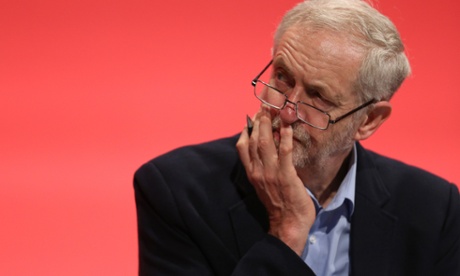
Corbyn wants to assure people they have 'nothing to fear' from his leadership, Powell says
Lucy Powell, the new shadow education secretary, has been giving a round of interviews this morning about what Jeremy Corbyn will say in his speech. Here are the key points.
- Powell said Corbyn wanted to assure people that they had “nothing to fear” from Labour under his leadership.
I think it is his opportunity to communicate directly with people in their homes this evening on the TV bulletins and I think he’ll want to get across that message that people have nothing to fear from him, they share his values, he shares their values and we are going to go on what is actually quite an interesting and new journey together about how we engage with people and do politics together.
- She said many of Corbyn’s policies would be popular with voters.
The polling on that is clear, that many of the things he espouses and that we as a Labour Party put forward are popular, but people want reassurance that we can run the economy and that we can deliver these policies in a way that doesn’t put the country at risk. I think that’s what he will be seeking to do.
- She said the speech would include proposals to extend maternity and paternity pay for the self-employed.
They are a big growing number of people in our economy and job security for them is very poor, their safety net is very difficult for some of them, yet they are the risk-takers and wealth-creators of our country. I think we are going to see some policy there around maternity and paternity pay for the self-employed.
- She said that the speech would not include lots of policy surprises, but that this was because Corbyn was committed to a new form of politics.
I know that is a bit boring for people because we always want to see the rabbit out of the hat on the new policies, but that is exactly the kind of new approach to politics that I welcome and I think people will welcome too.
He is not trying to go off into a room on his own and develop policies with his advisers. He wants an open and democratic and outward looking approach to policy-making so that is why he has not got fully formed policies that he is going to be announcing today.
- She sidestepped a question about whether she thought Corbyn would lead Labour to victory at the next election. Asked about this, she said:
He’s just been elected leader of the Labour Party, so I’m really not in the business of speculating how long he will last and how successful he will be. I wish he will be successful.
- She said all sides in the party had “a part to play” in developing policies for the next election.
Things are very volatile in politics, things are changing quickly. The balls have been all thrown up in the air in the Labour Party by Jeremy’s victory, and I’m pleased to play my part in trying to bring those balls back into play and set out our stall ahead of the next general election.
But we’ve got a long way to go, we’ve got time to do that - it’s nearly five years until the next general election. So we can all work together, we’ve all got a part to play in working together to develop that policy, those values and our vision for the country ahead of the next general election.
I’ve taken the quotes from the Press Association and PoliticsHome.

Updated
We’ve got a full morning of conference events to come, but there is only one event that really matters today - Jeremy Corbyn’s speech to the conference at leader. That will take place soon after 2.15pm. I will be covering the build up and the speech itself in great detail, as well as bringing you all the best reaction and analysis.
Some extracts have been released in advance. Here’s Patrick Wintour’s preview story, and here’s how it starts.
Jeremy Corbyn will tell the Labour party conference that he loves his country, shares British majority values and wants to forge a gentler politics in society.
In his first conference speech as party leader, Corbyn will say on Tuesday he was elected to lead Labour because he offered a kinder politics and a more caring society.
He will say: “It is because I am driven by these British majority values, because I love this country, that I want to rid it of injustice to make it more fair, more decent, more equal.”
He will also try to challenge preconceptions by promising to become the champion of the self-employed, suggesting they should have full access to statutory maternity and paternity pay. He will say all too often the current welfare state does not act as a safety net for the growing numbers classified as self-employed.
Corbyn’s avowal of his love for his country will be seen as a riposte to criticisms following his decision not to sing the national anthem at the Battle of Britain commemoration ceremony.
And here’s the agenda for the day.
9.30am: Conference opens. Stella Creasy speaks on behalf of the Co-operative party.
9.45am: Debate on living standards and sustainability, with speeches from Lisa Nandy, the shadow energy secretary, Kerry McCarthy, the shadow environment secretary and Lilian Greenwood, the shadow transport secretary.
10.45am: Jonathan Ashworth, the shadow minister without portfolio, speaks on taking the fight to the Tories.
10.50am: Jim McMahon, leader of Oldham council, gives a speech.
11am: Debate on stronger, safer communities, with speeches from John Healey, the shadow housing minister, and Jon Trickett, the shadow communities secretary.
2.15pm: Jeremy Corbyn gives his speech.
7.30pm: John McDonnell, the shadow chancellor, is interviewed by the Guardian’s editor-in-chief, Katharine Viner. This is a Labour conference fringe event. It was organised at short notice, and so it is not in the official fringe programme, but people attending the conference are welcome. It is in room GB2 in the Grand Hotel, Brighton.
If you want to follow me on Twitter or get in touch, I’m on @Andrew Sparrow.
Updated