The Labour MP Jon Cruddas has said that the party must now “go to some dark places” and be brutally honest with itself about why it lost. It doesn’t have to venture far; the dark places are sinkholes all around it.
Headlines screaming that evil union bosses are holding the party to ransom can be put down to terrible rightwing media, the usual running down of our sacred trade union history, a failure to acknowledge millions of workers – or they could be the cold, hard truth.
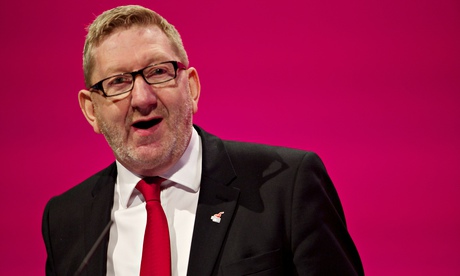
As long as the Labour party is dependent on funding from the unions we will have figures like Len McCluskey, with his dreams of Cuba, threatening to withdraw financial support if Labour doesn’t choose the leader he wants. What McCluskey’s mandate actually is in deciding these things is open to debate; possibly all Unite members are furiously engaged in discussion about who the “change candidate” is, whatever that means.
In all the rethinking Labour needs to do, its relationship with the unions is key. Marriage is the metaphor always used, but it is a marriage in which the breadwinner slaps the pay packet on the table in return for controlling exactly what happens both inside and outside the house – and marriage doesn’t really work like that any more.
Trade unions safeguard the rights of ordinary people in the workplace. Where they have modernised they have done so brilliantly, but it cannot be denied that casualisation, outsourcing and the loss of manufacturing mean that they are not the big beast they once were. About a quarter of us belong to unions now, a marked decline since the late 1970s, when half of all workers were unionised. Thatcher of course made a concerted attack on union power in the 1980s. This continues but there have been glimmers of hope, with a slight rise in membership in private sectors such as retail, and real efforts to unionise call centre workers. Nonetheless those most in need of unions are the least likely to join them – the young – and thus we have a union membership that is ageing. This isn’t surprising when so much union activity is conducted in a vocabulary that belongs to another era.
The influence of the unions on Labour’s leadership is not just about money but also the actual delivery of democracy within the party itself, which remains archaic as well. The relationship is economically determined of course: the Tories are bankrolled by business, bankers and billionaires and Labour out of the wages of “ordinary people” – but often those ordinary people do not choose or understand exactly what their affiliation with the party is.
There are real worries that without keeping union leaders on board the Labour party will not even be able to fund the next general election. This is more than an existential crisis or tedious argument between old and New Labour; it is a crisis of democracy within and without the party. It goes to the core of what Labour means now.
Ernest Bevin remarked in 1935 that Labour “grew out of the bowels of the trade union movement”. If it now has any stomach left it will call McCluskey’s bluff. It cannot hold this marriage of the unions and Labour together forever for the sake of the children. The children fled the nest a long time ago.