The two main parties remain neck and neck in the battle for Downing Street, with the latest Opinium/Observer poll putting both Labour and the Conservatives on 33%.
The polling, carried out following Thursday’s leaders’ debate on ITV, also confirms the widely held perception that the SNP’s Nicola Sturgeon put in the best performance on the night but that it has not had any significant impact on the parties’ electoral prospects. The Liberal Democrats are on 7%, Ukip 14% and the Greens 7%, according to Opinium. The SNP are on 4%, up one point from last week.
All the leaders achieved positive marks for how they performed in the seven-way debate, with the Green party’s Natalie Bennett coming closest to a negative mark – 24% said she was out of her depth and 29% said the Ukip leader, Nigel Farage, did badly.
Ed Miliband has enjoyed a particularly significant boost to his personal polling, however. The Labour leader has seen a six-point rise on last week, up from -21% to -15% (29% approve, 44% disapprove) with his net rating among Labour voters rising from +53% to +59%.
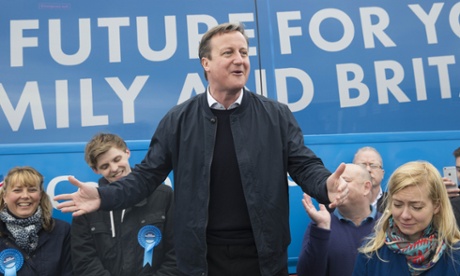
David Cameron’s approval rating is largely unchanged at +1% overall; both approval an disapproval have seen a one point rise.
Nick Clegg, the Lib Dem leader, remains the least popular of the major party leaders but he too has seen a rise from -40% to -30% (21% approve, 51% disapprove) while Farage has seen a jump from -24% last week to -13% (32% approve, 45% disapprove) this week.
Lib Dem voters are utterly split over what their party should do in the event of a hung parliament, it has also emerged. Between 40% and 45% would support going into coalition with whoever is the largest party but one in five want to return to opposition and a quarter would favour a confidence-and-supply agreement whatever the outcome may be.
The Lib Dem voters are predictably much less keen on joining the second largest party in a coalition, with 28% saying they should join Labour in a coalition if the Tories have more MPs. One in five (20%) say they should join the Tories in coalition if Labour are largest.