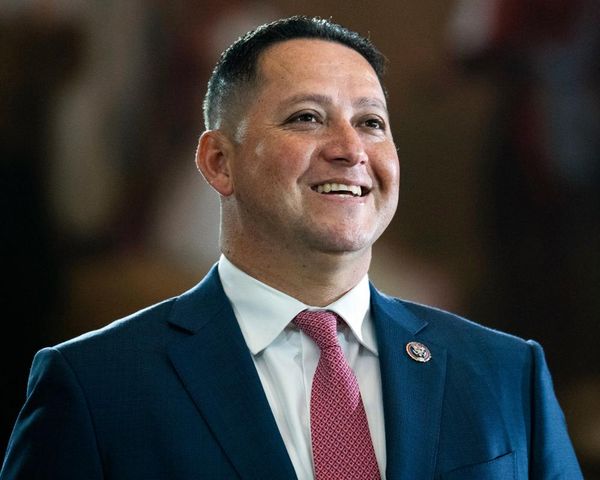
The shadow assistant treasurer, Andrew Leigh, has refused to rule out Labor clawing back small and medium business tax cuts after the next election.
Meanwhile, the treasurer, Scott Morrison, has said the government is “absolutely committed” to its full $48bn tax plan. He has called on Labor to clarify whether it will keep the tax cuts and how it will make up a $4.3bn shortfall in its costings caused by the passage of the deal.
On Friday the government passed the first phase of its company tax cut package with support from One Nation and the Nick Xenophon Team, the latter secured with a deal that included $260m worth of one-off payments for pensioners.
The business tax cuts will cost the budget $24bn over the medium term, half the $48bn over 10 years for the full package.
In an interview on Insiders on Sunday morning, Morrison noted that since the first phase of tax cuts had passed, Labor would now have to address a $4.3bn shortfall it had planned to save by opposing tax cuts for small and medium-sized businesses.
“They are now $4.3bn worse off in the current budget forward estimates and they’re some over $20bn worse off over the medium term.
“So Bill Shorten now needs to decide whether he is going to increase taxes on small and medium-sized businesses or he’s going to stand by his promises for higher spending.”
On Sky News Leigh said in a “perfect world” Australia would lower its company tax cut but net debt had nearly doubled since the Coalition was elected in 2013.
Leigh said that government modelling showed that households would get just a 0.1% increase in income from the full company tax cut if it was financed by an increase in personal income taxes.
“The government’s best numbers are very small impacts on growth – a 1% growth gain and a 0.1% household income gain – from the full package.
“We’re looking at something that is roughly half the size of the total package.”
Asked if Labor will tear up the company tax cuts, Leigh repeatedly refused to rule the option out.
He said Labor will decide whether to roll back the tax cuts before the next election, adding it would consider the impact on Australia’s Triple A credit rating which he said was a “bigger concern to a lot of businesses than a company tax cut”.
Asked whether business needed certainty, Leigh said “what business needs is a sense that the alternative government takes policy-making seriously” and that Labor had not formed policy in deals with One Nation or Xenophon.
“Our obligation is to get the policy settings right, since May last year we’ve been absolutely clear we would support a company tax cut for businesses up to $2m, but we didn’t feel the budget could bear a higher company tax cut.”
Morrison said the tax cut for businesses earning up to $50m a year was “stage one” and “delivers in full all the tax cuts we said we would be delivering in this term of parliament”.
“We will present the further phase of our enterprise tax plan to the Senate when we are in a position to believe we can pass that,” he said, adding that the government remained “absolutely committed” to the full $48bn plan.
Although the still-unlegislated big business tax cuts are not due to come in until after the next election, Morrison held out the possibility of pushing them through in this term, saying he was “encouraged by the progress we were able to make this week”.
“If the Senate is in the position to look at this before the next election, we will be more than happy to bring these things forward.”
Asked about estimates that the full plan would generate a cumulative 1% increase in GDP over 10 years, Morrison was not able to say what the benefit of the first phase over three years would be, simply repeating it was committed to the full plan.
In an interview on Sky on Sunday, the Business Council of Australia chief executive, Jennifer Westacott, said the company tax cuts were a “significant victory” for the government but revealed there is no separate modelling to explain what the benefit of tax cuts for small and medium businesses will be, shorn of the big business tax cuts.
Westacott called for the full tax cuts to be passed, or else there would be a “two-tiered” tax system, with small and medium businesses enjoying a 25% tax rate compared with 30% for big business.
“We’ll continue to work with the Senate to drive hard the point that big businesses ... need to export, they need to be competitive globally if we are to grow wages in this country, if we’re to expand, if we’re to employ more people.”
Westacott challenged Labor to produce it’s alternative plan and explain why company tax cuts were a priority when it was in government but it now opposed them.
She said that Labor accepted that business investment was “the lowest its been for some time”, that investment drives productivity and productivity drives higher incomes.
Leigh told Sky that Labor’s productivity plan was to invest in education, infrastructure and broadband.