From earliest times, products traded and sold have been distinguished in various ways, from the shape of vessels to makers’ unique marks scratched into clay jars, pasted on crates and printed on sacks. In some cases, these marks provided a tremendous amount of information. Labeling provides an easy way to keep tabs on what packages contain, a fact that has become more important as regional and global trade has grown through the years. As labeling has increased, so has its complexity: from glued-on paper lithographs in the 1880s to today’s world of labels made of recycled materials and embedded radio-frequency chips.
A good vintage
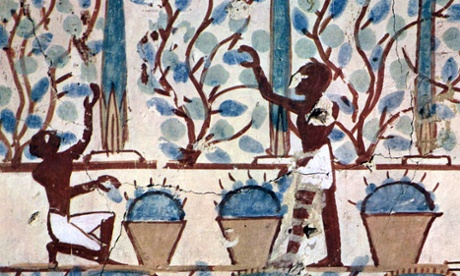
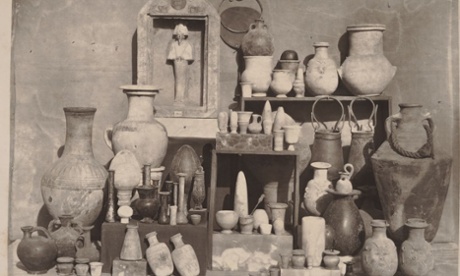
Wine jars believed to have belonged to King Tutankhamen (1332BC-1323BC) were found marked by the name, the year of harvest and even the vintner. These detailed disclosures could meet requirements of some countries’ current labeling laws, according to Adazon USA. For instance, one jar pulled from the boy king’s tomb read: “Year 5. Wine of the house of Tutankhamen, ruler of the Southern-on, l.p.h (in) the Western River. By the chief vintner Khaa.’” A royal sealer of wine is believed to have overseen labeling requirements and mandated a general assessment of quality. According to archaeological evidence, olive oil was likewise labeled, identifying the plantation of harvest and preparation. Merchants in ancient Greece also sometimes marked their jars, though the shape of the pottery itself also identified the contents.
The rise of regulation
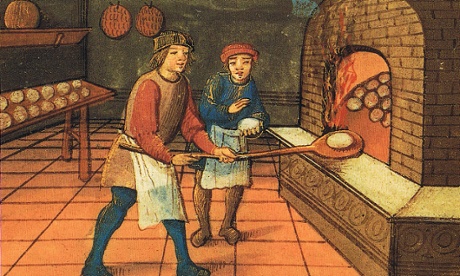
Since most food and drink products were consumed relatively close to their point of creation in the early centuries of trade, labels weren’t as necessary back then. More detailed labeling, however, has followed the development of adulteration laws and proliferation of various taxes. The 13th-century statute known as the Assize of bread and ale, the first law in England to govern the quality of food, prohibited bakers from diluting bread dough with ground peas or beans. Of course, this was back when a loaf of bread was expected to weigh 5.6 pounds. Now, the weight of higher-end breads has shrunken considerably while inclusion of sprouted beans may triple the value of a loaf at some boutique food stores.
Growth of branding
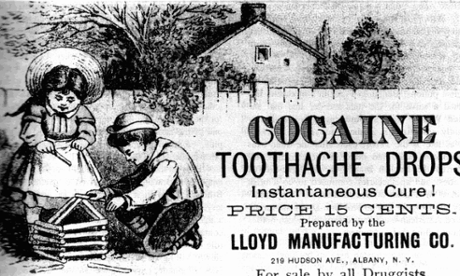
Some of the earliest paper labels in the US involved the identification of pills and tonics sold at pharmacies. These may have included the name of the compound, reminders to shake the product and instructions about how often to take the drug. Various companies in the 1800s also began to explore ways to market their products with the use of color lithographs. These were attached with a gum residue on fruit crates, cigar boxes and other items. Lack of regulations regarding food and drug purity meant exorbitant claims about a product’s supposed beneficial aspects. Companies also were able to avoid disclosing their ingredients entirely or to promote only specific elements, which frequently included alcohol, heroin and cocaine and were often sold for childhood ailments.
Enter “The Jungle”
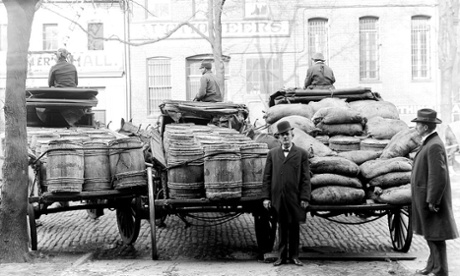
Misleading labels gained increasing attention as interstate trade exploded after the US Civil War. About the same time, a public movement for reliable and safe food and drugs developed, pressing for more disclosure. An all-volunteer “poison squad,” harbinger of Morgan Spurlock’s documentary film Super Size Me, in which Spurlock voluntarily ate McDonald’s for 30 days and documented its ill affects on his health, began publicly consuming tainted foods to demonstrate their impact on human health. Ingredients such as borax, formaldehyde and copper sulfate, popular at the time, were specifically targeted. In 1906, investigative novelist Upton Sinclair published “The Jungle,” a book about the horrors of meatpacking plants in Chicago. The same year, US Congress passed the Federal Meat Inspection Act and the Pure Food and Drugs Act. While the Meat Inspection Act sets standards for all processing plants doing business across state lines, the Pure Food Act took on foods, drugs and liquor. New regulations required new labels.
Making it stick
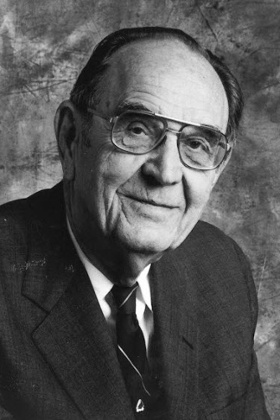
Entrepreneur R Stanton Avery invented the world’s first self-adhesive label in the 1930s. This paper label was given an adhesive backing that rested on a silicone-coated liner. The growth of this new technology was spurred along by the rise of supermarkets in the years following the second world war. Self-adhesive labeling came to dominate the market partly because they made production lines far cleaner and cheaper to operate than when using labels applied with wet glue. Improvements were made in the years that followed, including film label stocks that complemented the growing use of highly flexible plastic packaging. Although Avery passed away in 1997, the company he founded, now known as Avery Dennison, today boasts 25,000 employees and does roughly $6.3bn in sales each year.
Universal codes
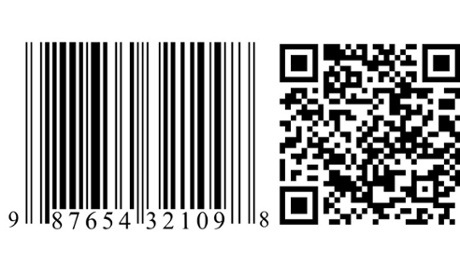
One aspect of labeling that’s become as ubiquitous as self-adhesives was made possible by the rise of information technology. The barcode was born in the mind of graduate student Joe Woodland. The vertical black stripes of varying thicknesses that have come to distinguish one product from another began with Woodland’s concentric circles inspired by the dashes and dots of Morse code. However, because reading the codes required fairly expensive barcode scanners, the technology was slow to take off. Business Week called the game early by running this headline in 1976: “The supermarket scanner that failed.” By the late 90s, PricewaterhouseCoopers estimated that what came to be known as Universal Product Codes were saving the grocery industry alone $17bn per year. By opening the possibility to better track consumer spending habits, the barcode also transformed marketing research.
Exploding technologies
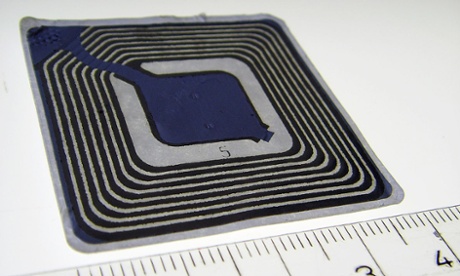
Just as the information revolution enabled the rise of UPCs, the home-computing revolution and rise of inkjet printers radically transformed labeling, most significantly by cutting out the need for commercial printing for low-quantity jobs at home and in the office. Meanwhile, an increasing number of tags and labels today contain radio-frequency identification chips (RFID) that allow companies to collect ever-more information from consumers and help prevent the theft of goods from a company’s supply chain. Related near-field communication chips (NFC) also let companies communicate directly with consumers through smartphones – for example by sharing coupons and ingredient information – and expand a company’s marketing impact. Responding to a rise in consumer concern about global warming, one company recently announced its development of a label containing a carbon dioxide-absorbent material capable of cutting by more than 20% the CO2 released if that label is incinerated.
Labels themselves are embracing the internet of things and becoming more connected. And as online shopping proliferates, labels need to keep pace with ever-evolving needs of retailers and consumers.
Read more about Avery Dennison’s commitment to sustainability. Then join the conversation on our blog.
Content on this page is provided by Avery Dennison, supporter of the Vital Signs platform.