Get all your news in one place.
100’s of premium titles.
One app.
Start reading
Los Angeles Times
Los Angeles Times
National
Hayley Smith

LA County's Bobcat fire splits into '3 heads' in Antelope Valley

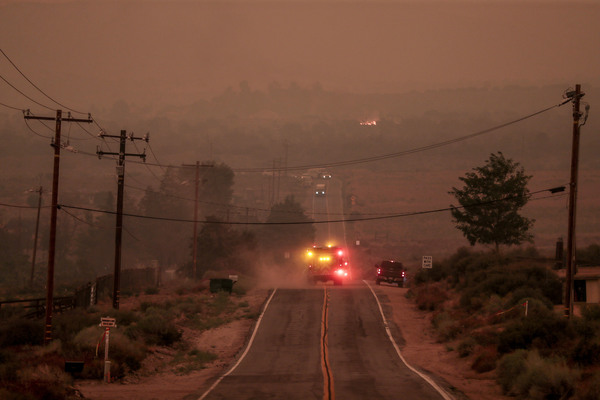
A fire engine drives into air thick with smoke along Juniper Hills Road as the Bobcat fire advances north into the Antelope Valley on September 17, 2020, in Juniper Hills, California. (Robert Gauthier/Los Angeles Times/TNS)

LOS ANGELES _ The Bobcat fire burning through the Angeles National Forest has now split into three "heads" along the foothills of the Antelope Valley, Los Angeles County Fire officials said Friday.

One of the blaze's three fronts is a quarter mile from the parking lot for the Devil's Punchbowl nature area, the second is advancing toward Tumbleweed Road from Cruthers Creek, and the third has jumped Juniper Hills Road at Longview Road, fire officials announced, tweeting that it had "split into 3 heads."

The relentless fire, which started Sept. 6, has now chewed through more than 60,000 acres _ doubling its size in the last week.
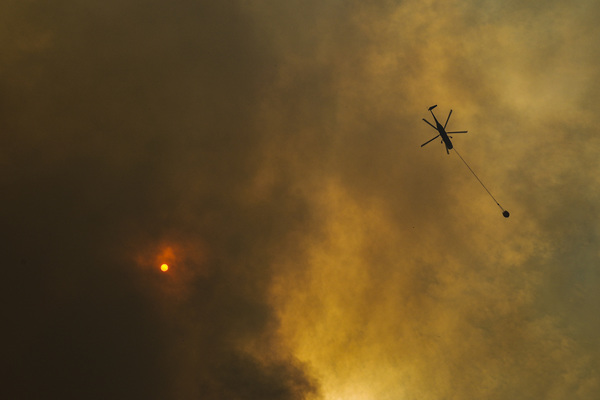
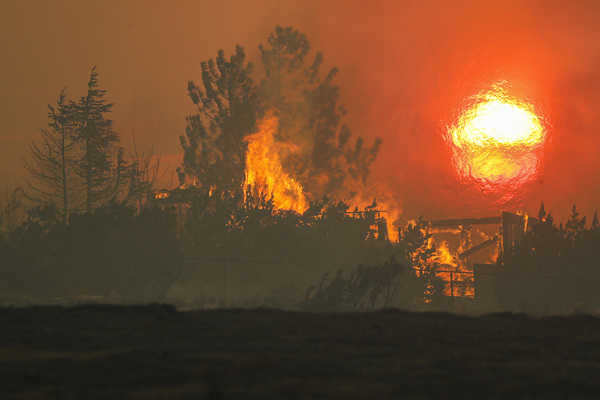
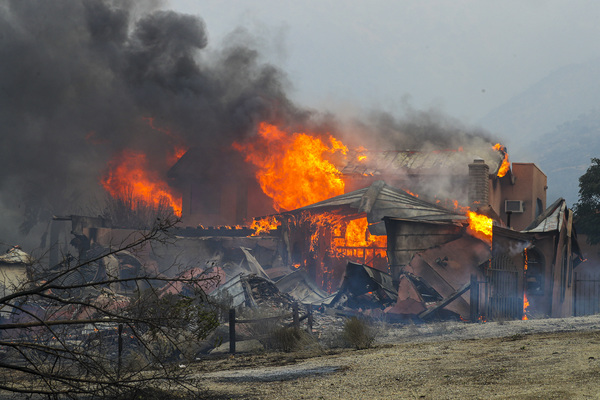
The Bobcat fire, which started September 6, rages in Juniper Hills, California, on Friday, Sept. 18, 2020. Wild fire that has now chewed through more than 60,000 acres, has burned through the Angeles National Forest has reached Foothills of the Antelope Valley in three different locations burning near Devil's Punchbowl nature area, the second is advancing toward Tumbleweed Road from Cruthers Creek, and the third has jumped Juniper Hills Road, on Friday in Little Rock, California. (Irfan Khan/Los Angeles Times/TNS)

Residents in northern foothill communities, including portions of Juniper Hills, Devil's Punchbowl and Paradise Springs, were placed under evacuation orders Thursday as flames moved within just a mile of the area.

New evacuation orders were also issued Friday for residents in the national forest east of Highway 39, south of East Fork Road, west of Glendora Mountain Road and north of Glendora Ridge Road.

"Yesterday we saw the fire expand north, to the west and to a pocket to the east," Angeles National Forest spokeswoman Keila Vizcarra said Friday. "Toward the north end, we have a lot of 'light and flashy' fuels that ignite really swiftly and quickly, which is contributing to its growth."
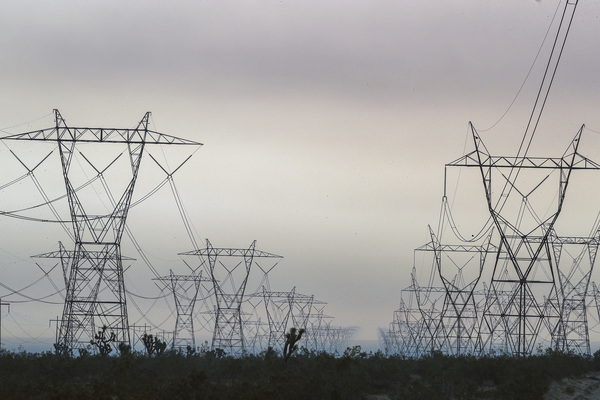
Power lines against smoke from the Bobcat fire in Juniper Hills, California, on Friday, Sept. 18, 2020. (Irfan Khan/Los Angeles Times/TNS)

The Juniper Hills area is home to several ranch houses and consists of low-lying desert terrain, the Forest Service said, which fire crews hope will help rebuff the flames that have been feeding off of the forest's bone-dry vegetation.

Containment lines dug with bulldozers were also laid down Thursday to further protect the community. No homes or structures in the northern foothills have been burned.

Yet the fire's dramatic spread has raised questions about what, if anything, could have been done to prevent it.
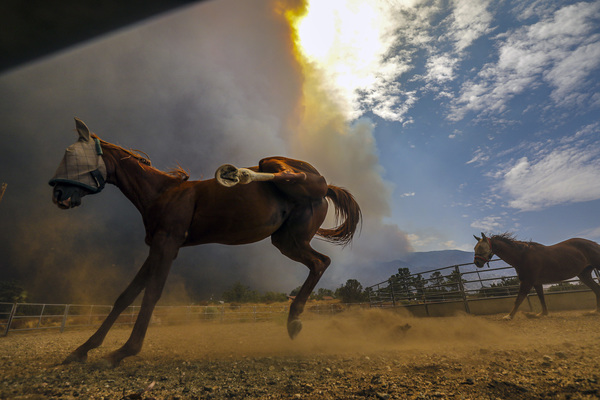
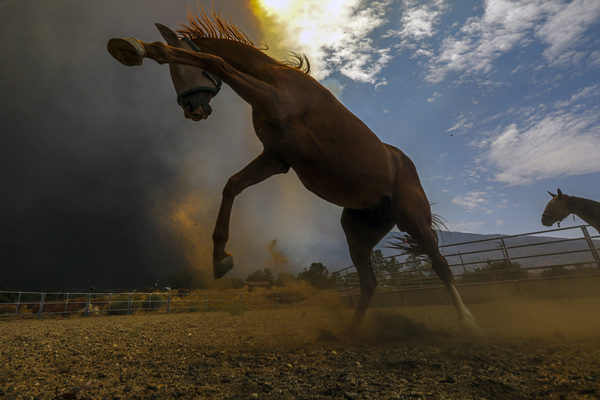
Horses spooked by approaching fire on 106th Street in Juniper Hills, California, on Friday, Sept. 18, 2020. Wild fire that has now chewed through more than 60,000 acres, has burned through the Angeles National Forest has reached Foothills of the Antelope Valley in three different locations. (Irfan Khan/Los Angeles Times/TNS)

Ample fuel, record heat and steep terrain have all been attributed to the Bobcat's ignition and growth. In a meeting with California Gov. Gavin Newsom Monday, President Donald Trump doubled down on criticism that poor forest management contributed to California's wildfires.

"When you have dried leaves on the ground, it's just fuel for the fires," the president said.

But Angeles National Forest is just that _ a national forest _ which means it technically falls under the purview of the federal government and not the state of California.
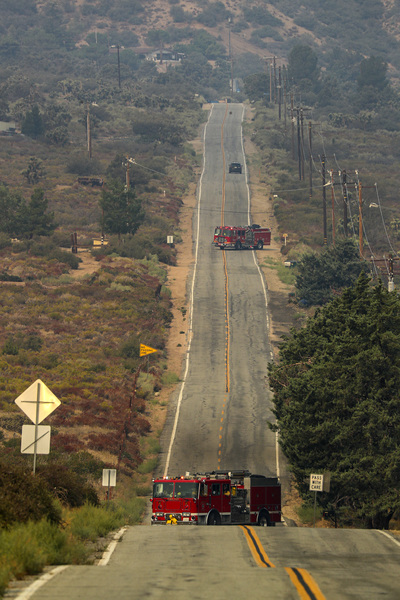
Fire trucks take position on Juniper Hills Road as the Bobcat fire, which started September 6, rages in Juniper Hills, California, on Friday, Sept. 18, 2020. Wild fire that has now chewed through more than 60,000 acres, has burned through the Angeles National Forest has reached Foothills of the Antelope Valley in three different locations burning near Devil's Punchbowl nature area, the second is advancing toward Tumbleweed Road from Cruthers Creek, and the third has jumped Juniper Hills Road, on Friday in Little Rock, California. (Irfan Khan/Los Angeles Times/TNS)

The federal government owns 57% of California's 33 million acres of forests, Newsom said. The state and local governments own 3%, and the remaining 40% is privately owned.

In August, Newsom reached an agreement with the Forest Service in which the federal government will match California's goal of reducing wildfire risks on 500,000 acres of forest land per year.

But for the Bobcat, it may have been too little, too late: the fire ignited just weeks after that agreement was signed.
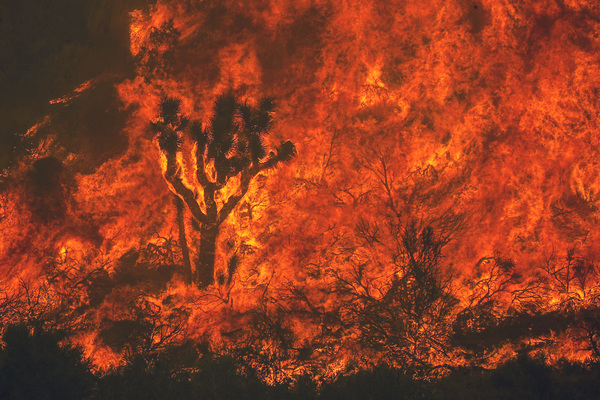
The Bobcat fire, which started September 6, rages in Juniper Hills, California, on Friday, Sept. 18, 2020. (Irfan Khan/Los Angeles Times/TNS)

Vizcarra said the priority for Friday will continue to be the protection of communities on the northern front of the blaze, as well as Mount Wilson, which has been under near-constant threat for days and is home to an important observatory and communication towers.

Weary fire crews, meanwhile, have made significant progress on the southern end of the fire, which jeopardized several foothill communities. With that side of the fire now all but completely contained, the overall containment of the Bobcat blaze rose from 3% on Thursday to 15% Friday, officials reported.

"Right now they are feeling tired, but they're also ready to continue the work that's been done," Vizcarra said, "and they've done a lot of good work already."
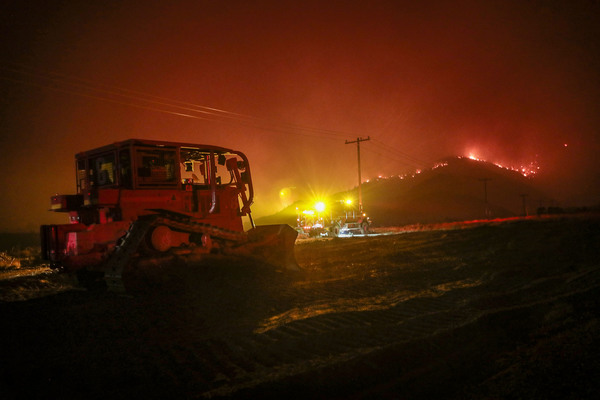
Flames crest a hill a few miles from Juniper Hills Road as the Bobcat fire advances north into the Antelope Valley on September 17, 2020, in Juniper Hills, California. (Robert Gauthier/Los Angeles Times/TNS)
Horses spooked by approaching fire on 106th Street in Juniper Hills, California, on Friday, Sept. 18, 2020. Wild fire that has now chewed through more than 60,000 acres, has burned through the Angeles National Forest has reached Foothills of the Antelope Valley in three different locations. (Irfan Khan/Los Angeles Times/TNS)
The Bobcat fire, which started September 6, rages in Juniper Hills, California, on Friday, Sept. 18, 2020. Wild fire that has now chewed through more than 60,000 acres, has burned through the Angeles National Forest has reached Foothills of the Antelope Valley in three different locations burning near Devil's Punchbowl nature area, the second is advancing toward Tumbleweed Road from Cruthers Creek, and the third has jumped Juniper Hills Road, on Friday in Little Rock, California. (Irfan Khan/Los Angeles Times/TNS)
The Bobcat fire, which started September 6, rages in Juniper Hills, California, on Friday, Sept. 18, 2020. (Irfan Khan/Los Angeles Times/TNS)
Sign up to read this article
Read news from 100’s of titles, curated specifically for you.
Already a member? Sign in here
Related Stories
Top stories on inkl right now
One subscription that gives you access to news from hundreds of sites
Already a member? Sign in here
Our Picks
Fourteen days free
Download the app
One app. One membership.
100+ trusted global sources.