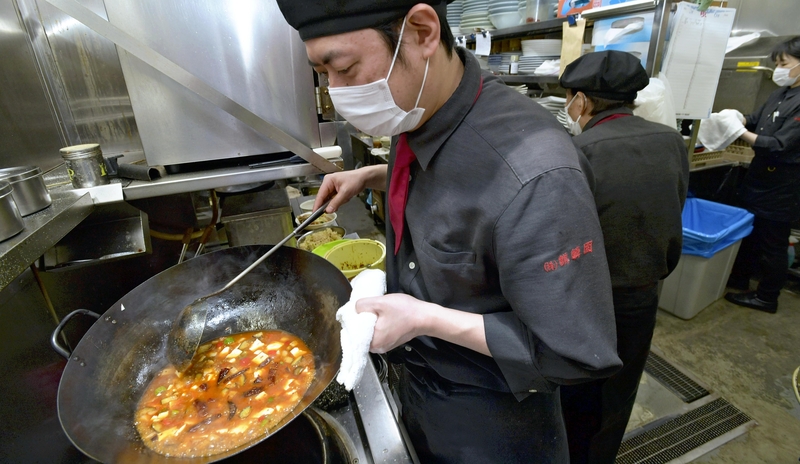
MUKO, Kyoto -- "I can't stop sweating," a 29-year-old woman said as she enjoyed a bowl of hot tantanmen noodles at Kirin-en, a Chinese restaurant in Muko, Kyoto Prefecture.
Out of five levels of spiciness, her soup was at the second-lowest, but it was still bright red. "I can eat really spicy food, but I can't eat this without taking a break," she said, putting down her chopsticks.
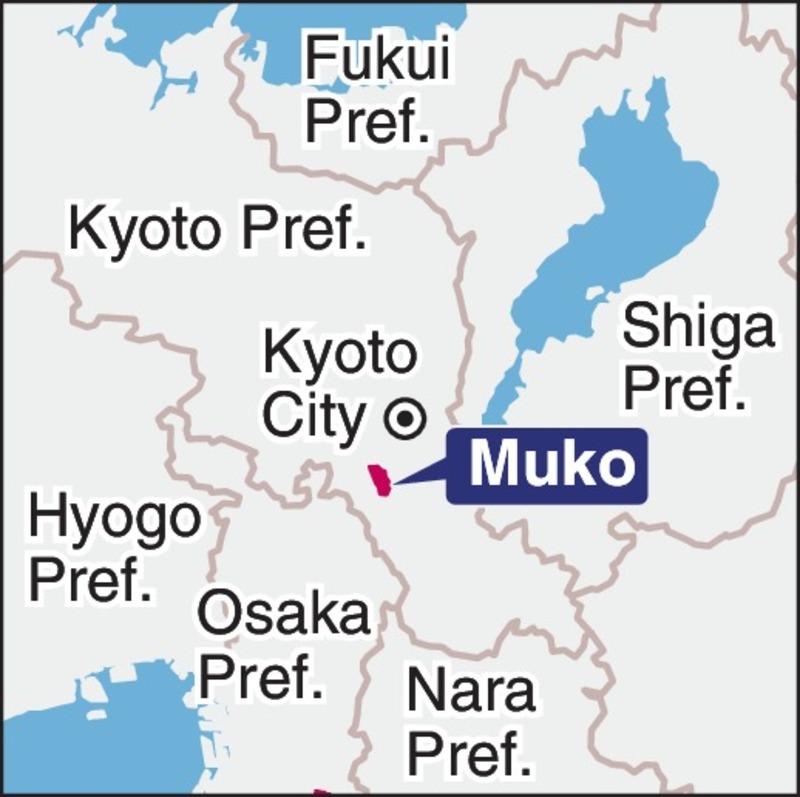
Kirin-en is one of the popular shops in the Kyoto Muko super spicy shopping street. However, Kyoto Muko is not an actual row of shops -- about 60 shops scattered around the city have gathered under the banner of "super spicy," creating a virtual shopping district.
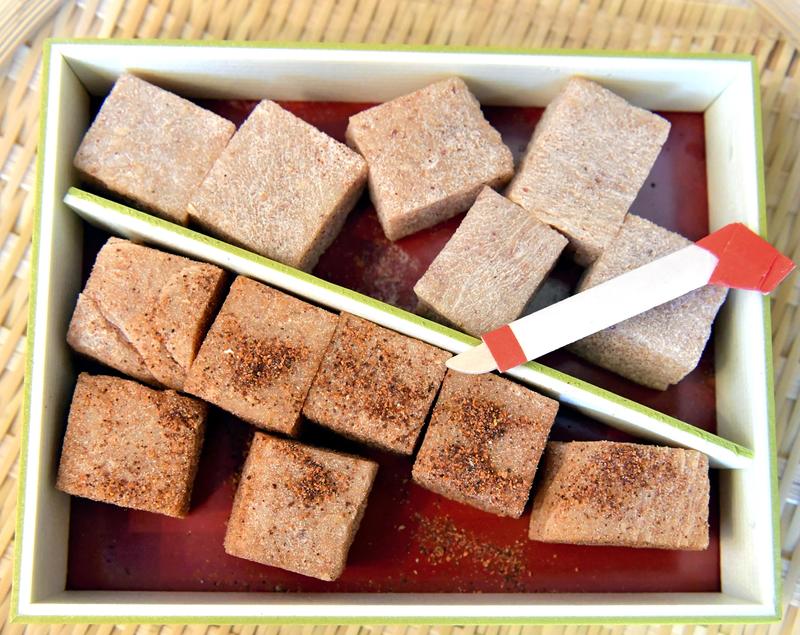
They offer not only the standard curry and mapo tofu, but also crepes with chorizo and spicy sauce. There is also a shop that sells mitarashi rice dumplings.
Ryo Miyaji, 44, the owner of Kirin-en and chairman of the shopping district, said, "Whether you're a devotee who's looking for super spicy food or a person who likes unusual kinds of spicy food, you should be able to find the right kind for you."
The city of Muko does not produce chili peppers and was not traditionally associated with super spicy food. However, about 10 years ago, a large shopping mall decided to move into the city, and shop owners began to feel a sense of urgency. This became a turning point for them.
There were calls to create a unique flavor using local bamboo shoots, but the dishes lacked variation. However, the national bamboo stilts competition, a long-running event in the city, has been held with competitors from far away competing for speed and skill.
Many stilt masters came there from all over Japan, and the stilts had become very popular.
Masaru Isono, 56, a real estate agent who was the head of young members of the city's commerce and industry association at the time, said: "Enthusiasts don't care about distance. Like the bamboo stilts competition, we need to have an outrageous personality that can't be found anywhere else," he said. This is how they arrived at the idea of "super spicy."
In the summer of 2009, a group of 28 shops joined together to launch the "super spicy shopping street." The virtual shopping district has gradually become more and more famous, in keeping with the modern trend of embracing a wide variety of food.
Members of the team have held regular spice workshops and tasting sessions for new spices to make sure that this is not a transitory project.
In 2012, they planned the Kara-1 Grand Prix, a competition for the best spicy food in Japan, and about 20,000 people gathered. It has grown to be the largest event in the city, attracting about 100,000 people. Many stores from the mall have also joined the virtual shopping district to provide a reliable boost for the city.
The number of tourists in the city was about 500,000 in 2018, nearly tripling since 2008.
Hiroki Taniguchi, 42, director of the city's planning and public relations division, said, "The activities born out of the private sector's flexible thinking have expanded our opportunities to showcase our city's attractions."
However, it is also true that 10 years have passed since the start of the project, and the freshness of the shopping district has waned. In October last year, each of the member shops offered for a limited time to "refresh your stomach and intestines after a hard day's work," offering sour food in a project called the "super sour shopping street."
The spread of the new coronavirus has caused many shops in the shopping district to close or shorten their hours, but once the situation has settled down, "I want to announce a plan that will allow people to get rid of the stress they've accumulated," said Miyaji.
He is working on a plan for a "super smelly shopping street" that will focus on blue cheese and cassava.
Isono said, "The spirit of challenge is the starting point of this shopping district." This is still in the process of evolving as it seeks new stimuli.
A precursor of the gourmet grand prix is the B-1 Grand Prix, a festival of local gourmet food that began in 2006 and has become a popular event attracting hundreds of thousands of visitors every year.
A wide variety of projects based on the B-1 Grand Prix have been held, including the Nippon Nationwide Nabe (hot pot) Grand Prix and the Nationwide Donburi (rice bowl) Grand Prix. There is also the Kanda Curry Grand Prix in Kanda, Tokyo, a fiercely competitive area for curry, and the Tosa Food-1 Grand Prix in Kochi Prefecture. There are also a number of community-specific events such as the B-1 event, which is used to vitalize a town.
"I think the popularity of these projects stems from the fact that we can communicate the unique characteristics of the regions through food, which directly affects their appeal to tourists," said Hiroyuki Hatanaka, an advisor to the organizing body of the B-1.
Read more from The Japan News at https://japannews.yomiuri.co.jp/