KYOTO -- The number of deer and wild boars that have been caught for damaging crops has been increasing every year in Japan. However, about 90% of the animals that are caught are eliminated and it has become an issue because the edible meat is wasted as opposed to being sold.
To vitalize the region and expand sales channels, there have been efforts made within Kyoto Prefecture to find value in wild animals as a new resource.
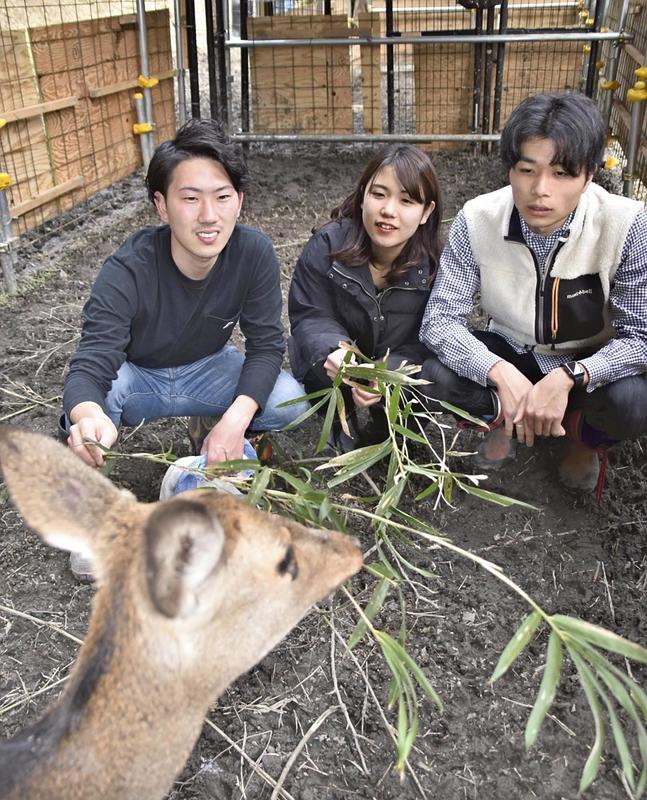
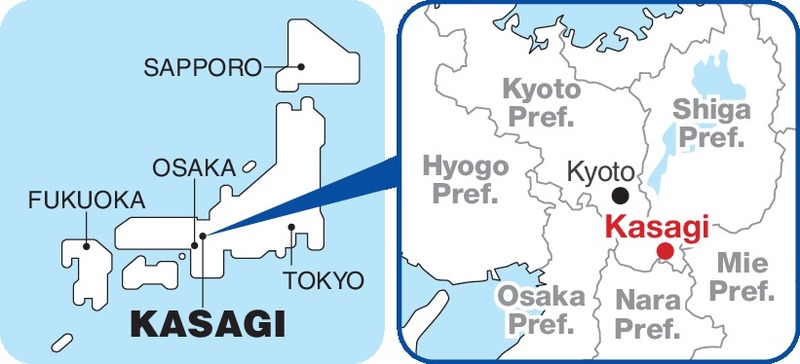
Three young adults who graduated from Ryukoku University in March were feeding a deer that had been caught in the town of Kasagi in the southernmost part of the prefecture. They established a temporary breeding facility to be able to provide a stable source of wild game meat.
The former students became interested in crop damage caused by birds and other animals after attending the same seminar at the university and set up a company to process and distribute wild game meat.
"It's a business relating to nature, so it's a little difficult, but I couldn't rest knowing about the issue of crop damage caused by wild animals," said Daiki Kasai, 22, a representative for the company.
In February last year, they visited a wildlife disposal site in the mountains of Kyotango within the prefecture and saw a pile of deer and wild boar carcasses.
"It's unavoidable if we want to protect our crops," said a local resident, who accompanied them.
They found out that there were not many meat processing facilities.
"We're wasting the lives of these animals just because we don't have the ability to process the meat," Kasai said.
As they prepared to start a business, however, they had to address the peculiar smell and toughness of wild game meat, as well as the difficulty of becoming a stable distributor.
They have been visiting a game meat vendor in Tokushima Prefecture since May last year to learn hunting methods and dressing techniques while creating a business plan, and their business started in earnest in the spring this year.
For their business, the animals are caught in cages without the use of guns and are temporarily raised and fed nutritious foodstuffs, such as tea dregs, to improve the quality of the meat. The meat processing plant is currently under construction and is scheduled to acquire halal certification in line with Islamic law, to be able to expand to overseas markets in the future.
"Our business has just started, but we want to reduce crop damage and create a society where we can continue the circle of life by distributing the animals' meat," Kasai said.
Various ways to process
According to the Agriculture, Forestry and Fisheries Ministry, the number of deer and wild boar hunted in Japan has increased nationwide since the special measures law to prevent damage by birds and other animals enforced in 2008 has encouraged hunting in seasons other than in the winter hunting season.
In fiscal 2018, 1.16 million animals were caught in Japan and the damage to crops caused by birds and other animals was 15.8 billion yen, marking the sixth consecutive year of decline.
The Kyoto prefectural government has strengthened its countermeasures by extending a hunting period and setting up protective fences around farmland in recent years. The amount of damage was about 744 million yen in fiscal 2008, a record high, but was reduced to about 274 million yen in fiscal 2018.
The central government is promoting the use of wild game meat as part of a project to subsidize measures to deal with damage caused by birds and other animals. Hunting wild animals to prevent crop damage has also proceeded and most of the wild animals that are caught are then incinerated.
In fiscal 2018, 1,887 tons of wild game meat were processed at more than 600 meat processing facilities nationwide, up 50% from fiscal 2016. Still, less than 10% of the wild animals that are caught are consumed.
However, more meat processing facilities are utilizing wild game meat in a variety of ways. A facility in Kyotanba, Kyoto Prefecture, makes deer and wild boar jerky and sells it as pet food. The Komoro city zoo in Nagano Prefecture feeds its lion deer meat. Some local governments, such as Wakayama and Nara prefectures, have introduced wild game meat for school lunches in an effort to promote dietary education.
"Increased hunting and effectively utilizing wild game meat are inseparable," said an official of the Wildlife Damage Prevention and Utilization Office at the Agriculture, Forestry and Fisheries Ministry. "It is important to eliminate the negative image of birds and other animals and work to convert it into income for agricultural areas."
Read more from The Japan News at https://japannews.yomiuri.co.jp/


.jpg?w=600)