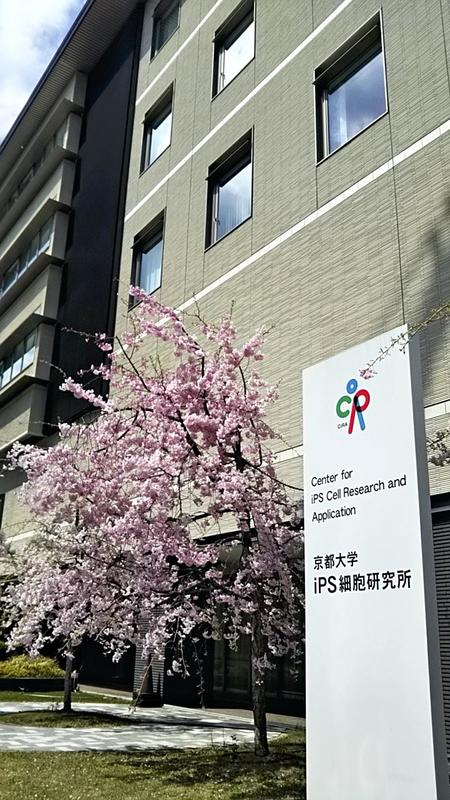
The Center for iPS Cell Research and Application (CiRA) at Kyoto University was founded to study induced pluripotent stem (iPS) cells 10 years ago.
In the past decade, the center has made steady progress in the development of treatments for difficult diseases, but Japan's dominance in the field has been fading.
What does the future hold for the application of iPS cell treatments in Japan?
CiRA Director Shinya Yamanaka celebrated the institute's tenth birthday in a web conference with other CiRA members in April, marking the occasion with a cake and 10 candles. "We couldn't have reached this point without the support of so many people," he said in a video that was released on a website created for the anniversary.
The center was established in April 2010, a second research building was completed in 2015 and a third was finished in 2017.
The main focus of the center's research is the storage of iPS cells created from healthy people -- which is significantly cheaper than creating iPS cells from patients. The center is also involved in the promotion of the medical applications of iPS at research institutes and companies.
So far, CiRA has provided cells to 18 research institutes and companies.
The Center's iPS cell stock was used for the first time in 2017 by Riken to treat age-related macular degeneration, an intractable eye disease. Since then, Kyoto University has transplanted cells and tissue made from stored iPS cells in patients with Parkinson's disease, and Osaka University has done so in patients with corneal disease and severe heart disease.
The government has already approved plans by Keio University to treat spinal cord injury and by Kyoto University to treat knee cartilage damage.
"We couldn't have reached this point without an all-Japan research framework centered around the iPS cell research center," said Osaka University Prof. Koji Nishida, who was involved in the corneal therapy.
The iPS cell storage project costs about 1 billion yen per year, almost all of which comes from the central government. However, the government is only providing financial assistance for 10 years, from fiscal 2013.
It is unclear how the project will be funded from fiscal 2023.
Critics have complained that too much money is being devoted to iPS cell research, and at one point last year funding was in danger of being cut off. Yamanaka even appeared at the Japan National Press Club to talk about the crisis.
Yamanaka decided to create a new public interest incorporated foundation to take over the project, and in April the CiRA Foundation was established. He heads the foundation, which will take over the stockpiling and supplying of iPS cells for medical use, as well as contract companies to produce iPS cells.
Masayoshi Tsukahara is in charge of iPS cell manufacturing at the new foundation. "We want to further improve cell quality based on advice from companies. We also need to work on automating cell cultures to reduce costs," he said.
Japan has been the world leader in the clinical applications of iPS cells, but things are changing, with the United States rapidly becoming a major player.
The startup BlueRock Therapeutics LLC is developing iPS cell treatments for Parkinson's disease and heart disease. A number of other companies have proposed manufacturing immune cells from iPS cells to treat cancer.
The number of iPS related articles published in U.S. journals and patent applications filed in the United States far exceed those published and filed in Japan.
Toshio Miyata, a specially appointed professor at Osaka University who studies regenerative medicine, said, "The speed of research and development in the United States is overwhelming. If the new foundation doesn't get more companies on board and expand the range of applications, they won't have a chance."
Read more from The Japan News at https://japannews.yomiuri.co.jp/