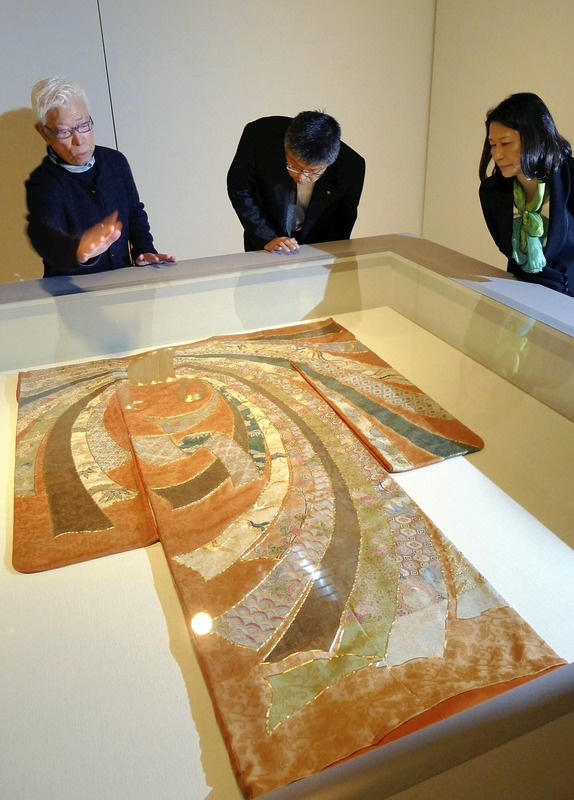
Japanese kimono was at its most resplendent from the Azuchi-Momoyama period (late 16th century) through to the middle of the Edo period (1603-1867). During this time, Kyoto was the origin of the newest styles of kimono fashion.
Kimono have gone in and out of style.
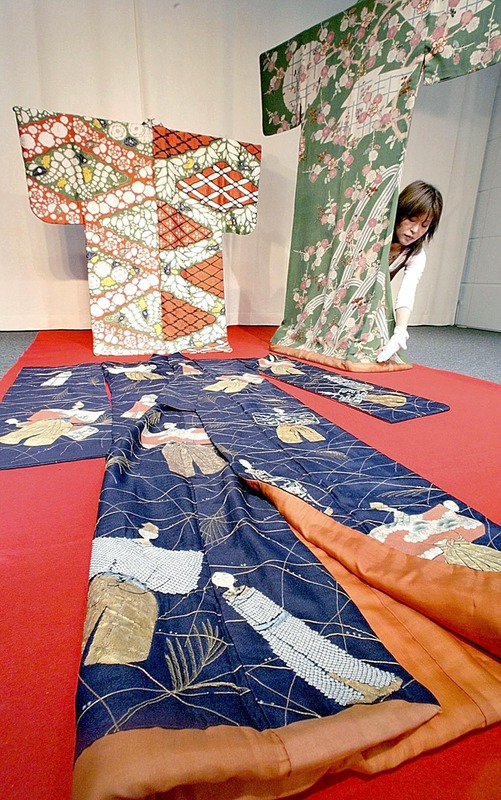
"I have come across traditional clothing from around the world, but kimono stand apart because they changed to reflect the times. The advanced craftsmanship made them works of contemporary art featuring beautiful patterns," said Ken Kirihata, an honorary staff member who was in charge of dyeing and weaving at Kyoto National Museum.
It has been widely said that Western fashion design started when English designer Charles Frederick Worth opened the first haute couture shop in Paris in 1858.
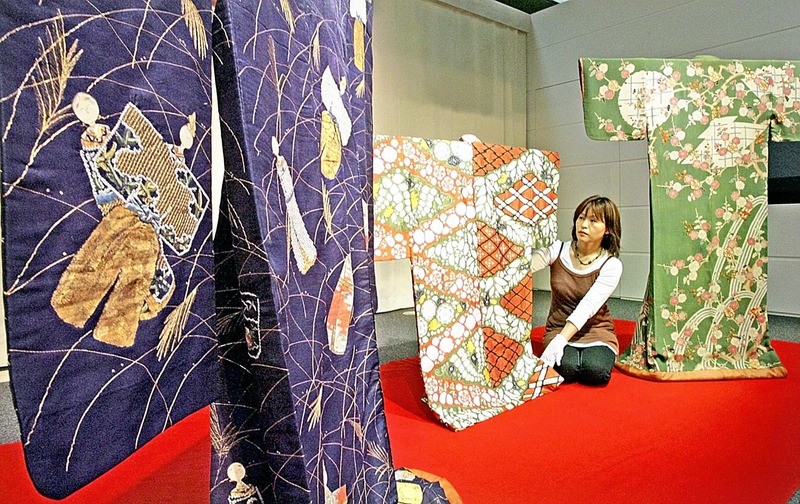
But long before this, "Onna Chohoki," a handbook about treasures for women published in Kyoto in 1692, stated that "all dyeing trends become unfashionable after five to eight years." The fashion cycle we see today has not changed much from the one that existed in the late 17th century.
Women pored over the hinagatabon catalogs showcasing the latest kimono styles. After buying the catalog, it was not uncommon for a woman to select a design she liked and order a kimono from a kimono fabrics shop.
If you get the chance, look through the pages of these catalogs. Each page features a single kimono, shown from the back with the sleeves outstretched. This might seem a little bizarre compared to Western cultures, but the cut of each kimono is the same. Only the patterns are different.
Western clothing is seen from all angles and new styles mainly start by changing the shape. But kimono have more of a flat structure and so designers make changes to the color and pattern. Any changes to its shape are extremely small.
The original meaning for the word "kimono" was "an item that is worn," or "clothing." However, since the introduction of Western clothing to Japan at the end of the Edo period, "kimono" has come to mean "traditional Japanese clothing," to differentiate it from clothes from overseas. Styles have changed through the centuries and kosode short-sleeve kimono took center stage during the Edo period and differs very little from kimono worn today.
Osode kimono, which have sleeves with large openings at the cuff, were originally considered ceremonial clothing and the kosode, which had smaller openings, would be worn underneath. The kosode was basically an undergarment, but as people began to dress more simply, it became outerwear.
The Azuchi-Momoyama period was a time of gorgeous costumes. Surihaku textiles featured embroidery and gold or silver leaf impressed onto the fabric, karaori cloth was decorated with vivid flower-and-bird patterns and the color schemes leaned heavily on shades of red.
The middle of the Edo period saw the emergence of the Yuzen-zome fabric dyeing technique, which is believed to have been developed by Kyoto artist Yuzenzai Miyazaki. The technique enabled designs to be dyed directly on the fabric, much like painting a picture. This allowed for more expressive and delicate designs, and the works of famous artists also could be used for kimono.
During the Shotoku era (1711-1715), kimono featuring the distinctive style of Korin Ogata, an artist of the rinpa school of Japanese painting, became very popular. Ogata was renowned for his abstract decorative designs and simplified birds and flowers.
During the latter part of the Edo period, the tightening economic and societal policies of the shogunate also had an impact on the kimono world. The "Edo refined aesthetic sense" with its muted colors became the norm, and the golden age of the vivid kimono with roots in Kyoto drew to a close.
If you visit an art museum or watch a well-researched period drama, you will be able to catch a glimpse of those gorgeous kimono again.
Read more from The Japan News at https://japannews.yomiuri.co.jp/