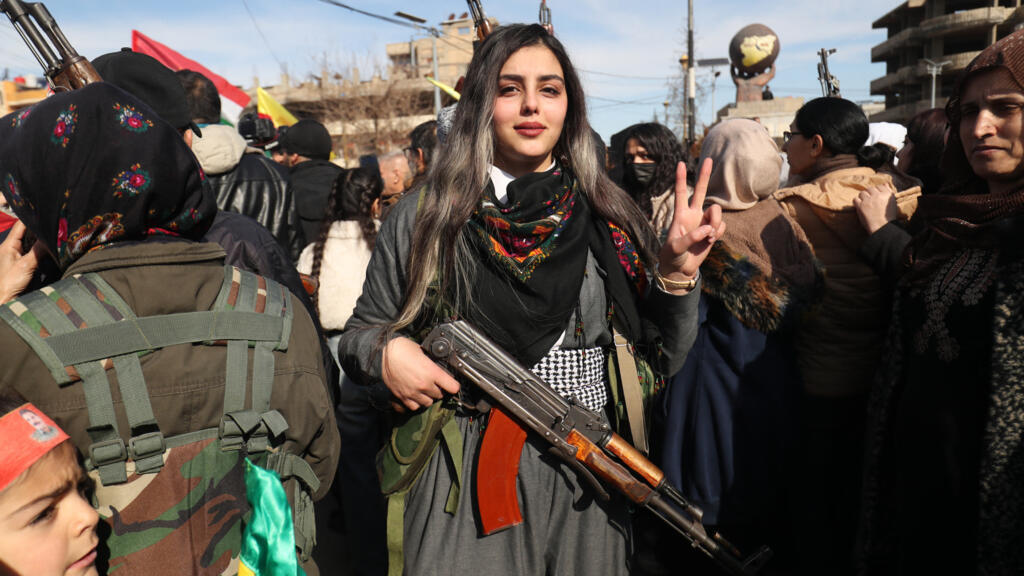
Syrian government forces have seized swathes of territory from Kurdish forces in the north of the country, effectively dismantling more than a decade of self-rule by the Kurds. The head of the Kurdish Institute of Paris tells RFI that the Kurdish-dominated Syrian Democratic Forces, who fought alongside the United States to combat Islamic State, have been not only abandoned, but sacrificed.
On Tuesday, the Syrian Defence Ministry announced a ceasefire with Kurdish forces and gave them four days to agree to integrate into the forces of President Ahmed al-Sharaa – the Islamist military strongman who came to power in December 2024.
The United States, the main ally of the Syrian Democratic Forces (SDF), has urged them to accept.
The SDF has so far resisted joining the central state, and ceasefire negotiations have collapsed.
Syrian government forces have seized swathes of territory from Kurdish forces in northern Syria, driving them out from Aleppo, Raqqa and Deir ez-Zor – effectively dismantling more than a decade of self-rule by the Kurds.
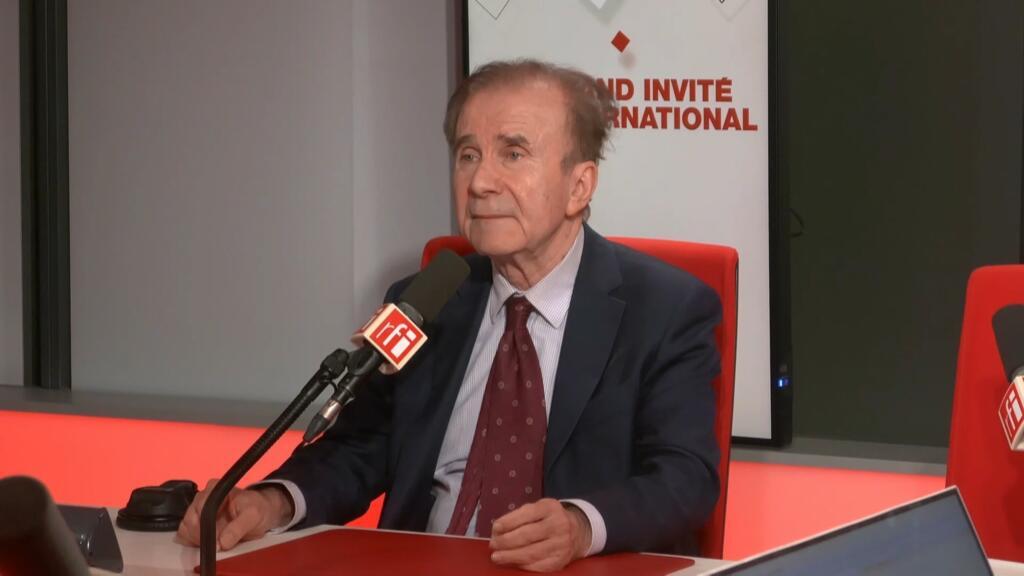
RFI spoke to Kendal Nézan, the president of the Kurdish Institute of Paris, about the latest developments.
Kendal Nezan: Obviously, we are very worried. The offensive began on 6 January, after a deal between President Trump and Turkish President Erdoğan, so with an American green light.
We saw nearly 40,000 militiamen from the Syrian Arab Army mobilised against two Kurdish neighbourhoods where there were around 450,000 displaced refugees. The neighbourhoods have been defended since 2011 by just a few hundred local police. That gives you a sense of the disproportion.
The neighbourhoods were encircled and, after six days of fighting, the Kurds withdrew. Afterwards, under American pressure, they decided to pull out of towns with an Arab majority, which they did. The Syrian army then retook these cities, which had been liberated by Kurdish forces from the grip of Islamic State.
RFI: A four-day ceasefire came into effect on Tuesday night. Could this help bring the current confrontation to a peaceful resolution?
KN: The issue obviously goes far beyond the fate of the Kurds alone. The fate of the Kurds matters because they defended not only their country and their territory, but also Europe, and humanity, against the Islamist scourge. More than 15,000 young Kurds were killed in that fight. They defeated Islamic State and captured tens of thousands of its members, who were held in camps. They have been doing this since 2014.
And how are they thanked? By being handed over to the Syrian regime and told 'listen, your mission is over, find an arrangement with the new Syrian regime', which is Islamist in nature, given that the current leader is a former jihadist.
So what will happen? The Kurds are faced with a dilemma. They are now confined to areas with a Kurdish majority. Either they come to terms with the regime by individually integrating into the new Syrian army, case by case, or they shift into resistance against this regime.
Syria says Sharaa, Trump discuss Kurdish rights as forces deploy in country's north, east
RFI: What is President Ahmad al-Sharaa trying to achieve?
KN: His intention is to establish his authority across the entire territory, with the logistical, diplomatic and political backing of Turkey, his sponsor. That's very important to point out.
And to establish an Islamic Syrian republic that is already in conflict internally. We saw the massacres of Alawites in March and of Druze in July. The Christian community is very worried. Now it is the Kurds.
So after the dictatorship of Bashar al-Assad, we are moving rapidly towards a new dictatorship – this time Islamist. And I say this for Europeans who think the regime will stabilise: such a regime, with so much power concentrated in the hands of one man, will generate a new influx of refugees and will become an Islamist hub.
RFI: So what is happening in Syria will have consequences for Europe and elsewhere?
KN: It will certainly have consequences in the region, and in Europe. It could tip over and become a centre of jihadism, because within the current Syrian Arab Army you have a heterogeneous mix of various Islamist militias – including between 6,000 and 8,000 foreign jihadists.
RFI: Do the events of recent weeks definitively mark the end of the Kurdish dream of autonomy in Syria?
KN: The Kurds are a resilient people. Over the course of their turbulent history, they have experienced setbacks, betrayals and shifting alliances. Definitive end? No.
But for the moment there is an autonomous zone in northern and north-eastern Syria. That zone has now shrunk to almost nothing and will probably no longer exist. The Kurds had in fact established an alternative system that was ecological and feminist, in which all components of the population – Arabs, Assyrian Chaldeans, women, everyone – took part. And we are heading towards an authoritarian regime where there is only the voice of the leader, who has appointed a parliament and rules the country with an iron fist.
What's driving France's sudden deportation of Kurdish activists?
RFI: There was also talk of a repressive Kurdish authority installed in Arab regions. It was not an ideal, democratic system either.
KN: Repressive? Certainly not. But conservative Arab tribes did not agree with the model that was put in place, because women were involved, because there were local councils and democracy, so there was irritation. Now they feel liberated.
One of the symbols of the Kurdish resistance was a female fighter, a statue of a Kurdish woman fighter who had liberated Raqqa. The first thing the current Syrian army did was to pull down that statue of a woman. For them, it's heresy. And they opened prison doors to free Kurdish detainees.
RFI: The issue of controlling the region’s prisons, where jihadists or people close to Islamic State are held, is one of the big questions. The Syrian army accuses the SDF of having opened the doors, notably at Shahdad prison, where 120 Islamic State terrorists were held. Does this mean the Kurdish forces are now playing a dangerous game, using the prisons as their last card, at the expense of security?
KN: The Syrian government is coached and briefed by Turkey, which has an extraordinary mastery of black, negative and deceitful propaganda. If the Kurds had wanted to open the prison doors, they would have done so. They have guarded these prisons for around 10 years.
But on Tuesday, for example, the Kurds withdrew from al-Hol, the largest detention camp in the area, where there are 24,000 relatives of jihadists. The camp was attacked from all sides by drones, by the Syrian army and by the Americans. The international coalition was informed and did nothing. They said 'listen, we cannot, we must first defend our own territories, and then it is up to you'. They no longer have the means to act.
Turkey warns Kurdish-led fighters in Syria to join new regime or face attack
RFI: Do you feel that you've been abandoned by the West, by the Americans?
KN: Yes, we've been abandoned. Ingratitude is, of course, a constant in human and political history. I would even say we've been sacrificed by the allies of the international coalition, the Americans of course. But the others remained silent.
RFI: Would you include the French in that?
KN: The voice of France is inaudible. I may be a little hard of hearing, but France’s voice is inaudible. Have you seen any statements of support for our 'brothers in arms'? That was the expression used by a French minister only recently.
This interview, adapted from the original version in French, has been lightly edited for clarity