Grocery store Kroger announced Wednesday it’s buying family-owned supermarket and pharmacy chain Giant Eagle, which has nearly 200 stores in Indiana, Maryland, Ohio, Pennsylvania and West Virginia - and it could have an impact for local food shoppers.
“We evaluated the opportunity carefully, and the strategic fit is clear,” said Kroger CEO Greg Foran said. “Giant Eagle expands our reach into attractive adjacent markets.”
The merger, which is expected to close in 2027, adds 197 Giant Eagle stores and 11 standalone pharmacies to Kroger’s portfolio of more than 2,700 stores and 2,270 pharmacies.
Kroger’s acquisition comes less than two weeks after Foran, who joined the company in March, said in a June earnings call that Kroger wasn’t “opening enough stores” as “competitors have continued to grow their footprint while we stepped back.”
Some customers expressed excitement on Facebook about the merger. “Kroger is a lot cheaper than Giant Eagle and they have a really great private label for organic foods called Simple Truth. I’m pumped for this,” one noted.
Cheaper groceries may not be ahead for Giant Eagle shoppers, though, because of the merger. Prices could go up in areas where stores don’t face much competition, said Rhode Island Democratic Lieutenant Governor Sabina Matos, whose policy platform includes a focus on grocery regulations that protect consumers and business owners.
She pointed to a 2024 lawsuit between Kroger and the State of Colorado, in which the grocer admitted to raising prices in areas with little to no competition.
“This may not raise prices tomorrow, but allowing just a few firms - especially a notable bad actor like Kroger - to control enormous swaths of the food retail market will inevitably lead to less competition and higher prices in the long term,” Matos told The Independent by email.
The Independent asked Kroger for a response.
Not all experts believe that Kroger will raise its prices, though.
“I do not anticipate an impact on Kroger prices, in part because the competitive dynamics in the marketplace haven’t changed at all,” said Diana Leza Sheehan, a retail expert and principal at business consultancy PDG Insights. “Retailers like Walmart and Aldi are doing a great job of keeping prices in check, and consumers have never had clearer transparency in price comparisons.”
Kroger doesn’t plan to convert any Giant Eagle stores to the Kroger brand, and it doesn’t plan to close any Giant Eagle stores, according to a company spokesperson.
Sheehan is skeptical - store closings are likely, she told The Independent in an email.
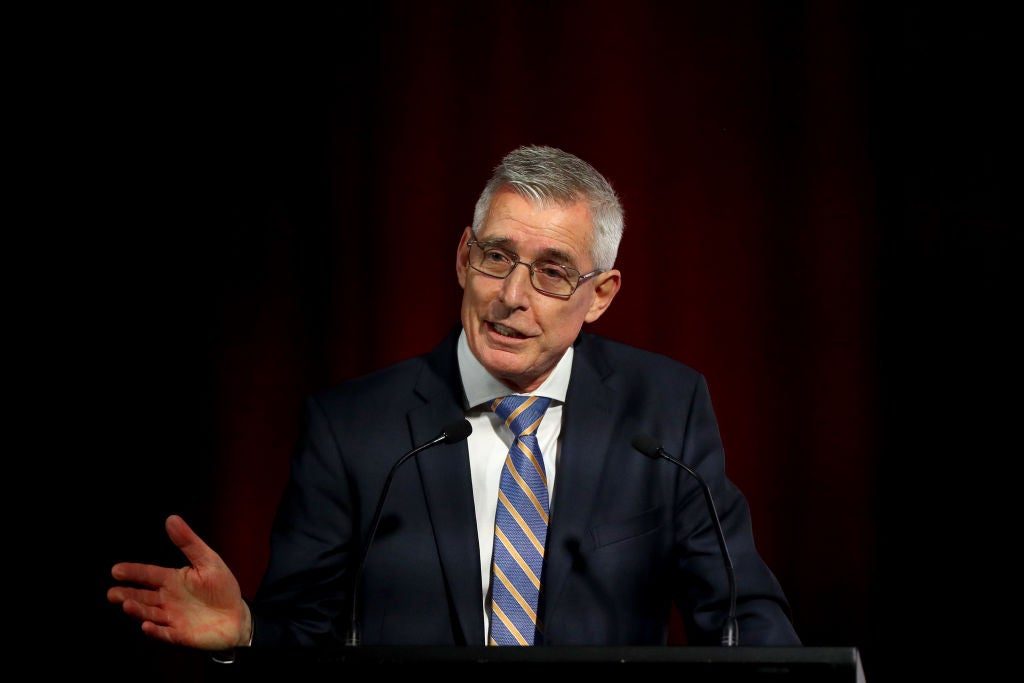
“In the Ohio market, Kroger and Giant Eagle are already competing against each other and will need to reduce outlets in their overlapping footprint,” she said. “Giant Eagle has struggled over the past few years, and Kroger will likely close or sell off stores that they don’t think they can turn into strong, profitable outlets.”
It’s “very reasonable” that 20 to 30 Giant Eagle stores could close, Sheehan said.
Kroger’s decision not to convert Giant Eagle stores to Kroger is on-brand, said Ashish Chaturvedi, executive research leader at business research consultancy HFS Research.
“The company operates entirely through local banners,” Chaturvedi told The Independent by email. “The logic is simple. A name like Giant Eagle carries generations of customer loyalty, and that loyalty is precisely what Kroger paid that hefty price tag for. “
Wednesday’s merger announcement isn’t the first time Giant Eagle’s owners have sold to Kroger.
The “family” that owns Giant Eagle is a group of five families, according to the company’s website. Three of those families started Eagle Grocery in 1918, grew the business to 125 stores, then sold it to Kroger in 1928. Three years later, they partnered with two other families to start Giant Eagle.