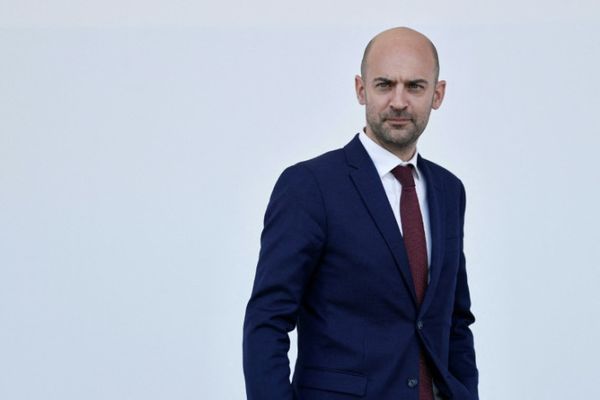
A Korean mathematician has solved one of geometry’s most stubborn puzzles, ending a problem that has challenged researchers for nearly 60 years and earning global recognition for a proof achieved without the help of computers.
Dr Baek Jin Eon, 31, a research fellow at the Korea Institute for Advanced Study, has demonstrated that no shape larger than a previously proposed design can move through a right-angled corridor of fixed width, resolving the so-called “moving sofa problem” that was first posed in 1966.
The problem asks a deceptively simple question: what is the two-dimensional shape with the largest possible area that can be carried through an L-shaped corridor of width one? While easy to visualise, it has resisted proof for decades.
In 1992, mathematician Joseph Gerver proposed a complex curved shape, known as Gerver’s sofa, as a likely solution. However, no one had been able to prove that a larger shape could not exist.
After seven years of work, Dr Baek showed that Gerver’s design was indeed optimal. He published his 119-page proof on the preprint server arXiv in late 2024, concluding that “no sofa wider than Gerver’s sofa can exist”.
Unlike many earlier attempts, Dr Baek’s work relied entirely on logical reasoning rather than large-scale computer simulations.

Describing the long research process, Baek likened his work to repeatedly building and abandoning ideas.
“You keep holding on to hope, then breaking it, and moving forward by picking up ideas from the ashes,” he said in an interview.
“I’m closer to a daydreamer by nature, and for me, mathematical research is a repetition of dreaming and waking up.”
The research has since been named by Scientific American as one of its “Top 10 Math Discoveries of 2025”, an editorial selection highlighting breakthroughs across the field.
The magazine has noted that “while many researchers have relied on large-scale computer simulations to solve for the maximum sofa size, it is surprising that Baek Jin Eon’s final solution does not depend on computers at all”.
Dr Baek’s proof is currently under peer review at the Annals of Mathematics, one of the most prestigious journals in the discipline.
While the review process remains ongoing, confidence in the result is high within the mathematical community.
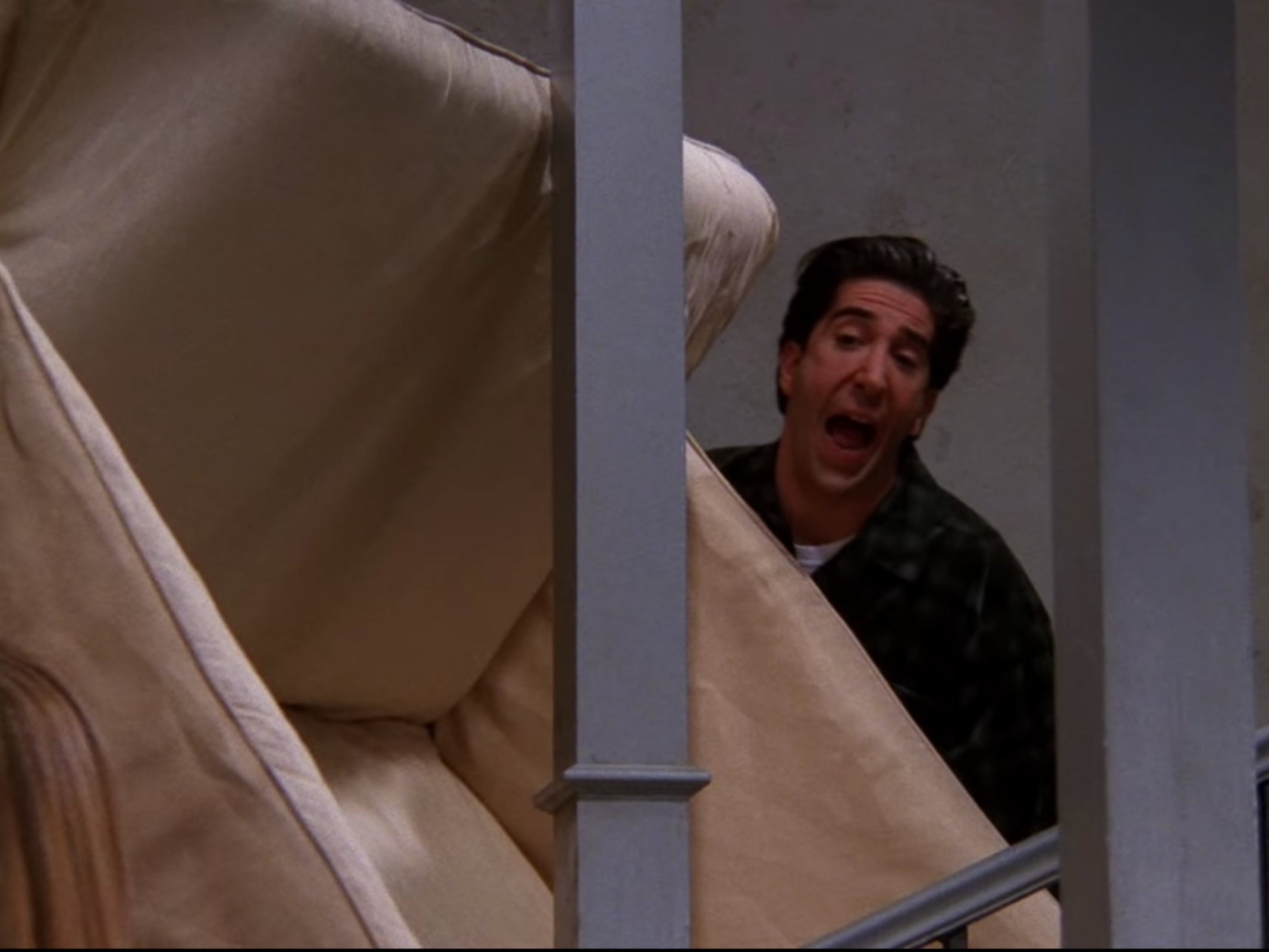
The moving sofa problem has long held a place in popular culture as well as academia, most famously referenced in the US sitcom Friends, where characters struggle to manoeuvre a sofa up a staircase.
Scientific American joked that “explaining the ‘Pivot!’ shouted by Ross Geller required a 119-page paper”.
Dr Baek began working on the problem while serving as a research specialist during his mandatory military service and continued through his doctoral studies in the US and later as a postdoctoral researcher in South Korea.
He was selected last year for the June E Huh Fellow programme, which supports young mathematicians under 39 for up to a decade.
He is now continuing work on optimisation problems and challenges in combinatorial geometry.
This Vietnamese town boomed as factories left China. Now it’s asking what’s next?
What to know about Trump administration freezing federal child care funds
Scientists find remarkable link between healthy teeth and longer life
Inside the quest for the origin of Stonehenge’s Altar Stone
Seven rare species discovered in Scotland in ‘significant’ boost for conservation
New study reveals surprising reason our ancestors didn’t need braces