Komatsu Ltd. has told the Defense Ministry that it plans to halt development of new Self-Defense Forces vehicles because the major machinery manufacturer cannot anticipate making profits commensurate with the high cost of such projects, and maintaining its development and manufacturing arrangements has become difficult, the Yomiuri Shimbun has learned.
It is unusual for a major defense-related manufacturer to cancel such operations, and will likely deliver a stinging blow to the government, which has loudly advocated the maintenance and strengthening of Japan's domestic industrial base.
In fiscal 2017, Tokyo-headquartered Komatsu concluded contracts with the ministry worth a total of about 28 billion yen through central procurement, which does not include procurement directly made by local SDF units. Komatsu ranked seventh among all companies in terms of total contract value, including manufacturers of big-ticket equipment such as aircraft and ships.
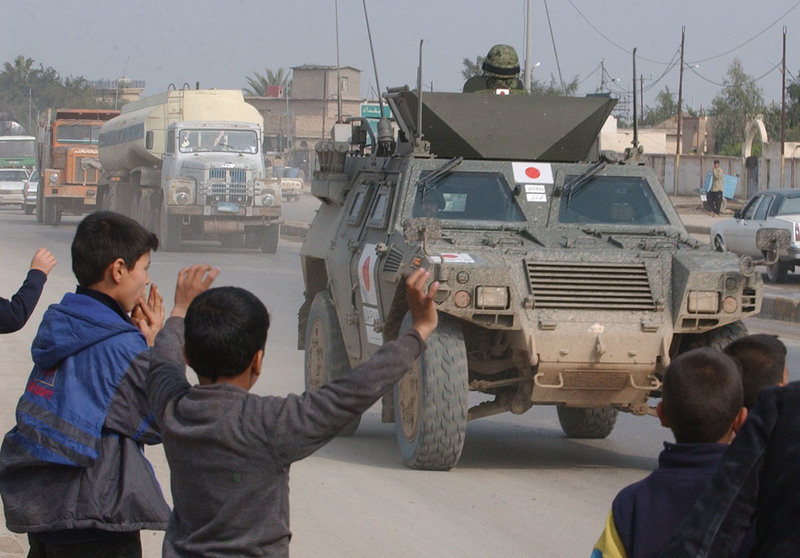
Komatsu developed the Ground Self-Defense Force's first domestically produced armored vehicles, which were deployed in fiscal 1983. It was the largest producer of vehicles used by the SDF when units were dispatched overseas and on other occasions. Komatsu produced about 2,000 of the light armored vehicles deployed from fiscal 2002 and used during the SDF mission in Iraq, in U.N. peacekeeping operations and elsewhere. It has also produced nuclear, biological and chemical (NBC) reconnaissance vehicles designed to detect such materials.
However, overseas dispatches of GSDF units ended when its personnel completed the mission in South Sudan in 2017, and orders for light armored vehicles, which hovered at around 200 units annually during peak years, have slumped. According to sources, the ministry sounded out Komatsu about a plan to remodel the vehicles, but the company decided there was no prospect of making profits that would warrant the development costs.
In autumn 2018, Komatsu notified the ministry that "as long as the current situation continues, we will not develop any new vehicles."
Komatsu reportedly plans to produce NBC reconnaissance vehicles it is scheduled to deliver and continue doing maintenance work on those it has already delivered for a certain period.
Given Komatsu's plan to halt development work, the ministry will consider placing orders with other companies when it introduces new vehicles in the future.
In the national security strategy approved by the Cabinet in 2013, the government defined "defense production and technological bases" as "one of the important factors that support defense forces." The strategy also stipulated the nation will "maintain and enhance its defense production." The National Defense Program Guidelines revised at the end of 2018 laid out a similar plan, and the government started preparing advantageous conditions for companies, such as by using negotiated contracts.
However, even if a manufacturer pours vast sums of money into development, increasing orders is difficult because the customers for the equipment are limited to the Defense Ministry. Compounding this, the manufacturer must keep sustaining advanced technologies and production lines dedicated to these items. Although Japan's defense expenditure itself is increasing, in recent years part of the defense budget has been used to procure large U.S.-made equipment, which has squeezed the budget for other equipment. Some subcontracting companies also reportedly have started to pull out of the industry.
"Komatsu is a big company, but it can no longer afford to devote its limited capital and resources to developing defense equipment," a government official explained.
A Komatsu official said: "At this point, we have absolutely no plans to develop new vehicles. As long as there is no profit for even covering development costs, we can't maintain our development and production base."
A Defense Ministry official declined to comment on the ministry's "correspondence with an individual company."
Read more from The Japan News at https://japannews.yomiuri.co.jp/