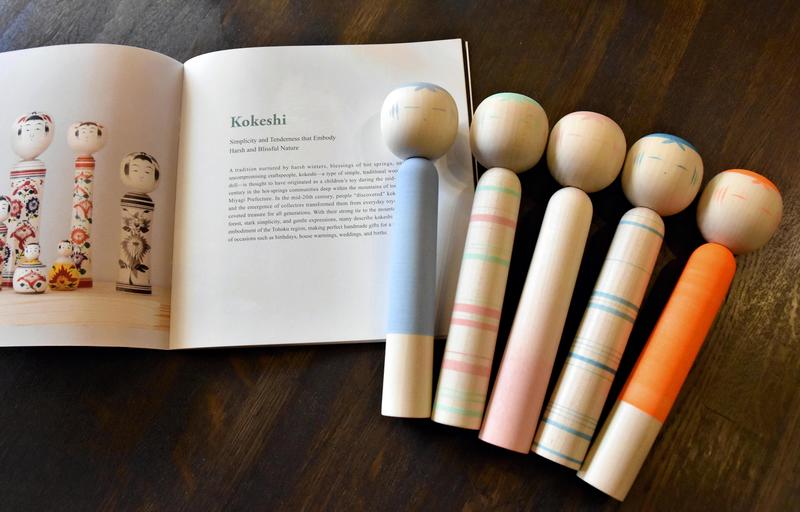
They have cylindrical bodies and big round heads but no limbs -- typical features for kokeshi traditional wooden dolls. But these kokeshi are not typical; with a chic appearance, they have thinner bodies and are painted in unconventional colors such as light blue and pale pink, enhancing the beautiful texture of their surface.
The dolls are part of the Hagoromo series developed by the Sakurai Kokeshi workshop in Osaki, Miyagi Prefecture. The series made its debut at an international trade fair for interior design held in Paris in January last year, at which the maker paved the way for overseas sales channels by reaching deals with British fashion label Paul Smith and a local subsidiary of Japanese stationery shop Mark's.
Kokeshi dolls, a traditional craft of the Tohoku region, are known for their simple, endearing appearance and air of warmth. They have had a fresh spotlight on them since the 2011 Great East Japan Earthquake. The creation of dolls with contemporary, stylish touches like the pastel-hued Hagoromo series, coupled with the meticulous techniques of those who make them, has been drawing interest from people at home and abroad.
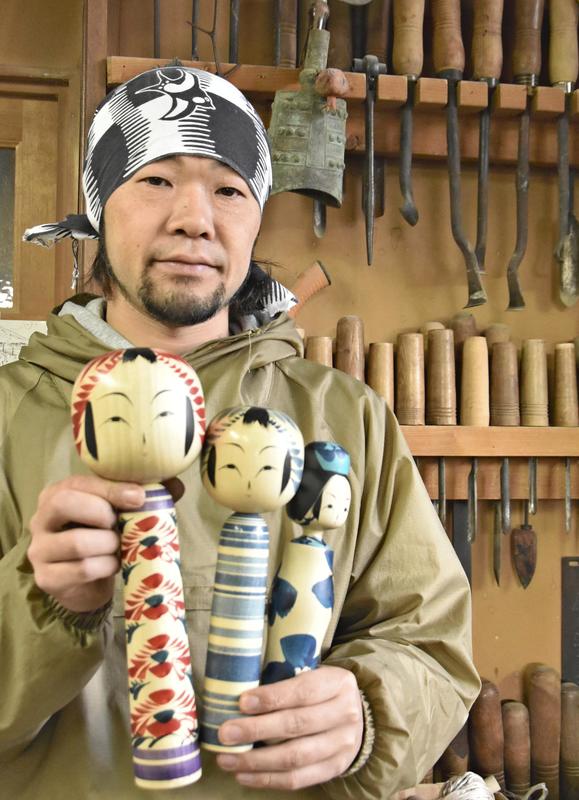
Kokeshi were originally made during the Edo period (1603-1867) as toys. They were produced across the Tohoku region, and today there are 11 distinct styles, with the differences depending on their origin. The Naruko Onsen hot spring resort, where Sakurai Kokeshi is located, is home to one of the styles.
Naruko's production of kokeshi developed to provide souvenirs for visitors to its onsen. However, the community has faced a declining number of visitors in recent years.
"It's prompted us to expand our market," said Akihiro Sakurai, 66, the fifth-generation head of Sakurai Kokeshi. He decided to develop sales channels overseas when his son Naomichi, 29, joined the family business four years ago, after leaving his company job.
The Sakurai family decided to give their products nontraditional colors and modern designs to lure Western buyers. The Hagoromo series has just been made available for the domestic market as well.
The 2011 earthquake triggered a new boom in popularity for kokeshi, as part of support to help the Tohoku region recover from the disaster. A proposal by two buyers for a fashion label helped develop a hit product called Indigo Kokeshi.
The project started in 2013 when Terry Ellis and his wife Keiko Kitamura -- a couple who are the directors of the fennica label for Beams, which operates popular specialty fashion boutiques -- visited two places in Sendai: an indigo dyeing atelier and a kokeshi workshop called Sendai Kiji Seisakujo.
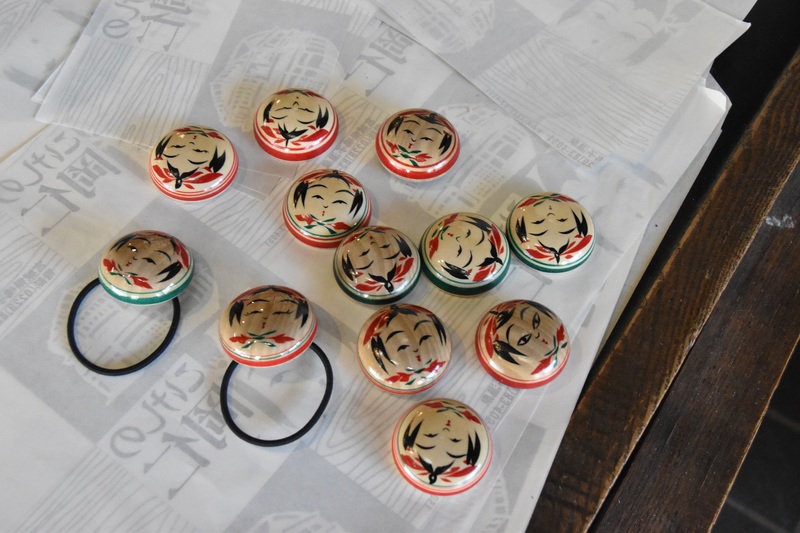
At the workshop, the couple suggested to craftworker Yasuhiro Sato that he use indigo blue for his kokeshi, asking him why no such products existed, even though the color is part of Japanese tradition.
Now Indigo Kokeshi products are sold at Beams Eye, Sendai, Miyagi -- an annual event held in March in Shinjuku, Tokyo -- that features food and craftwork from Miyagi Prefecture. The kokeshi are so popular that visitors form lines for the dolls available at the event.
Sato seemed surprised that his Indigo Kokeshi have turned out to be so popular.
"It may sound a little paradoxical, but I consider [making Indigo Kokeshi] to be doing something old, because I've been given a chance to use the traditional color of indigo," he said. "I hope people not only pay attention to the novel features [of Indigo Kokeshi], but also use this opportunity to learn about the depth [of tradition] and how interesting the Tohoku region's traditional kokeshi are, as different styles have different techniques depending on the place of production."
Well-known designs
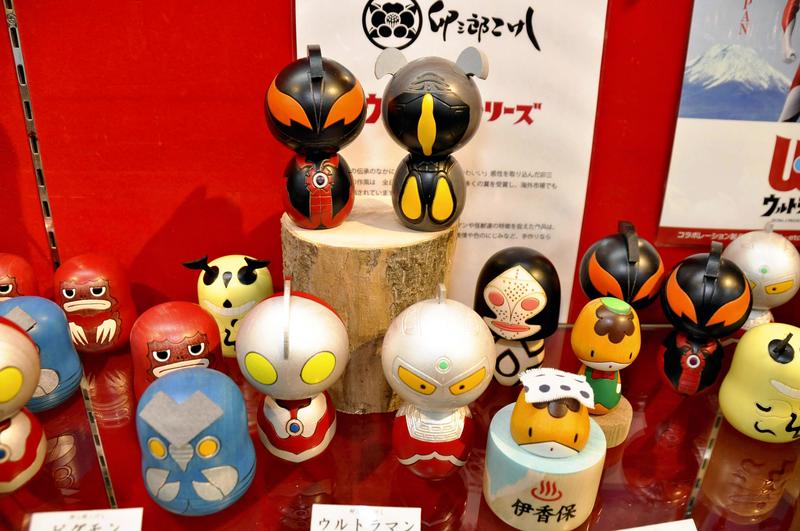
Doraemon, Star Wars characters, samurai, ninja and more -- Usaburo Kokeshi, a workshop in Shinto, Gunma Prefecture, makes dolls free from tradition with such designs, which have particularly fascinated young people.
Unlike the Tohoku region's kokeshi, which have a history of about 200 years, the Gunma Prefecture workshop began after World War II and makes what is called "creative kokeshi."
The maker's signature Okappa Kokeshi series -- in the shape of a girl with a bob hairstyle (okappa in Japanese) -- became popular in Europe about 15 years ago. As a pioneer in promoting kokeshi overseas, the workshop was exporting more than 10,000 pieces a month at its peak.
"We've developed our products by incorporating new elements, while remaining loyal to the tradition of using the lathe for processing wood," said Yuji Okamoto, 69, the second-generation head of the business.
His company started the Character Kokeshi series in 2010 with Miffy the white rabbit. In 2016, characters from the Ultraman series were made into kokeshi to mark the series' 50th anniversary.
Video shows expertise
In the Tohoku region's style of kokeshi production, a single craftsperson completes almost all the steps from beginning to end. Te to Te to Te, a website to promote craftwork items made in Miyagi Prefecture, posted a video showing a kokeshi doll made this way.
The video shows Yasuo Okazaki, a craftsman at Naruko Onsen, shaping a piece of wood on a lathe and applying vivid red paint with a brush while the lathe runs. It has been played 1.4 million times over the past four years on vimeo, a video-sharing site particularly popular among image creators overseas. Many viewers have posted comments in foreign languages, such as "Beautiful work!" and "This is so calming and relaxing."
"I found it surprising how beautiful the footage of my work is," Okazaki said. "I still receive orders from overseas."
Okazaki's products will be sold at the Japan Traditional Crafts Aoyama Square in Minato Ward, Tokyo, from Feb. 23 to March 7. Visit kougeihin.jp/aoyama/ for details.
Indigo Kokeshi will be sold again at this year's Beams Eye, Sendai, Miyagi event in March. Details will be announced at www.beams.co.jp/fennica/
The Hagoromo series can be purchased at Sakurai Kokeshi's website at www.sakuraikokeshiten.com
Read more from The Japan News at https://japannews.yomiuri.co.jp/