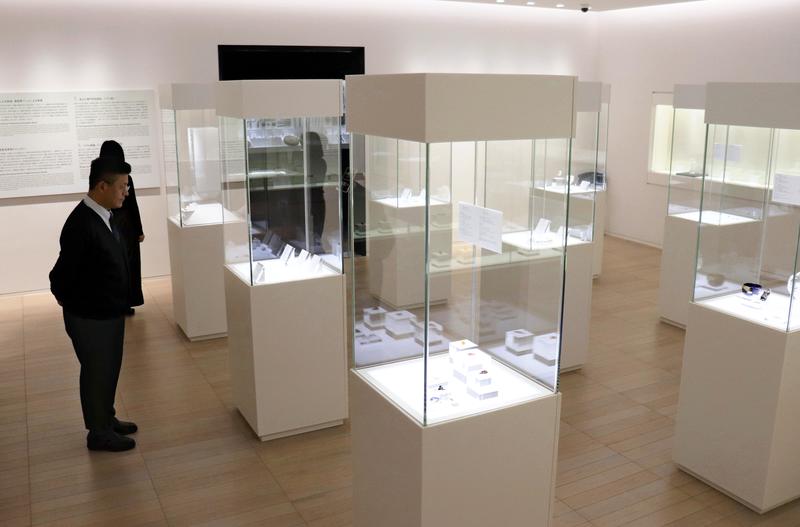
KOFU -- After years in the doldrums, the local jewelry processing industry in Kofu is regaining some of its past luster thanks to online sales, especially to China, and a jointly developed brand.
Yamanashi Prefecture is one of Japan's top jewelry production areas, with many jewelry-related businesses operating there, especially in Kofu. However, the domestic market shrank after the economic bubble burst, and shipments of rings, necklaces and other jewelry in 2017 amounted to 23.9 billion yen -- about one-fourth the level of 1990.
In recent years, local businesses have harnessed the internet to promote overseas sales and banded together to break out of the slump. Now all eyes are on these efforts to get the "city of gems" shining again.
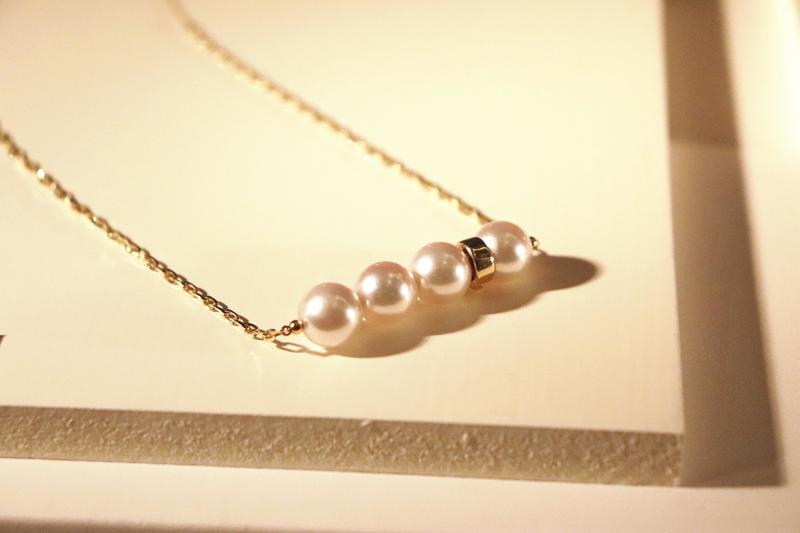
In mid-January, a potential customer bombarded a jeweler with requests during business talks being held in Tokyo. "Could you show me a close-up of that ring?" the customer asked. "Do you have gold pearl earrings?"
The customer was Chinese -- and they were looking at images of the jewelry on their smartphone. The Japanese dealer displayed their products live online, and the client would check the images and then text any questions they had before purchasing items they liked. On this day alone, this jeweler from Kofu racked up sales of about 3 million yen. They reportedly can rake in 10 million yen on really good days.
Selling products this way online, called "live commerce," has become a major sales method in China. With the help of Yamanashi Chuo Bank, which had been trying to support the local jewelry industry, Tokyo-based live commerce operator roctona Co. launched this service in November. The Chinese online sales market is said to be far bigger than Japan's, so Kofu's jewelers have scrambled to get involved.
The 55-year-old president of a Kofu jewelry company who began making trips to Hong Kong five years ago to drum up sales has high expectations for the live commerce approach.
"Sometimes my sales in Hong Kong weren't enough to cover my travel expenses or other costs, so I incurred a loss," the president said. "Live commerce involves lower costs and I can project stable profits. Plus I can find new customers."
Said Hikaru Nemoto, a director at roctona: "Japan-made goods are popular among Chinese people. I think the intricate, beautiful jewelry from Kofu has potential for growth."
As well as pushing sales to China, local businesses are working together in a bid to boost sales elsewhere.
In December, 12 Kofu jewelers announced the launch of a joint brand called SIMPRICH. The expression was coined by combining the English words for "simple" and "enrich," this brand features designs intended to appeal to working women.
A jewelry company president and one of SIMPRICH's founders is excited about the brand's prospects. "By working together locally, we want to breathe life back into the jewelry industry," said the 53-year-old woman.
This project also aims to stop young people from becoming less fond of jewelry, so many items are priced between 10,000 yen and 50,000 yen. The products will be sold online.
Kofu's jewelry businesses rarely sold goods directly to consumers in the past. "They lacked a sales strategy that saw things from the customer's perspective, so they could not reach the entire country," said the chairman of the Yamanashi Jewelry Association.
The goal is to establish a powerful regional brand, like towels made in Imabari, Ehime Prefecture.
"We want to make Kofu a production area where people automatically think of jewelry when hearing the name of the city," the 59-year-old said.
Finely honed skills supporting jewelry industry
Kofu's jewelry industry originated when Yamanashi Prefecture was an area of major crystal production. During the latter half of the Edo period (1603-1867), gem polishing techniques were brought from Kyoto and many skilled artisans put down roots in Kofu.
After World War II, jewelry brands contracted craftsmen there to manufacture products from imported diamonds and metals, and Kofu developed a reputation for being Japan's "top city for gems." The Yamanashi Jewelry Museum, which is attached to the prefectural Institute of Gemology and Jewelry Art in Kofu, exhibits jewelry items under one roof to share their charms with the public.
Techniques honed by craftsmen have sustained the local jewelry industry. "Craftsmen in various fields, such as polishing, engraving, precious metal processing and jewelry design, have stood side by side and competed against each other, resulting in them acquiring world-class skills," said Yoichi Nishi, a professor at the institute.
It is estimated that more than 1,000 jewelry-related businesses operate mainly in Kofu, where they also train young jewelers to ensure the techniques from the past are handed down to future generations.
Read more from The Japan News at https://japannews.yomiuri.co.jp/