You might just possibly have heard the name Kodak before. Let’s face it, Kodak used to be one of the biggest names in the photographic business, the original company being launched all the way back in 1880.
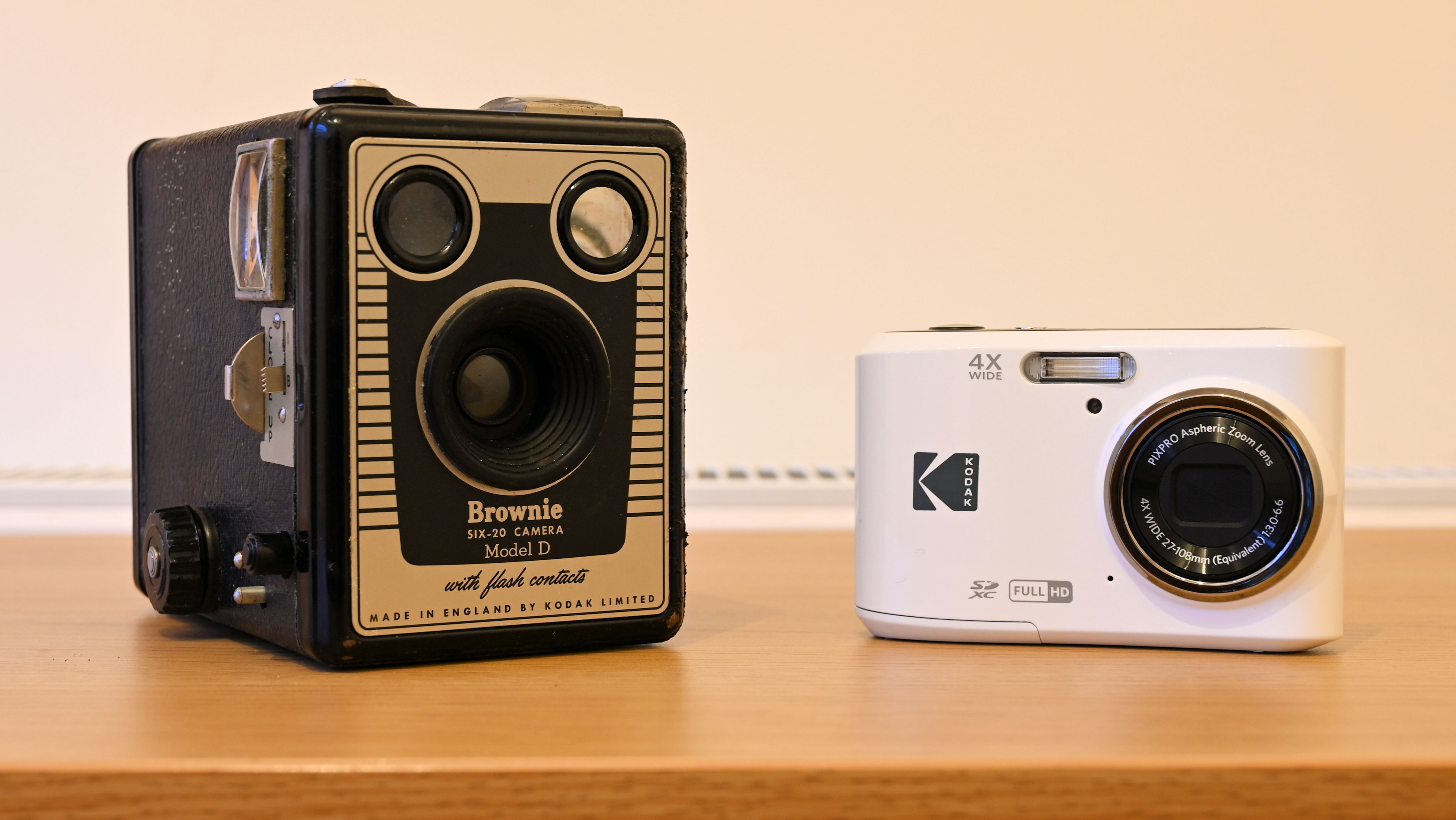
My mind goes immediately to Kodachrome slide film (even Paul Simon sings its praises, literally) and the delights of Tri-X black-and-white film. And let's not forget that the Kodak Box Brownie camera brought photography to the masses, when it was launched back in 1900. Snapshots were born and have been enjoyed by millions for more than a century.
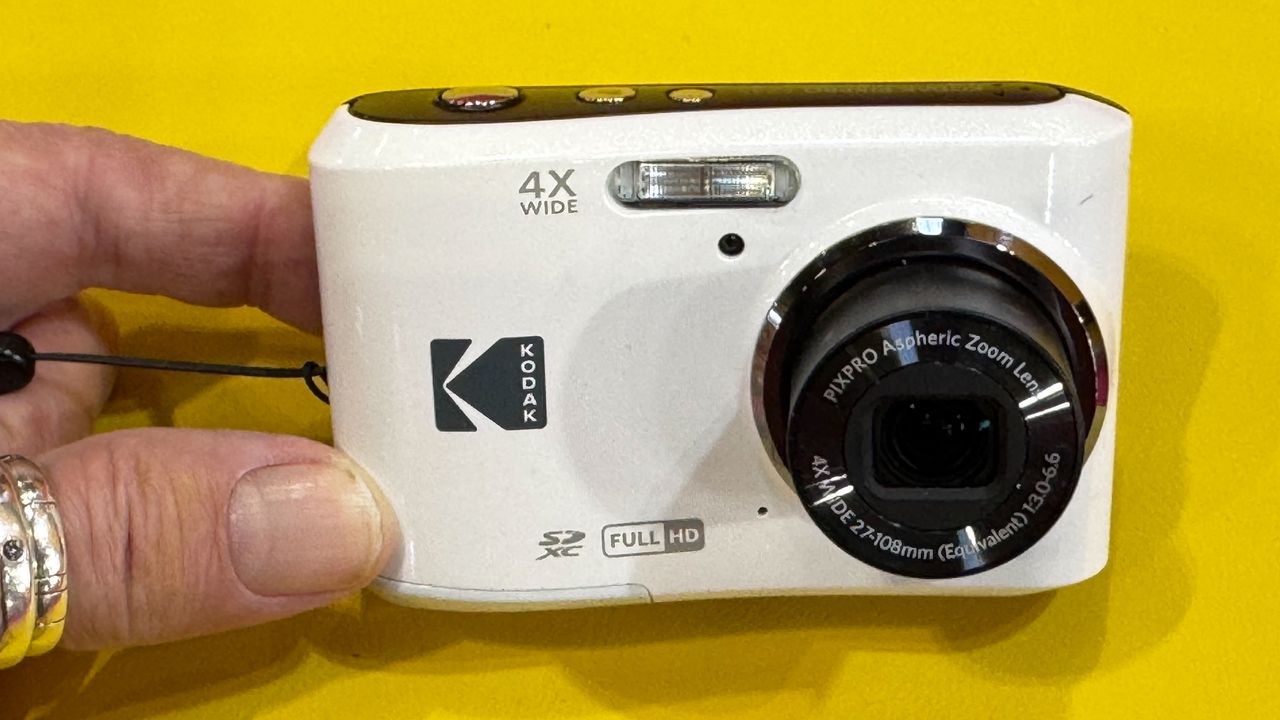
To some extent, Kodak died along with film sales when the world went digital but the name lives on and the Kodak PixPro FZ45 is a similarly mass-market camera, this time digital, made under license in Myanmar, or Burma if you prefer.
Launched in 2023, it sets its sights on being one of the best cheap cameras on the market, and in the intervening couple of years it has become a bestseller, riding on the wave of the renewed popularity of point-and-shoot cameras. Alongside its sibling, the similar Kodak FZ55, it has become a symbol for the resurgence of the Kodak brand.
Kodak PixPro FZ45: Specifications
Photo Resolution |
16.35MP |
Video Resolution |
Full HD 30p |
Image Sensor |
1/2.3-inch BSI CMOS |
Display |
2.7-inch, 230k-pixels fixed LCD |
Touchscreen |
No |
Battery |
2x AA |
Connections |
Micro USB |
Size (mm) |
93 x 60 x 29mm / 3.66 x 2.37 x 1.12 inches |
| Color options | White, pink, silver, black, blue or red |
Weight |
117g / 4.1oz |
Kodak PixPro FZ45: Price
You don’t get much for under a hundred bucks these days, especially when it comes to camera gear. Even so, a quick scroll through Amazon’s almost endless catalog will reveal compact digital cameras for less than $50/£50. The Kodak PixPro FZ45 is nearer the 3-digit mark, with a price tag of around $119/£95. That’s still remarkably cheap for a camera with such a big name behind it, and hopefully a name that can still be relied upon.
Kodak PixPro FZ45: Design & Handling
I feel that, understandably, this little Kodak camera is built down to a price and feels a bit plasticky. Even so, it’s quite nicely styled and I like that at just over an inch thick, it slips easily into a spare coat pocket.
The buttons and switches are of decent quality and the interface is quite simply child’s play. That fits entirely with the camera being suitable for beginners and children alike. It can be found in a range of colors including black, white, blue, pink and red – and almost inevitably, some color options are cheaper than others.
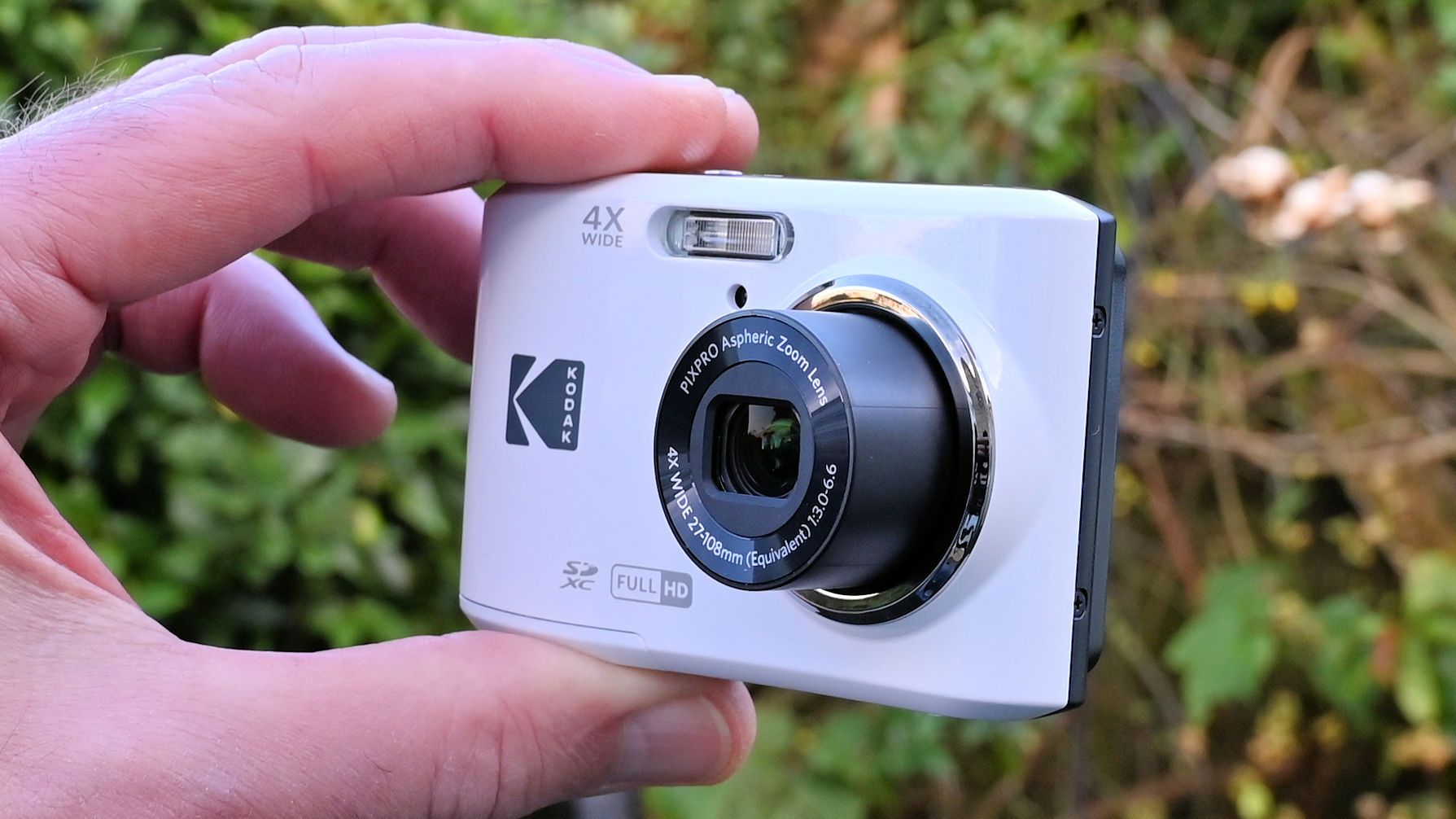
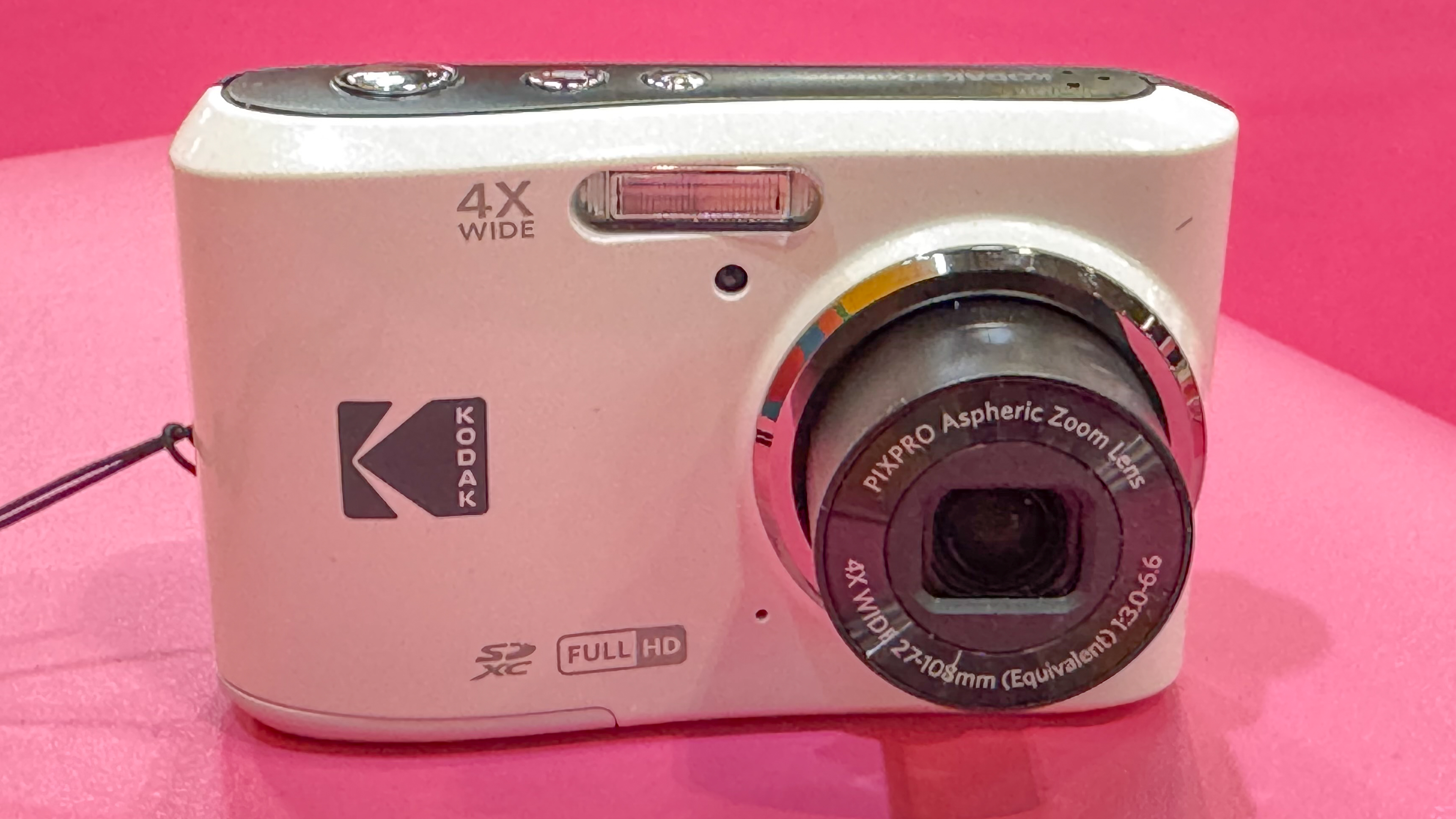
Viewed from the front, the standout items include a 4x zoom lens with an effective 27-105mm optical range and f/3-6.6 aperture range. The zoom range is boosted to 24x if you bring digital interpolation into play. Up top there’s a small built-in flash and, to the left, that iconic Kodak logo. The front panel also features a microphone and AF-assist/self-timer lamp.
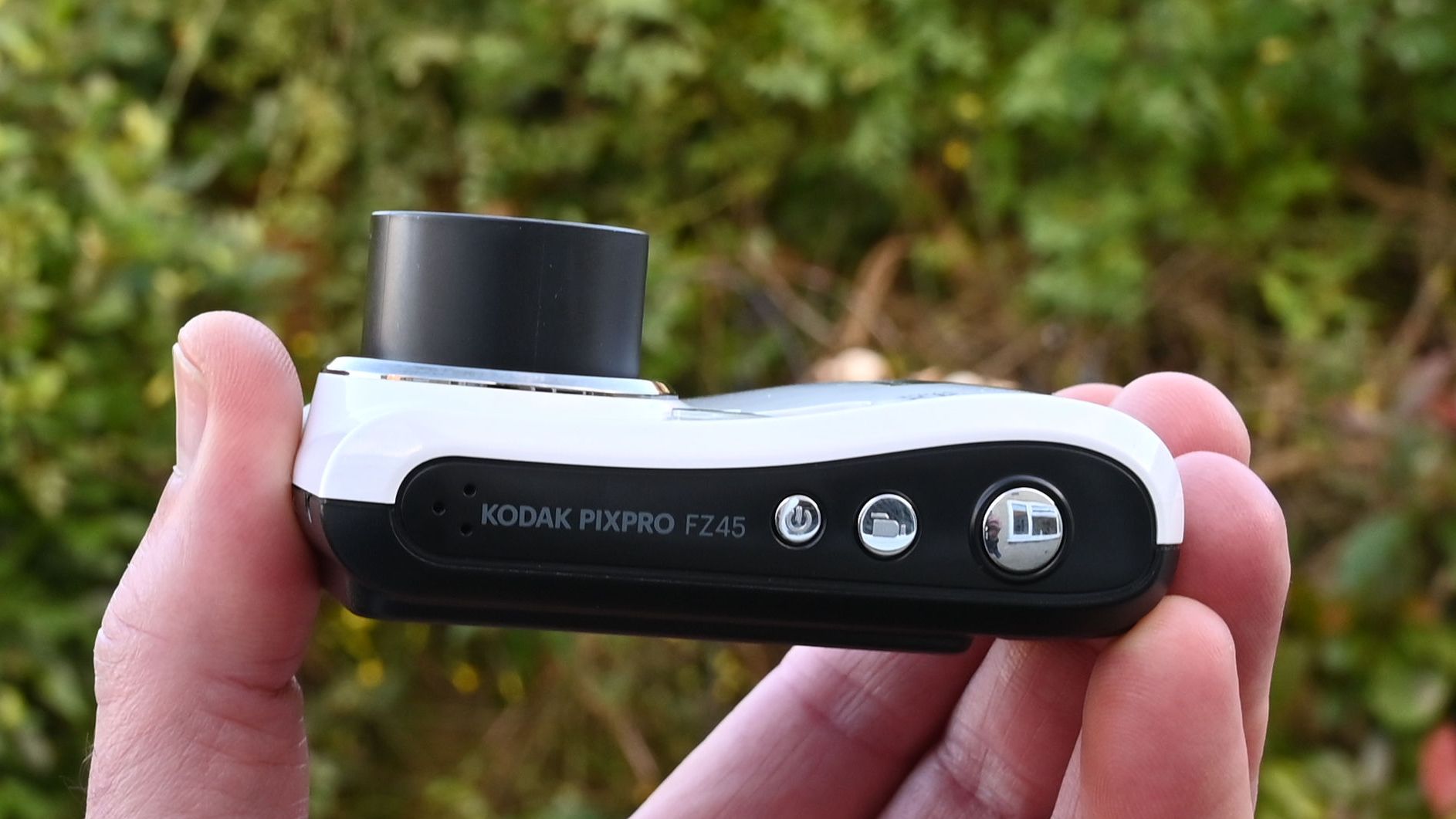
Up on top, there are three buttons for power on/off, video start/stop and shutter-release complete with a half-press function to initiate autofocus and metering. Three small holes to the left of the top panel are for the built-in speaker. On the right hand side of the camera are a Micro USB port and an eyelet for attaching the supplied wrist-strap.

Most of the rear panel is taken up with the display screen. Even so, it’s pretty small at 2.7 inches on the diagonal and low-res with just 230k pixels. Again, as I’d expect at the price, it’s not a touchscreen and has no tilt facility nor vari-angle articulation. All the main control buttons are ranked down the right hand side of the rear panel. There’s the usual 4-way pad and Set button, plus quick-access buttons to shooting modes, flash, macro, zoom, playback and a further-reaching menu system.
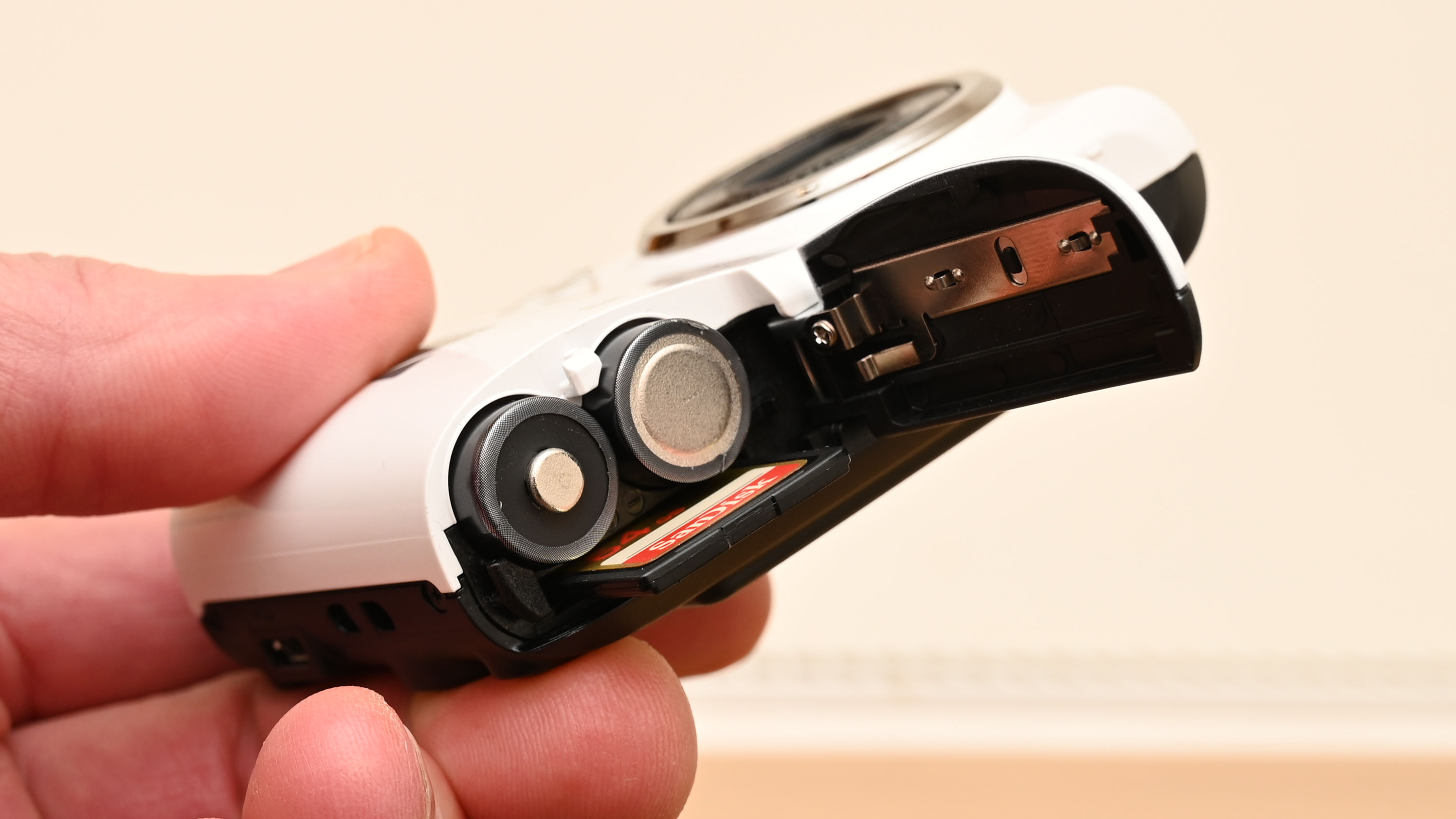
The camera is based around a 1/2.3-inch BSI CMOS image sensor with an effective stills resolution of 16.35 megapixels. It’s powered by two AA batteries, which lack the stamina of a rechargeable Li-ion battery pack but at least replacement batteries are universally available and easy to fit (and you could choose to use rechargeable AAs). Very usefully, there’s 63MB of internal memory, as well as a SD/SDHC/SDXC memory card slot.
Kodak PixPro FZ45: Performance
The Kodak works well as a point and shoot camera, in full Auto mode. Everything’s taken care of from autofocus and exposure to use of flash. Capturing video at up to Full HD 30p is similarly simple with a press of the start/stop button. But ‘full auto’ can only get you so far and it’s nice that, despite being so beginner-friendly, the Kodak gives you options to spread your photographic wings. For example, there are Program AE and fully manual exposure modes, choices for autofocus and metering modes, a wealth of scene modes and color treatments including normal, vivid, black & white and sepia. You even get HDR and panoramic options. To some extent, you can also enhance photos in the Playback menu but the camera only supports JPEG rather than RAW quality capture, so there’s not a great deal of latitude.

Image quality itself is perhaps best described as acceptable. Fidelity is certainly in a different ballpark to even the best disposable film cameras, although you could argue that those have their own lo-fi charm. In digital company, the Kodak isn’t the sharpest tool in the box but photos have a bit of bite and pleasing color rendition. The Auto scene selection option sounds good, ‘intelligently’ selecting the likes of landscape, portrait, pet, snow, party and plenty more on the fly. In general street and landscape shooting, however, I found it was all too keen to invoke the flash when I wouldn’t have chosen to, with a further disadvantage being that it took about 6 seconds for the flash to recycle, before I could take another shot.


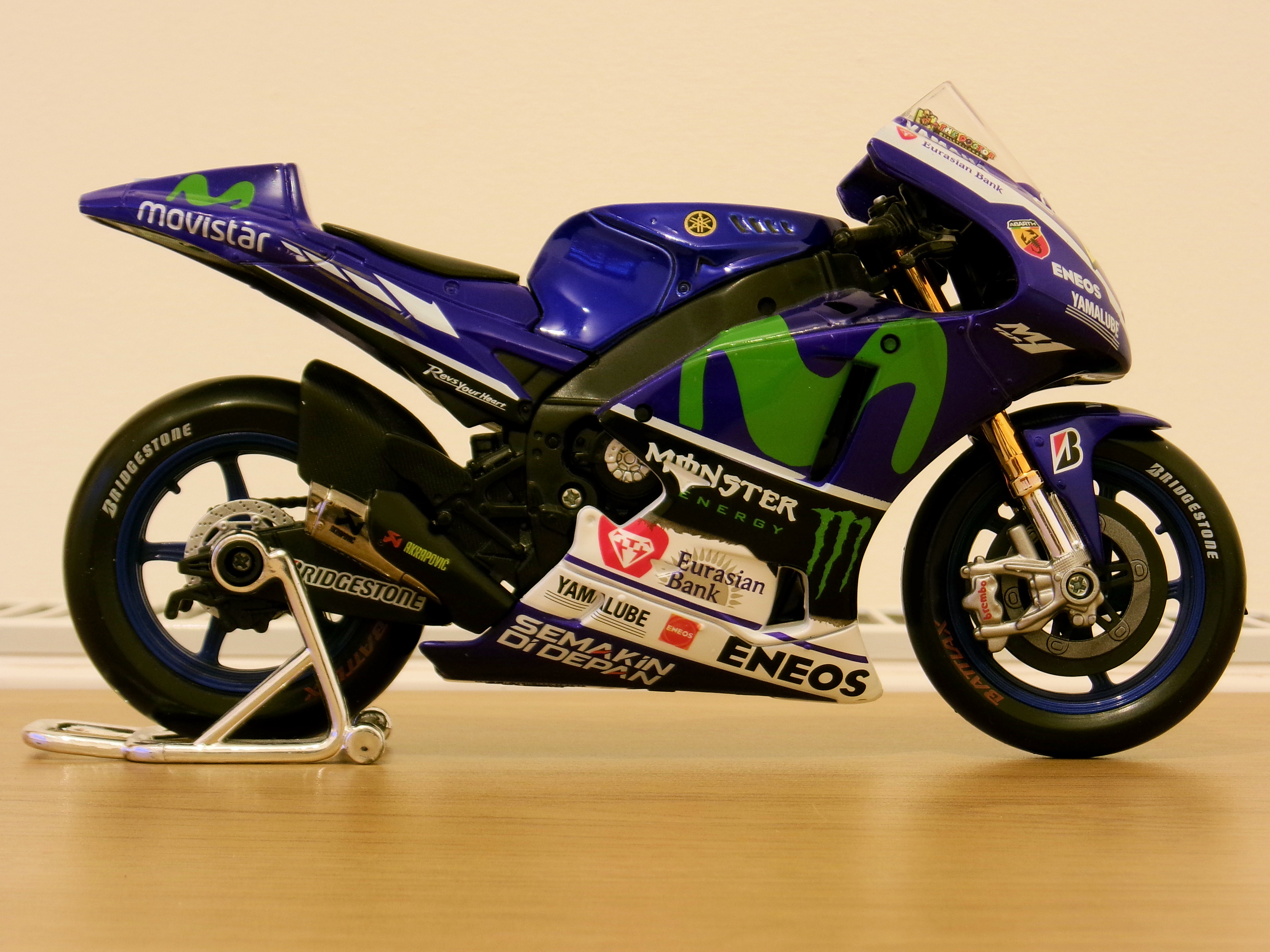
As with many compact cameras, there’s a Macro mode, which enables extreme close-ups, at least at the short end of the zoom range. In regular modes, the extended digital zoom facility is best avoided, as it can bring a severe degradation of fine detail and texture. Moving up through the sensitivity range from ISO 100 to the maximum of ISO 3200, image noise is fairly well suppressed but this comes at the expense of a lot of smoothing, which again degrades fine detail. The following galley contains shots of the same composition of a model race bike under artificial room lighting, at ISO 100, ISO 800, ISO 1600 and ISO 3200.
Kodak states a CIPA-compliant battery life of 120 shots or about an hour of video captured at the maximum resolution of 1080/30p. That makes the camera an obvious contender for use with some of the best AA rechargeable batteries.

Kodak PixPro FZ45: Sample Images
The following gallery of example shots were taken in the Somerset city of Wells, UK.

These more recent images were taking on a trip to The Photography & Video Show in Birmingham:

Kodak PixPro FZ45: Sample video
Below are some sample video clips shot at a city farm, outside Bath…
Video quality is okay, rather than good, with some shots looking overexposed, and the lack of built-in stabilization being obvious when zooming in.
Kodak PixPro FZ45: Verdict
The Kodak PixPro FZ45 works well for snapshots, especially in situations like beach holidays and other occasions where you want to travel light, or not risk using an expensive camera in inclement conditions or when you’ve got other things on your mind. It’s also very easy to use, making it ideal to share with friends, family and children. Naturally, the image quality and all-round performance don’t compete with expensive cameras but the Kodak is a bit of fun at a very affordable price.
Features |
With 4x optical zoom, flash, a variety of shooting modes and 1080/30p video, it’s not short on features. |
★★★★ |
Design |
It’s slim enough to fit into a spare pocket and take pretty much anywhere, although it feels a bit plasticky. |
★★★ |
Performance |
Image quality and sophistication are streets ahead of disposable film cameras but mediocre for digital. |
★★★ |
Value |
The Kodak is pricier than similar cameras from relatively unknown brands but still good value. |
★★★★ |
Should you buy the Kodak PixPro FZ45?
✅ Buy this...
- You want a camera that’s simple enough for anyone to use but still delivers decent image quality and video.
- You’re after a camera that’s cheap to buy, so you won’t have to worry too much about pampering it and can just enjoy taking snapshots.
🚫 Don't buy this...
- You’d rather spend more on a camera that’s more sophisticated and delivers better all-round performance.
- You’d prefer a camera with a viewfinder – the screen is quite low-res and not very bright when the sun’s over your shoulder.
Alternatives
See also our guide to the best Kodak cameras