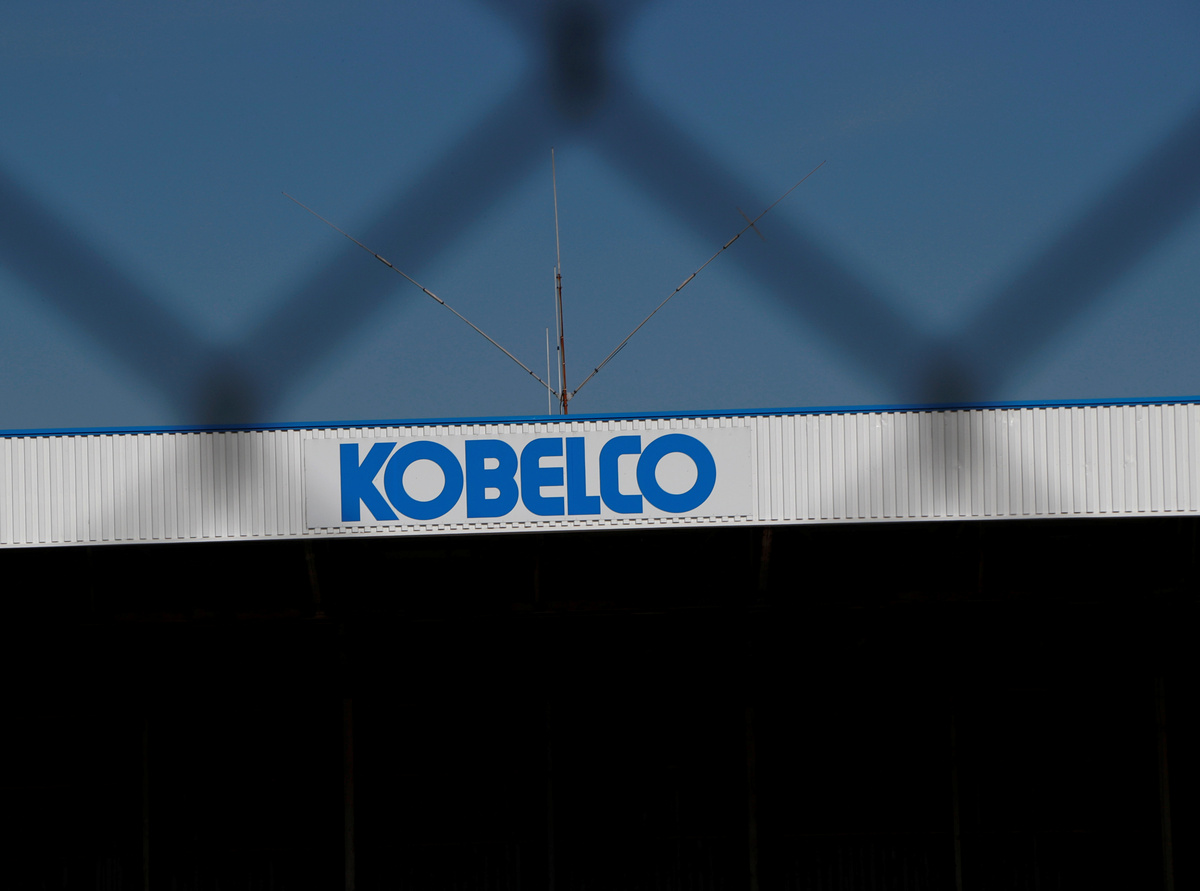
Japan's Kobe Steel Ltd has successfully demonstrated a new technology to reduce CO2 emissions from blast furnace operations by a fifth, as compared to the conventional approach, a company official said on Tuesday.
Cutting carbon emissions from steelmaking is a key part of efforts to fight climate change and Japan's No.3 steelmaker sees the technology as a promising solution other manufacturers could adopt without large capital expenditure.
"If there is demand from our customers for low-carbon steel, we could make it available within a year," Koichiro Shibata, an executive vice president of the firm, told a news conference.
The demonstration ran for a month at a blast furnace of the Kakogawa Works in the western region of Hyogo in October 2020.
The new method uses a combination of Kobe Steel's blast furnace operation technology and the direct reduction iron (DRI) technology of its U.S. unit, Midrex Technologies Inc.
DRI is a steelmaking raw material made by reducing iron ore, which finds its chief use in electric arc furnaces as a supplement or substitute for high-quality scrap and pig iron.
Midrex's technology uses natural gas to reduce iron ore for use in steelmaking, offering lower CO2 emissions than from blast furnaces.
But charging a large amount of DRI in a briquette form, produced by the Midrex process, into a blast furnace could slash the required amount of carbon fuel, such as coke, bringing about lower CO2 emissions.
The additional cost of the low-carbon steel is estimated at about 10 yen ($0.09) per kg, Shibata added.
($1=105.5200 yen)
(Reporting by Yuka Obayashi; Editing by Clarence Fernandez)