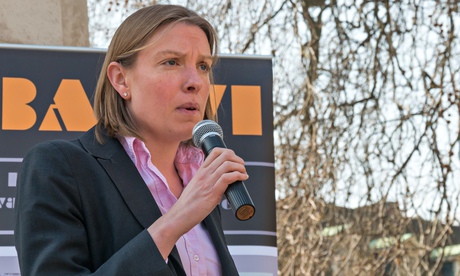
She is the FA-qualified football coach of a girls’ under-18 side who has called for Russia to be stripped of hosting the 2018 World Cup, backed fan power and uses Twitter to hold forth on everything from the X Factor to her love of Spurs and Puma King football boots. So while the new sports minister, Tracey Crouch, may be more knowledgeable about her sector than many of her predecessors, and is certainly already well thought of among grassroots sports organisations, her tenure is likely to be anything but dull.
The 39-year-old MP for Chatham and Aylesford is a staunch Spurs fan and a vocal supporter of the women’s game. She is described by colleagues as energetic and opinionated and will need every ounce of both to remind them of the power of sport now that it has slipped back down the policy agenda in the wake of the London Olympics, to the detriment of the promised 2012 legacy.
Crouch also sat on the culture, media and sport select committee chaired by John Whittingdale, who has been appointed above her as secretary of state for culture, media and sport.
The committee played a pivotal role in the unfolding drama over Fifa corruption allegations and its thorough inquiry into football governance called for fundamental reform of the Football Association and for greater fan influence in how clubs are run. Hugh Robertson, the former sports and Olympics minister, used it as the basis for a long-running negotiation with football’s complicated matrix of powerbrokers to try and bring about change.
But although he succeeded in introducing two independent directors to the FA board, he was ultimately frustrated by football’s filibustering in attempts to overhaul the FA. Crouch might prefer to focus instead on how the Premier League will deal with pressure to reinvest more of its expected £8bn-plus TV bounty in grassroots sport and cutting ticket prices. There is a widespread belief that a “new deal” is required and the Premier League’s Gloucester Place headquarters is likely to be one of the first stops on her itinerary.
However, her working knowledge of the grassroots game – she coached Medway’s Meridian Girls up to under–18 level – and insight into football’s corridors of power should at least give her a modest head start when it comes to hard-headed negotiations with the Premier League chief executive Richard Scudamore and his recently appointed FA counterpart Martin Glenn. She already has form in clashing with the FA, reacting furiously when it took over the running of the Parliamentary football team and refused to let her play alongside men.
Without a home Olympics to focus attention, the fear is that sport will continue to slip down the pecking order as further cuts are meted out on departmental budgets. Whittingdale’s focus is likely to be largely consumed by the looming battle over the future of the BBC so Crouch will be left to battle for sport’s share of exchequer funding.
She will be helped by the fact that around two thirds of the money that flows to UK Sport to invest in elite Olympic disciplines and to Sport England to invest in the grassroots comes from the lottery rather than the treasury. Elite funding is ring-fenced until after the 2016 Olympics but with £12bn in cuts planned across Whitehall it is inevitable that sport will face its share. More damaging still will be the hidden effects of further cuts to local authority budgets that could lead to facilities being slashed.
One idea that might help fill the gap has been floating around sports policy circles for years and is the concept of top-slicing a portion of the profit from betting companies to fund grassroots sport. While it goes against Tory free‑market principles, she might look to use forthcoming reform of the horse racing levy to explore the idea.
Robertson, the last sports minister but one who occupied the seat during the London 2012 Games and remains well thought of in the sports world, said that Crouch’s three main challenges would be: “Funding, football and the wider issue of governance”.Given her sporting hinterland, there is one traditional hurdle for incoming sports ministers that she should be able to clear – that of the trivia quiz ambush. Helen Grant, her predecessor, was embarrassed at an early stageafter being unable to name the previous season’s FA Cup winners or the current women’s Wimbledon champion. It was more than a little unfair, but her confidence never really recovered.
Sports ministers tend to divide into those who view it a consolation prize and those for whom it is a dream posting. Crouch appears to fall into the latter camp but if she is to avoid being given the runaround by the big beasts of the sporting world and those within her own party who see public investment in sport as a luxury rather than a necessity, she will need to deploy more of the nimble footwork and determination she once displayed in nutmegging the then Labour MP Jim Murphy in a Westminster football match.