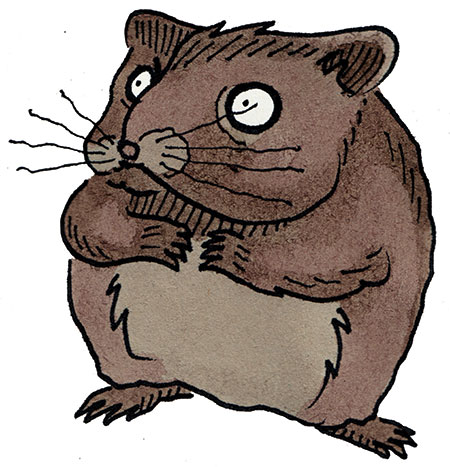
Hamsters are chubby little rodents with stocky limbs, short tails, long silky fur and pudgy cheeks. They are native to western Asia, but are kept as pets around the world. The most common species of hamster is the Golden, or Syrian Hamster, which can grow up to 18cm in length. They are clean, solitary creatures with poor eyesight but acute senses of hearing and smell. As nocturnal creatures, they will sleep most of the day and become more active in the evenings, playing, exploring and hiding
Photograph: Cicada Books
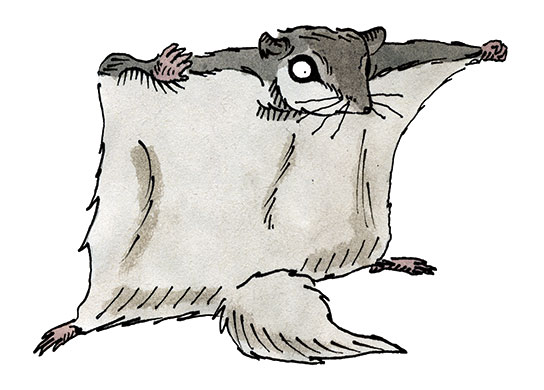
There are two species of North American flying squirrel - one found in the northern areas of the United States and Canada, and one in the south. Both species have a unique parachute-like membrane stretching between their forepaws and hindpaws, which allows them to glide up to 30 metres between trees. This is called a ‘patagium’. They have fluffy tails that can flatten and act as a stabiliser, controlling their flight and allowing them to slow before reaching the next tree
Photograph: Cicada Books
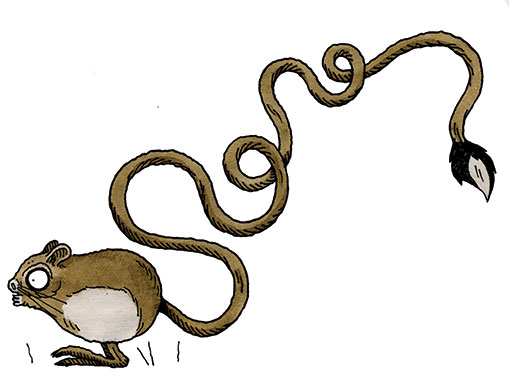
Pygmy Jerboas can be found throughout Asia and North Africa. Unlike most rodents that scuttle along on all fours, jerboas have the wonderful ability to jump from their hind legs, making them look like miniature and extremely cute kangaroos. They are the smallest rodents in the world, often measuring less than 5cm, and can leap several times their body length
Photograph: Cicada Books
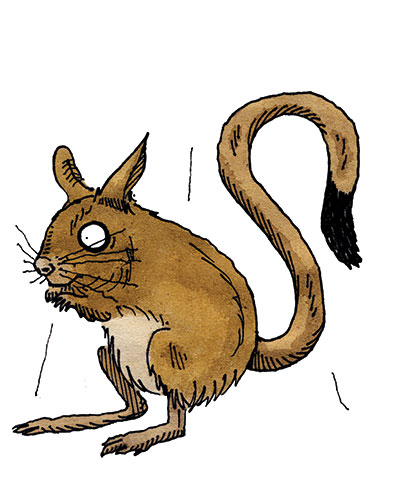
The springhare is a very unusual rodent mostly found in Southwestern Africa. Looking like a cross between a rabbit and a kangaroo, it has strong hind legs that allow it to jump up to 9m in a single bound. Its body measures up to 40cm long and is covered in soft yellowy fur, with black highlights on the head, back and tail. The springhare has very keen eyesight and hearing, and has a flap of skin at the base of its ear that can be closed to prevent sand entering the ear
Photograph: Cicada Books

These sociable, rabbit-sized rodents are a type of ground squirrel native to the grasslands of North America. They burrow elaborate tunnels with various rooms and chambers, for nursing, sleeping and even toilets. The tunnels are lined with grass for insulation, and can be identified by the mounds of earth packed at their surface entrances. Prairie dogs live in large colonies or ‘towns’ made up of numerous prairie dog families, consisting of a single male and two to four females living in a strict hierarchy. They are territorial but also very friendly, often greeting one another with a special prairie-dog kiss and a nuzzle
Photograph: Cicada Books
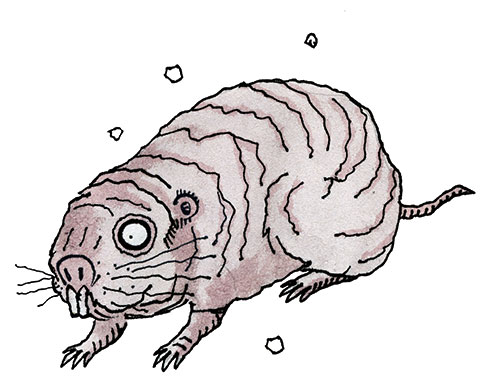
The naked mole rat is not going to win any prizes in the rodent beauty contest, but this African rodent is one of the weirdest and most interesting little creatures you'll ever come across. Measuring about 7cm in length, they are hairless, with tiny eyes that are almost blind and massive incisors that protrude out of the mouth with lips that close behind them. These teeth can be moved independently - spread apart or moved together like chopsticks, and are used to build vast, complex systems of tunnels. Their skin is insensitive to pain, and they can live up to 29 years - an eternity in rodent terms!
Photograph: Cicada Books