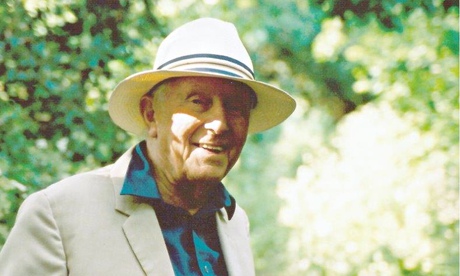
My friend Kit Wynn Parry, the eminent rheumatologist, who has died aged 90, was one of the leading medical practitioners of his generation.
He was a pioneer of rehabilitative medicine, and at different times director of rehabilitation at the Royal National Orthopaedic hospital, Stanmore, Middlesex, and at King Edward VII hospital, Midhurst, West Sussex. He was a world expert on the hand: books he wrote or co-authored include The Rehabilitation of the Hand (1958, now in its 4th edition) and The Musician’s Hand, A Clinical Guide (1998).
Kit took particular delight in looking after musicians; Charles Mackerras, Georg Solti, Alfred Brendel, the guitarist John Williams, Imogen Cooper and Rafael Puyana were only some of the performers whose careers he helped (and in some cases saved). On his retirement, he was part of the team that set up the British Association of Performing Arts Medicine, a boon for countless musicians, myself included.
Son of Sir Henry Wynn Parry, a high court judge, and his wife, Shelagh (nee Berkeley Moynihan), Kit was born in Leeds, and educated at Eton and Oxford, where he studied medicine. He began working in rehabilitative medicine at RAF Chessington and RAF Headley Court in the postwar years, and it was for this work that he was awarded an MBE.
Music was only a part of his great interest in the arts, but it was the most important part. He had a special passion for Monteverdi, Mozart and the Renaissance polyphonists (whose music he continued until very late on to sing, as a member of various choirs), but he was always ready to find new things. When the rest of us were asleep he was listening to Radio 3. It was thanks to his super-attentive ear and his profound natural musicality that when the Aldeburgh festival staged a quiz where you had to name the authors of a dozen recorded examples of the works of contemporary composers, Kit won by a mile. He knew them all.
He was a marvellous raconteur, when the spirit moved him – as, fortunately, it often did. Whenever he asked, “Did I ever tell you … ?”, it was the eagerly awaited signal for one of his stories, and even if one had heard it before one never minded. His mastery of narrative, his lucidity and fluency, his humour, showed what a good teacher he must have been. To hear Kit, in the middle of one of the crowded, animated parties that he and his wife, Morna, gave, improvising a five-minute lecture on Proust or Anthony Powell, was an experience never to be forgotten.
Only the vagaries of the honours system can account for the fact that he was never given a knighthood.
Morna predeceased him. He is survived by three of his four children and by two grandchildren.