

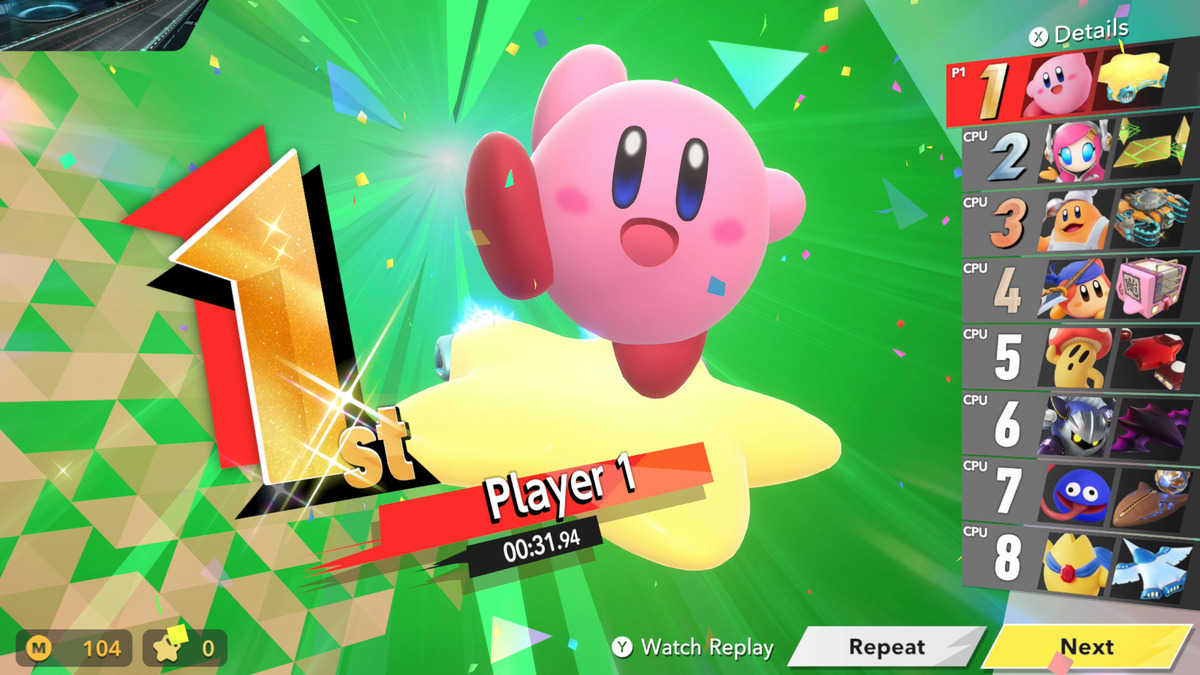
It hasn’t been 10 days since Kirby Air Riders was released, and players are already trying to top the leaderboards. That’s a staple for any competitive game; however, with Kirby Air Riders, things aren’t so simple. Kirby Air Riders’ ranking system is a bit different from the ladder systems we’re all used to.
With two different stat boards, it’s important to know which represents what. To keep things simple, I’ll break down the ranking system in Kirby Air Riders in full, including both Global Win Power and Class Categories. So if you’ve been confused about how to climb, make sure to read ahead.
Kirby Air Riders Ranking System Explained

The first thing you need to know about Kirby Air Riders’s ranking system is that it has two distinct stats you can increase as you play. The first is Global Win Power, and the second is Class Categories. I want to clarify that Class Categories is what you should actually focus on if you want to showboat to your friends, and here’s why.
Global Win Power
Global Win Power (GWP) is simply a tally of your wins. It can increase with each match you win, and is indicative of matches won rather than skill level. One thing you should remember is that GWP doesn’t signify your total number of wins. It compares your total wins against every other Kirby Air Riders player and ranks you accordingly.
For example, a GWP of 100,000 means you’re ahead of 99,999 players in total. However, it doesn’t mean you have 100,000 wins. This is why, after every win, GWP can increase by 1 (or more than 1), or stay the same. It is entirely dependent on how many wins the player above you has.
It is also true that your rating will constantly change as other players win matches, since it might push you down. The dynamic rating system is bound to keep things interesting. But GWP will not affect matchmaking, nor does it represent a player’s skill level. Older accounts that have racked up more wins will usually top the charts, unless someone decides to grind it out for a top spot.
Class Categories
If you really want to play with the best of the best, class categories are what you should focus on. There are seven class categories in Kirby Air Riders (according to the seven colours of the rainbow):
- Violet
- Indigo
- Blue
- Green
- Yellow
- Orange
- Red
You’ll be placed into a class according to your skill level and be matched with players of a similar class. This is to ensure fairness across the races, so no one gets matched unfairly during their runs. The final class is the rainbow class, which can be considered the pinnacle of Kirby Air Riders’s ranking system.
Rankings Affect Game Modes
An interesting feature in Kirby Air Riders is that each game mode has its own ranking. You could be Red in City Trials, but Indigo in Top Ride. Since Class Categories change by playing, you’ll need to play different game modes in order to rank up in all of them.
Another point to keep in mind is that your class will affect your runs. Players in a higher class ranking will get more challenging courses, with harder objectives and complex obstacles. This is to limit any power creep throughout the game and keep it fun for everyone, regardless of which class you’re in. The higher you get in the rankings, the harder things will become. But you’ll also unlock more and more machines as you progress, so things should balance out.