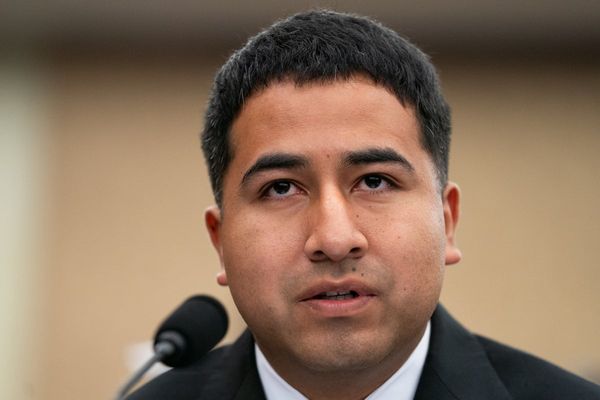
The newly appointed governor of the state-run Metropolitan Electricity Authority (MEA), Kirapat Jiamset, vows to transform the organisation for the digital era and improve services in anticipation of disruptive technology in the coming years.
Mr Kirapat, 57, has worked in materials management and technology for a long time. His most prominent jobs were the underground wire project in Bangkok's central business district (CBD) during 2014-17, as well as the introduction of the digital platform in the power distribution service area of the MEA, covering Bangkok, Nonthaburi and Samut Prakan.
Mr Kirapat spoke to the Bangkok Post about his plans to bring the MEA into the digital age.
What are your top goals and priorities as MEA governor for the next three years?
In 2018, the MEA has matured 60 years from its establishment in August 1958. The organisation has had three big movements over the last six decades, such as bare power wire (without wrapping) and enhancing services with the call centre to rapidly accommodate power users.
But the third wave is the digital trend and internet, which are fast coming, so the MEA has to handle these changes.
The country's traditional power distribution with overhead wire is not appropriate for high-density metropolitan areas at all, leaving only underground wire, which is much more stable than overhead wire.
Demand for electricity will increase every single year, especially when the mass transit train system operates another six or seven lines in metropolitan areas, which will need much more power.
Life in metropolitan areas will shift from low-rise to high-rise residences in the next decade, and rely more on power for people's electronic tools and home appliances.
So, stability of power distribution is most crucial.
The underground wire will also cut damage from road accidents and power short circuits, and the CBD's scenery will be better.
Have you seen disruptive technology in the country's power sector? What will the MEA do to tackle it?
We have seen the signs for many years and estimated that it will definitely come to Thailand, so we have already prepared both related infrastructure and human resources.
The MEA has seen that the adoption of solar photovoltaic (PV) power rooftops is unavoidable because owners and managers of properties are rapidly installing them on their rooftops and they are seeking alternative choices of power resources, not only consuming them from state utilities but also generating them from rooftops to trim their power bills.
The development cost of solar power can be nearly as competitive as fossil-based power, but this is just the first step, because each property will have surplus power in the near future and they will have to trade it through the peer-to-peer concept.
As the state utility for power distribution, the MEA has to facilitate and prepare infrastructure for the big shift, such as smart meters and smart grids.
Future adoption of electric vehicles (EVs) is the other technology that Thailand cannot ignore. The MEA has developed and prepared charging stations in many service areas.
In addition, we are conducting a feasibility study of an EV mobile app that will navigate to the nearest charging station.
A power tariff at the charging station will be calculated into each driver's power bill, which will help drivers with their cashless lifestyle.
Explain the MEA's campaign called "Energy for City Life, Energise for Smart Living".
It is aimed at facilitating power users that will require alternative power resources, and we are studying an upgrade to smart meters for a new version of time-of-use meters.
This upgraded meter will monitor the movement of power load and consumption; for instance, when power is interrupted, the meter will know the reason and the area of interruption, so people will not suffer 30-60 minutes of waiting time for the MEA to repair power distribution.
The meter will also monitor the point of power circuits and manage to avert power interruption by using other distribution lines instead.
The MEA is also carrying out an assignment from policymakers and improving services every year. As a result, the World Bank ranked the MEA in the sixth spot in the Ease of Doing Business 2019 report, which means our services have achieved a high level of international standard, particularly when we launched the Smart Life mobile app.
In 2018, the MEA will install smart lights in 75 communities along the Saen Saeb canal.
Currently, when the lights installed in public areas go out, communities have to wait for the local administration or the MEA to replace them, but the new lights will automatically report to the MEA when they are out of order.
What is the MEA's mission and plan for 2019?
We are carrying on with the underground wire project. We have done 40 kilometres and we have a further 130 kilometres in the pipeline with a budget of 40 billion baht.
The pinned areas are along mass transit lines and in CBD areas.
In 2019, the pilot project of the smart metro grid will start development on a land plot of nine square kilometres around Rama IV, Ratchadaphisek, New Phetchaburi and Phaya Thai roads.
Currently that project is in the designing period and is expected to finish early next year, so the MEA is looking for construction firms to start the project.