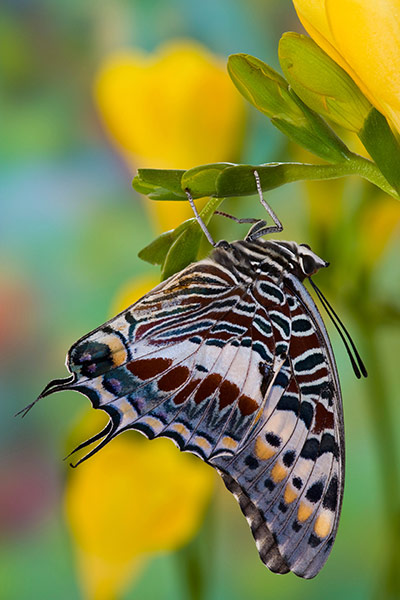
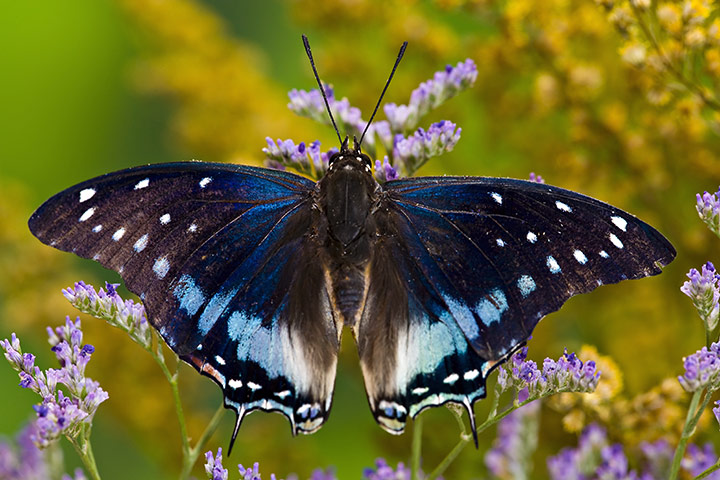
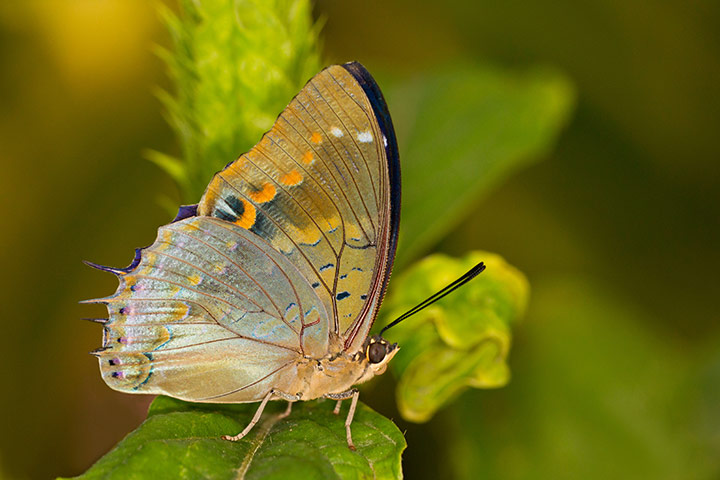
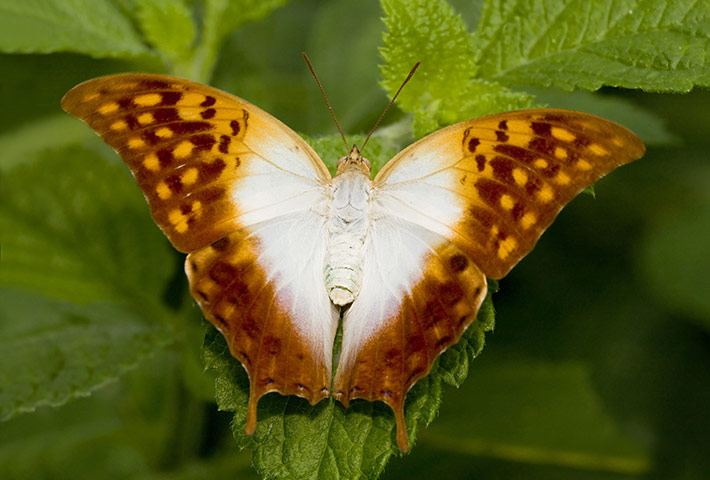
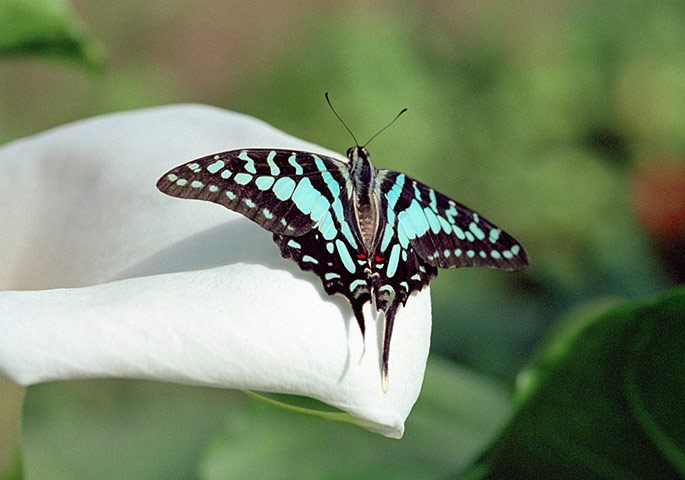
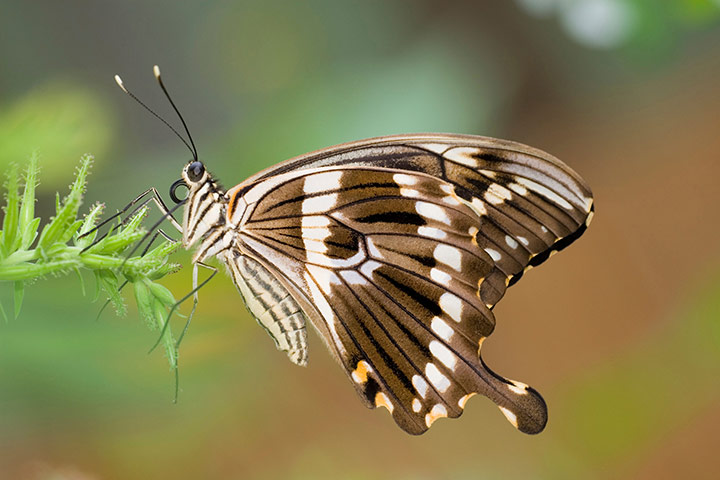
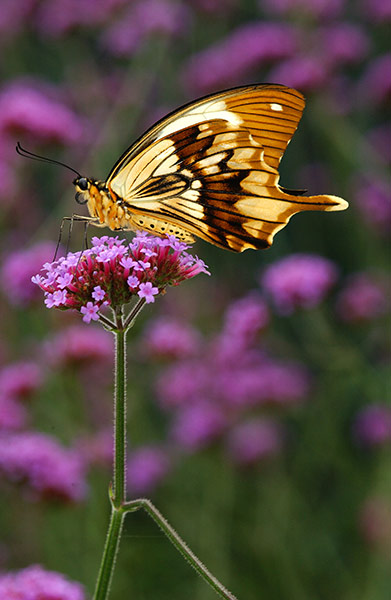
The giant emperor or giant charaxes (Charaxes castor). Kipepeo is open to the public, where they can see the rearing procedure and live butterfliesPhotograph: Danita Delimont/AlamyBlue-spotted charaxes (Charaxes cithareron) butterfly resting on verbena. The project started in 1993 and is based near the entrance of Gede ruins, one of the ancient Arab towns dotted along the east African coastline that dates back to the late 13th centuryPhotograph: Darrell Gulin/CorbisBlue-spotted charaxes (Charaxes cithaeron). Kipepeo (Swahili for butterfly) was set up to give farmers around the Arabuko-Sokoke forest a small legitimate income from the forest. This was to compensate in part for the damage to their crops caused by elephants and baboons. Earning money from raising butterflies provides an incentive for the community to participate in conservation and demonstrates the link between conservation and livelihoodPhotograph: James Urbach/Alamy
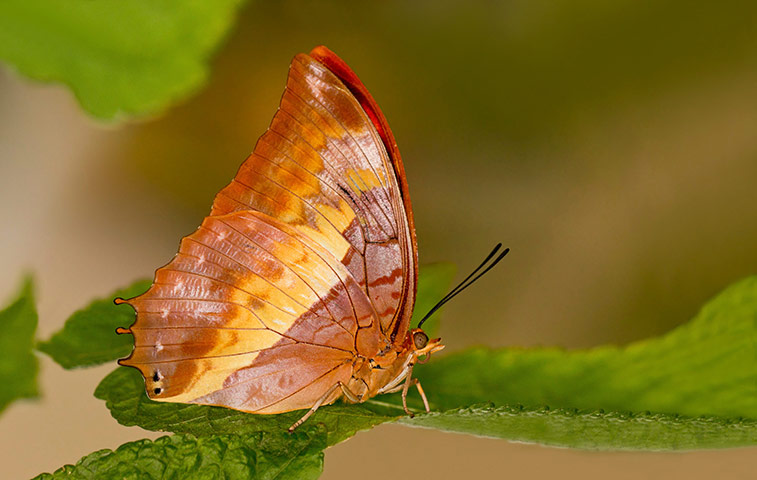
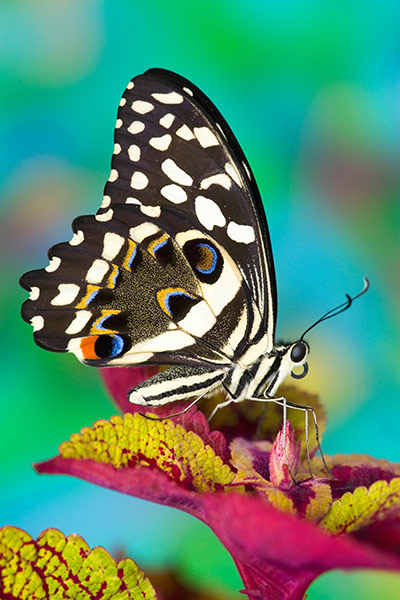
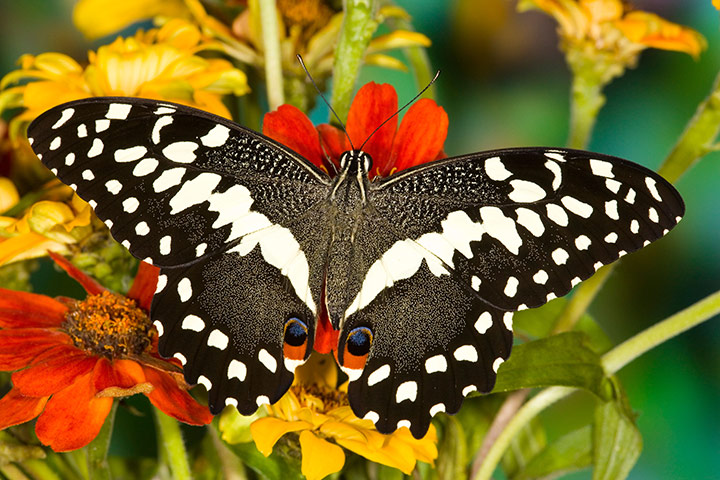
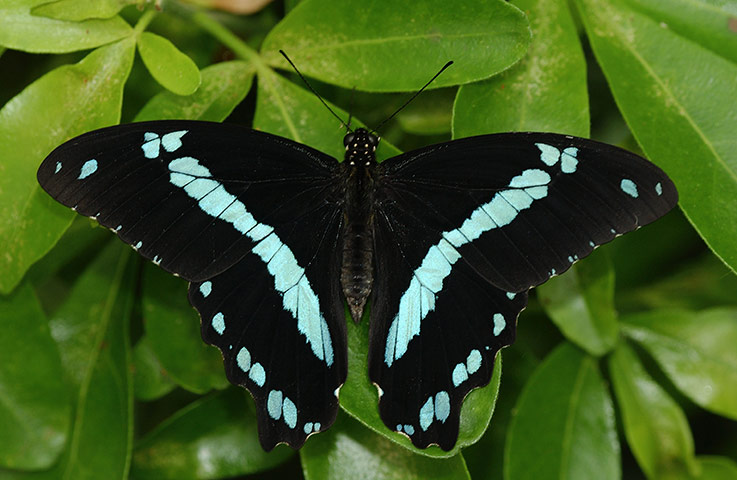
Flame-bordered charaxes (Charaxes protoclea). The project gives an insight into the rare species of Arabuko-Sokoke - the largest remaining intact piece of a coastal forest that once stretched from southern Somalia to northern MozambiquePhotograph: SuperStock / Alamy/www.alamy.comPearl charaxes (Charaxes varanes). Arabuko-Sokoke is a 420km sq forest that contains 20% of Kenya’s bird species, 30% of its butterfly species and at least 24 rare of endemic bird, mammal and butterfly speciesPhotograph: CorbisCharaxes varanes butterfly. The forest is under pressure from the local population which is always in need of fire wood and wood for construction, as well as meat. Many would also like to clear the forest for land to grow crops. But by exploiting its natural resources, and taking from it a few common butterflies and their larval food plants, butterfly farmers can increase their income without damaging the forestPhotograph: Nigel Pavitt/CorbisA tropical blue swallowtail butterfly (Graphium antheus). The 150 community butterfly farmers are made up of local families that live adjacent to the eastern border of the Arabuko-Sokoke forest. Women comprise over 80% of Kipepeo farmers, meaning that much of the income from butterfly farming is directly spent within the family householdPhotograph: AlamyPapilio constantinus swallow tail butterfly. Some Kipepeo butterflies are also reared in other high biodiversity forests in the coast region such as the Shimba and Taita HillsPhotograph: Pulwey Andreas/AlamyPapilio dardanus. More than 100,000 people live in 50 villages adjacent to the Arabuko-Sokoke forest. Most are small-scale subsistence farmers who grow maize, cassava and beans and cash crops of coconut and cashew nut treesPhotograph: Barrie Neil/AlamyPapilio demodocus, orchard swallowtail. In 1993, when the Kipepeo project started, the annual per capita income for the community was about $40. Through the Kipepeo-supported livelihoods, most have doubled this per capita with the earnings ranging from a few dollars to over $1,000 per year depending on their individual effortsPhotograph: Danita Delimont /AlamyPapilio demodocus, the orchard swallowtail. As well as selling butterfly and moth pupae and other live insects, Kipepeo sells delicious forest honey and silk cloth produced by the communityPhotograph: Danita Delimont/AlamyPapilio nireus. Because butterflies require plants for food and survival, Kipepeo farmers have established tree nurseries and planted trees on their farms for breeding the pupae. Many of the Kipepeo farmers are also members of Community Forest Associations, helping to protect and conserve the Arabuko forestPhotograph: Barrie Harwood Photography/Alamy
Sign up to read this article
Read news from 100’s of titles, curated specifically for you.