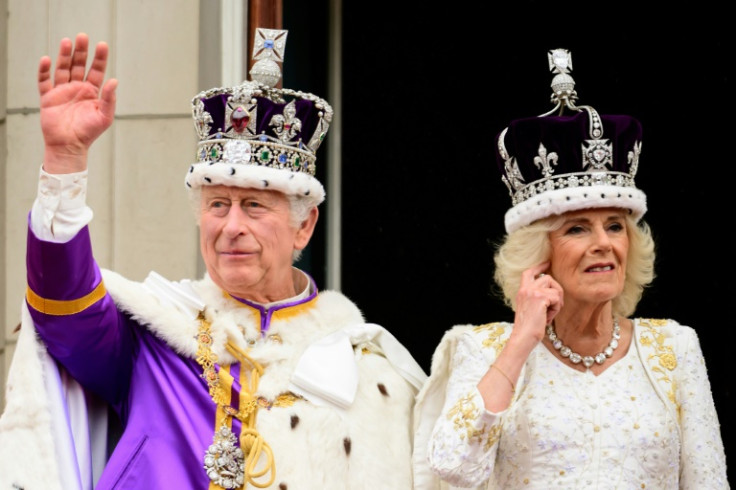
King Charles and Queen Camilla allegedly urged Kate Middleton to change the spelling of her first name in the run-up to her 2011 royal wedding to Prince William, a request the future Princess of Wales is said to have found 'insulting,' according to a new book about Kate.
The claim comes after royal author Christopher Andersen wrote in Kate! The Courage, Grace and Power of the Woman Who Will Be Queen that the then Prince Charles and Duchess of Cornwall were uneasy about Kate's full name, Catherine, clashing with their royal monograms. Andersen's account, which has not been corroborated by Kensington Palace or Buckingham Palace, reopens an awkward chapter from the early days of Kate's entry into the royal family, when questions over status, symbolism and hierarchy were far from settled.
The 'Catherine' Monogram Problem
Andersen writes that both Charles and Camilla had royal cyphers made up of interlocking 'C's beneath a crown, a familiar emblem on everything from stationery to official signage. The prospect of a third senior royal with the initial C was, he claims, regarded inside the couple's circle as visual clutter.

According to the book, that concern led to a highly unusual suggestion. Charles, now 77, and Camilla, 78, are said to have asked Kate whether she would be willing to alter the spelling of her first name from 'Catherine' to 'Katherine,' thereby avoiding another 'C' cypher. On paper, it sounds like a minor tweak. In royal terms and in the charged atmosphere of a dynastic marriage, it carried a very different weight.
Andersen reports that Kate, who had spent the better part of a decade being introduced to the public as 'Kate Middleton,' was offended by what she saw as an overly fussy, image-driven demand. The implication that her given name needed tidying up to fit royal branding sensibilities was, he argues, taken as a slight not just to her but also to her family.

William's reaction, as described in the book, was more than mildly irritated. Once the prince 'caught wind of the situation,' Andersen says, he 'fumed' and pushed back, viewing the proposal as 'insulting ... not only to Kate, but to her entire family.' The row apparently fizzled out, and the matter was dropped. Catherine remained Catherine, and the royal household has since navigated any monogram overlap without public drama.
Nothing in Andersen's account has been confirmed by the palace, and there has been no official response to the specific claim about the name-change request. In the absence of documentary evidence, it sits in the now-familiar grey zone of royal biography: detailed, plausible-sounding, but ultimately unverified.
Royal Names and Symbolism in the House of Windsor
Royal names and titles have long been a pressure point inside the House of Windsor. Kate Middleton's transformation into Catherine, Duchess of Cambridge, and later Princess of Wales, came freighted with expectations about continuity and modernisation. The idea that a spelling dispute might have erupted at the edge of all that may sound petty, yet it also tracks with a family acutely aware of symbolism.

Andersen positions the alleged episode as one more sign of how carefully managed Kate's accession to royal life had to be. Having met William at the University of St. Andrews in 2001, the pair did not become a couple until 2003, and their relationship moved in fits and starts until their engagement was finally announced in 2010. By then, the press had spent years dissecting everything from her wardrobe to her work ethic. The notion that even her first name might have been up for discussion feeds a familiar narrative of scrutiny bordering on the obsessive.
Whatever tensions existed before the wedding, they have not prevented William and Kate from presenting a remarkably united front in public. The couple, who married at Westminster Abbey on 29 April 2011, quietly marked their 15th wedding anniversary late last month with a relaxed photograph of themselves and their three children, Prince George, 12, Princess Charlotte, 11, and Prince Louis, 8. Barefoot on grass, dogs at their feet, the image was about as far from monogram politics as it is possible to get.

Yet the shadow of previous royal marriages still hovers. William has been explicit that he does not want to repeat what he sees as the mistakes of his parents' relationship. Speaking to Eugene Levy in an October 2025 episode of The Reluctant Traveler, he reflected on the lessons he drew from the turbulent union of Charles and Diana.
'You take that [example] and you learn from it,' he said. 'I think we all try and do that.' He went on to explain that his priority is creating stability for his children: 'I just want to do what's best for my children, but I know that the drama and the stress when you're small really affects you when you're older. I think it's really important that that atmosphere is created at home. You have to have that ... feeling of safety, security, love.'
Set against those remarks, Andersen's story about an 'insulting' suggested name change reads less like palace trivia and more like a small test of boundaries at a moment when William was determined to protect the woman who would stand beside him as queen. Whether every detail in the book stands up, the underlying theme is hard to miss: in a family obsessed with initials and insignia, Kate Middleton's name has never been just a name.