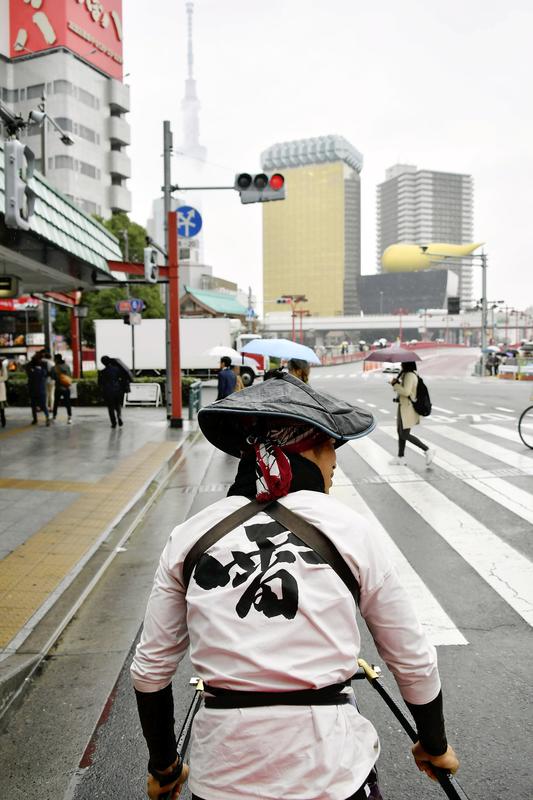
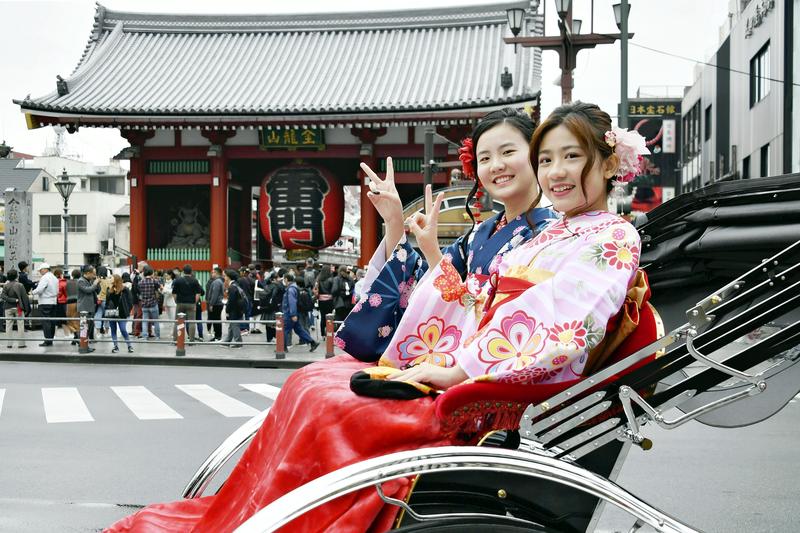
Tourists dressed in kimono and riding in rickshaws are a common sight in the Asakusa district of Tokyo. The slightly higher vantage point of a rickshaw lifts the spirits and can be a way to rediscover Asakusa's charms.
English, Chinese, Spanish -- a symphony of languages can be heard around the Kaminarimon gate of Sensoji temple.
"Taking a stroll in a rented kimono, rickshaws and Japanese food -- bundling these three mainstays is an efficient way of enjoying Asakusa tourism to the fullest," said Shinichiro Yamaguchi of hotel and restaurant firm Fujita Kanko Inc.
Yamaguchi devised the "Japanese culture experience" plan that includes kimono rental and fitting, a ride in a rickshaw and a Japanese lunch for 8,000, yen including taxes and service fees.
Working with local businesses, they began soliciting customers in September through the website of the Asakusa Tourism Federation and elsewhere.
I followed two women in their 20s from Hong Kong as they took part in the tour.
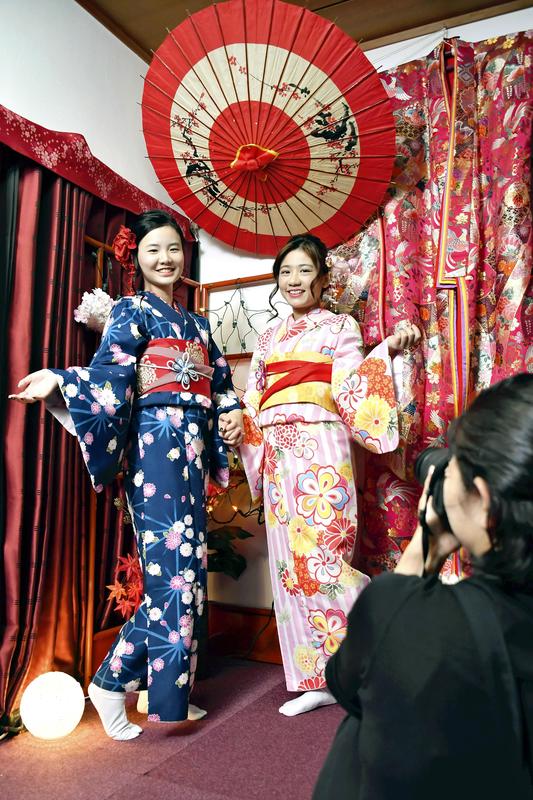
First, they visited the kimono rental shop Hanaka to put on the Japanese attire. After the women selected kimono and obi sashes from a wide selection, the shop's staff spent about 30 minutes helping them into the robes.
When they saw each other in kimono, they smiled in delight and said, "So cute!"
Posing in a corner of the store set up for photography, they took pictures to remember the day.
Stepping outside the building where the store is located, a driver employed by the rickshaw company Ebisuya was waiting. The two-person rickshaw had a retro design intended to evoke the time when Japan was opening up to the West during the Meiji era (1868-1912). The driver that day spoke good English.
Going along the Sumidagawa river, the rickshaw passed by near the Azumabashi bridge with its striking red balustrades, Kaminarimon, and through the alleys around Sensoji.
After about 15 minutes, the driver dropped the pair off at the ride's starting point. The route is a popular one for the view it gives of Tokyo Skytree across the river and passing close to Sensoji.
Waiting at a traffic light, another pair of foreign tourists spotted the two women on the rickshaw and pointed their smartphones in their direction. Smiling and waving from atop the rickshaw, they appeared to enjoy behaving like celebrities.
"The rickshaw was faster and more comfortable than I thought it'd be," one of the women said. "I got a taste of regular Japanese life in the alleys."
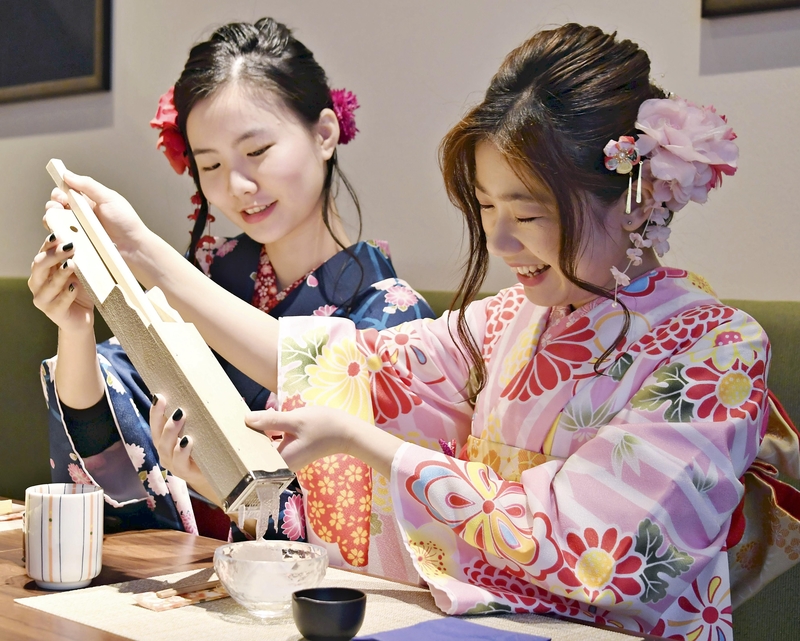
After the ride, the women went to Japanese Restaurant ORIGAMI Asakusa, which is run by Fujita Kanko, for lunch. The main course was fried beef cutlets, then it was time for dessert -- tokoroten, a kind of jellied agar, garnished with dark molasses. They enjoyed it using a tool called a tentsuki to push the tokoroten through a mesh that cut it into thin strips.
After the meal, they walked around Asakusa in their kimono, which did not have to be returned until the evening. Depending on the time of day, some tours have lunch before the rickshaw ride.
"The current trend in travel is experience-based. Putting on a kimono, riding on a rickshaw and talking with the driver -- these are out-of-the-ordinary experiences. I think Japanese customers would enjoy it as well," Yamaguchi said.
With the end of the Heisei era (1989-) approaching, it might be time for some retro fun.
Halal, vegetarian meals
Japanese Restaurant ORIGAMI Asakusa, which opened in Asakusa in July, aims to provide meals for tourists from all over the world.
In addition to regular Japanese meals, the restaurant has halal items that are allowed under Islamic food rules, as well as options for vegetarians.
The halal items contain no pork or alcohol, which are forbidden under Islam, and are made with beef and other ingredients according to prescribed methods.
"We'd be happy if people from many countries can eat Japanese food, something we can be proud of before the whole world," said Yamaguchi.
-- Shinichiro Yamaguchi
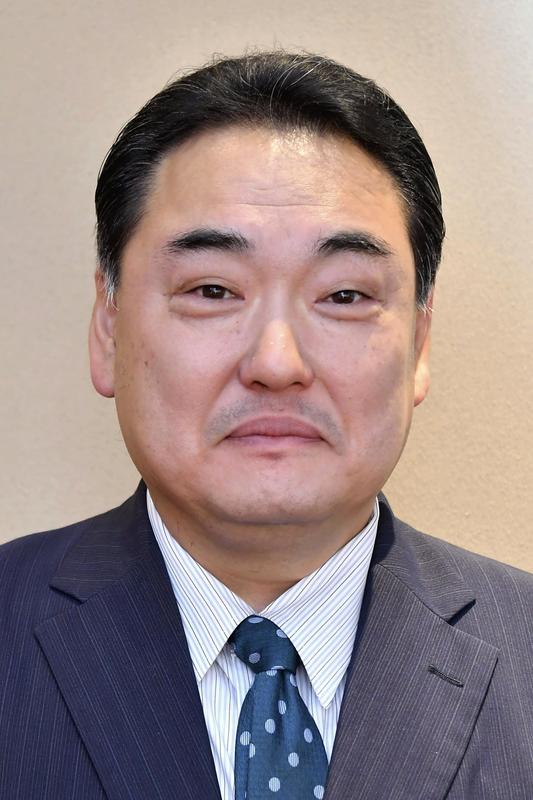
Yamaguchi was born in 1967 in the Asakusa district of Tokyo. He works for tourism company Fujita Kanko, which operates hotels in Japan and abroad, including the Washington Hotel chain. He currently heads the department of business promotion and dining coordination. He mapped out the "Japanese culture experience" plan and is involved in promoting the charms of Asakusa.
Read more from The Japan News at https://japannews.yomiuri.co.jp/