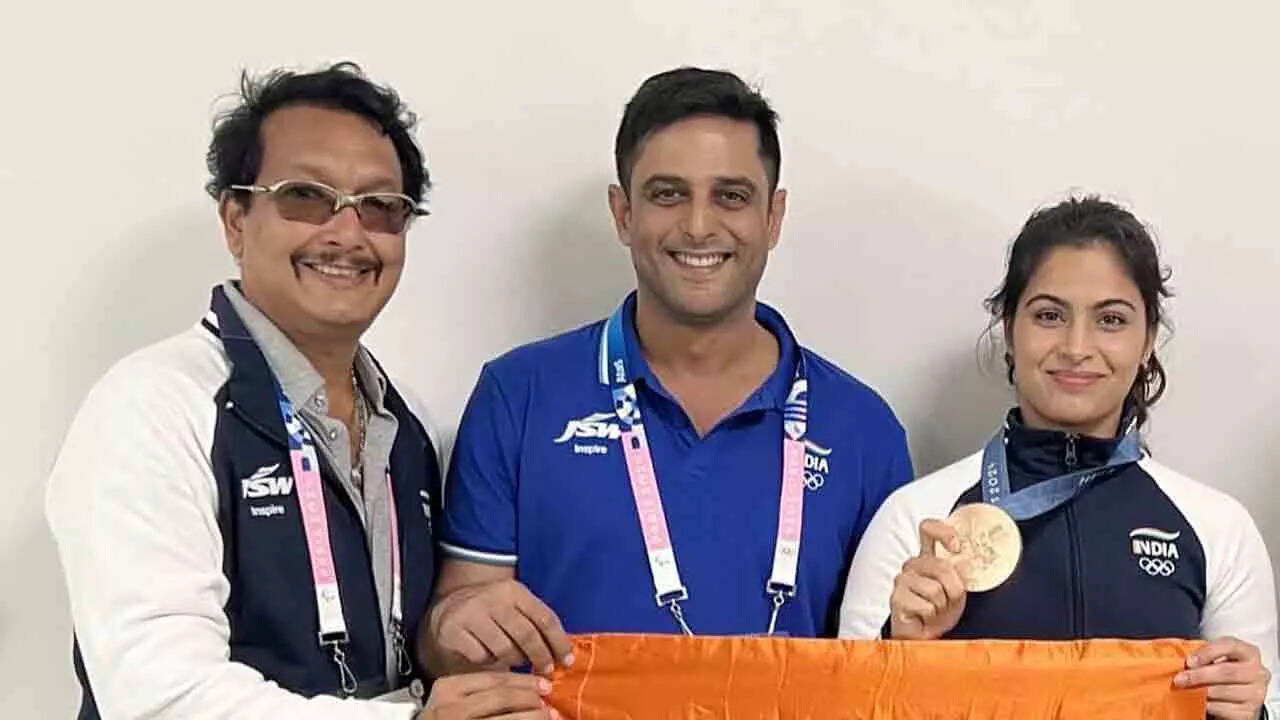
NEW DELHI: Kalikesh Singh Deo recently took charge as the president of the National Rifle Association of India (NRAI). Deo's first major assignment as the shooting body's chief will be the successful organisation of the World Cup Finals in New Delhi later this month. He informed that a total of 37 nations and 132 shooters, including 23 from India, will be participating in the event. As a federation head, Deo also spelt out his vision where his primary focus would be on supporting high-performance athletes and capitalising on the success from Paris.
Excerpts from an exclusive interview...
Tell us about your future plans as NRAI president to take the sport to greater heights?
Kalikesh: In light of the Indian shooting team's success at the Olympics, we believe this is an ideal time to capitalize on the increased visibility of the sport. Our goal is to expand the reach of shooting across India, right down to the grassroots level. Currently, we have a strong base of approximately 82,000ef registered shooters who participate in competitions at various levels. We aim to provide them with enhanced support at the grassroots level to build a solid talent pool for our high-performance teams. Moving forward, we need to establish more high-performance centres to better support these teams and cultivate a larger group of shooters from which we can select our national team for future competitions. Another key focus will be to offer more opportunities for these athletes to receive guidance from both our national and foreign coaches. Additionally, we will continue working with the Government of India to strengthen our junior team, which has been instrumental in developing our current bench strength.
In Paris, Indian shooters won three medals. Do you believe we could have ended with more medal count in some of the other shooting events?
Kalikesh: Yes, we secured three medals, and we narrowly missed three more, finishing in fourth place in some events. For example, Ramita Jindal reached the finals, and while we could have won more medals, the performances of all our shooters were commendable. Even those who didn't make it to the finals, like Sarabjit, who missed qualifying in the Men's 10m Air Pistol by a tiebreaker, put up strong performances. Several of our athletes finished in positions ranging from 8th to 12th, which is a significant achievement at the Olympics. However, moving forward, one of our key priorities will be to ensure that our athletes are mentally prepared and resilient enough to convert their performances into medals during major events like the Olympics.
What are the plans for Los Angeles 2028? How does NRAI make sure that the gains made in Paris 2024 don't go to waste when it comes to planning for LA 2028? What will be the NRAI's vision?
Kalikesh: Since our recent elections, we've hit the ground running. The visibility of shooting has increased, and there is growing interest in the sport. As part of our efforts to maintain momentum, we successfully bid for the World Cup Finals, which will be hosted in Delhi shortly after the Olympics. This gives our shooters and Indian fans a chance to witness some of the world's best talent compete on home soil. We have also received immense support from younger shooters, with around 400-500 volunteering to assist in organizing this event. Our focus now is to secure more international events, such as Junior World Cups and quota competitions, in the lead-up to the LA 2028 Olympics. We are committed to expanding the talent pool by ensuring that athletes at all levels receive ample support from both our national and foreign coaches. We will also work to provide foreign exposure to not just the main national team, but also our second and third-tier teams, so they can compete in various international events. We are leaving no stone unturned in our preparations to improve our performance at the LA Olympics.
What are the key areas you would be focusing on as an NRAI president?
Kalikesh: My primary focus will be on supporting our high-performance athletes and capitalizing on the success from Paris. It is essential to raise the visibility of shooting as a sport and secure adequate funding, whether through CSR initiatives, government support, or internal competitions, to channel resources toward both high-performance athletes and grassroots development. We also aim to increase the reach of shooting in areas where there may be gaps and establish more high-performance centres. Additionally, we will work closely with state bodies and academies to improve the organization of state and national-level events. Ultimately, our goal is to ensure that athletes at all levels-from schools and colleges to national and international competitions-receive the best possible support from NRAI.
India will be hosting the prestigious World Cup Finals in October. How have the preparations been and how many countries and shooters have confirmed participation for the event? Also, are we hopeful of granting visas to shooters from China and Pakistan to compete in the Finals?
Kalikesh: A total of 37 nations and 132 shooters, including 23 from India, will be participating. While Pakistan will not be part of the competition, China is, and they regularly compete in our events without any issues. We don't foresee any challenges in granting visas for their athletes. This is the most prestigious event in the shooting calendar, bringing together finalists from World Cups worldwide, including top shooters from countries like Turkey, Korea, China, and India. NRAI is working diligently to ensure that all preparations are in place for a successful event. We see this as an opportunity to establish a strong foundation for bidding for more competitions in the future. There has been significant interest from schools, colleges, and shooters across the country, and we are opening the arena to anyone interested in attending. We look forward to welcoming everyone to the opening ceremony and for the rest of the competition.
India's former star shooter, Jitu Rai, recently quit the Indian Army to focus on training the country's young shooters. He wants to either become a high performance coach or open his own shooting academy. Has NRAI thought about something for him...any plans to utilise his experience?
Kalikesh: Jitu Rai has been one of India's most accomplished shooters, and it will be a pleasure for NRAI to work with him and help him realise his dreams. We believe that former shooters should consider transitioning into coaching or technical roles within the sport. NRAI would welcome Jitu Rai's involvement, along with other retired athletes. Sanjeev Rajput has already joined our coaching team, and we are eager to work with more former shooters who want to contribute to the national coaching staff or high-performance teams. Their experience would be invaluable in helping India compete on the international stage.