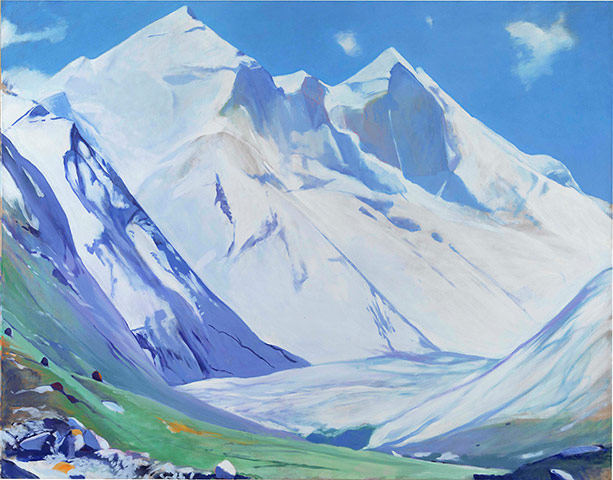
Gathering source material for this series of 21 oil paintings from the banks of the Ganges (the show’s full title is Ganga 21), Kevin Pearsh set off from the Himalayan mountains and ended up at the Bay of Bengal a year later. Taking more than 2,000 photos and making daily watercolour sketches the artist accumulated a deepening sense of the Ganges as a cultural and spiritual force. Against Pearsh’s hugely imposing vistas, human endeavour is pictured as a humble minor detail. The tiny figure in Lone Fisherman 2007 stands in stark contrast to the giant statue across the river at Haridwar in Shiva 2008. Thus, the natural world is embodied as an environment into which human creativity is obliged to find some small viewpoint from which to paint its praise.
Birmingham Museum & Art Gallery, Tue 5 Nov to 18 Nov
RC Photograph: Philippe Hiest
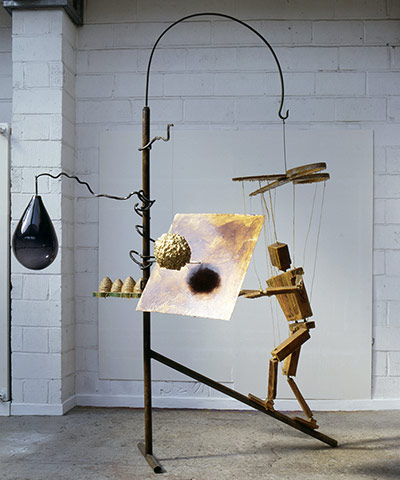
Joining the dots through Bill Woodrow’s 40-year career can initially seem like a puzzle. At one end of this show, there’s work from the late 1970s and 1980s breaking down our relationship with gadgets and machines, with his eyes trained on everyday consumerism. At the other there’s his Beekeeper series, a surreal literary adventure through the constraints of working life, with marionettes caught up in an environment of bronze, wax and honey. Finally, his most recent elaborate bronzes are paired with glossy abstract blocks of laminated MDF in jazzy colours. Underpinning all this is Woodrow’s interest in excavating objects, first to uncover their material reality and later their poetic potential.
Royal Academy Of Arts, W1, Thu 7 Nov to 16 Feb
SS Photograph: PR
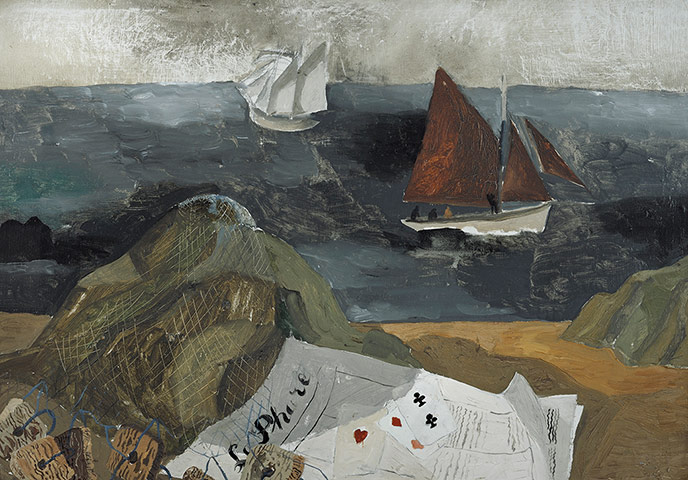
This exhibition reveals a joint creative project fired by Winifred and Ben Nicholson’s mutual passion for the rural wilds of Cumberland and Cornwall, and the pictorial experiments filtering through from modernist Paris. Pieces from friends such as Christopher Wood (work pictured) and the ceramicist William Staite Murray will appear as well. Also inevitably included here are inimitable and irresistible seascapes by the self-trained painter Alfred Wallis, whom the Nicholsons “discovered” working away in virtual isolation in a St Ives fisherman’s cottage. Touchingly, Wallis simply said he painted in order to keep himself company after the death of his wife.
Leeds Art Gallery, to 12 Jan
RC Photograph: PR
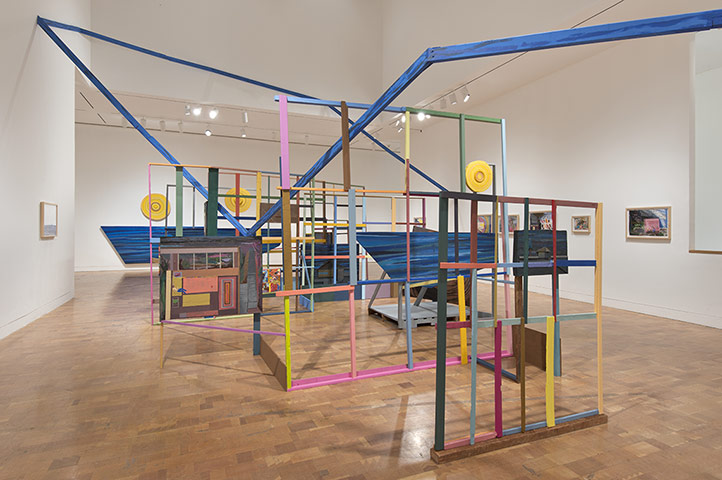
There’s a mock naivety about much of Chris Johanson’s installations that tends to disarm any critical detachment. You are drawn into feeling part of the fun and the frustration of the creative process, as forms are built up only to be dismantled and rearranged into precariously unresolved compositions. The gallery space is invaded and traversed by multi-coloured timber structures into which are slotted bold paintings of seaside sheds and close-ups of a sun-drenched Mediterranean sea. The pastel colours add to the impression of a seaside shantytown playground improvised by a creative adolescent.
The Modern Institute, to 20 Dec
RC Photograph: Brian Forrest
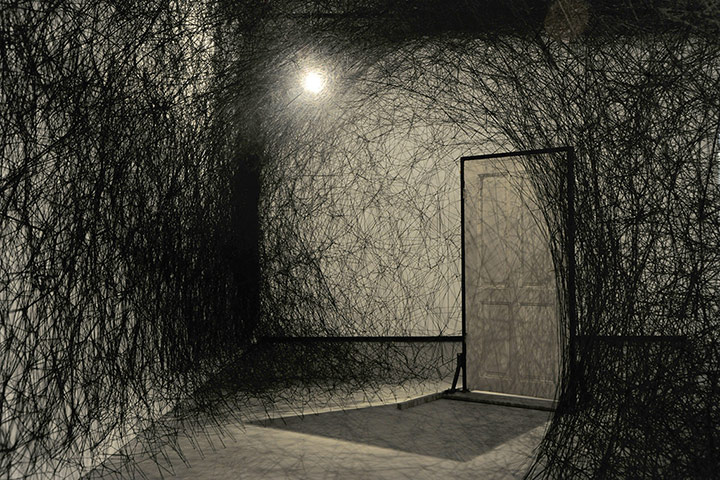
Chiharu Shiota turns galleries into spooky, spectacular mazes with densely woven webs of black yarn. Her tangled threads resembling synapses become a shadowy nest for memories, encasing objects from her own and others’ pasts. For her installation at Towner gallery, she’s entwined white doors from her hometown of Berlin in a net that coats walls, floor and ceiling (pictured). The group show Wonderland complements her highly wrought installation with work by artists interested in subverting the logic of the built environment. There’s conceptual trickster Ceal Floyer’s door to nowhere and British painter Derek Boshier’s hard-edged geometric abstraction suggesting a fantasy city plan reminiscent of MC Escher’s buildings.
Towner, Shiota to 5 Jan; Wonderland, Sat 2 Nov to 26 Jan
SS Photograph: PR
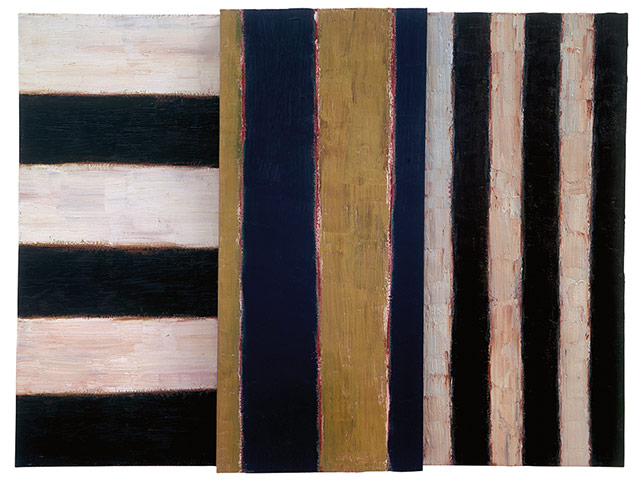
Triptych painting is one of western art history’s great relics. The format referencing the Christian holy trinity in a symbolic three panels isn’t something you come across too often in the 21st century. Unless that is you’re looking at Sean Scully’s work. The British abstract expressionist has long explored painting’s spiritual potential in a secular age. This show is the first in the UK to focus exclusively on his triptych paintings (pictured), which began in the 1980s after he encountered an early 14th-century altarpiece in Sienna. In place of the traditional Madonna And Child, Scully gives us thick lines or grids; one composition distils the palette of traditional triptychs into a grid where gold and lapis lazuli blue shines amid earthy brown and black.
Pallant House Gallery, Sat 2 Nov to 26 Jan
SS Photograph: PR
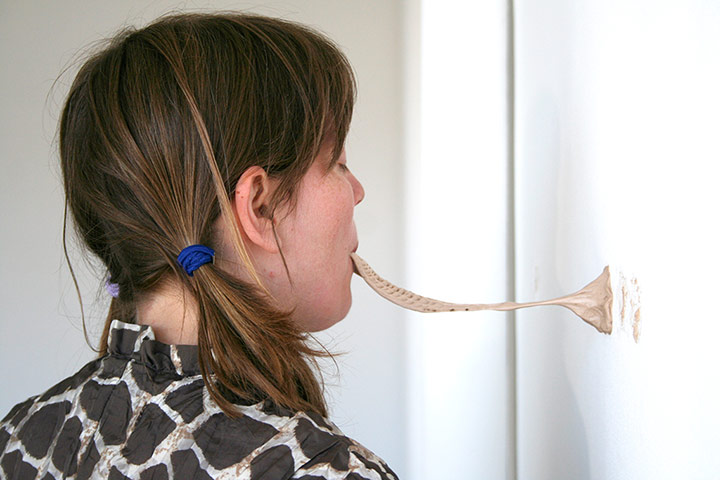
Lisa Watts is touring the country, responding to the work of different artists at three galleries. In this second show she comes across a fellow spirit in sculptor David Kefford. Both Watts and Kefford create highly inventive scenarios from the most humdrum of found materials, with Kefford summoning surreal tableaux out of textile scraps and old plastic bags. How Watts will respond to such set-ups remains to be seen in a series of live developments in the gallery, though a recent video in which the artist shackles herself to the gallery wall with a stretched skein of chewing gum (pictured) could be a pointer.
Vane, to 14 Dec
RC Photograph: Mark Cohen
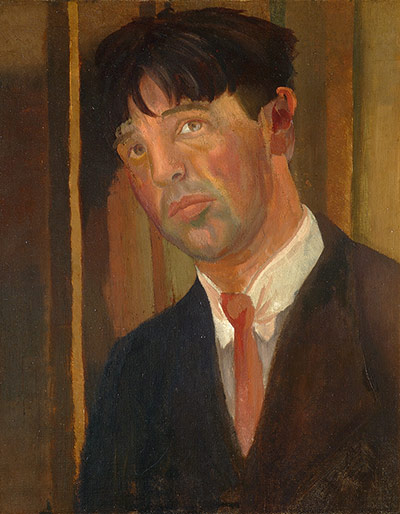
Stanley Spencer (self-portrait pictured) loved English village life to the point of religious ecstasy, setting biblical scenes amid the sewing circles and flowerbeds of his native Cookham. His masterpiece, though, is the series of murals about the first world war created for the Sandham Memorial Chapel in rural Hampshire. Through often compared to the Sistine Chapel, the paintings’ out-of-the-way location means their audience has been limited. Spencer always wanted to show them in a gallery, and now the chapel is closed for renovations they’re making their London debut. Described by the artist as “a symphony of rashers of bacon” and “tea-making obligato”, this is visionary war art of another order, focusing less on blood spilt than the day-to-day experiences behind the main events.
Somerset House, WC2, Thu 7 Nov to 26 Jan
SS Photograph: PR