Frizz is my number one hair enemy. One step into a humidity-laden environment turns my typically wavy hair into a large-and-in-charge situation that no styling product or leave-in-conditioner can tame. Air-dry creams and at-home keratin-infused products help a bit, but the best defense to calm frizz is a professional keratin hair treatment, also known as a Brazilian blowout.
The most classic (and controversial) keratin treatments require chemicals like formaldehyde, a known carcinogen, and can damage hair health, permanently change curl patterns, and dry out hair strands from intense processing. But innovations in the hair space have come a long way, and more natural keratin treatment alternatives—also referred to as keratin smoothing treatments—are now available in salons for anyone looking to banish frizz.
"These treatments can significantly cut down on styling and blow drying time so that they can be a major time saver," explains hairstylist Kee Taylor. The idea is that once the keratin treatment is complete, my hair will air dry frizz-free (!!) and have a stronger defense against humidity for roughly six months.
There are a handful of benefits and cons to consider before scheduling a keratin treatment, including which type is best for you and your hair texture. From what to expect during the appointment and the safety of the chemicals to aftercare, I asked professional hairstylists about everything you need to know ahead of a keratin treatment.
What Is Keratin?
Your hair is loaded with keratin. It's the fibrous protein that forms the main structure of our hair and is effective at blocking out humidity. Think of it like the grout that fills in the gaps between bricks.
Over time, hair loses keratin from sun exposure, hot tools, and chemical processes like bleaching. "When the hair is depleted of proteins, it can look dry and lifeless. It also has a lot more frizz, tends to swell in humid weather, and is prone to not being protected from the sun and environmental damages, especially if it's been color-treated," shares Ebony Gordon, CEO of Hairista Studio. To use the metaphor above, less grout means a weaker structure that won't have strong defenses against the enviornment.
What Is a Keratin Treatment?
"Keratin treatment" and "keratin smoothing treatment" are often used interchangeably but they are technically different. Traditional keratin treatments, aka Brazilian blowouts or straightening treatments, “break the bonds of the hair so it is permanently straight or mostly straight and leave a demarcation line during grow out," shares hairstylist Kennidi Wallgren.
With a straightening treatment, your hair is coated in the keratin solution to break down bonds before it's blow-dried and straightened with a high-heat tool to seal it back up. In the end, your hair is frizz-free and straight. "[These] are traditional keratin treatments known to last longer and smooth the hair out more," explains Caspara. While the change in texture can be dramatic and is effective on even the curliest and coilest hair, traditional keratin treatments contain chemicals known as aldehydes that can be damaging to your hair and overall health in general (more on that below).

On the other hand, a keratin smoothing treatment, like Cezanne, GK, or Kerasilk aim to help you add shine and cut down on frizz without disrupting your hair's natural texture. It won't completely straighten your hair (you'll keep a bit of your curl pattern), but it will make it sleek and frizz-free. With less harsh ingredients, this is a good option for those with allergies or scalp sensitivities, or if you're wary of the harsher chemicals in a straightening tretment.
What Are the Benefits of a Keratin Treatment?
- Humidity Protection: While a keratin treatment will provide more humidity protection than a keratin smoothing treatment, both effectively reduce frizz. Think of it this way: exposure to sun, hot tools, and bleach removes keratin, weakens the hair, and makes it susceptible to frizz, explains Ebony Gordon, CEO of Hairista Studio. Using a keratin treatment helps supplement the missing keratin, create a stronger hair strand, and block out moisture in the air.
- Adds Shine: When a keratin treatment fills in porous spots of your hair, the hair cuticle is stronger and smoother. That means it can catch the light more easily and appear glossier and more radiant.
- Makes Air Drying Easier for Textured Hair: Following a keratin treatment, your hair will naturally dry straighter and less frizzy without a blow dryer or flat iron. "I recommend still using styling products, but it can substantially cut back on the time it takes to get ready," says Gordon.
- Good for Most Hair Types: If you struggle with frizz, chances are you’re a viable candidate for a keratin treatment. Typically, Caspara says that those with curlier or coilier hair seek out the treatment more frequently; however, even those with loose waves may find that a keratin treatment or keratin smoothing treatment makes their hair dry straighter and smoother. As always, consult with your hairstylist to determine if the treatment is a fit for you.
Is a Keratin Treatment Safe?
The most controversial aspect of a traditional keratin treatment is that the composition frequently includes formaldehyde, which the FDA is looking to ban. A carcinogenic chemical, the safety of formaldehyde in chemical straighteners was majorly called into question in December 2022, when a study showed that women who regularly use formaldehyde-containing products more than double their risk of endometrial cancer. (It's important to note that despite this statistic, the rate of endometrial cancer remains very low.)
Frequent exposure to formaldehyde can also cause respiratory problems, with the CDC stating that "exposure to formaldehyde can irritate the skin, throat, lungs, and eyes."
While the label "formaldehyde-free" is often touted in keratin smoothing treatments as a much safer alternative, you still need to be wary. Formaldehyde isn't just an ingredient you can control+find on a list; it's a gas that's released when other chemicals are exposed to heat. To identify products containing formaldehyde-related ingredients, medical researcher Alexandra Arriaga recommends looking for the following words on your label: formaldehyde, formalin, and methylene glycol.
What Happens During a Keratin Treatment?
Whether you’re getting a keratin treatment or a keratin smoothing treatment, you can expect roughly the same order of operations. "The treatment typically begins with a clarifying shampoo to remove any product buildup in your hair,” explains Taylor. Then, your hair will be blow-dried, and the keratin formula will be applied to the entire head in small sections. "This step is followed by another blow dry that must render the hair 100 percent dry." Once dry, the hair is flat ironed at a high temperature (typically 450 degrees) until each section is completely straight.
How Long Does a Keratin Treatment Take?
An in-salon keratin treatment takes a long time, regardless of whether you're doing a straightening or a smoothing treatment. It can take roughly two to three hours, but it could easily take five hours or longer, depending on your hair's length and texture.
Can I Shower After a Keratin Treatment?
With a keratin treatment or Brazilian blowout, you must stay away from water for 72 hours and keep your hair down so it doesn't deform—no ponytails or claw clips allowed. "I know it may be hard to completely avoid getting your hair wet for three full days, so I recommend getting a reusable shower cap," says Taylor. "If your hair does come into contact with water during those 72 hours, don't panic! Just dry and straighten the area that got wet."

Some keratin smoothing treatments, like Kersilk and GK, also encourage waiting two to three days before showering. There are, however, some treatments that don't require you to skip the shower. "The best part of Cezanne's Keratin Smoothing Treatment and other alternatives is that there is no downtime. You can immediately resume your lifestyle, wear a ponytail, clip it up, shampoo—anything you want," says Wallgren. That said, you will still want to use a paraben- and sulfate-free shampoo and conditioner to prolong the life of your keratin or keratin-smoothing treatment.
How Much Does a Keratin Treatment Cost?
The price of your keratin treatment will vary based on location, salon, and how long it takes for your hairstylist to complete the treatment. While my treatment in Minnesota was on the lower end (it costs $300), keratin treatments in biggerb cities can go up to roughly $500 or $600.
What Are the Results of a Keratin Treatment?
If you’re getting a keratin treatment, be prepared for your natural texture to change; even the tightest curls can lose their bounce, says Taylor. You may still have a slight wave, especially with smoothing treatments, but you’ll also notice increased shine and less frizz.
How Long Does a Keratin Treatment Last?
The effects of a keratin treatment will last between three to six months. At that point, you’ll notice the shine diminishing and a return to your normal texture. That said, your curls may be permanently changed even after a keratin treatment is completely gone.
Can I Do a Keratin Treatment At Home?
While at-home keratin treatments don't last nearly as long as their in-salon sisters, they're a great choice if you want to go a more affordable (yet still smoothing) route. "Styling products containing keratin that can be used daily to manage hair can [also] be really effective," says Caspara.
"This contains hydrolyzed keratin and panthenol to smooth and moisturize strands to preserve straight styles while resisting humidity," says Caspara.
Marie Claire's favorite at-home keratin treatment, this Gussi duo is the closest you'll get to an in-salon treatment.
For a keratin-infused product that will add shine to all hair types and textures, scoop up this affordable jumbo jar on Amazon.
K18's reputation precedes it. There's a reason celebrities like Kim Kardashian and Jennifer Aniston swear by the hair mask's reparative properties. One use of this cuticle smoothing mask will leave your hair shiny and frizz controlled.
I am a Davines girl through and through. While this isn't going to completely remove frizz, a small drop before going outside will certainly reduce it.
Repair damaged hair and get one step closer to stronger strands by using this hair mask on the regular.
My Keratin Smoothing Treatment Review
I was wary of getting a keratin smoothing treatment because my hair is fine and only has the slightest texture (on a good day). Why would I risk losing the little volume I have? That said, I eventually settled on the keratin-smoothing treatment, Cezanne.
While someone with curlier or more textured hair would have a more dramatic result, Wallgren told me that I would still notice frizz protection and a shinier finish when I let my hair air dry.
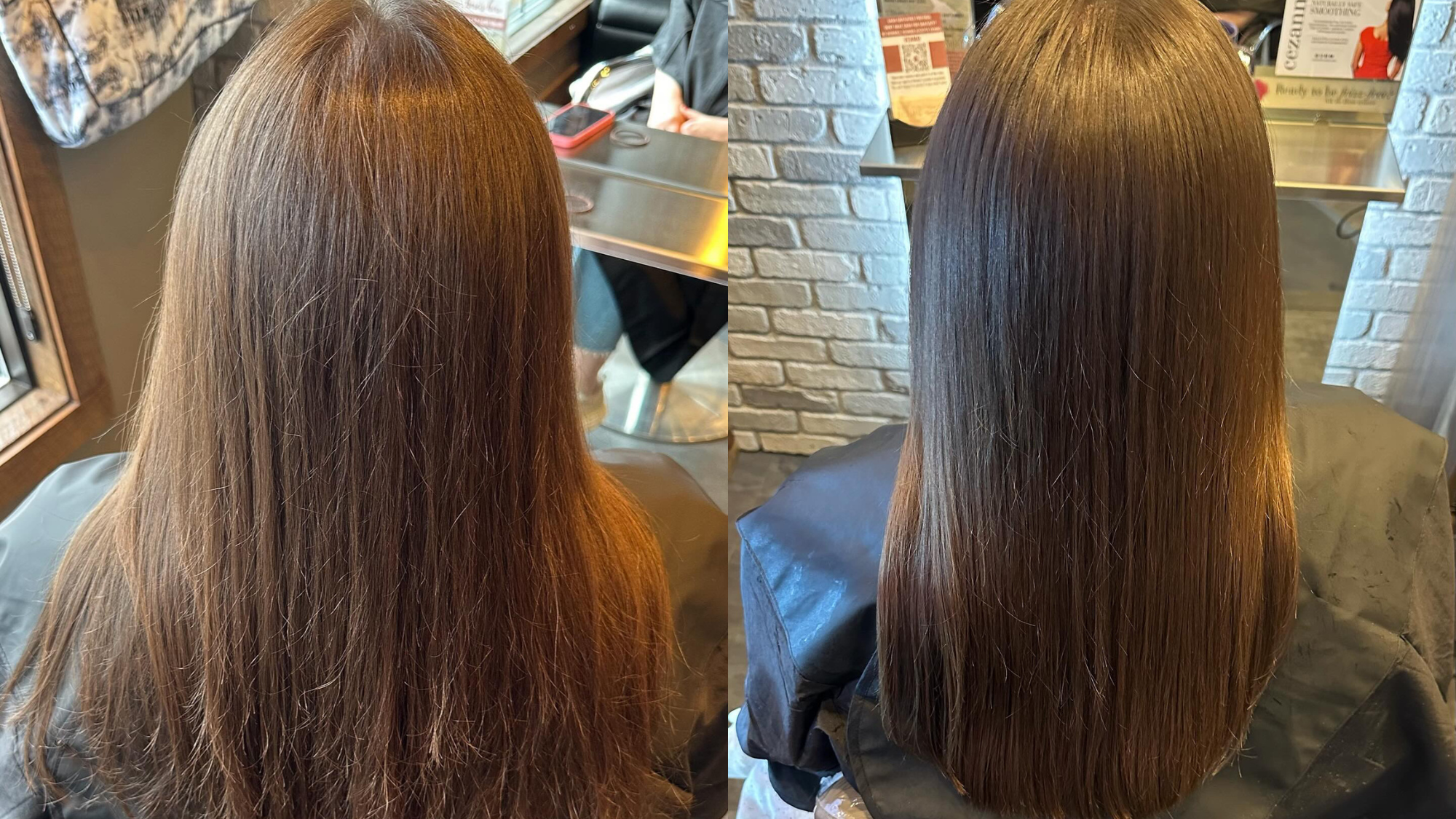
The three-hour process went exactly as Taylor had described. While it was a long time spent in a chair, I heard it took Zendaya's stylist nine hours to make her hair honey blonde, so I cannot complain. Wallgren diligently applied the activator to every section of hair, let it process for 30 minutes, and straightened my hair at 450 degrees to seal it all in.
After a final wash, I was blown away by how fast my hair dried—and how sleek it looked with no product or styling. Since my appointment, I've made everyone I know run their fingers through it because it's so silky. While I know the true test will be the summer's humidity, I feel good about where things are headed. Maybe, for once in my life, my morning hair routine will take under five minutes.
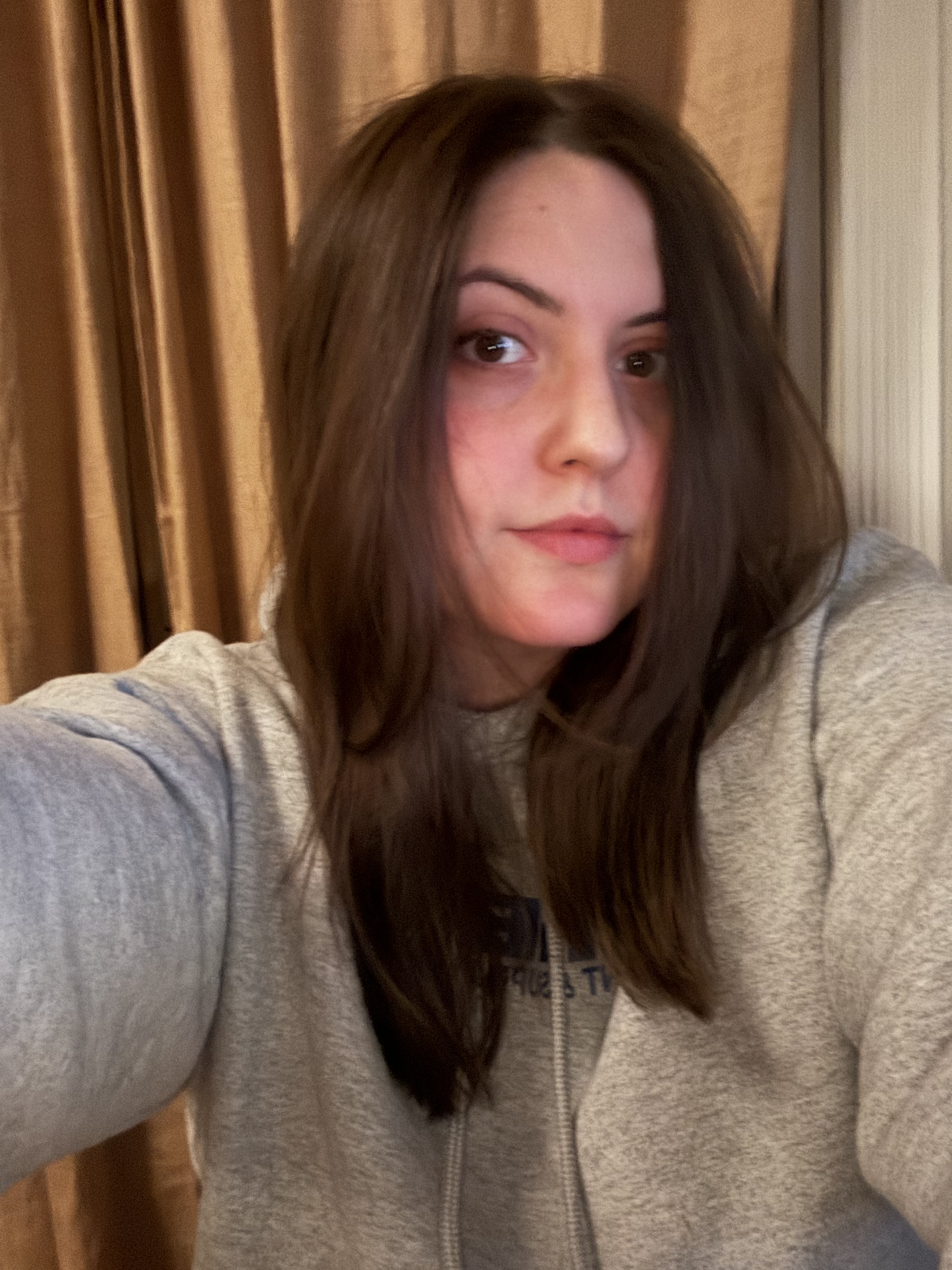
Still, I will once again say that this was my experience. You (and your hairstylist!) will know what's best for your hair.