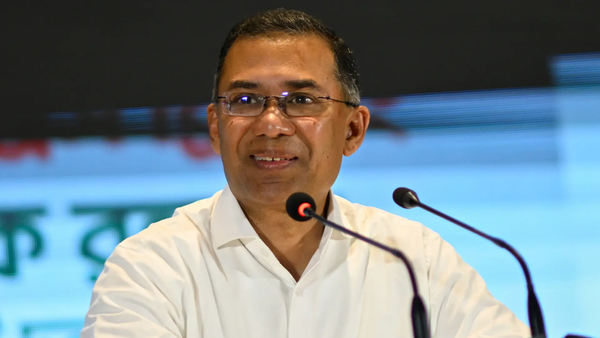
“A broken ceramic commode maybe an ugly piece of waste but, for me, it is useful construction material. In fact any kind of debris is great to work with.” Architect Vinu Daniel’s significant body of work challenges conventional design and building practices.
His latest innovation is a shuttered debris wall, which is proving to be a low-cost and stylish building solution. A residence under construction in Pothencode, Thiruvananthapuram is using this wall, for which the patent is pending, along with a design that creates “a safe haven for frogs, dragonflies and snakes” and nurtures local ecology. Created along with architect Shobhita Jacob, the wall is a mixture of poured and rammed earth with debris of varying sizes — three to seven centimetres in diameter — with 7-8% cement stabiliser.
One of Vinu’s early works is Tease Me Café in Kottayam. Its walls fall and fo
The 38-year-old says, “I am an anarchist by choice; anything other than conventional is creative.” Vinu graduated in Architecture in 2005 from College of Architecture, Thiruvananthapuram, but hated it because it was like “building someone’s ego.” His attitude changed after listening to “the great Laurie Baker” who spoke about the idea of building around a tree. “Architecture did not make any sense to me until then,” he says.
Originally from Alappuzha, Vinu grew up in an affluent household in Dubai. This showed him the non-functionality of opulence in plenty and the desert made him realise the value of trees. Two distinct memories from childhood are of going to school on treeless roads in the searing desert heat, and wide chairs with large curvaceous arms that served no purpose.
Another influence on him was Auroville-based veteran architect Satprem Maini of Auroville Earth Institute. “I learnt from the venerable SN Kanade the reasons for dogmatic construction rules, like why the window sill is 60 cm high. It is a Victorian legacy, because the writing table was 80 cm and the ink pot needed to be at a comfortable height on the window sill at 60cm,” he laughs. In the aftermath of the tsunami, he learnt all about the mud block, building low cost houses at Auroville Earth Institute in 2006-2007 and gained experience in restoration while working on a Nataraja temple in Puthukoopam, Tamil Nadu.
Armed with these, he began innovating and convincing clients of his ideas. In Kerala the Compressed Stabilised Earth Blocks (CSEB) proved difficult to manufacture as they use up a lot of soil. So Vinu came up with a new strategy: using debris or waste construction material. “All over the world, in urban areas, there’s a huge issue of construction waste. I thought of recycling that,” says Vinu, who calls him self a vagabond, office-less architect, who moves from “site to site.”
Cloth and concrete
He founded Wallmakers in 2007 and recalls a time when his ideas were suspect and he got contracts only to build compound walls. When the first big break came, he remembers his brother, who works along with him, telling the client that they were only wall makers. “We started from there.” Today his team believes in his innovative ideas and non-conformist ways. “I am the chieftain of the tribe, so to speak,” he laughs.
What inspires him? Vinu talks about the sensorial and translating sensibilities into buildings. The ‘clothcrete’ captures the “smoothness of Michelangelo’s Pieta”, the casurina verandah is all about feeling the breeze at an altitude of 30 ft. The Umbrella Pavilion at the Kochi Muziris Biennale (2014) with its dramatic origami structure was all about contemporary visual arts.
A few of his current projects are: a residence for his physically challenged friend Gokul Retnakar, at Karikulam in Thiruvanthapuram, made from debris collected from quarries and the entire space will be a ramp; a school in Uganda (project by Kwagala Foundation) made of bamboo by the villagers.
Vinu has faced legal issues over his irreverent architectural ideas and won, “a case is still pending”, he remains undeterred, driven by passion
“People have accepted my innovations and we are going to use more alternative materials to build in a sustainable, cost effective and earth-friendly manner.”
- Vinu’s first mud structure, made on his family property,was a double storey shed to showcase the material. A client wanting to build a resort thought the medium used to be fit for footpaths and compound walls only.On another instance when Vinu was building a structure that had vaults and domes, he noticed people gathering on the site daily. When he enquired from his mason the reason for their presence he learnt that they came to see the dome fall. “Everybody was suspicious of mud, they thought poorly of it, few know its strength, ” says Vinu who has won awards for all his projects except one.