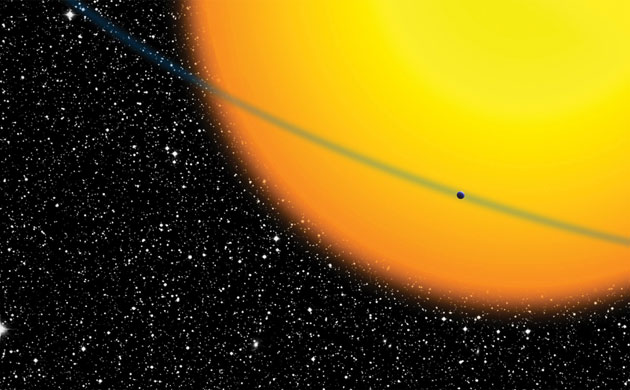
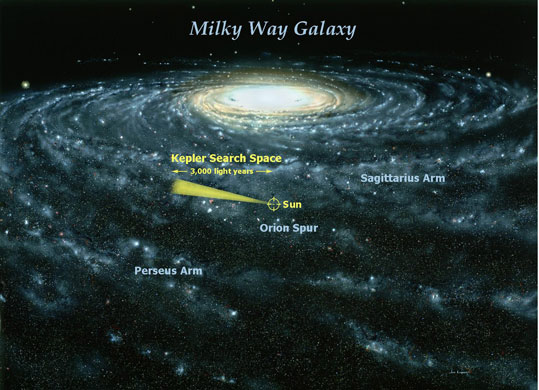
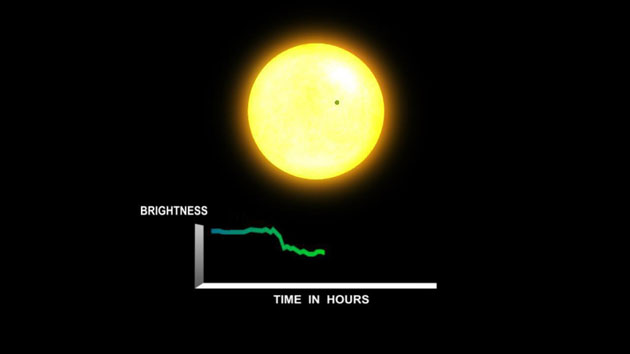
Kepler will detect alien worlds by measuring the minuscule dimming of a star's light that occurs when a planet passes in front of it Photograph: Ames Wendy Stenzel/NasaThe Milky Way, showing our sun about 25,000 light years from the galaxy's centre. The yellow cone illustrates the region or 'starfield' in which Kepler will hunt for habitable planetsPhotograph: Jon Lomberg/NasaWhen a planet passes in front of its sun this causes a mind-bogglingly tiny change in the star's overall brightness. “If Kepler were to look down at a small town on Earth at night from space, it would be able to detect the dimming of a porch light as somebody passed in front,” says James Fanson, project manager at Nasa’s Jet Propulsion Laboratory in California. An orbiting planet will produce a regular, periodic change in the brightness of its starPhotograph: Nasa
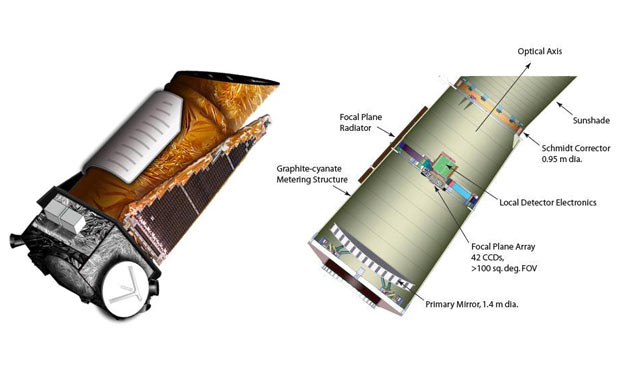
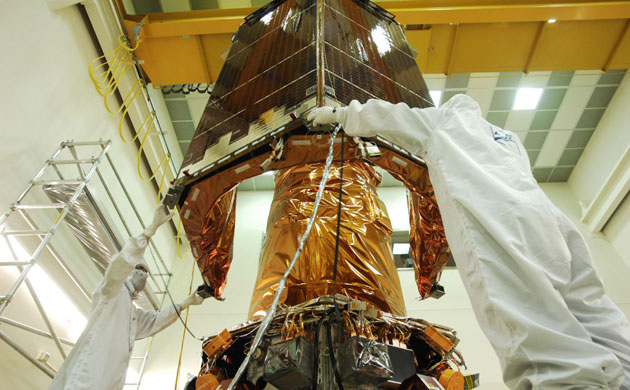
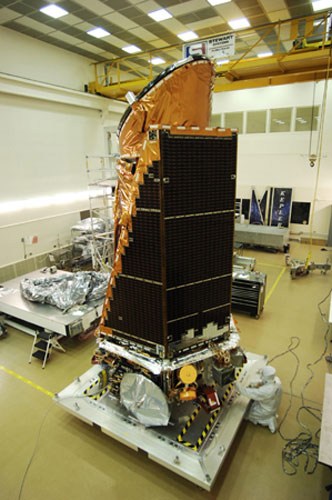
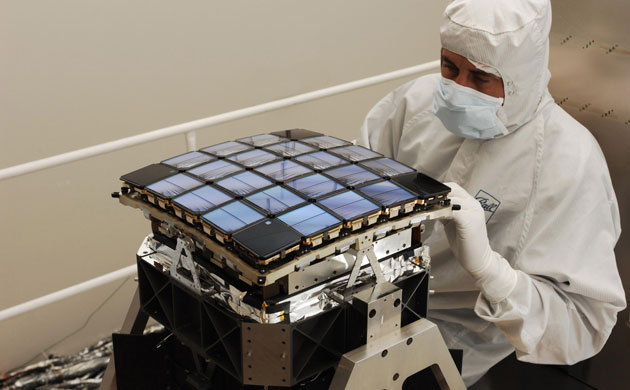
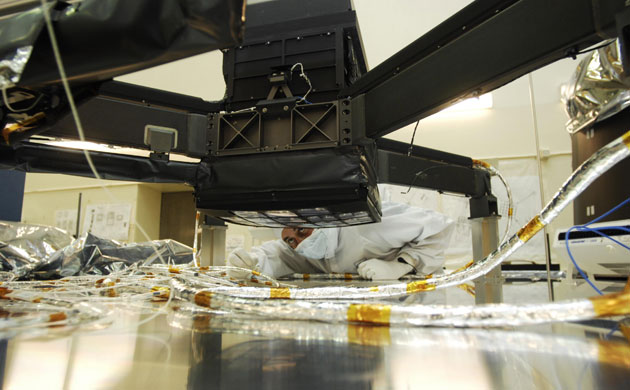
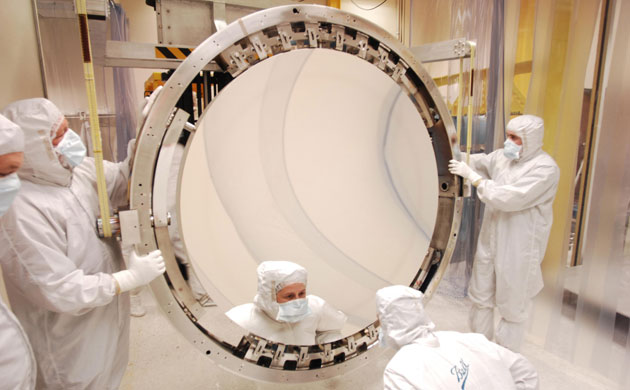
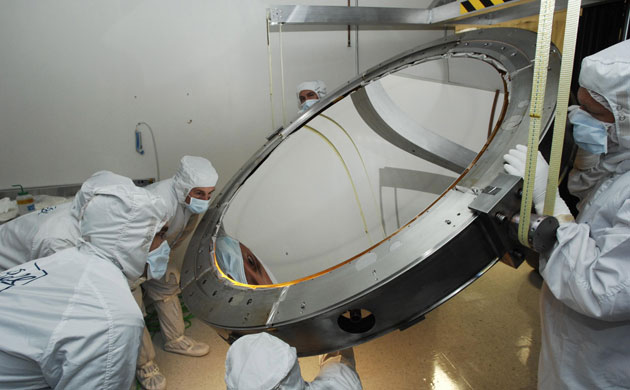
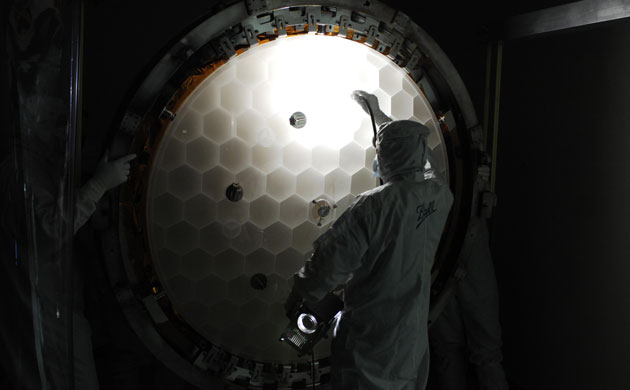
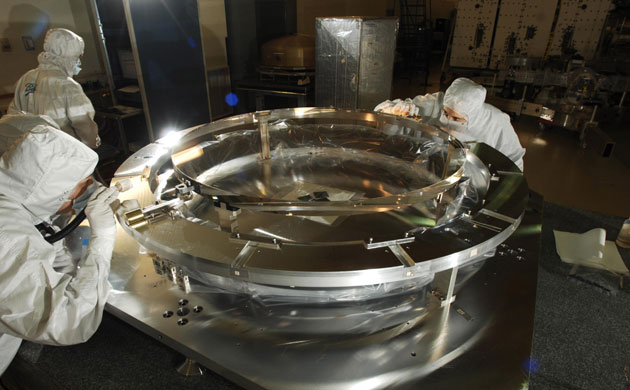
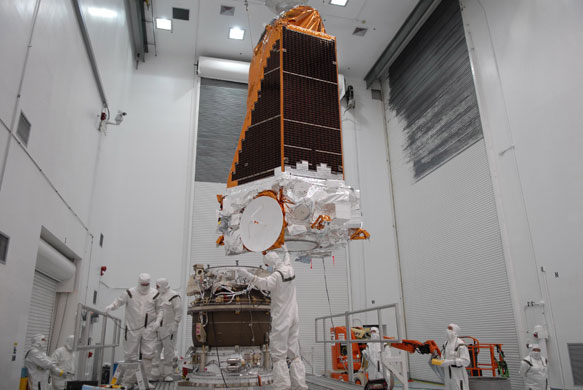
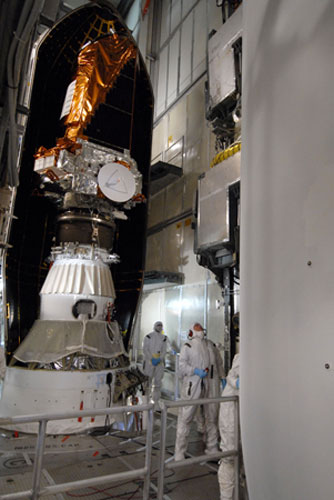
The exterior of the complete spacecraft (left) and a cutaway of the photometer with the major components labelledPhotograph: NasaInstalling the solar array assemblyPhotograph: Ball Aerospace/NasaThe fully assembled Kepler spacecraft and photometerPhotograph: Ball Aerospace/NasaIf the entire Kepler craft is an eye, the 'focal plane array' is its retina. It consists of 42 charge coupled devices (CCDs), each 2.8 by 3.0cm with 1,024 by 1,100 pixels, adding up to 95 megapixels for the whole arrayPhotograph: Ball Aerospace/NasaThe focal plane assembly showing the array of 42 CCDs in placePhotograph: Ball Aerospace/NASAKepler's primary mirror, which acts like a lens focusing light onto the detectorsPhotograph: Ball Aerospace/NasaTechnicians inspect the primary mirror's coatingPhotograph: Ball Aerospace/NasaRear view revealing the primary mirror's weight-saving honeycomb structure. The mirror only weighs a seventh the weight of a solid mirror of the same sizePhotograph: Ball Aerospace/NasaTechnicians work on the Schmidt corrector plate, which corrects optical distortions known as spherical aberrationPhotograph: Ball Aerospace/NASAThe spacecraft is guided onto the third stage of a Delta II rocketPhotograph: Troy Cryder/NASAOn Launch Pad 17-B at Cape Canaveral Air Force Station in Florida, the first half of the fairing is moved into place around Kepler atop its Delta II rocket. The fairing fits flush with the outside of the rocket and forms an aerodynamically smooth nose cone that protects the spacecraft during launch and ascentPhotograph: Nasa
Sign up to read this article
Read news from 100’s of titles, curated specifically for you.