Forty-eight hours before he was scheduled to report to federal prison, Keonne Rodriguez was still talking about code.
In 2015, Rodriguez launched Samourai Wallet, a bitcoin wallet designed for financial privacy. Its signature feature, called Whirlpool, allowed users to combine their bitcoin with others', obscuring the trail of who paid whom. "I think the best analogy for it is like smelting gold," Rodriguez told Reason in 2022. "You take your bitcoin, you add it into Whirlpool, and Whirlpool smelts it into new pieces that are not associated to the original piece."
Federal prosecutors saw something very different. According to the Department of Justice, Whirlpool was a money laundering machine. When prosecutors filed charges against Rodriguez and his co-founder, William Hill, they argued that the app was "specifically intended to conceal the nature of illicit transactions," knowingly transmitting more than $237 million tied to drug trafficking, darknet marketplaces, muder-for-hire schemes, and a child pornography website, among others. But just as selling someone a kitchen knife isn't a crime, building software capable of moving money doesn't automatically make its creators responsible for how others use it.
Prosecutors also charged that Samourai Wallet operated as an unlicensed money transmitting business—that it acted like PayPal, Venmo, or Western Union but failed to register with the Financial Crimes Enforcement Network (FinCEN). Yet the software never took custody of users' bitcoin, and FinCEN told DOJ prosecutors in official correspondence this meant Samourai Wallet wasn't a money-transmitting business.
Rodriguez ultimately pleaded guilty in July 2025 to conspiracy to operate an unlicensed money-transmitting business, a charge that carries up to five years in prison and a $250,000 fine. Hill faces a four-year sentence. U.S. District Judge Denise Cote imposed the maximum penalty allowed under Rodriguez's plea agreement, describing his conduct as "very serious, anti-social criminal behavior."
Rodriguez's case has grave implications for the future of privacy software. If publishing code that protects anonymity can land someone in prison, developers may start thinking twice before releasing tools the government finds inconvenient.
In this conversation with Reason's Zach Weissmueller, recorded in December just two days before Rodriguez was set to go to prison, Rodriguez explains why he built Samourai Wallet, how he views the government's allegations, and why he chose to plead guilty despite insisting he broke no law.
Reason: You launched Samourai Wallet about 10 years ago. What is it, and why did you create it?
Rodriguez: Samourai Wallet is what we would call a noncustodial bitcoin wallet. Noncustodial only means that the user of the wallet or the software is the one that maintains total complete control of their private keys or of their bitcoin as opposed to custodial, which is like a relationship that you have with your bank. You walk into the bank, you give them $100, that $100 is yours, but the bank is the one who's holding it for you. We built a noncustodial open-source piece of software, a bitcoin wallet named Samourai Wallet.
I got involved in bitcoin in 2012. I got involved because I saw bitcoin as a digital analog to physical cash, a type of censorship-resistant currency where there was no third party between you and what you were trying to transact with or to. By 2015, the culture in bitcoin and cryptocurrencies in general started to shift. It started to be more about an investment or an asset, a way to make a lot of money. And that's really not why I was here or my partner Bill was here. So instead of leaving the space or going to a different coin, we said, let's build the software that we want to see. Let's build the software that makes bitcoin what we believe it can be. If you have a censorship-resistant form of currency, you really need to have privacy built in.
What most people don't understand about bitcoin is that it's actually very transparent. There isn't privacy built into the protocol of bitcoin. If you have a web browser, you can log onto a website and see every single transaction that's ever occurred, and it's there permanently forever. That's not a great aspect of censorship resistance. So we needed to build software that could increase the privacy proposition for users so that bitcoin could live up to its potential of censorship resistance.
The way most people buy bitcoin is they go to an exchange like Coinbase, connect their bank account, buy bitcoin using that account, and then they can spend it, hold onto it, or transact with other people. There's this digital trail—a public ledger that ultimately can be traced back to a real-life person who used the bank account to get bitcoin. How did Samourai Wallet disrupt that flow or make it less easy to trace?
The way I like to describe to a lay person the type of privacy proposition that Samourai provided, again, imagine you walk to an ATM at your bank and you withdraw $100 out of the ATM. The bank knows you had $100 and the bank knows that you took out $100 in cash from the ATM, but the bank doesn't know what you do with that $100 after. They don't know where you spend it or where you send it to, and frankly, it's none of their business. What Samourai Wallet did was create that same level of financial privacy.
So they go to an exchange, they buy $100 worth of bitcoin from Coinbase. Coinbase knows who they are. Coinbase knows where they sent the $100 worth of bitcoin to, but once they use Samourai Wallet, Coinbase could no longer see what they were spending their bitcoin on, what they were spending that $100 worth of bitcoin on. And again, it's none of Coinbase's business. That relationship is now done. Once you've taken the bitcoin off of Coinbase's exchange into your own custody, into your own possession, it's nobody's business what you do with it afterward. We built the tool that essentially gave the basic level of financial privacy to a digital asset like bitcoin.
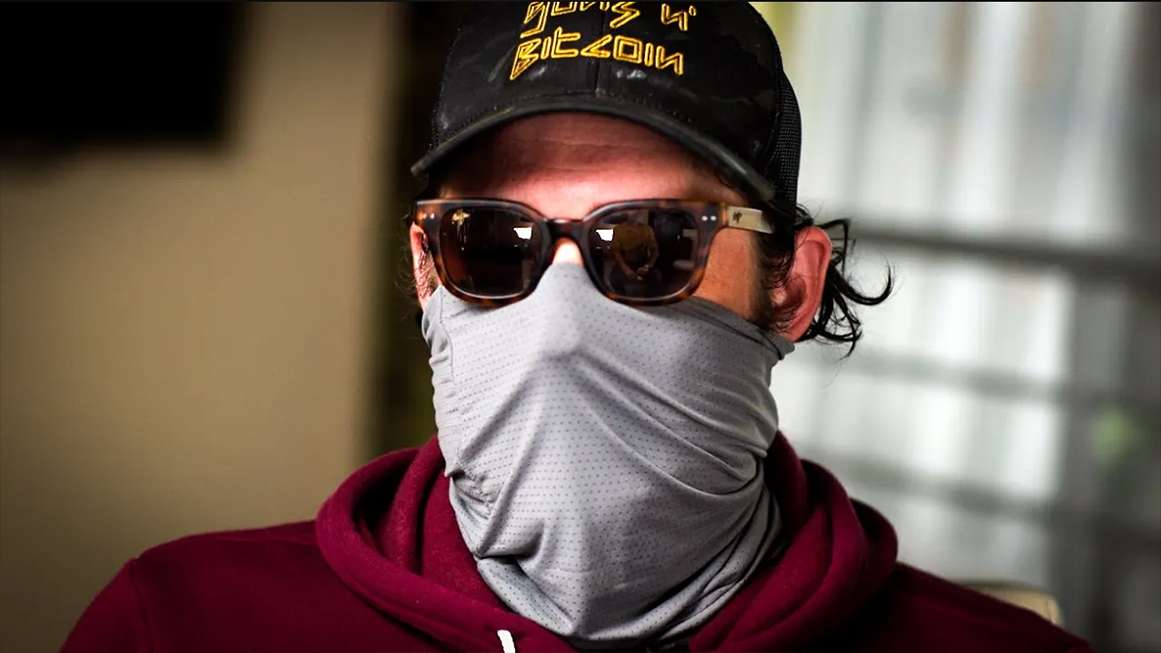
In 2022, at the Miami bitcoin conference, I spoke to someone from Samourai Wallet who was wearing a face mask and sunglasses to stay anonymous—I think that was you. They compared Samourai Wallet to smelting gold. Could you walk us through that analogy?
I think I described it as you said: a gold smelter where you and other people who want to get the same level of financial privacy all put in gold to the smelter. And in the smelter, all gold is equal and it comes out as gold. You don't lose any of it. It's the exact same gold. It's just been reformulated and recast into new ingots. You start with a scratched up and dirty gold ingot. It gets melted down and recast into a brand new, fresh, clean ingot.
Even that description isn't sufficient, to be honest with you, because what's actually happening in Samourai Wallet's Whirlpool functionality, which is what you would call the smelter, the person isn't actually getting rid of their Bitcoin. They're not actually ever sending their bitcoin into a smelter. The bitcoin is in their wallet at an address they control, and it's just being moved to another address that they control in their wallet. They never lose the bitcoin in any way. And that's exactly why we thought we were on the right side of the law, is that the user's always in total complete control of their bitcoin. No one else is.
It's crucial to your case that Samourai never had custody of any of this money, even though you pleaded guilty to running an unlicensed money-transmitting business. This wasn't a bank or a Western Union where you're collecting money from one person and then sending it to another. When thinking about whether or not you should be pardoned, why is that a particularly important consideration?
It is the major consideration. The regulatory agency in charge of illicit finance and money transmission is called FinCEN, the Financial Crimes Enforcement Network. It's a Department of the Treasury offshoot, and their whole remit is to stop illicit finance and to regulate money transmission. In 2013, they wrote, for a regulatory agency, very common-sense guidance. They said in order to be a money transmitter you have to take custody of the money, because how can you transmit something that you don't have? It was very clear in 2013. In 2019, they reiterated their previous guidance: You have to have custody and control of the money if you're a money transmitter.
You were operating under that good-faith assumption that this is what the federal government says, so we're playing within these rules. Then what happened?
They reiterate that, and they add additional language. They introduced this concept of what they called an anonymity service provider or an anonymity software provider. And they reiterate, they said, "If the anonymity software provider does not take custody of the funds, they are not a money transmitter." They were very clear. It wasn't in some garbled regulatory language. It was, as I said, very clear. After that guidance came out, we launched Whirlpool, which was our CoinJoin implementation—because what is Whirlpool if not an anonymity software provider? We thought we were good. We don't take custody. We're not a money transmitter.
The government, of course, we know they charged me with unlicensed money transmission, but what most people don't know is six months before the government brought the indictment, they actually went to FinCEN and the government asked FinCEN, "Is Samourai Wallet an unlicensed money transmitter?" And FinCEN responded to the government in writing, in black and white, "No, they don't take custody of the funds. We wouldn't consider them a money transmitter." The government had this information six months before indicting us, and then they indicted us anyway, with one of the charges being unlicensed money transmission.
How did the delay in informing you about this correspondence, given what seems like a pretty crucial concession, affect your legal defense?
We didn't find out about this for a year into the case. They had this information six months before indictment, and they hid it from us. There's a rule in criminal proceedings that the government has to hand over all evidence against the defendant whether that evidence is good or bad. Good evidence for the defendant is called exculpatory evidence, and they have an obligation under [the] Brady [rule] to provide that exculpatory information without us asking.
Thank God, my lawyer asked. He asked a year into this case, "Have you ever had any conversations with FinCEN?" And the government responds, "Oh, yeah, of course. Yeah, we did. Here it is." It was shocking. It was a bombshell to us that this information was out there and they still proceeded to indict us on this particular charge.
A defendant isn't a part of the indictment. It's the prosecutor and the grand jury and the judge. And the prosecutor is on the honor system producing all the evidence related to the alleged crimes. I think the fact that a grand jury indicted us on unlicensed money transmission strongly suggests that the prosecutor did not produce to the grand jury the letter from FinCEN, because what grand jury would indict on unlicensed money transmission when the regulator in charge of money transmission says in black and white, "We don't think he's a money transmitter"?
Bitcoin was started by the pseudonymous creator Satoshi Nakamoto, and to this day nobody knows who that is. Every single day it becomes more clear why it was done in that way. With everything that's happened in your case, does it reinforce the idea that these systems are going to have to be completely decentralized, with no individual connected to the software?
It appears to be that way. We operated Samourai Wallet openly and notoriously because we thought it was so clear that we are on the right side of the law. We weren't doing anything wrong. We were following the guidance. That was, I guess, some level of naiveté that the government will follow their own rules. Now, it's very clear that it doesn't matter. If you're in their targets, they'll figure out a way to take you down.
So yes, unfortunately, I think it is the case that future tools, even if they are clearly and unambiguously within the realm of the law, [they] need to take adequate protection against a government that will go after them if they don't like the tool.
The code for Samourai is still active. You can still go on GitHub and get it. You've licensed it as open source, so anyone can take it and modify it as they want. Do you expect that tools like Samourai will survive in the long run?
Yes, absolutely. It wasn't long—it was maybe a few weeks—after our arrest that some anonymous coders forked Samourai Wallet, made a copy of Samourai Wallet, and are running it themselves. They've even reintroduced Whirlpool and are running that themselves. And they're doing it in a way that is more protecting of those developers. They're only going through Tor. They don't have a social media presence. They don't have a clearnet domain. They've been driven underground, which was the whole point of this operation: to drive the innovators underground. That's very unfortunate for America, but there is just an innate demand for privacy. People do want privacy. People don't want corporations and governments knowing every detail about their lives. This type of software will always be there. You just may have to look a little harder for it.
Why did you plead guilty if you believe, to this day, that you weren't actually running a money-transmitting business?
Trying to go face-to-face with the Department of Justice as an individual person vs. a monolithic agency that has unlimited resources—it's tough. But there was one event that really solidified the decision in my mind. I had mentioned we had found out about the FinCEN letter. We had found out that the government had hid exculpatory evidence for us. So we wrote a motion to the judge to discuss this, to say, "Hey, judge, some bad behavior has happened here, and we want more information. We want to know what else they talked about, and we want some sort of sanctions on the government for their actions here, which were illegal. You can't withhold evidence."
We also wrote a really compelling motion to dismiss the indictment. A motion to dismiss the indictment is really unique, because you have to assume that everything the government has said about you in their indictment is true because it's not the time to argue facts. So assuming everything the government said about you is true, the indictment should be dismissed anyway, and here's a bunch of legal reasons why. We put together a phenomenal one. I'll just make two highlights from our motion to dismiss, but I recommend anyone who's interested, read it, because it's great legal work.
In 1940, there was a Supreme Court case against a gentleman named Falcone. And Falcone was being charged with a conspiracy charge, just like we are, of distributing sugar to a bootlegger in the creation of illicit alcohol. This is during Prohibition. They got him on this conspiracy charge because he knowingly sold sugar to a bootlegger. The Supreme Court overturned it. They said you can't be a part of conspiracy unless you're actually a part of the crime. Just mere knowledge of the crime isn't enough to be a member of the conspiracy. It's a major, major case that really feeds into what we are kind of being charged with. Just because we knew that criminals could use our software is not enough to join their conspiracy, we needed to know the exact crime and be materially a part of it.
The second one is a 1990s case where a distributor of grow lights that are used in horticulture was taken down on a conspiracy charge because he knowingly sold his grow lights to a marijuana cultivator. He had even advertised his grow lights in High Times magazine, which is a magazine directed toward marijuana enthusiasts. He even joked when he sold the grow lights to the cultivator: "I don't want to know what you're going to do with these grow lights." Government came down on him on a conspiracy charge. Again they got their conviction, and that conviction was overturned. Again, it's not enough. Even advertising, generally, to something that might be illegal is not enough to join the conspiracy.
These are hardcore Supreme Court–level precedents, legal precedents, that we thought very compelling. So we put this into our motion to dismiss. We had a motion to dismiss. We had a motion about the Brady violation. We had a simple motion asking the judge to allow what are called amicus briefs. Amicus briefs are submissions to the court to help educate the judge on a complex topic. What could be more complex than the intricacies of bitcoin? This is a 79-year-old judge, probably never heard of bitcoin before. "Here's some information to help you understand this case." So these are the motions that we have before the court. Very important time.
Suddenly, two or three days before we're supposed to argue these motions in front of the judge, our judge changes, which is unusual. Normally, you get a judge at the beginning of your case and you see that judge throughout the entirety of your case. It can happen for real extreme sickness or something like that. But that wasn't the case here. Our previous judge was fine and still seeing other cases. So we have a brand new judge. That's a red flag, kind of weird. The judge that we get reassigned to, let's just say she has a reputation. She was not only a former prosecutor, she was the former top prosecutor in the SDNY [Southern District of New York]. She was the former head of the criminal division in the SDNY where I'm being tried.
So you have a top prosecutor who's now a judge, and she has a reputation for being a very harsh sentencer. If she can give the max, she's giving the max. If you go to trial and you don't take a deal, you're not getting any leniency. It's called the trial penalty. You're getting the full 25 years, in my case. So these were concerning developments.
You don't want to take those odds, basically.
Our first time appearing in front of Judge Cote, we're there to argue these motions. She gets onto the bench, she sits down, she says, "I've read your motions. They're all denied." And that was the end of it. There was no argument, there was no trying to convince the judge of the merits of our motions. The fact that the government had withheld evidence wasn't even in contention, but it was denied. And the amicus briefs, which are something that are routinely approved throughout courts all over the country, because judges aren't experts at everything, they need guidance and help, that was also denied. And actually there was even no written or verbal opinion as to why she denied the motions. We have no understanding as to what her thought process is. We have nothing to even appeal, because she didn't say or write what her thought process was.
What would your defense of the concept of spending money anonymously and privately sound like?
I don't even know if I have to defend it. It's the de facto state of being for almost all of our history. There has never been another time other than the last several decades where the government or corporations could just peer into your finances on a transactional granular level. It's completely new. I think they should have to defend that to us, not us have to defend private transactions to them.
We have had private transactions almost all of our history since the creation of money, whether it was gold, silver, even fiat. When you have dollar bills in your pocket, no one knows where those dollar bills came from or where they're going, only you and the person you're transacting to. That has been the de facto state of things. Now the government wants to know every single thing you're doing. They want to know where you're spending. They want to make sure you're paying your taxes appropriately. They want to see every aspect of your financial life—because transacting, and donating, and spending money, that is speech. There's no greater form of speech than transacting.
This new innovation of money and transactions being permissioned by the government: It's brand new. Last several decades. And so I don't even know if I have to defend it. I think they have to defend their interpretation to us.
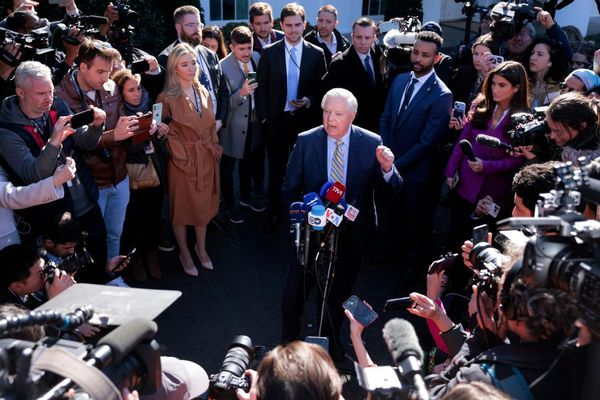
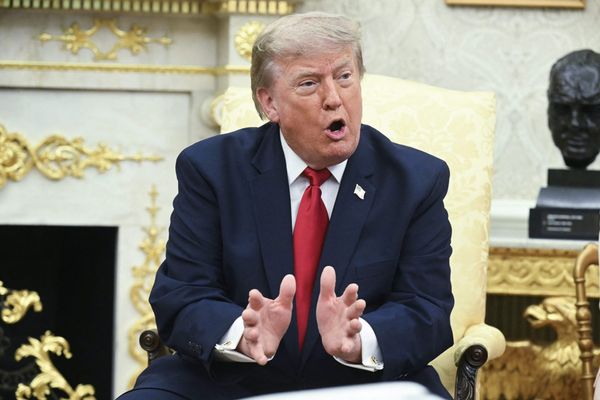
Your last hope here might be President Donald Trump. He's surprised a lot of us by following through on his promise to free Ross Ulbricht, and he recently acknowledged your case after a Decrypt journalist asked him about it at a press conference. He even told Pam Bondi, his attorney general, to take a look. What was your reaction to that?
What a surreal moment to hear the president of the United States talking about you individually and the software that you spent 10 years building. Very surreal. It was not expected at all. I think it's a good development for us. I've long said that the biggest stumbling block for me and Bill in getting a pardon is getting the attention of the president. Everyone is vying for his attention; a lot of money, a lot of influence, a lot of power is going after the president to get him to know about their pet issue. We don't have money, influence, or power. We're just two software developers. Thankfully, a reporter at Decrypt brought the case to his attention for us.
I think the fact that it's got to his attention is very helpful for us. I think the president does want to do right by the crypto community. He said as much in his campaign season. If he wants America to be the capital of crypto, the one way to make sure that comes about is to end prosecuting its software developers and prosecuting its innovators because that innovation will just go offshore. That innovation will go somewhere where software developers aren't at risk of being sent to federal prison. He can do a lot, I think, at this point with a pardon, and I hope that he will.
We're speaking about 48 hours before you're set to report to federal prison to serve your five-year sentence. What's it like just on a personal, human level going through this?
It's heavy, of course. You're leaving your family behind. You're leaving life behind. Last night, I spoke with Ross Ulbricht. He gave me a call to give me some advice and see where my headspace is at. He was facing a far worse fate than I was. He was facing double life sentence, no possibility of parole. He was fully expecting to die in prison. I'm only looking at five years.
But he said even a shortish sentence, like five years, you essentially die a little bit on the outside because you're no longer around. You're gone. The only people that are remembering you are maybe your family and close friends. Just like when someone in your family passes away, over time, the memory fades and you don't think about them every day.
It's kind of the same thing when you go inside. Most of all, it sounds very banal, but I'm taking care of a lot of small logistical things that I normally do in my relationship and in my life that now my wife is going to be responsible for. I put together a document that says, how do you reset the printer when it won't print? How do you get the internet to work when it stops working?
The little things that I take care of that she now is going to have to take care of, I want to make it as smooth of a transition for her as possible. I think, again, another thing that many people who have spoken to me who have gone through this process have said is that doing time is harder on your loved ones than it is on you. You're there, you're in the space, you're dealing with it, but they're on the outside dealing with a world without you. I'm conscious of that, and I'm just trying to do everything I can to soften that blow for my wife.
This interview has been condensed and edited for style and clarity.
The post Keonne Rodriguez on Bitcoin, Privacy, and Going to Prison appeared first on Reason.com.