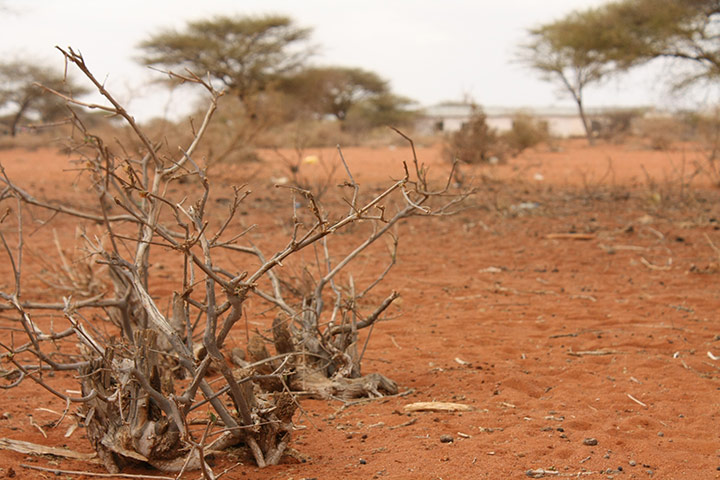
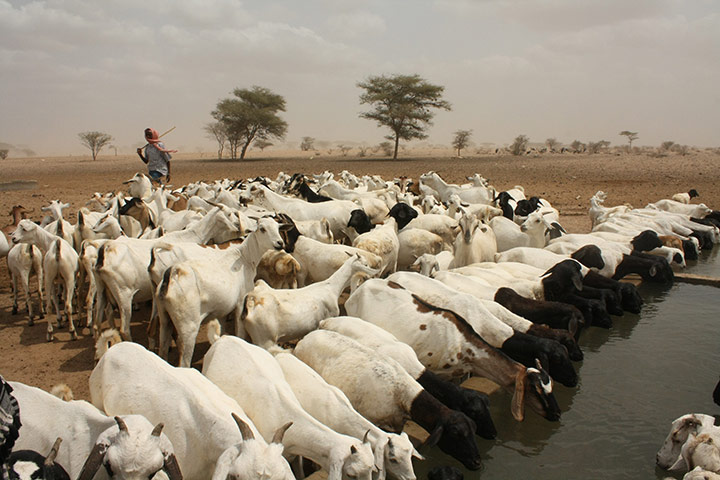
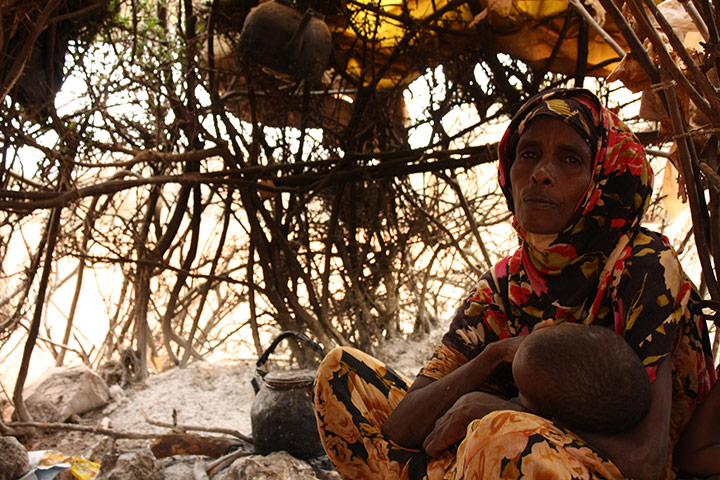
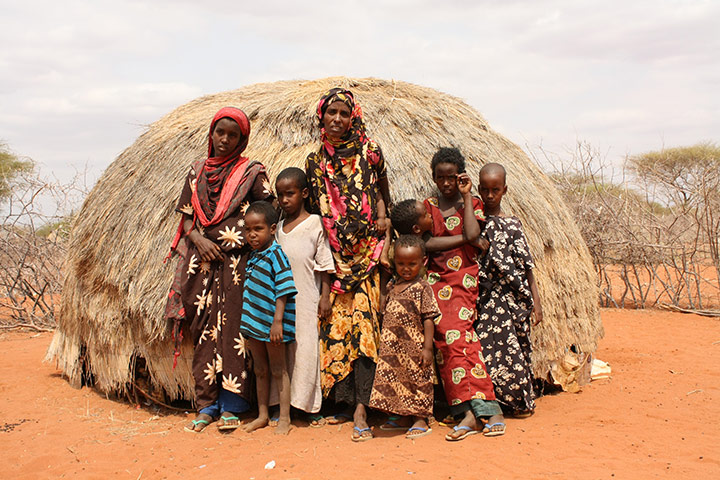
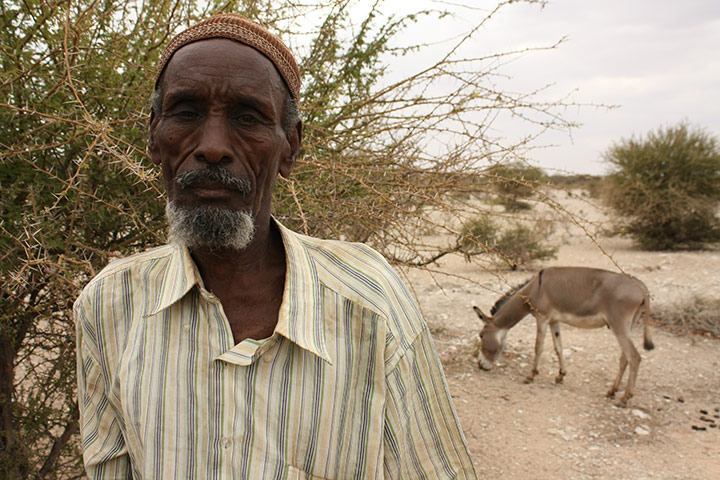
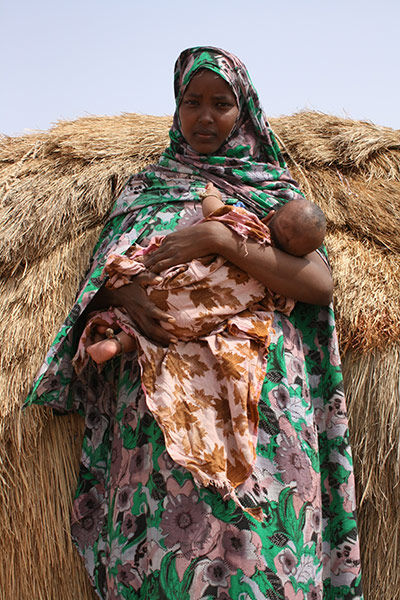
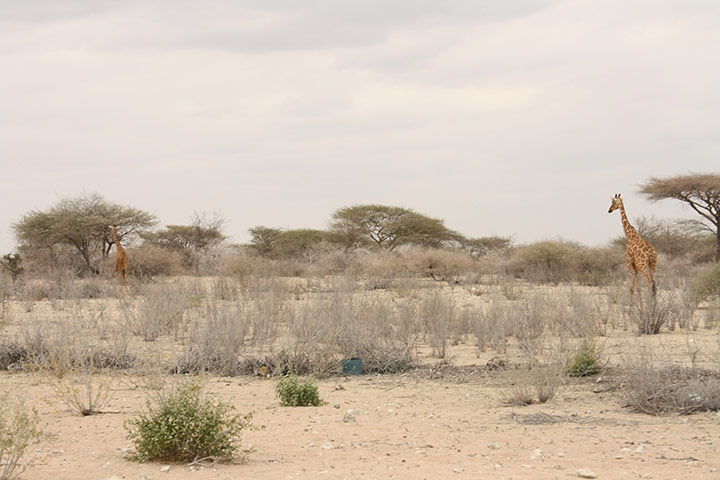
More than 360,000 people living in north east Kenya, in the Wajir province, depend on livestock for their incomePhotograph: Anna Ridout/OxfamGoats drinking water at a borehole, funded by Oxfam, in Dilmanyale village, Wajir. Many people have moved to the village because of this water source. There are two access points for water, one for humans and another for animals. This ensures that disease will not spread and the water remains clean. However, once the animals have finished drinking they must be walked more than 10km to get to pasturePhotograph: Anna Ridout/OxfamHalima Bare walked from the village of Elado. 'We only have five cows left out of 40 and the five that remain are too weak to stand. I walked 50kms with my seven children for days to get here. Our journey was slow... we moved a small distance each day with the small children on a donkey and the elder children walking. Where we came from, water was the biggest problem. There is at least a water source here. Sometimes we have some relief from different donors, but otherwise we don’t have cash to purchase basic food items. Mostly I rely on relief food. My children used to be dependent on our animals. We used to sell the livestock and buy the children some clothes, buy them some rations. Now we are trying to find an alternative... We used to witness droughts but after the droughts there used to be rains but this is unique because we go from one drought to another drought. I’ve never seen a phenomenon like this one'Photograph: Anna Ridout/Oxfam
Halima Bare added: 'We have left our animals back in the bush. We had neighbours and relatives and we used to migrate together but many of them have dropped out to look for other professions. Now my husband and my eldest son are with the cattle. For a month now since I’ve been here, I don’t know the whereabouts of my son and husband. Mostly there is diarrhoea and it’s dangerous. We see the symptoms here and there, then we are dehydrated and we feel very tired'Photograph: Anna Ridout/OxfamKhaltuma Salat Hassali said: 'Women are most affected by the drought as most of the burden of the household has been left with the women. They are lactating, some of them are pregnant. Some are weak and elderly. My two neighbours, one woman is deaf and a man is very elderly and they don’t have anyone to help them. All the animals they had are dead and we were helping them but as time goes by we are unable to help. They have nothing apart from the relief they are getting. Every time we go to town we get something for them. The man is very elderly and he gets diarrhoea. I have seven children in my house and my husband. All our livestock have died apart from five. We only have God and nothing else. Only the relief food and nothing else, if it weren’t for that I don’t know what would have happened'Photograph: Anna Ridout/OxfamOsman Adbi Nur from Kulaley village, said: 'This used to be a water point but for five years there’s been no water. We get our water from a village 10km from here. Depending on the means of transport we use a donkey and it can take up to six hours to collect water. Our life is almost 100% dependent on livestock and now almost 80% of our animals are dead. Now humans are at risk especially the elderly and the young children... When you don’t have access to water there are lots of things that go wrong. Generally we don’t have enough water to cook food or enough water to ensure hygiene and sanitation. And water is very far so it takes a lot of hours you could have invested in other productive areas. We want a permanent solution to the water problem in this location. We want the government to drill boreholes and to look for a permanent solution for the problem of living here'Photograph: Anna Ridout/OxfamHalima Ahmed Ali lives in Hadado village and has a baby girl, who is 40-days-old. She said: 'I am lactating and my child has problems because she doesn’t have milk and she is depending on me. We only have maize to cook. My husband is not here and the only food we get is relief food. My mother is the only one registered so what my mother has is what we are sharing among ourselves. We don’t have money to buy food or water. We have to pay 20 shillings for 20 litre jerry can of water. Women are most affected. A man will leave a mother with their children and go anywhere he wants during the drought and leave the women to lead the normal household activities. When I’m breastfeeding I also require nutritious food and I am not getting it. I used to depend on livestock which produces meat and milk and during the drought we don’t get it'Photograph: Anna Ridout/OxfamHalima Ahmed Ali added: 'Sometimes I have to carry the child on my back following the donkey and maybe the camel to go and get water. My home is 40-50km from here and when you are there you will see even the trees have dried up, there is nowhere to get water so I opted to come and live with my mother here. We used to use animals to carry things but if those animals have died, how do you expect me to carry my children and my luggage to where my husband is? What will I use to fetch water?' Photograph: Anna Ridout/Oxfam
Sign up to read this article
Read news from 100’s of titles, curated specifically for you.