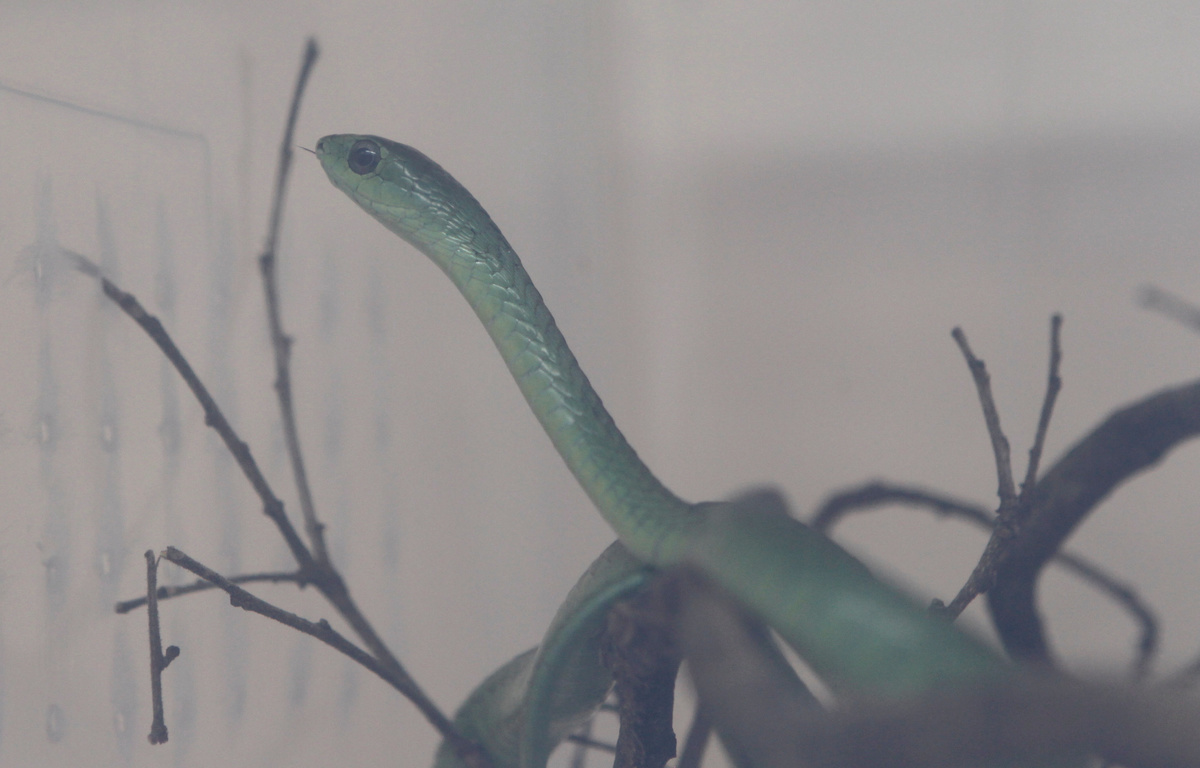
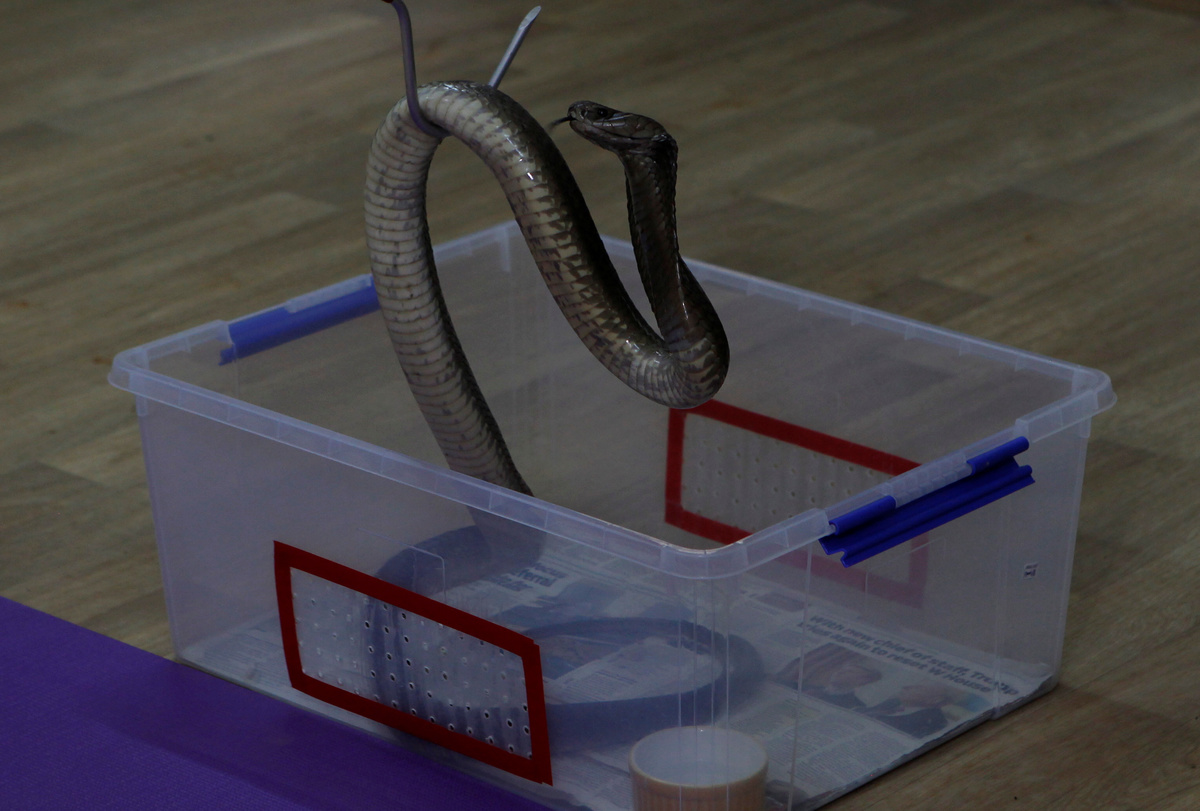
A green cobra is seen at the Kenya Snakebite Research and intervention centre in Nairobi, Kenya October 22, 2019. Picture taken October 22, 2019. REUTERS/Njeri Mwangi
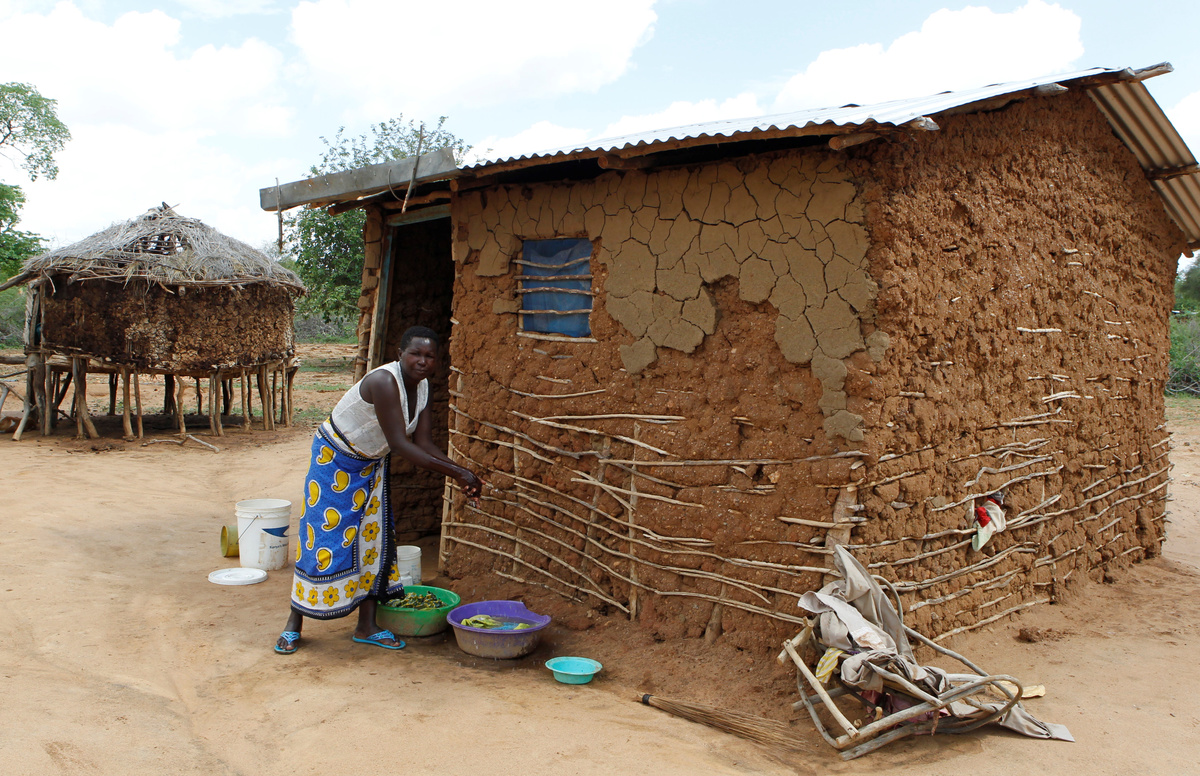
NAIROBI (Reuters) - Kenyan mother Beth Mwende heard her sleeping three-year-old cry out, but did not worry further after the child quickly settled - until the next morning, when she found her daughter, Mercy, semi-conscious with two fang marks in the neck.
"I did not know that it was a snake," Mwende said, as she recounted going out early to fetch water from a nearby river.
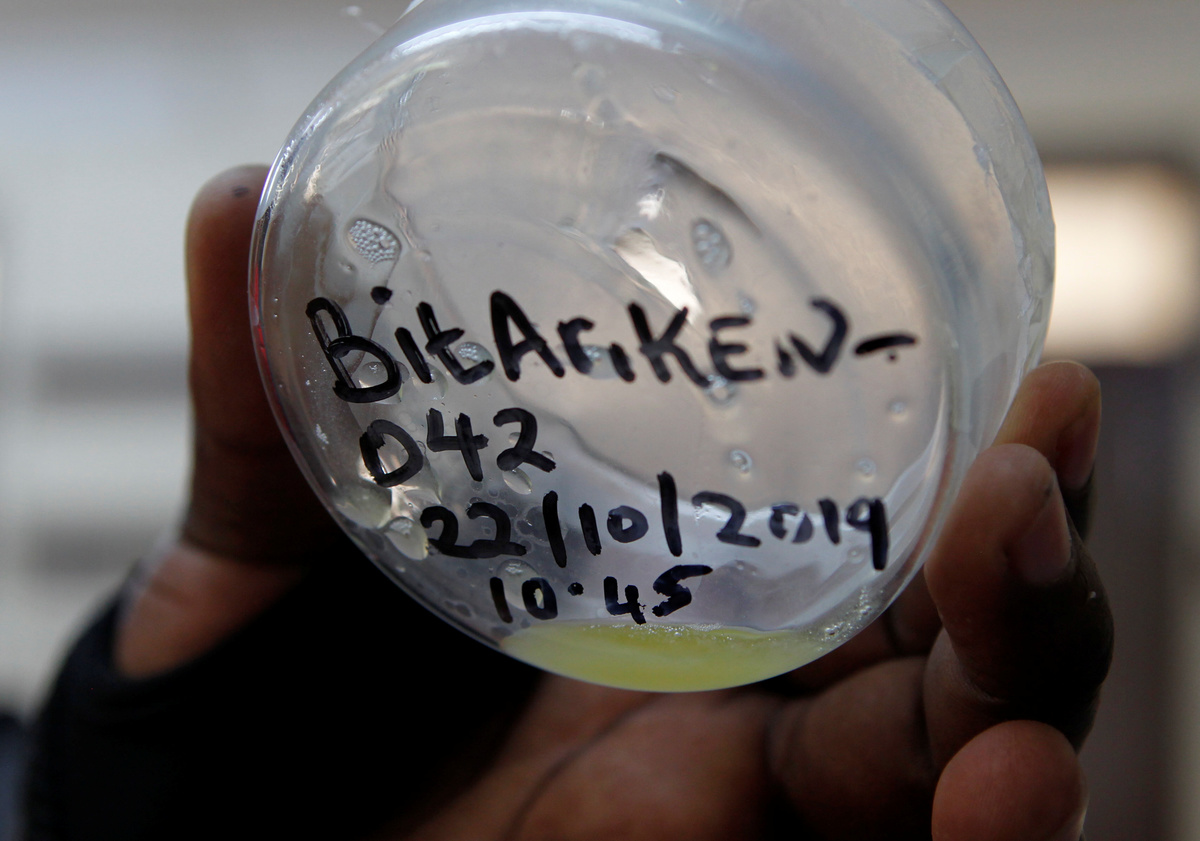
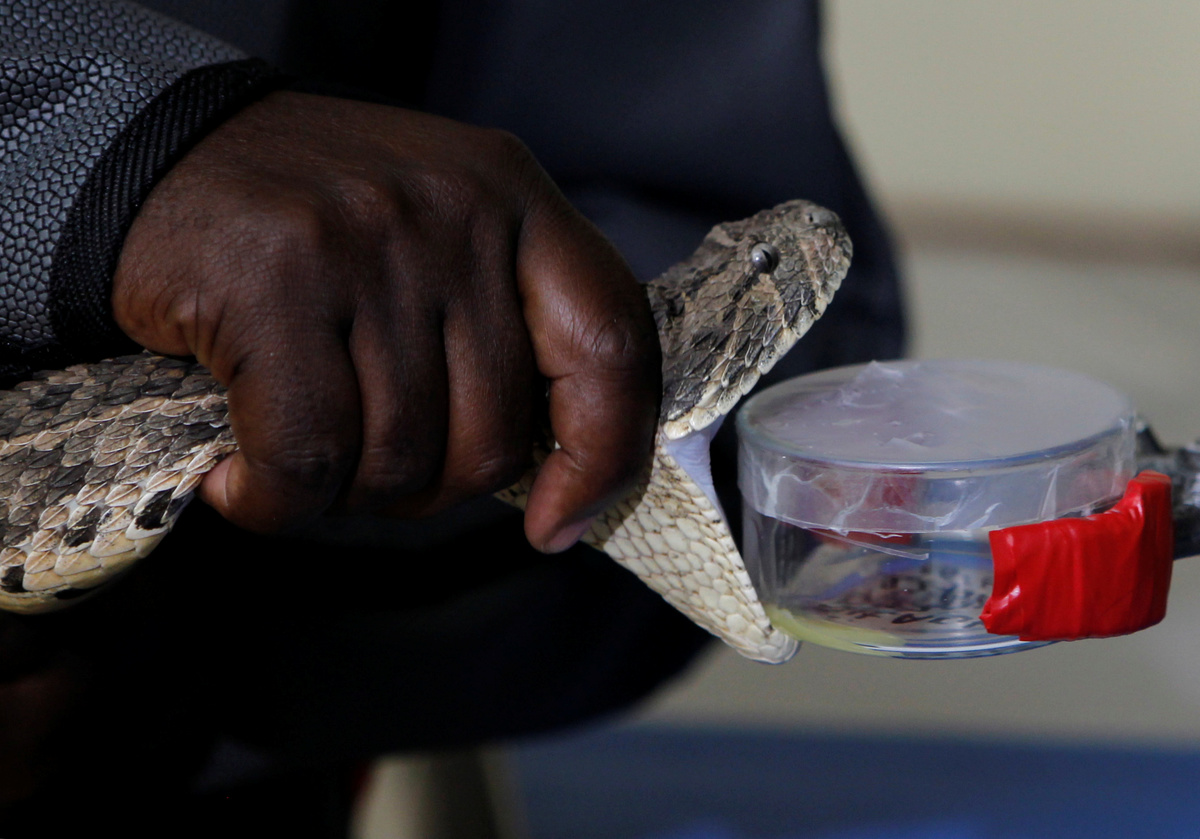
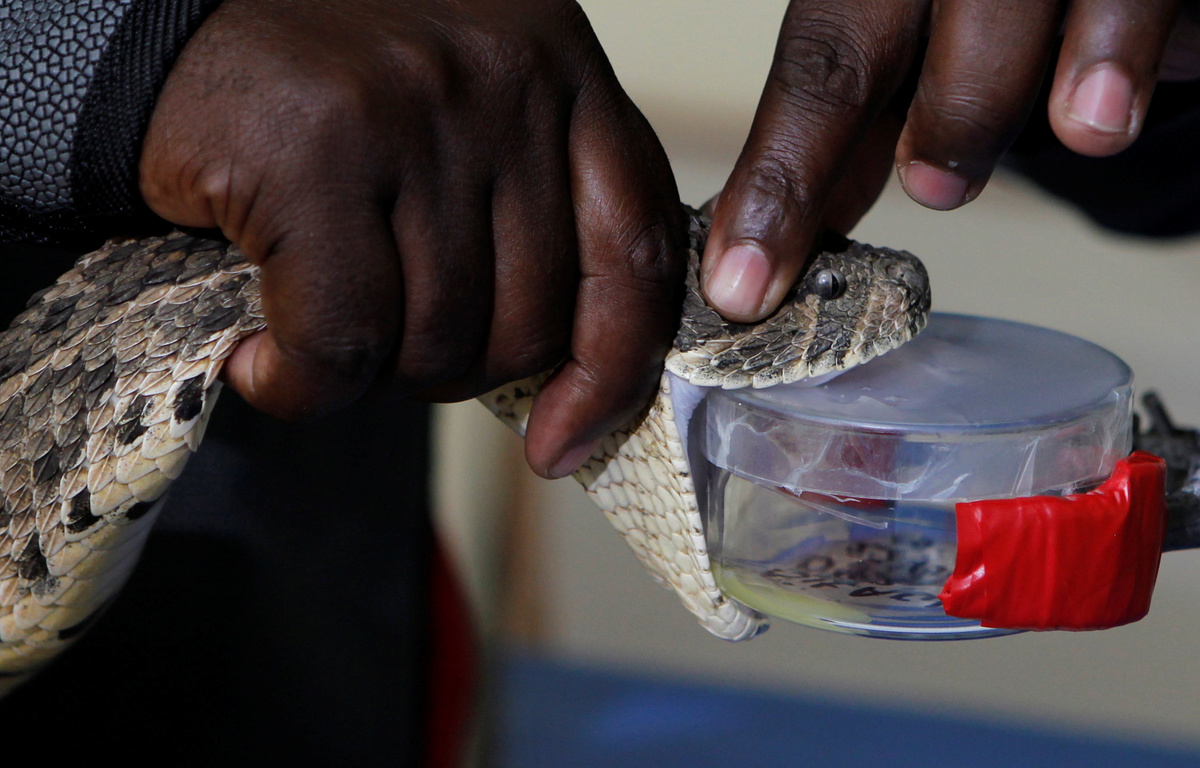
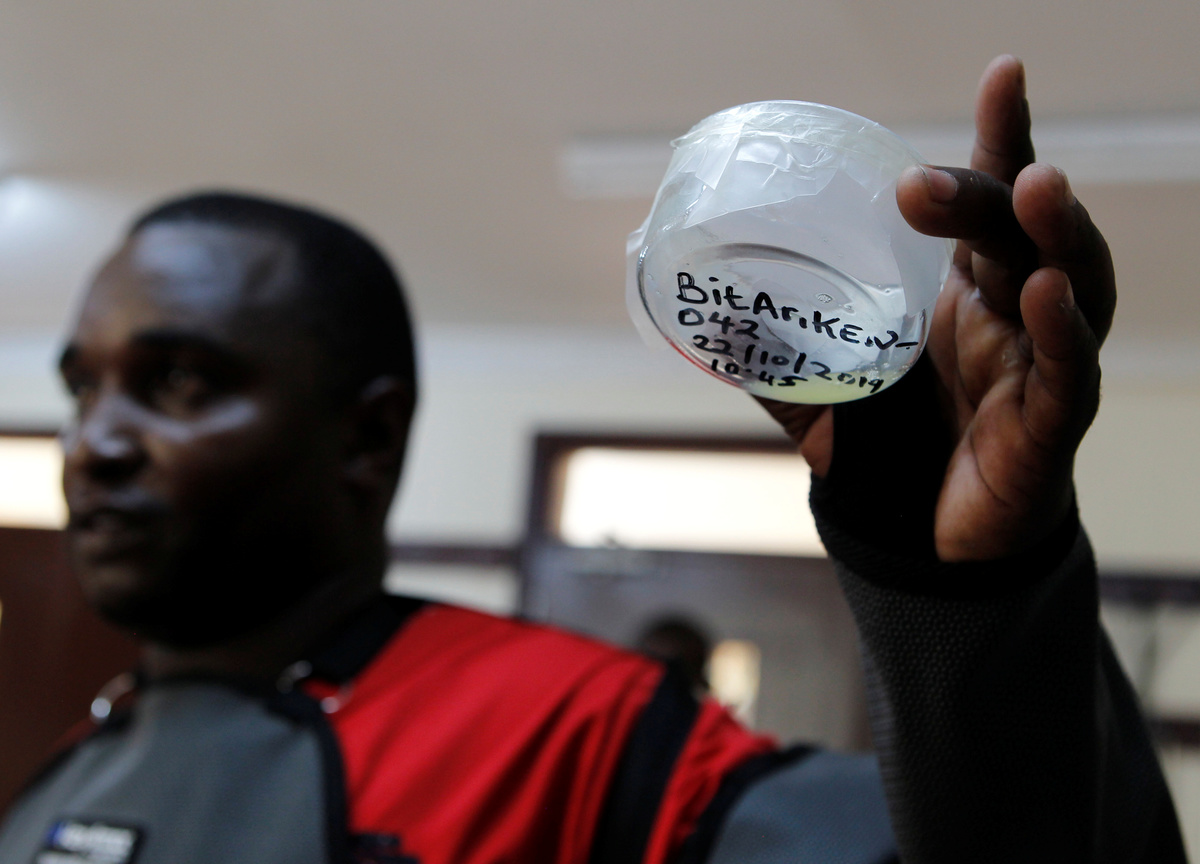
Venom specimen harvested from an African puff adder is displayed at the Kenya Snakebite Research and intervention centre in Nairobi, Kenya October 22, 2019. REUTERS/Njeri Mwangi
"And on my way back, I met my eldest daughter, who told me my child is not waking up."
Although snakebites are common in their home town in Kitui county, 160 km (99 miles) east of the Kenyan capital of Nairobi, antivenom medication is hard to come by.
So Mwende took her daughter to a traditional healer, who placed stones over the bites to draw out the poison.
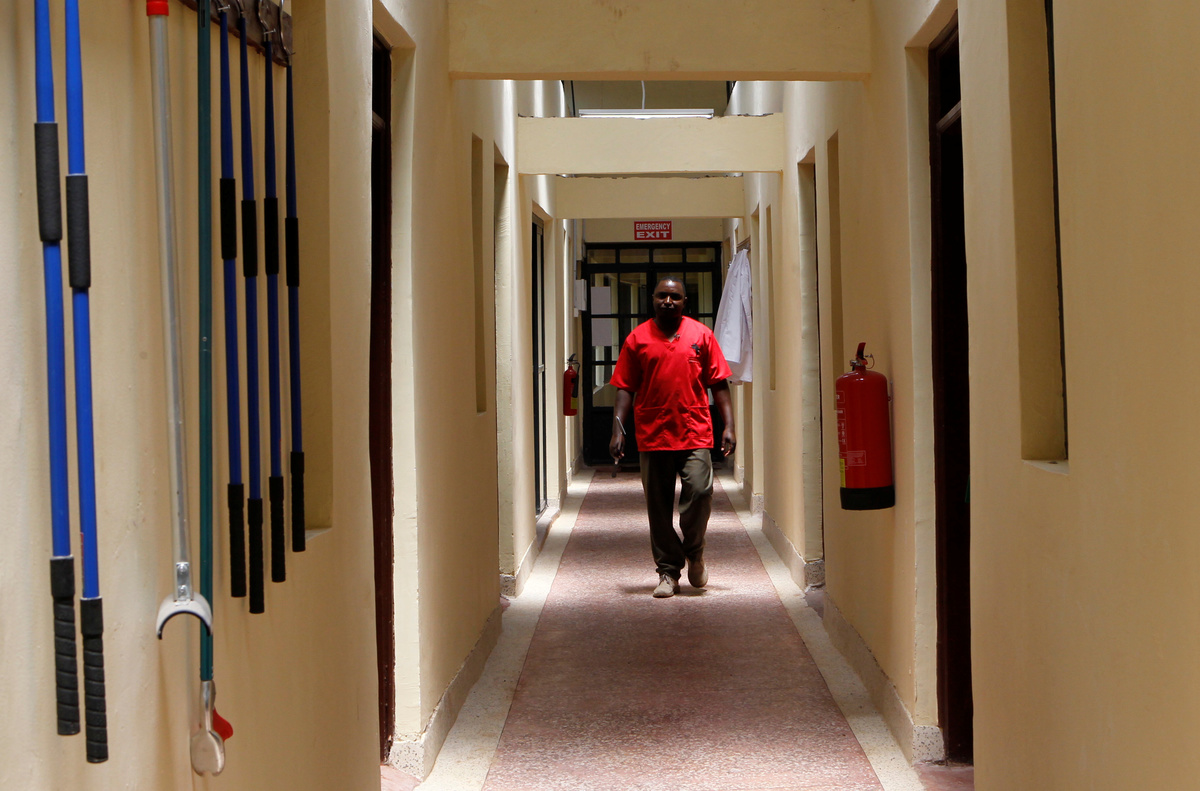
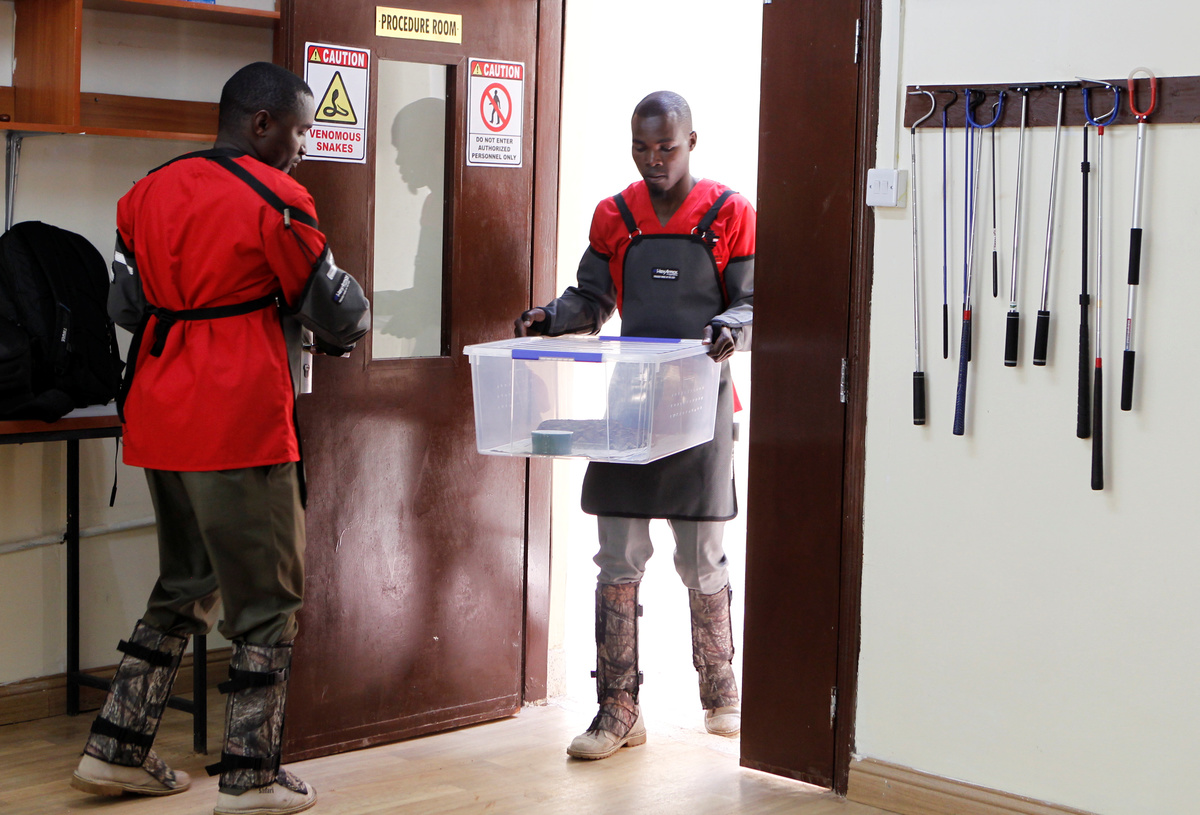
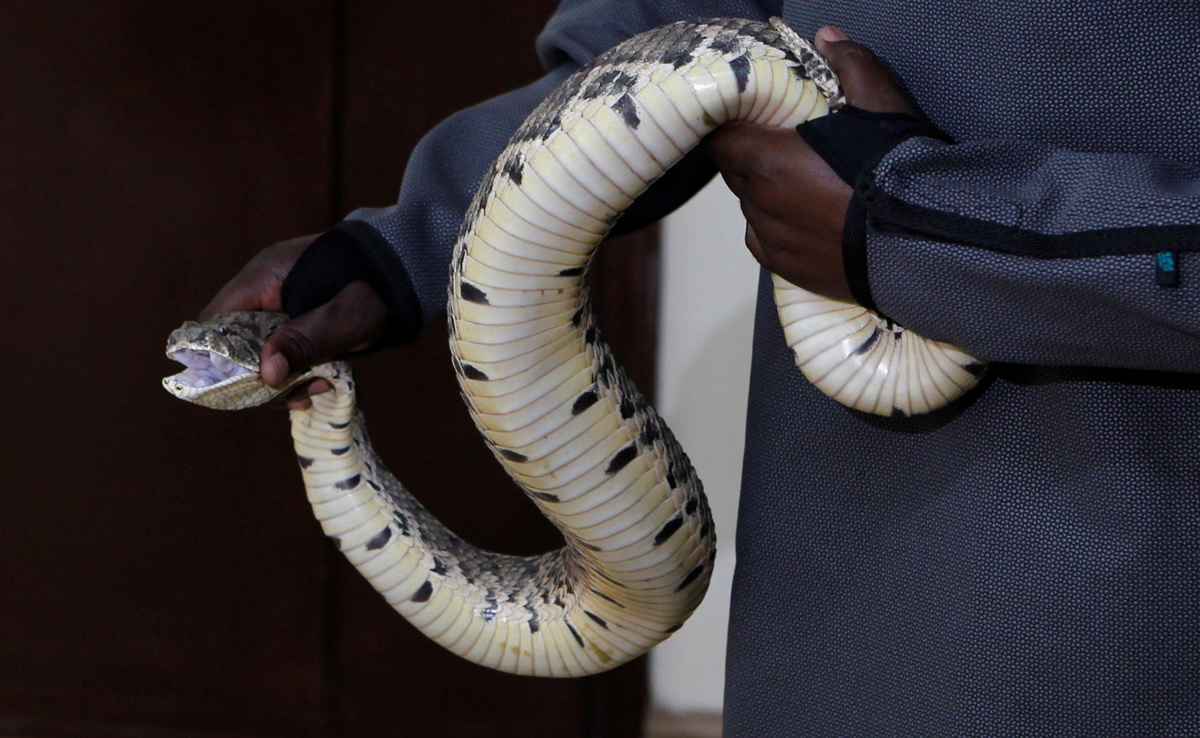
Geofrey Maranga, Senior snake handler at the Kenya Snakebite Research and intervention centre, walks at the facility in Nairobi, Kenya October 22, 2019. Picture taken October 22, 2019. REUTERS/Njeri Mwangi
Mercy died within hours, becoming one of about 700 Kenyans killed by snakebite each year, according to an article in a scientific journal, Toxicon.
Experts say the number is probably higher, since bites often go unreported and few victims make it to hospital.
The Kenya Snakebite Research and Intervention Centre (KSRIC), partly funded by the Liverpool School of Tropical Medicine, is working to change that.
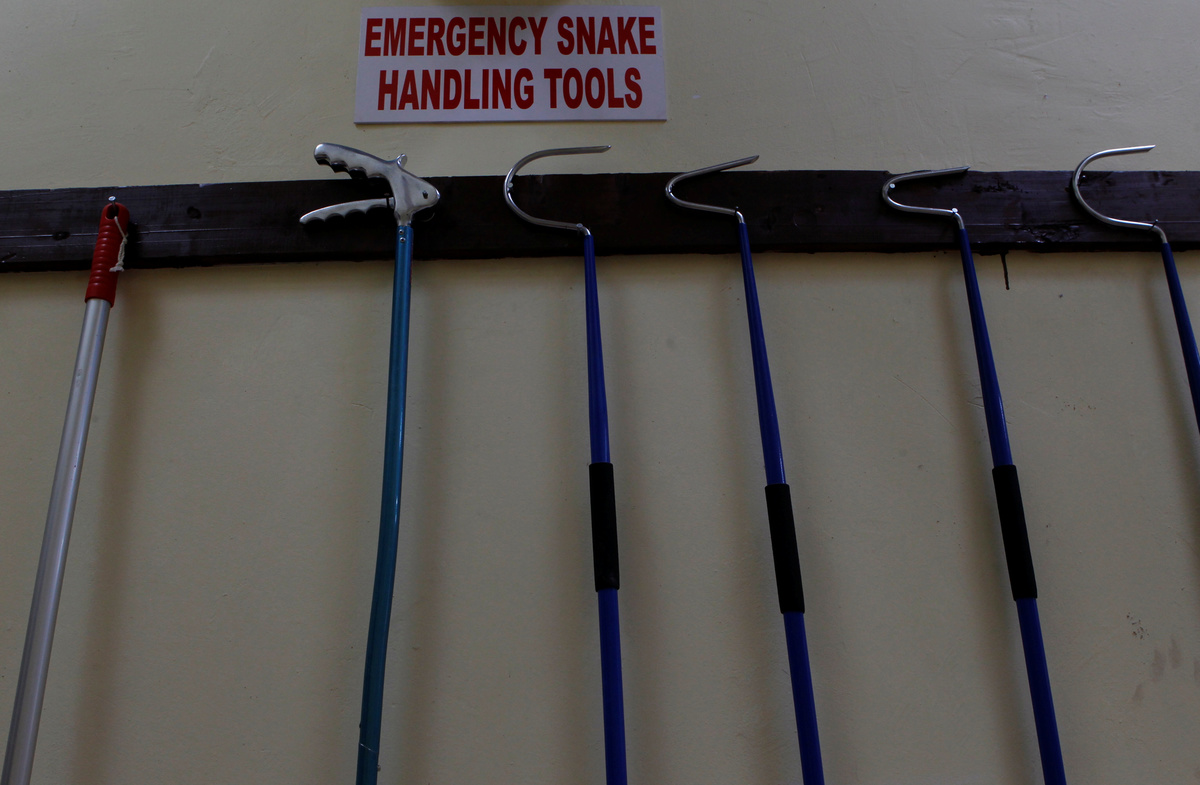
Snake handling tools are seen at the Kenya Snakebite Research and intervention centre in Nairobi, Kenya October 22, 2019. Picture taken October 22, 2019. REUTERS/Njeri Mwangi
It plans to have East Africa's first antivenom on the market within five years, at a cost it estimates will be about a third that of an imported product, often priced at about $100.
More than 70,000 people are bitten in East Africa each year, and climate change and deforestation are worsening the problem, as snakes get pushed out of natural habitats into populated areas.
Nearly 100 snakes live at the research centre in a forest on the outskirts of the capital.
Snake handlers, at the Kenya Snakebite Research and intervention centre, carry a spitting cobra to harvest venom in Nairobi, Kenya, October 22, 2019. Picture taken October 22, 2019. REUTERS/Njeri Mwangi
Researchers extract venom and study it before injecting small amounts into donor animals, such as sheep, which then produce antibodies to be harvested and purified into antivenom.
"Up to (now), no one has produced any kind of antivenom in Kenya," said senior snake handler Geoffrey Maranga Kepha.
Two effective antivenoms are available in Kenya, from India and Mexico, the centre says.
A spitting cobra is taken from a container at the Kenya Snakebite Research and intervention centre in Nairobi, Kenya October 22, 2019. Picture taken October 22, 2019. REUTERS/Njeri Mwangi
But many ineffective products circulate in sub-Saharan Africa, said David Williams, head of the Australian Venom Research Unit.
"One Indian product marketed in Ghana as a replacement to Sanofi’s actually increased the death rate for snakebites," he added.
Vaccine maker Sanofi Pasteur, part of French drugmaker Sanofi-Aventis, stopped producing antivenom for African snakes in 2010 because low demand and competition from a cheaper supplier made it unprofitable.
Snake handlers harvest venom from an African puff adder at the Kenya Snakebite Research and intervention centre in Nairobi, Kenya, October 22, 2019. Picture taken October 22, 2019. REUTERS/Njeri Mwangi
Sanofi wants to share its knowledge with partners who could handle production, the company told Reuters in a statement.
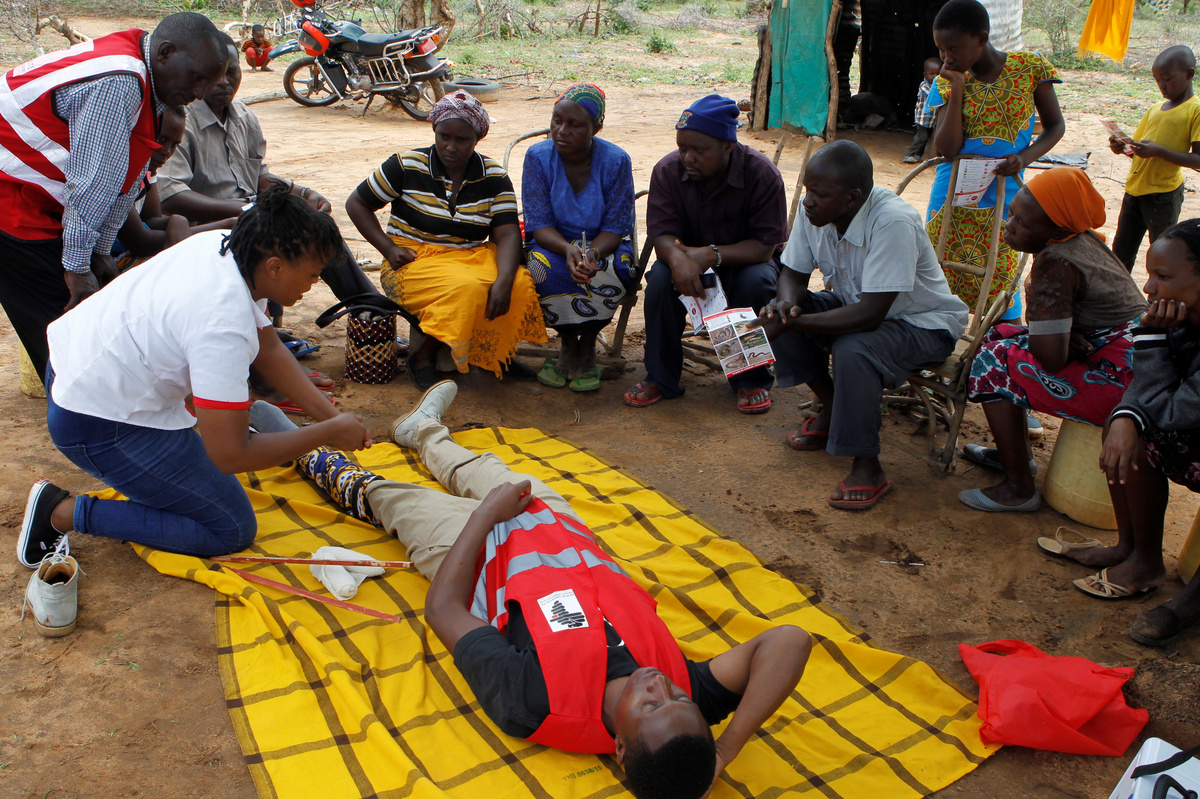
The centre is teaching communities that swift use of antivenom saves lives, said veterinarian and head researcher George Adinoh.
"It's a weird or risky job, but after seeing how people die in Kenya from snakebites I decided to devote my life to coming up with a rescue measure that will help, or prevent people from dying from snakebites," snake handler Kepha added.
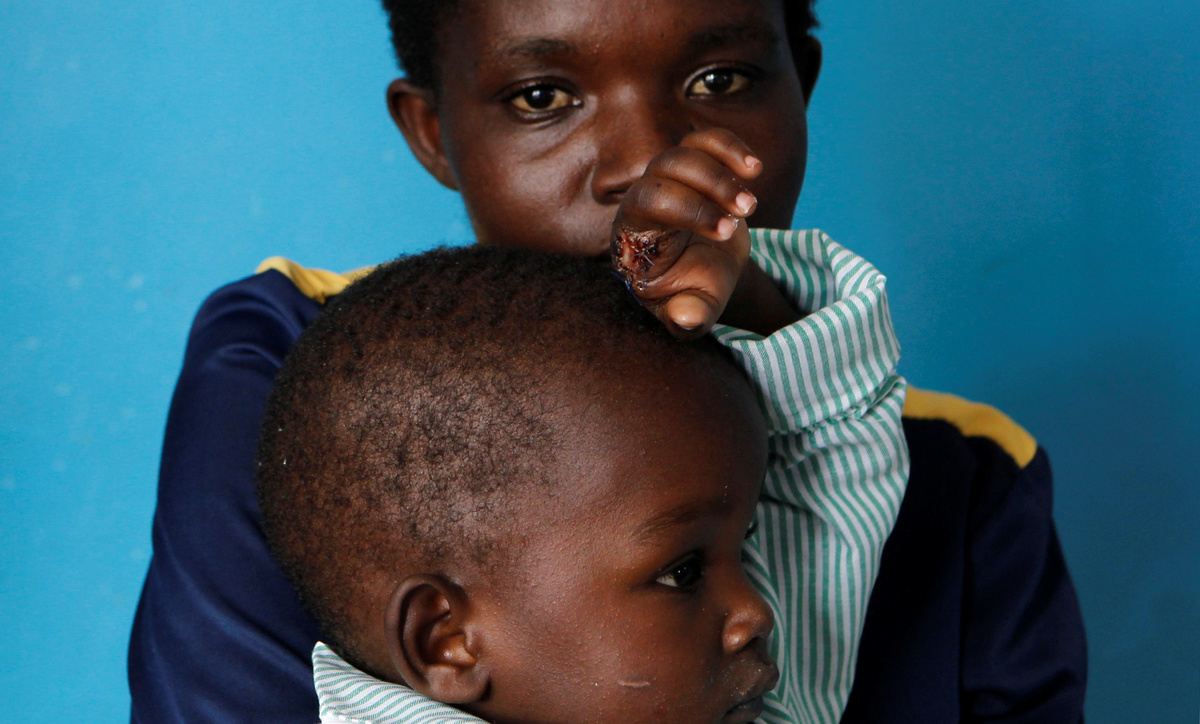
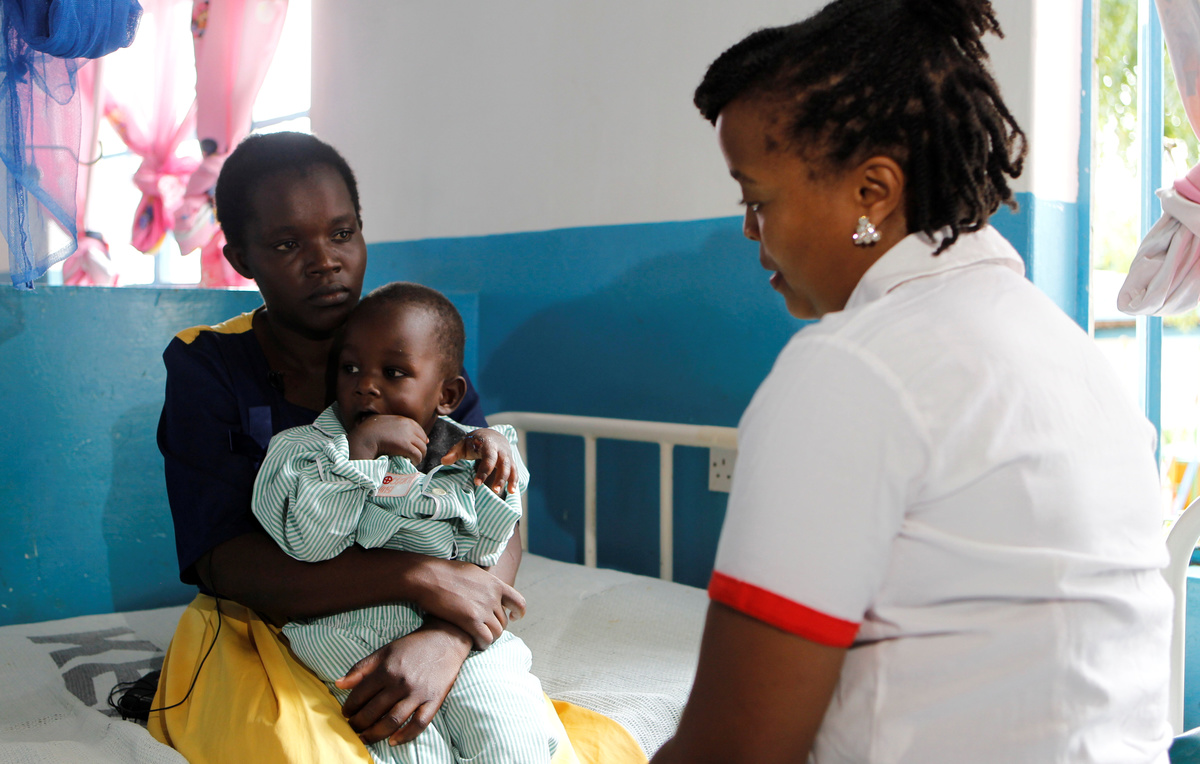
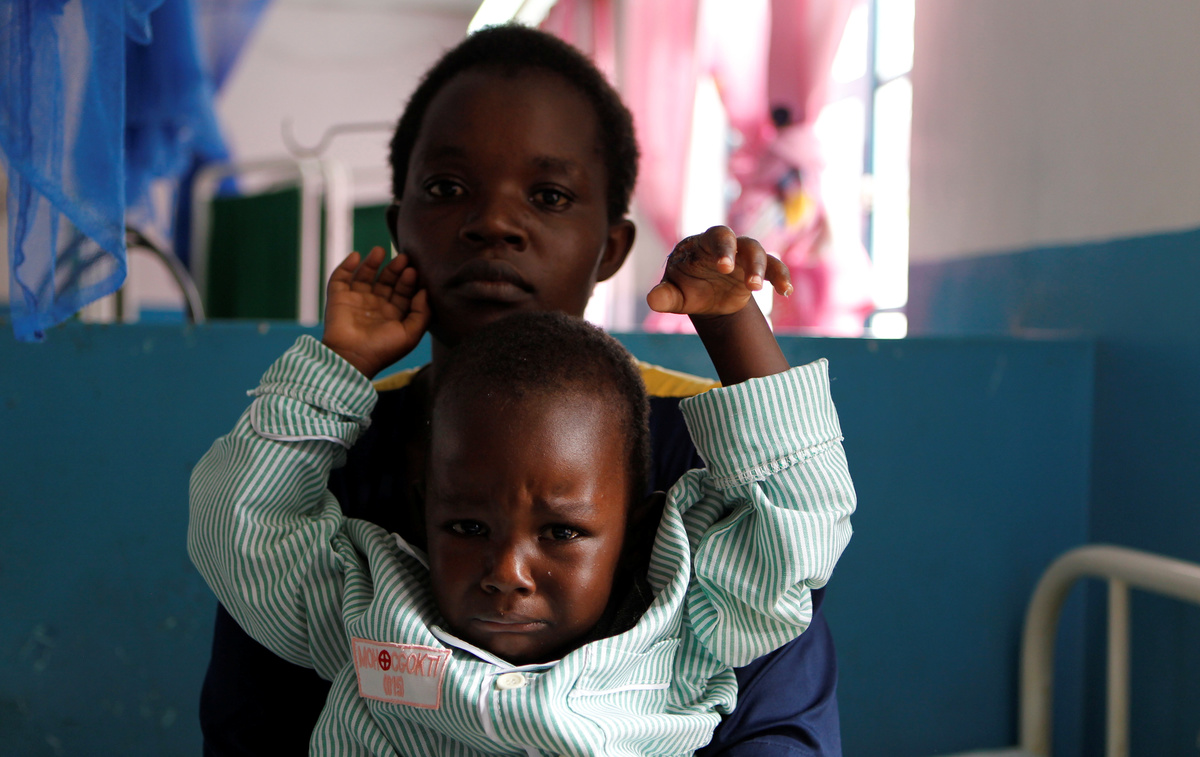
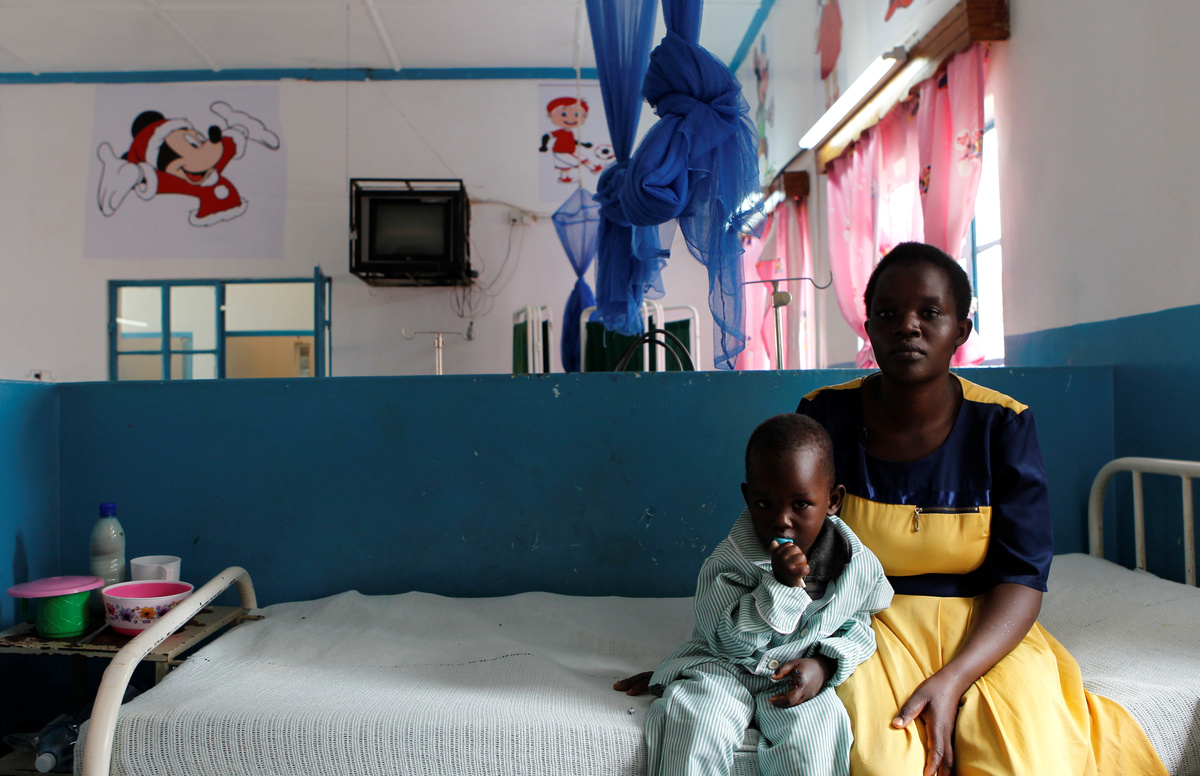
Apphia Ngunge holds her two year old son, Evans Mwendwa, whose index finger was amputated at the Mwingi Level 4 hospital after he was bitten by a snake in Mwingi, Kenya October 23, 2019. Picture taken October 23, 2019. REUTERS/Njeri Mwangi
(This story updates to amend the headline)
Snake handlers harvest venom from an African puff adder at the Kenya Snakebite Research and intervention centre in Nairobi, Kenya October 22, 2019. Picture taken October 22, 2019. REUTERS/Njeri Mwangi
(Reporting by Ayenat Mersie; Editing by Maggie Fick and Clarence Fernandez)
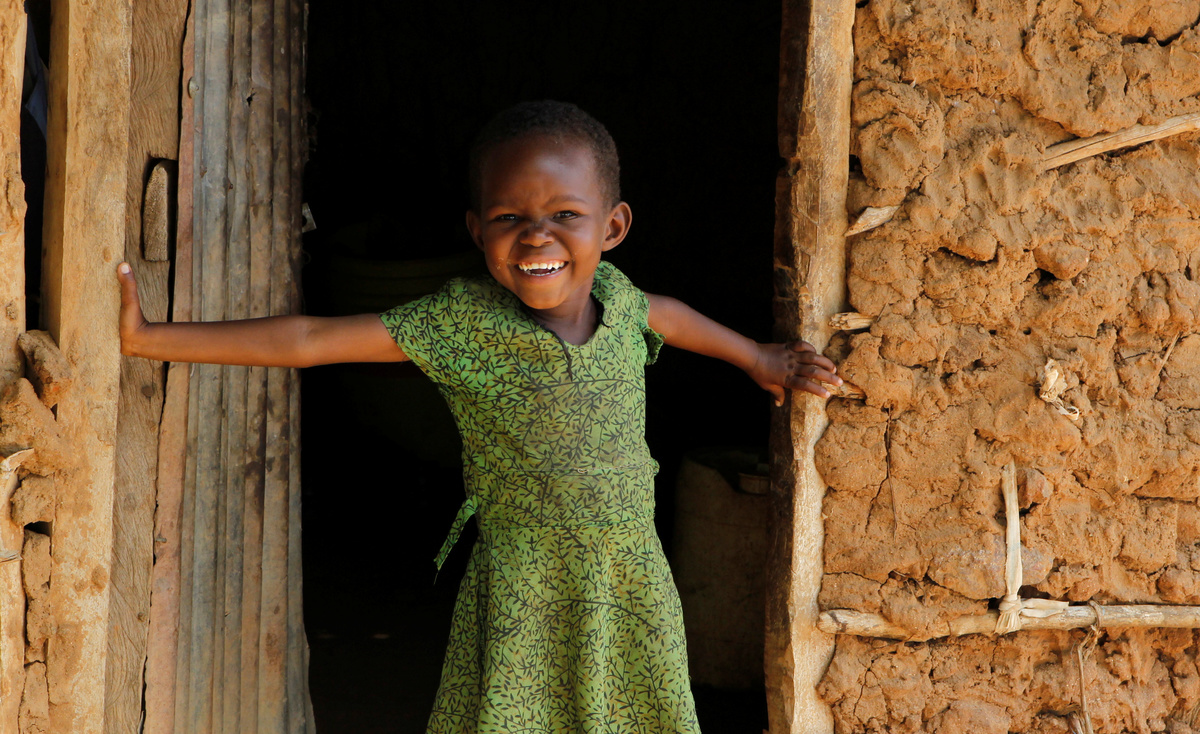
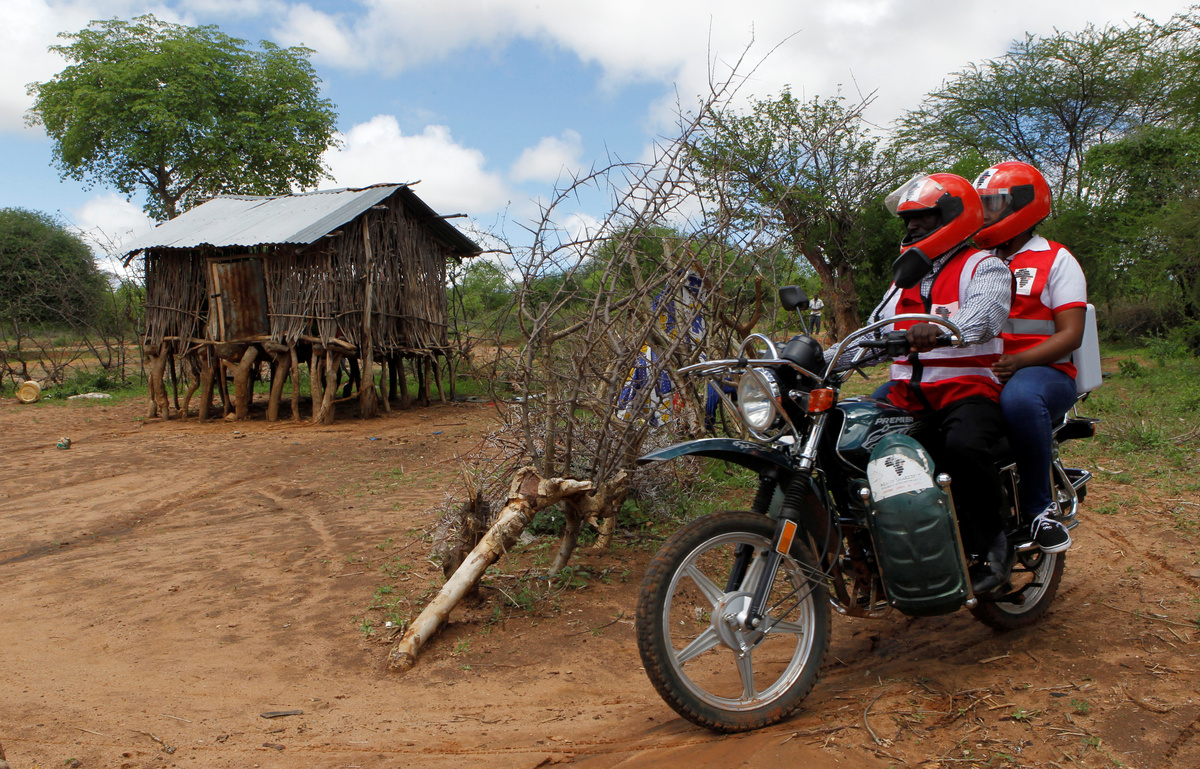
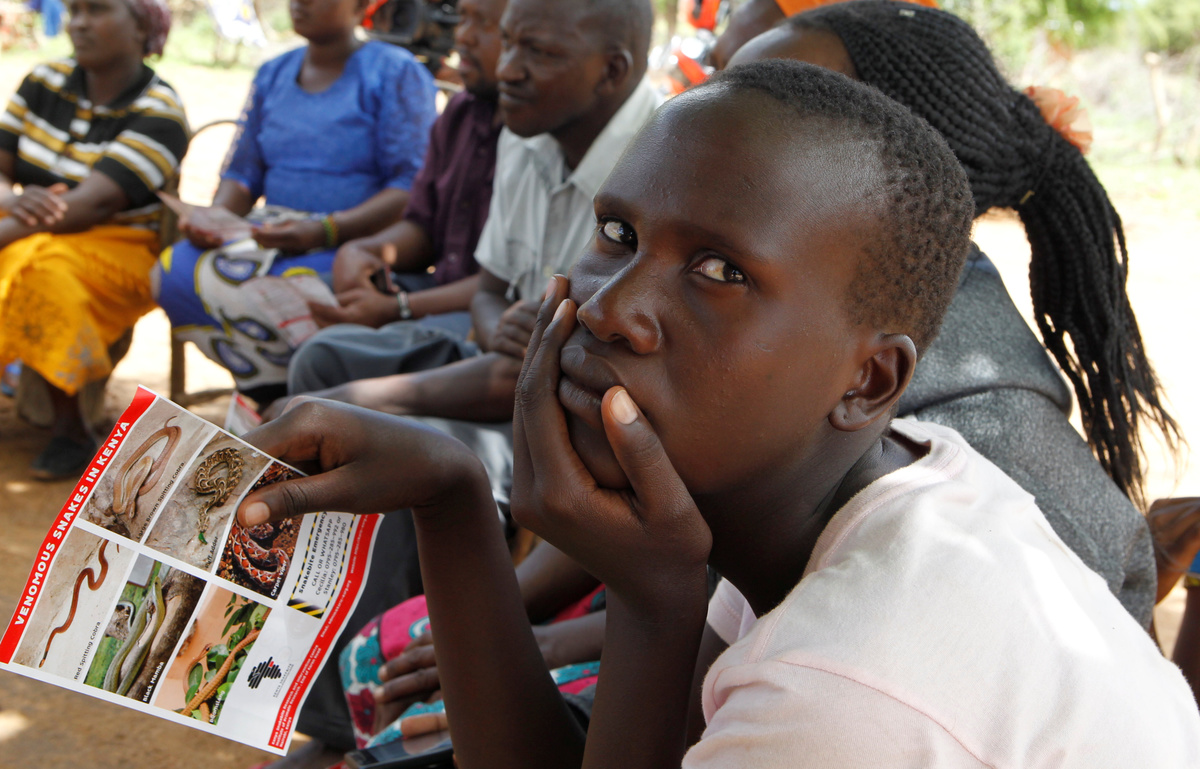
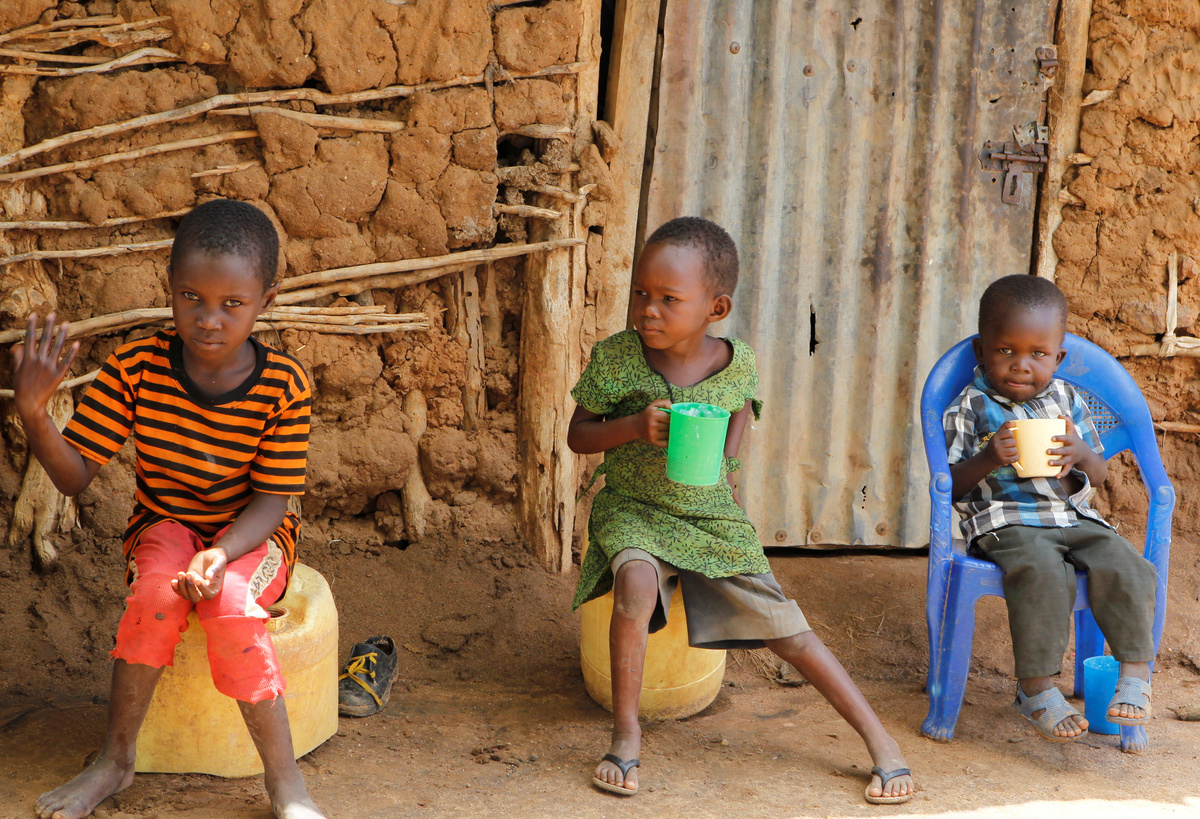
A snake handler prepares to harvest venom from an African puff adder at the Kenya Snakebite Research and intervention centre in Nairobi, Kenya October 22, 2019. Picture taken October 22, 2019. REUTERS/Njeri MwangiMwende Kilonzi, who lost a child after a snake bite, is seen outside her house at Nguni village in Mwingi, Kenya October 23, 2019. Picture taken October 23, 2019. REUTERS/Njeri MwangiA nurse from Kenya snakebite research and intervention centre shows how a snakebite victim should be handled during a snakebite sensitisation exercise at Malalani village in Mwingi, Kenya October 24, 2019. Picture taken October 24, 2019. REUTERS/Njeri MwangiA child is seen outside their house during a snakebite sensitisation exercise by nurses from Kenya snakebite research and intervention centre at Malalani village in Mwingi, Kenya October 24, 2019. Picture taken October 24, 2019. REUTERS/Njeri MwangiNurses from the Kenya snakebite research and intervention centre arrive for a sensitisation exercise at Malalani village in Mwingi, Kenya October 24, 2019. Picture taken October 24, 2019. REUTERS/Njeri MwangiPeople attend a snakebite sensitisation exercise by nurses at Malalani village in Mwingi, Kenya October 24, 2019. Picture taken October 24, 2019. REUTERS/Njeri MwangiChildren are seen outside their house during a snakebite sensitisation exercise at Malalani village in Mwingi, Kenya October 24, 2019. Picture taken October 24, 2019. REUTERS/Njeri MwangiA snake handler shows venom specimen harvested from an African puff adder at the Kenya Snakebite Research and intervention centre in Nairobi, Kenya October 22, 2019. REUTERS/Njeri MwangiA nurse talks to Apphia Ngunge, whose two year old son, Evans Mwendwa, had his index finger amputated at the Mwingi Level 4 hospital after he was bitten by a snake in Mwingi, Kenya, October 23, 2019. Picture taken October 23, 2019. REUTERS/Njeri MwangiApphia Ngunge holds her two year old son, Evans Mwendwa whose index finger was amputated at the Mwingi Level 4 hospital after he was bitten by a snake in Mwingi, Kenya, October 23, 2019. Picture taken October 23, 2019. REUTERS/Njeri MwangiApphia Ngunge with her two year old son, Evans Mwendwa whose index finger was amputated at the Mwingi Level 4 hospital after he was bitten by a snake in Mwingi, Kenya October 23, 2019. Picture taken October 23, 2019. REUTERS/Njeri Mwangi
Sign up to read this article
Read news from 100’s of titles, curated specifically for you.







.jpg?w=600)



