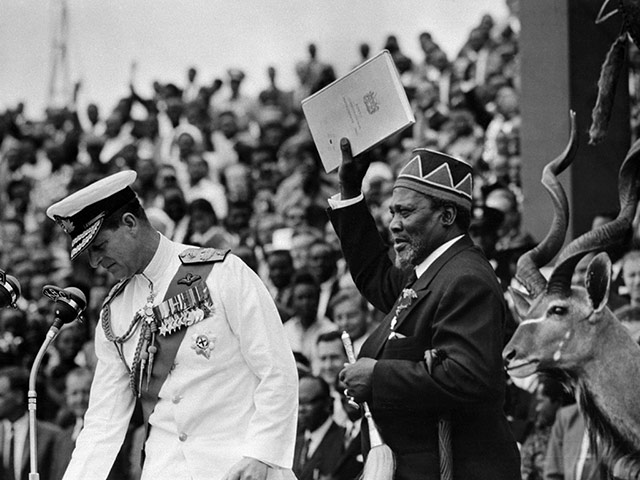
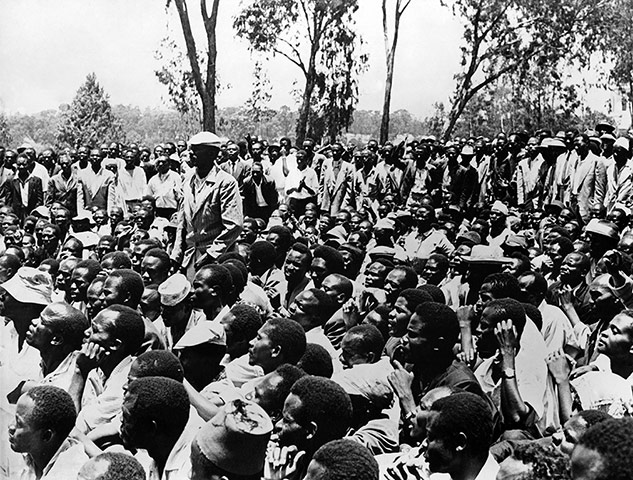
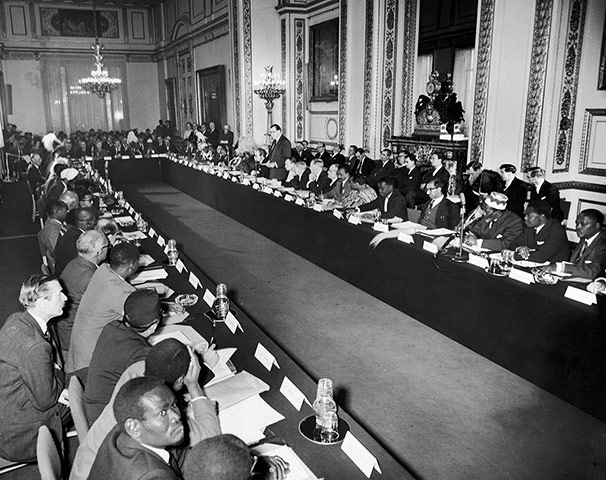
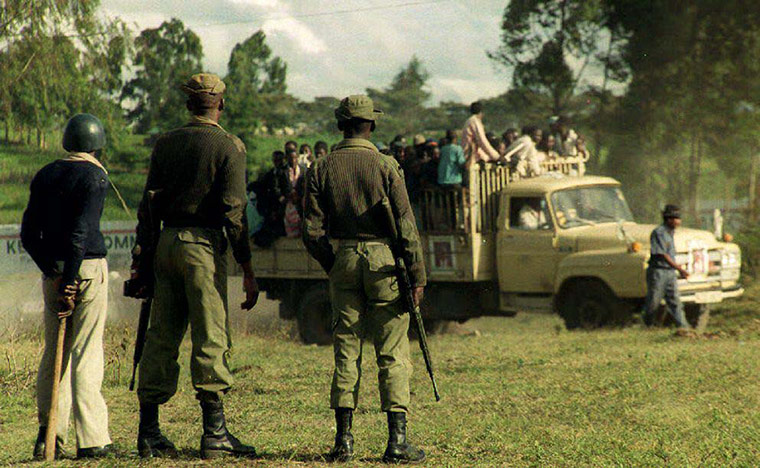
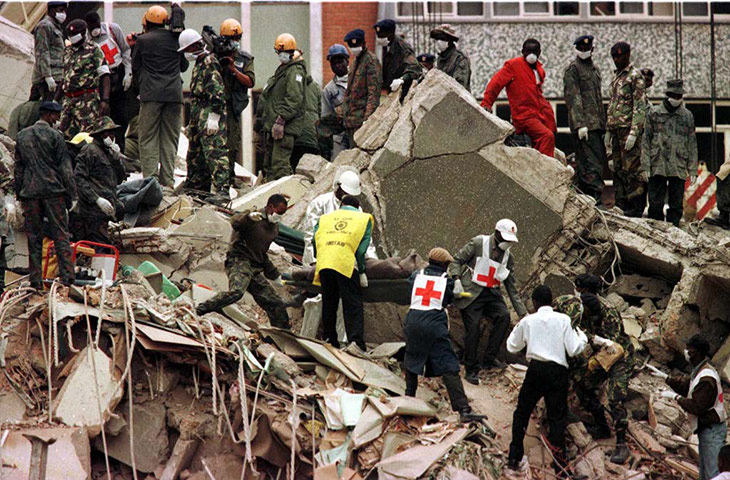
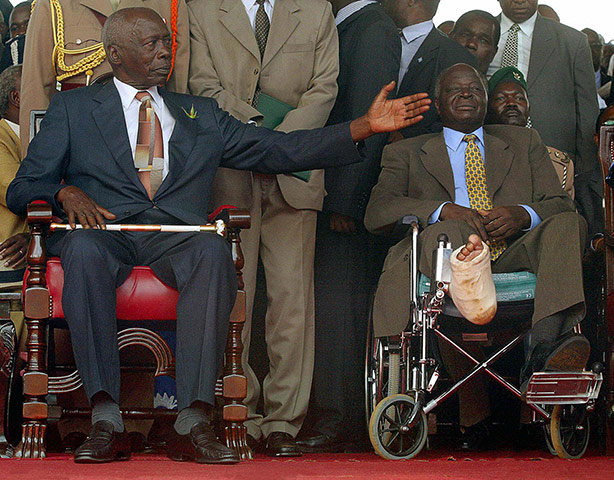
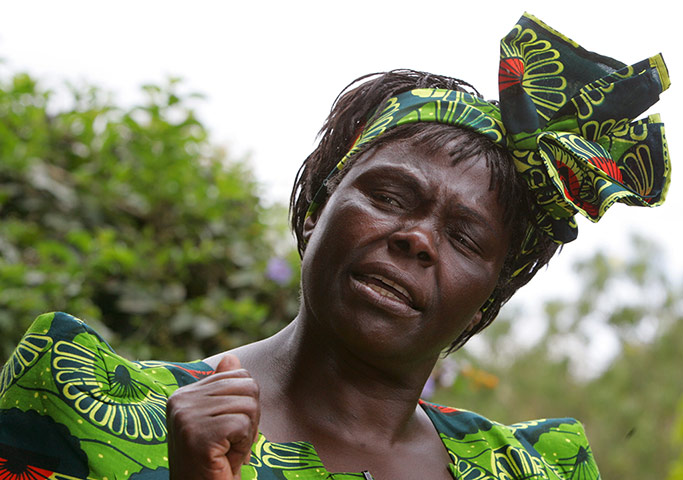
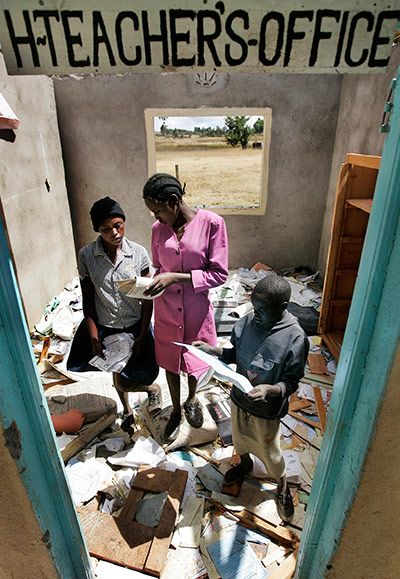
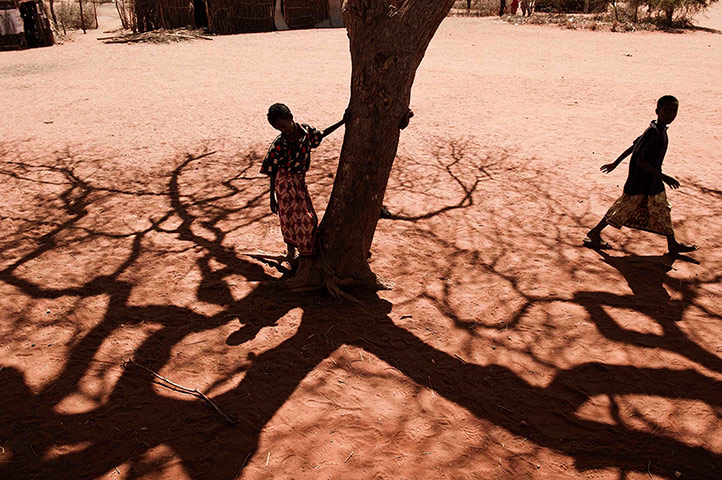
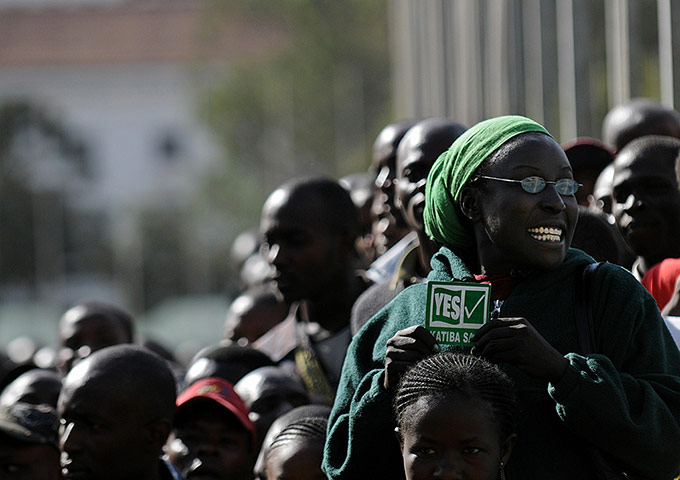
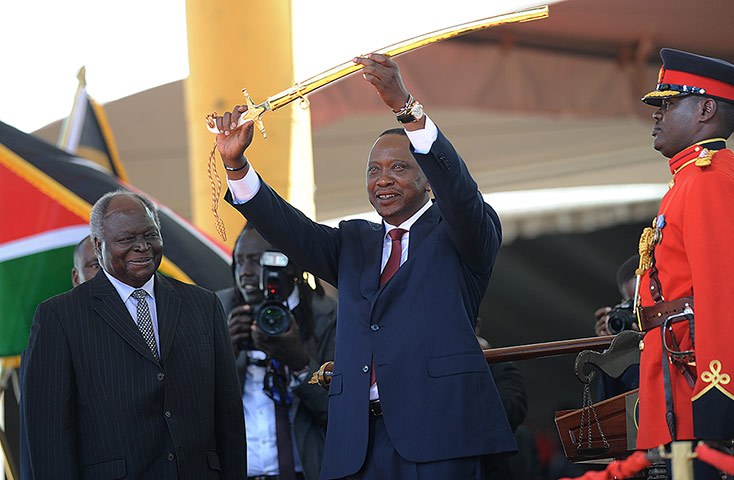
Jomo Kenyatta, leader of the Kenya African National Union, holds the official document of independence at a ceremony on 13 December 1963, attended by the Duke of Edinburgh, representing Queen Elizabeth. Kenyatta, the country's first prime minister, becomes president a year later when Kenya is declared a republic Photograph: AFP/Getty ImagesThe road to independence is long. Trade Unions call for a national strike to put pressure on the pivotol constitutional conference in London. The talks begin in February 1962, but it takes more than seven weeks for an agreement to be reached Photograph: AFP/Getty ImagesBy April 1962, independence is tantalisingly close. Both Kenyatta and opposition leader Ronald Ngala, of the Kenya African Democratic Union – who will become minister of co-operatives and social services under Kenyatta – attend the London talksPhotograph: Getty Images
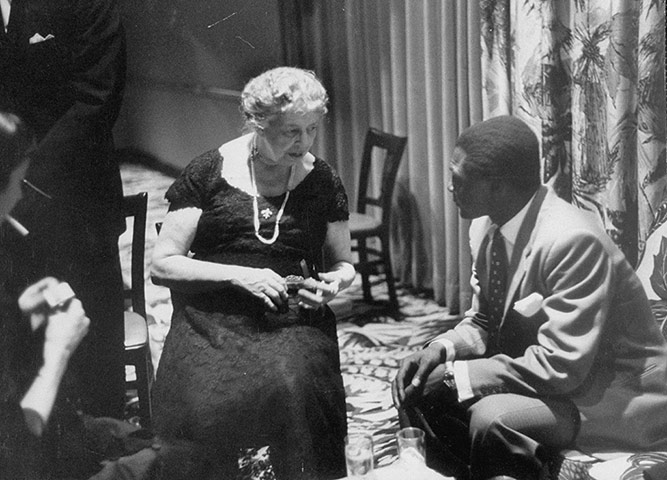
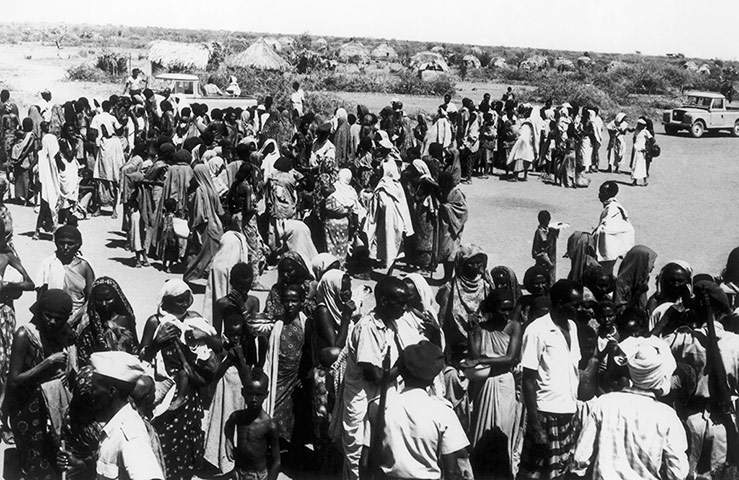
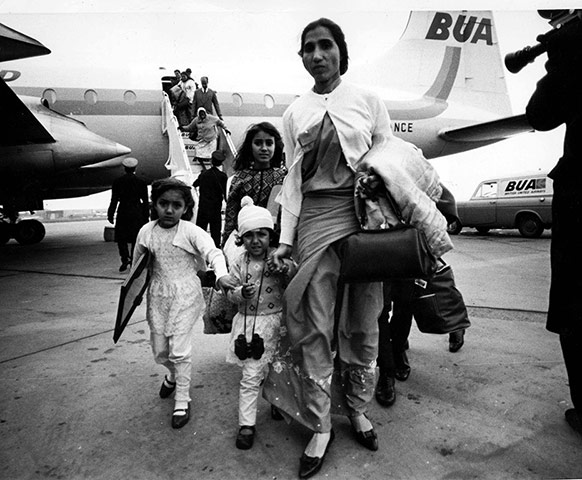
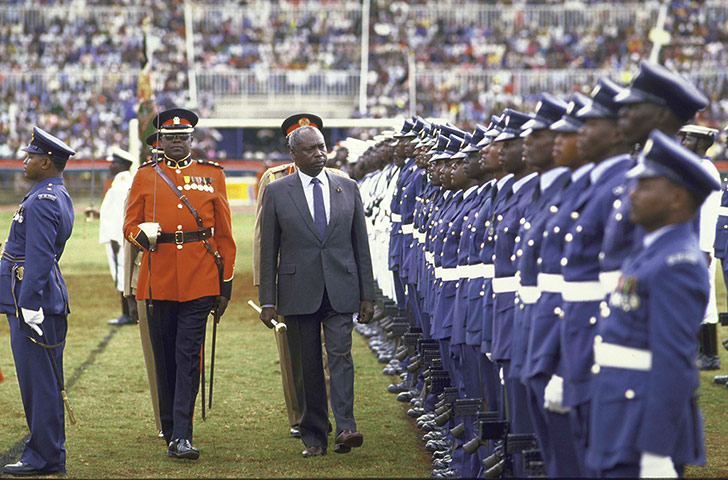
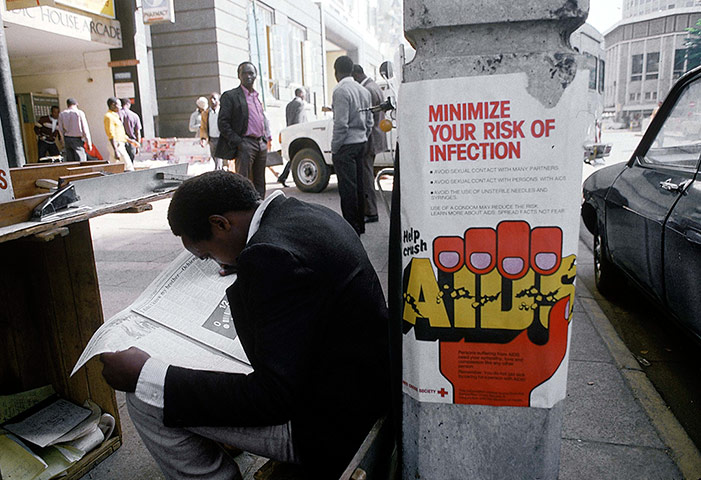
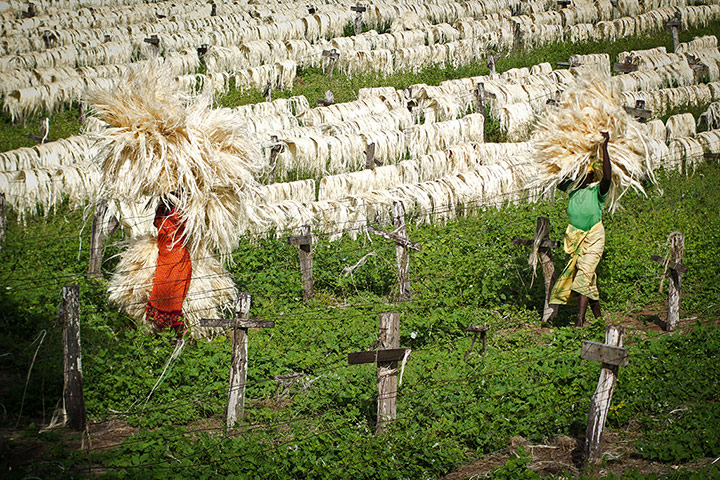
Another prominent politician involved in the fight for independence is Tom Mboya, seen here talking to US first lady Eleanor Roosevelt in 1959. Mboya helped establish Airlift Africa, a project providing young people in Kenya with scholarships to study at US universities. He is assassinated in Nairobi in 1969Photograph: Joseph Scherschel/Getty ImagesIn 1967, amid tensions between Kenya and neighbouring Somalia, thousands of refugees arrive at the Somali border town of Bulla Hawa, fleeing fighting between Somali and Ethiopian armed forces. In years to come, hundreds of thousands of Somali refugees will continue to pour over the border; many will be housed in Dadaab, the world's largest refugee settlement, which will be set up in 1991Photograph: Getty ImagesBy 1968, the Kenyan government's Africanisation policy is promting thousands of Asian Kenyans to leave the country. The policy, introduced by Kenyatta, will result in people of Asian descent being pushed out of government and businessPhotograph: Getty ImagesIn 1978, following the death of Kenyatta, Daniel arap Moi becomes Kenya's second president. His 24 years in office will be dogged by allegations of corruption and human rights abuses. In 2007, a 110-page report by the international risk consultancy Kroll will reveal the extent of corruption under his leadershipPhotograph: William F. Campbell/Getty ImagesKenya records its first case of HIV in 1984; three years later, Red Cross posters warning of the threat from HIV and Aids appear. The Kenyan government says the Aids epidemic has become ‘one of the central impediments to national health, wellbeing and development. Aids has deepened poverty; slowed economic growth; reduced life expectancy; worsened other infectious diseases; and visited particular ills on affected households, with the harshest effects experienced by women and children.’ A national action plan leads to a reduction in infections. In 2010, the HIV prevalence rate is 6.2%, about 40% lower than at the epidemic's peak in 1993. By 2012, the number of people living with HIV is 1.6 million, according to UNAids Photograph: William F. Campbell/Getty ImagesIn 1992, Kenya's first multi-party election in 26 years is marred by violence. Here, members of the Kenyan army watch supporters of the opposing Democratic party after a campaign rally in December in Nairobi. The opposition accuses the authorities of arresting more than 500 in the central town of NakuruPhotograph: Alexander Joe/AFP/Getty ImagesIn August 1998, Nairobi is rocked by a terrorist attack on the US embassy in which 158 people die and more than 4,800 are injured. In September 2013, al-Shabaab militants storm a shopping mall in the capital, resulting in the deaths of at least 67 peoplePhotograph: AFP/Getty ImagesOn 30 December 2002, Mwai Kibaki succeeds Daniel arap Moi as Kenya's president at a ceremony in Nairobi following the latter's retirement. In 2007, Arap Moi backs Kibaki's bid for a second term in officePhotograph: Pedro Ugarte/AFP/Getty ImagesIn 2004, environmentalist Wangari Maathai becomes the first African woman to win the Nobel peace prize, which she is awarded for ‘drawing attention to political oppression nationally and internationally’. An assistant minister in the government between 2003 and 2005, her outspokenness sees her sidelined and she eventually loses her seat after one term. Her death in 2011, at the age of 71, prompts global tributesPhotograph: Antony Njuguna/ReutersAn advertisement for a bank adorns the side of a Nairobi building in 2007. Between 2003 and 2013, Kenya achieves steady economic growth. According to the World Bank, the country is expected to achieve 5.7% growth this year and 6% in 2014, up from 4.6% in 2012. In its Vision 2030 national development blueprint, Kenya has set itself a 10% growth rate. It aims to become a middle-income country by 2030Photograph: Roberto Schmidt/AFPDespite economic growth, poverty levels remain high. The country is unlikely to meet the millennium development goal to halve extreme poverty by 2015. Recent figures suggest about 45% of the population lives on less than $1.25 a day, and more than 65% on less than $2. Although progress has been made, more people live in poverty in Kenya today than in the early 1990s Photograph: Jerome Delay/APIn 2007, the presidential elections are marred by violence. More than 1,000 people die when fighting erupts after Mwai Kibaki declares himself the winner amid allegations of fraud and vote rigging. Shops, homes and schools are destroyed by rioters from opposing ethnic groupsPhotograph: Ben Curtis/APA severe drought hits east Africa in 2011, leaving more than 13 million people in need of humanitarian support. Turkana, in north-west Kenya, is badly affected. Crops and cattle die, leaving thousands hungryPhotograph: Jakob Dall/Danish Red Cross/REUTERSIn 2010, Kenya votes to change its constitution. 'The historic journey that we begun 20 years ago is now coming to a happy end,' says Kibaki Photograph: Tony Karumba/AFP/Getty ImagesKenya's fourth president, Uhuru Kenyatta, son of the first president, receives a sword symbolising authority from former president Kibaki, left, during his inauguration in April 2013. Charged with crimes against humanity as a result of the riots that followed the 2007 election, Kenyatta is facing trial at the international criminal courtPhotograph: Simon Maina/AFP/Getty ImagesWomen carry dry sisal fibres and organise them in stacks to be carried to the brushing and bailing processing plant in Kilifi. The energy from sisal waste is converted into biogas, which provides half the farm's electricity needs, as well as biofertiliser, which provides nutrients for the young sisal crops. Sisal is an agave plant that yields a stiff fibre used to make twine, rope and dartboards Photograph: Ivan Lieman/AFP/Getty Images
Sign up to read this article
Read news from 100’s of titles, curated specifically for you.