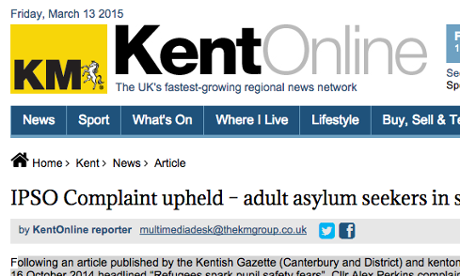
A newspaper in Kent breached the editors’ code of practice by falsely claiming that asylum seekers lied about their ages in order to obtain places in local schools.
It further claimed, also falsely, that men in their 20s were placed in schools with 11-year-olds.
The Independent Press Standards Organisation (Ipso) decided that the claims by the Kentish Gazette and its website in an article headlined “Refugees spark pupil safety fears” could not be substantiated.
It therefore upheld a complaint made by Councillor Alex Perkins and ruled that the paper must carry an adjudication to that effect, which it did (see here).
The original article, published on 16 October 2014, included direct quotations from head teachers in Canterbury who spoke of “safeguarding concerns” because of doubt over the ages of pupils placed in Kent schools.
But Perkins said the coverage was inaccurate because there was no proof that asylum seekers had been lying about their ages, nor had any adults of 20 been placed in schools with pupils aged 11.
He noted that none of the head teachers quoted in the article had confirmed that there were pupils enrolled at their schools who had lied about their ages, nor had they expressed concerns about safety.
Perkins said he had spoken to a county council representative who had told him that there had been only two cases over a number of years in which unaccompanied asylum seekers were found to be older than originally thought. Neither was 20, and neither was placed in a school with 11 year olds.
Furthermore, there were only 10 unaccompanied asylum-seeking children in Kent this academic year, with just three placed in Canterbury.
The Kentish Gazette argued that publication of the article was in the public interest, as the matter reported was a safeguarding issue, which had implications for the well-being of pupils.
The newspaper defended the accuracy of its coverage. It said that on-the-record comments by local head teachers, quoted in the article, supported the claims made.
But Ipso’s complaints committee decided otherwise. It believed the comments from head teachers and council representatives did not support the newspaper’s central contentions.
It therefore ruled that publication of the claims represented a failure to take care not to publish inaccurate information in breach of the editors’ code.
Sources: Ipso/KentOnline