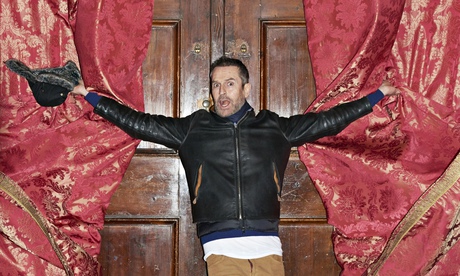
The long-toothed matinee idol – that lesser-spotted showbusiness queen Keiran O’Nightley – has developed a tendency to shun the world. (She met everyone and they all turned out to be the same person. She got bored with the person.) Unfortunately she has developed a fixed taste for the good life, but the tiny principality of show business in which she is still crown princess produces a spiral of diminishing returns and so she has taken to skulking around the world off-season. When everyone else is busy doing fabulous things, taking the kiddies back to school, going to Clouds for a winter top up or simply churning out one fabulous film after another she is on the night train to Venice with a picnic from Fouquet’s and a Tramadol. Don’t take this train, by the way. It is a disease trap.) Miss O’Nightley attacks the ski slopes of Kitzbuhel in early January – term time – and only heads for the hills again in August to join tribes of orthodox Jews in St Moritz while all the other religions head for Mykonos or Syria. She takes her summer holiday during the Christmas rush. She travels by train or cargo ship and has never been seen printing out her own boarding pass at the airport.
With a mélange of judicious timing and casual name dropping she has learnt over the years to score remarkable deals at the best hotels. This January she has set her sights on the flat black Adriatic.
The afternoon before I leave – it’s early in January and the Charlie Hebdo massacre happened this morning – I am plodding down Frith Street, Soho, with a heavy heart and I notice that the coffee shop on the corner of Old Compton Street has closed down.
There is a note on the door. “Susie says goodbye and happy 2015” it says in sweet, swirly letters. She continues in neat block capitals: “After 25 years my lease is not being renewed. I would like to thank all my customers for their loyalty and support throughout those years – the good and bad times we all shared. Soho is not the hub of characters it once was. However it is onwards and upwards for all of us. I am sure our paths will cross again. Saying goodbye would be too hard and bittersweet. Love Susie.”
I read it twice, standing there in the rain as people rush by. This is how dementia begins. Frozen in front of some inexplicable piece of bad news, unable to make the next move. But that’s Soho for you. Here today, gone tomorrow, mourned only by a few remaining ghouls shuffling past Susie’s in the rain on a January night. We are in the hands of extremists – at home and abroad.
It seems apt somehow to be going to Venice, the wedding cake of wedding cakes, a Disneyworld cleared of all Susies, and perhaps the metaphor for our own sinking Europe. I travel from London to Paris on a Eurostar bristling with policemen – where I must pause for a moment to celebrate one of the most amazing bottoms I have seen in years. Am I allowed to do this, I wonder, or am I being reductive, racist and sexist? It is the bottom of a glorious muscle-bound attendant. He is sweet and slightly sissy with a delicious cockney French accent and eyes in the back of his head. (You’d need them with an arse like that!) Like Marilyn he seems to have been sewn into his uniform. His trousers strain at the seams. They can hardly contain these flexing cheeks and my seat can hardly contain me as I topple out time and again watching him striding up and down the aisle. In the old days I would probably have hung out by the toilets in the hope of joining the mile-low club. Now I’d rather the complete works of Jean Rhys sitting on my lap.
Paris slides by wet and deserted, street lights and traffic lights glittering in the rain. I stop off at Fouquet’s and continue to the Gare de Lyon where I catch the night train to Venice. It’s called the Thello and is revolting – worse than any train I have ever taken in India, Africa or even England. Luckily I have brought my own picnic because the restaurant car – an old custard-coloured carriage from the eastern block – only serves a hepatoid jellyfish masquerading as pizza. The girl behind the bar looks as though she has just graduated from reform school. The train breaks down for long periods, dripping and hissing in a siding near Chambéry as the heating fails and the loos block up. (Suddenly I’m at school, mountains of piss-soaked paper topped with dollops of you-know-what.) But spirits rise and we limp into Santa Lucia late the next afternoon as dusk falls in coral smears over the lagoon.
Venice is deserted from 5 January until Carnival. St Mark’s Square is a vast drained swimming pool in need of a good scrub. Empty gondolas bob about on the canals like rows of open coffins. Beady boatmen keep a lookout for winter trade from the nearby bars. The big bells boom from the pointed towers, reverberating through the night as my water taxi takes me round that amazing corner under the antique lamp that swings in the breeze and twinkles on the water to the Grand Canal – shrouded in mist – one of the most heartstopping sights in the world. There is an icy breeze, but I stand erect at the back of the boat and we bounce about in the wake of a passing tugboat. The scent of salt and diesel with its bottom note of sewage is delicious. We pass under the Rialto Bridge and someone shouts. “Hi, queen!” Am I being recognised? This is an increasingly rare occurrence nowadays and I am unsure how to react. I look round. Yes. “Ciao Keiran!” screams a chubby Italian, waving.
How delightful. Should I jump into the water and swim over to thank him personally or should I snootily look away? I settle on a regal wave. The boatman observes through eyes like slits. Another 20 on the bill.
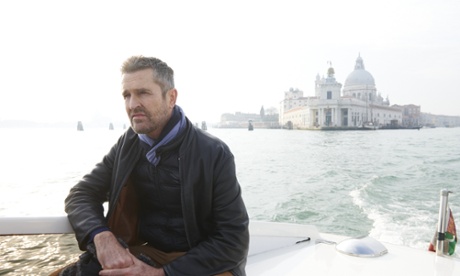
The Gritti Palace is one of the best hotels in the world. Actually I think it could be the best. It remains luxurious and discreet – an almost impossible combination these days. It is quite small and beautifully furnished like the inside of a jewellery box in gilt and glass, damask and marble. Unlike most of the grand hotels it has survived the obligatory refurbishment with its dignity intact. The staff is from the old school, with brilliant manners, neither obsequious nor aloof. The concierge remembers the first time I came to the hotel in 1983. “You haven’t changed,” he lies sweetly, winking. Actually I look as if I had spent the night in prison.
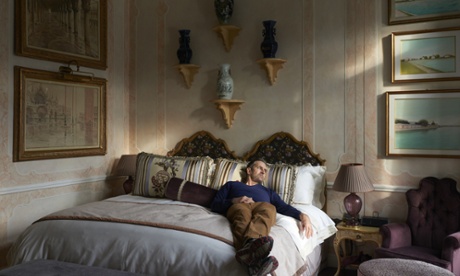
On the other hand I have negotiated a rather generous deal for a single room looking over the square, so imagine my delight as I am shown to the most expensive suite in the hotel. In the game of snakes and ladders I have thrown double sixes. “Since you are writing your book,” says the assistant manager, throwing open a door on the first floor of the palazzo “we thought you might like to stay in our Somerset Maugham suite.” I grovel like a rabid Pekinese and immediately decide to stay for an extra week.
Two high coral and cream rooms hung with elaborate chandeliers look out over the Grand Canal through pointed windows. During the day the sunlight bounces off the water and shimmers on the ceiling, and the chandeliers gleam. The room trembles with life and that is one of the strange things about Venice. The place sometimes feels more alive than the people, the past more vivid than the present.
The bath is a foamy sarcophagus and I feel strangely immortal lying there for an hour listening to the noises of the canal – the vaporetto grinding through its gears, the water slapping and gurgling against the walls of the hotel and the odd snatch of “O Sole Mio” from a half-hearted tenor with an accordion on a cluster of gondolas crammed with Chinese tourists moving in slow motion along the canal.
The bar downstairs is empty. Once you have got used to being alone in a hotel there is no going back and each new arrival is viewed with undisguised horror. I sit in splendid isolation in that hall of mirrors, just the barman in one corner, me in the other and all the ghosts in between – Garbo and Gershwin, Coward and Cocteau – all trapped and watching through the glass walls.
In the old days the Giglio gondola rank was a little cruisy. Not any more. There is a little wooden cottage where the gondoliers stand about, grumpy and flubby in their striped shirts and straw hats, making noises like primates – oyee, owoo – at their colleagues on passing boats. They show little enthusiasm as they haul the tourists on to their gondolas and less when I ask how much it would cost to do some pictures (for this article) with a good-looking punter. (I fancy a Madonna-Like-a-Virgin moment.) My offer doesn’t go down very well. The old gondoliers strut around indignantly – oyee, owoo – then come up with an insane price. (Probably the good-looking gondolier is living in Las Vegas and has to be flown over.)
Harry’s Bar is the first port of call for all visitors to Venice with enough money but less imagination, and tonight is the last time I shall ever go there. It is unchanged since the 1920s – except for the price. You are neatly fleeced from the moment you walk through the door. On the other hand the waiters here are much better than the gondoliers. They are charm personified.
The bar itself is placed right by the door so the first thing you see is the handsome barman beaming at you and proposing a cocktail. “Americano, Negroni, Bellini?” Kerching. With a drink in your hand you are handed along the line by another pristine and smiling waiter towards “your special table” and soon you are gushing superlatives and ordering everything on the menu. The place is brightly lit (concentration-camp tactics). The waiters all wear white jackets, bow ties and black trousers. They look marvellous clustered in groups by the bar against the canary-silk walls.
The place is small, intimate, a throwback to a gentler time – you think – until you realise the pasta you ordered costs nearly €50. Not only that, but when it comes there are only about 30 strands of spaghetti on the plate. Your salad is gone in three chomps. Just in case the spell is broken Mr Cipriani himself is wheeled in from the freezer – ancient and pristine in a dark suit and white hair. He reminds me of Mr Visconti – the war criminal from Travels with My Aunt. He leans politely over every table shaking hands and finger fucking us all into submission. The bill for pasta and salad is €160. Thank God polly pound is strong.
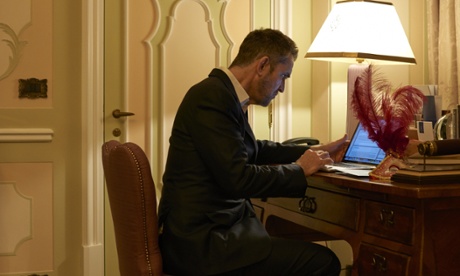
I stay in my room in the morning trying to work, sitting at Somerset Maughan’s desk – but he isn’t being enormously helpful. I don’t think he approves of Jean Rhys. I stare at the busy canal, vague and directionless. A weird lethargy sets in. I stumble out to wander the city, down the streets where lean illegal boys from Ethiopia and Somalia brace the cold in front of the fashion houses – Gucci and Louis Vuitton, Versace and Prada – selling counterfeit handbags. These bags are spread out on the ground in front of the real thing – a gleaming mirage in the shop window – and the boys stand between them silent, waiting. Relations with the police seem to have reached some kind of entente. A few years ago they were constantly on the run.
You could see them grabbing their stuff – 300 pairs of shades – and sprinting off. Now they can be seen late at night sauntering home in the mist, strange tall figures – six handbags on each arm – queens who have dropped in from another planet.
I listen to an amazing conversation in a little restaurant near the Rialto called Paradiso, only it isn’t so Paradiso tonight. It’s a tiny place on a thin, dark side street with a 70-year-old head waiter. I think he must be an aristocrat fallen on hard times. He is incredibly nice and calls me “caro”, which is sweet. The place is empty. Just me and an electric fire until an American family arrives and then an English couple from the home counties. He is corpulent in corduroy trousers and a scrubbed pink face and she is a screechy stick insect and the old man puts them at the table next to the American family who are eager to strike up a conversation. They start off with me. The man catches my eye, we smile at each other and I continue with my book (I am on Voyage in the Dark).
“Your face looks ree-allee familiar,” he says when I look up.
“I’m Keiran O’Knightley the actor.” I reply politely and dive back into Jean.
“Tell us some of the things you have been in.” Now there is absolutely nothing worse than being a celebrity who has trot out his own CV. There is literally NO glamour. Nevertheless I cheerfully list my credits and they respond to each title with a puzzled shake of their wretched corn-fed heads. It would appear they’ve seen nothing of my work until I mention that I once wrote a travel book called Rambles in the Balearics.
“I love Rambo. Did they make it into a movie?”
“Alas. Not yet.”
The English couple observe furiously. Undeterred, the American gentleman turns his attention to them. Introductions are made. Brandi. Ursula. Trett. Jonathan. Common ground is located.
“Je suis Charlie,” declares the American, winking and raising a clenched fist.
“Je sniff Charlie.” The pink-faced man replies languidly, before barking with laughter. The Americans join in, unsure. The stick insect, Ursula, senses danger.
“Actually I always loathed Charlie Hebdo,” says Jonathan.
“Oh really? But don’t you love freedom of speech?”
“Not really, no. I suppose you know why it’s called Charlie Hebdo don’t you?”
“No.”
“Well, when De Gaulle died they came up with another of those ghastly-unfunny-if-you-ask-me covers and the government stopped them from printing it. So they changed the name of the magazine to Charlie Hebdo – after De Gaulle. There’s freedom of speech for you. Freedom for who?” He’s bellowing now.
“Whom, darling, freedom for whom,” corrects the stick insect, nervously.
“Fuck off, darling. My wife is a stickler for grammar,” barks Jonathan, splashing wine into his glass.
“Well, we don’t want to go to France any more,” says the American man.
“Then you absolutely mustn’t,” agrees Ursula. She’s in a Noël Coward play.
“It’s become very difficult for Jews”: Trett.
“You think it’s easy for Muslims?”: Jonathan.
The patrician maître d’ has collapsed on a chair near the door to the kitchen and makes faces at me. Some more guests arrive – Italians – and the place suddenly feels electric.
“Don’t get me wrong,” continues Jonathan, oblivious. “No one deserves to be shot. Ghastly. But it was bad form doing another cover. That really was pathetic.”
“I completely disagree,” says Trett.
“You would. You lot are the reason we’re in this pickle.”
“Don’t listen to him. He doesn’t know what he’s talking about,” squawks Ursula.
And it goes on. A communal bottle of wine is ordered. The two men become competitive.
“This is just plonk.”
“We like it.”
Ursula and Brandi grow rigid as only good wives can. The Italians murmur.
Jonathan’s face turns purple. He is approaching his John Galliano moment but the maître d’ has other plans and the bill is placed firmly in front of him.
“Oh. Did I ask for that?”
“I did,” snaps Ursula.
In the tiny loo I am accosted by the old waiter, white faced and quivering.
“Signor O’Knightley. Mi dispiace. Thees is not good people. Come again tomorrow and we give you something special.”
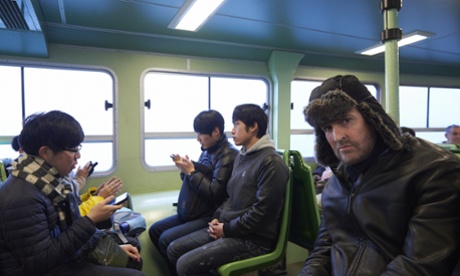
Drifting round the city I see them from afar on several occasions – the American family walking across St Mark’s Square; Jonathan and Ursula bickering on a passing vaporetto and then again looking for Diaghilev’s grave in the cemetery, dots howling through the tombs. I wave and move on. Venice is a small place and we go round and round in circles. On my last day they are comically wedged between two groups of Chinese tourists on a vaporetto to Burano.
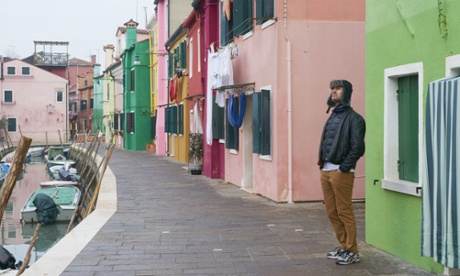
Every day I take this boat. It leaves from the Fondamente Nuove and stops at Murano and Torcello before arriving on the island of many colours with its leaning tower 40 minutes later. There are no palazzos on Burano, just fishermen’s cottages painted in every colour of the rainbow. The tides of tourists come and go like clockwork. They seethe from the vaporetto across this toy town before being sucked back into the lagoon on the next boat.
I plough through the current on my way to lunch at Al Gatto Nero. It’s my favourite restaurant: simple and delicious, pretty and reasonably priced. The walls are covered with pictures, the windows with pretty lace curtains. Ruggero and his wife Lucia cook while their son Massi runs the show. He speaks perfect English with a Scottish accent. I go there every day. All the fish is fresh and local and so are some of the clients – which is more than can be said for most of the restaurants in Venice.
The vaporetto is the best part of being in Venice. (Forget walking around endless freezing churches. No message. They all look better from the window of a passing boat.) I love watching the sailors as they casually dock, talking to their girlfriends on their phones while slinging ropes over bollards with easy grace and precision. The engine grinds into reverse and the boat strains and groans into the station with a final clunk of contact.
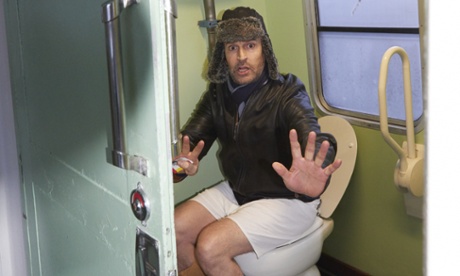
The passengers surge aboard. It is all green inside: an underwater light and a substantial loo – a large room with a sliding door and a gracious white porcelain bowl and sink. One day, bumping up and down in the wake of a passing tug the door slides open to reveal a Chinese lady sitting with her trousers round her ankles, hunched down and concentrated on the job in hand which, judging by the expression on her face is not coming along too easily. It takes her a second to realise that she has been revealed and she grasps howling for the door, but she’s too small and can’t reach. We all watch horrified. What should we do? Luckily with another lurch the door slides shut and the vignette is over.
The lagoon is stunning in all weathers. The pale jade water, shallow and flat, turns to white or silver depending on the mood. The wooden stakes that line the route blink in the mist, red and green. On a clear morning the snowy Alps hang over the view, another planet – Nirvana. Looking at it all day after day is mesmerising. Real life, with its soundtrack of screaming sirens and crashing building sites, slowly recedes like a bad dream. In Venice there are only voices and footsteps, waves and boats, oyee and owoo. It’s an expensive therapy, but worth it. When you get home the water laps on for a time in your dreams and you list in your bed as you speed across the lagoon on a gigantic seashell pulled by the American family and the English couple.
On my way to the station I get done on the vaporetto for not having a ticket. It is quite humiliating. Clutching my wheelie suitcase like a paranoid chicken with an enormous egg I am interrogated sharply by the lady collector and quickly lose my nerve. I pretend to look for my ticket and then am forced to admit that I never purchased one. All this observed by the haughty faces of three Venetian dowagers swathed in furs. I am fined and have to pay her €50 on the spot. I wave the note in their nasty faces. “More mink, eh?” I scream.
Oh well, if it helps to stop Venice from sinking, so be it. On the train I try to catch one last look at the lagoon, but all I can see is my own face reflected in the dirty window. Bloated and bleary, lips locked in an eternal frown, raisin eyes straining to see round the remains of Dr Sebagh’s latest Eastern Bloc implants.
“Found drowned,” Jean Rhys would say. I’ve fallen in love with her. She is my patron saint. In her honour I drop a Tramadol and wash it down with wine. I turn out the lights and now I can see the lights twinkle on the lagoon.
The train breaks down at Maestre.
Keiran O’Nightley’s diaries, Fifty Shades of Gay, are being published by Little Brown Moment shortly
Follow the Observer Magazine on Twitter @ObsMagazine