In an era of polarization, public distrust, and accelerating ideological conflict, museums occupy one of the few remaining spaces the public still views as neutral. They are institutions built slowly and carefully, grounded in scholarship, research, and civic purpose. Yet today they face growing pressure to enter partisan debates, adopt ideological positions, or orient programming around political performance rather than public service. It is a dangerous path. Museums must resist becoming political actors, because once they do, they risk losing not only their credibility but their very ability to fulfill their cultural mission.
Their authority comes from public trust, a fragile asset that can erode in an instant. When exhibitions, acquisitions, or staffing decisions begin to mirror political fashion or ideological litmus tests, museums risk alienating the broad audiences they are meant to serve. In a moment when nearly every civic forum has collapsed into ideological sorting, institutional neutrality is not avoidance; it is leadership. It is the discipline to remain a place where people can confront ideas without being told what conclusions to reach.
The consequences of politicization are not theoretical. History shows that cultural institutions are often the first to be weakened when political forces seek to reshape identity or rewrite collective memory. Civilizational confrontation tends to move in three stages: physical presence, political dominance, and finally cultural transformation, where the symbols of a society are rewritten to reflect new power. Cultural institutions become vulnerable not because they fail, but because they are pulled into conflicts they were never designed to fight.
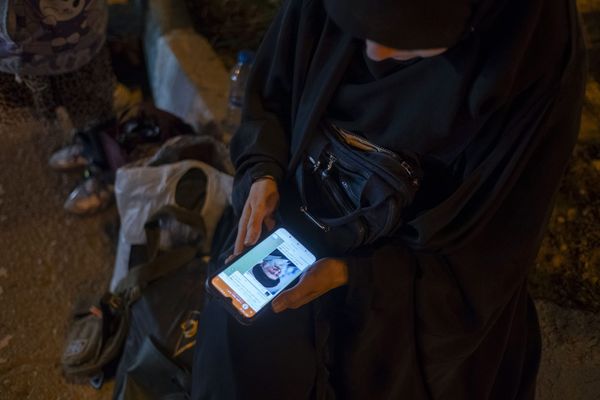
The destruction of cultural heritage in Sudan, the iconoclasm of the Cultural Revolution, and the targeted erasure campaigns of extremist groups demonstrate how quickly cultural memory can be manipulated or dismantled when it becomes a tool of ideological control. While we are not experiencing war, the lesson endures: when culture becomes politicized, it becomes precarious. Once a museum is perceived as an ideological actor, it loses the protective layer of public trust that historically insulated it from political swings. Funding can be cut, leadership removed, and collections turned into bargaining chips. Institutions that took generations to build can be undone through a single budget decision or executive order.
This vulnerability is compounded by a disconnect between museums and the public at a time when people arguably need cultural spaces the most. During the pandemic, a global surge of personal creativity emerged as people turned to art for comfort and agency. Yet many institutions responded with politically charged exhibitions. Attendance fell sharply, and many institutions have yet to recover to pre-pandemic levels. So the question remains, were it external factors or were there internal reasons involved? It was a revealing moment: people embraced art as healing, participatory, and human. Many museums, instead of meeting that need, retreated into institutional language and political signaling.
This tension grows when museums attempt to take explicit political positions. Doing so forces audiences to engage not with the art but with the institution's ideology. Museums should facilitate dialogue, not dictate it. They should create the conditions for inquiry, not advocate for partisan outcomes. Their power lies in being civic spaces where people can think critically, encounter complexity, and interpret meaning on their own terms. When museums shift from presenting ideas to endorsing them, they narrow rather than expand the space for public engagement.
None of this means museums should ignore difficult histories or avoid conversations about inequality, exclusion, or identity. Addressing these topics with evidence-based interpretation and intellectual rigor is part of their responsibility. But there is a difference between grappling with history and aligning with political platforms. Museums must be able to hold complexity without collapsing into advocacy. They must be willing to trust audiences to think, not rely on ideology to guide them.
The greatest danger is not that museums will take the "wrong" political stance, but that they will lose the broad civic legitimacy that protects them. Once the public becomes apathetic or suspicious of the institution itself, not just its programming, anything becomes possible. The erosion of trust leaves a vacuum that can be filled by the loudest or most extreme actors, not the most informed.
To preserve their role in civic life, museums must recommit to principles over performance. They must be transparent, evidence-driven, and publicly accountable without becoming partisan. Their responsibility is to the cultural commons, not to political movements. In a moment when many institutions are being pulled toward ideological battles, the museum's greatest contribution may be its refusal to enter them.
Neutrality is not silence. It is stewardship. And the future of the nation's cultural heritage may depend on it.
About the Author:
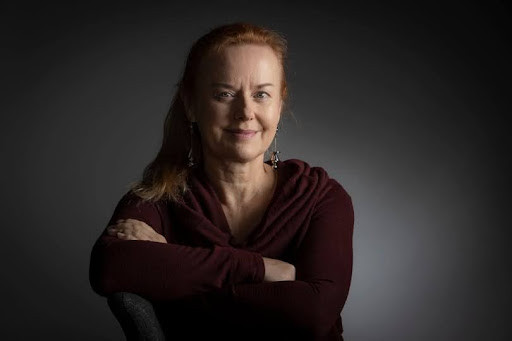
Dr. Zora Carrier is an independent museum professional and cultural strategist who brings decades of cultural leadership and art-education experience. Formerly Executive Director of Florida Museum of Photographic Arts, she previously helmed the Open Concept Gallery in Grand Rapids, Michigan, and co-founded the Gallery Art Factory in Prague. She earned her Ph.D. in Pedagogy from Comenius University (Bratislava). Over the course of her career, she has championed public access to art, curated international collections, and spearheaded community engagement through exhibitions and education programming, all grounded in the belief that museums are civic spaces, not ideological platforms.