I got inspired to write my second novel from a slogan. Sent to me from a well-meaning friend, it read: “Life is short. Enjoy it”. He shared it with me to stop me getting upset over a long ago experience. But I soon found myself getting more bothered by those five words than I was by the past (so I suppose it worked in a roundabout way).
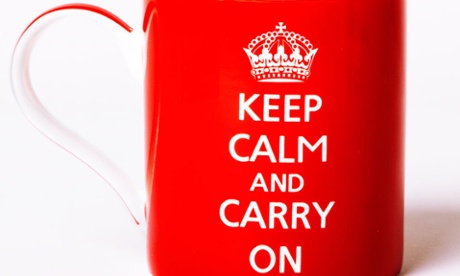
It’s not that I’m averse to the odd teatowel telling me to “Keep Calm and Carry On” or the occasional shared Instagram image reminding me “True friends are always there for you” – but lately these motivational messages seem to be whizzing round the ether, offering their quick-fix solutions to all of life’s hard bits. And it’s making me feel a little itchy. Because when you distil them down what do messages like “Life is short. Enjoy it” actually mean? Is sharing and reading them really all you need to set you back on the path to happiness? And whose version of happiness is it?
I confess I do happen to enjoy a regularly tweeted literary quote or two, but for me there’s a stark difference between a line shared from a sweat-and-tears novel that offers possibilities, and a surface-skimming message that professes to know the meaning of everything. A literary quote gets carved from beautifully assembled words for the individual to interpret. In contrast, motivational messages are usually simple words with an obvious message (er, yup, life is pretty short and yup, ideally I should try and enjoy it) with no puzzle to work out, no independent interpretation to unravel. At best they are made for greeting cards, at worst, for David Brent. They are created for the masses. Not the individual.

The lurking cynic in me even starts to wonder if these slogans have something else to sell besides happiness (and a teatowel). Like motivational speakers who make millions telling us to “Believe in yourself!” and “You’re only a winner if you decide to win!”, or companies who pour billions creating advertising taglines for a soap or a mobile phone that promise to enhance your life – what are these life-affirming messages indirectly selling and why?
Could it be a brand of positivity? Positivity is certainly profitable right now. Many of the new celebrity vloggers have made it big from igniting a cheerful, chirpy war against negativity. A quote from one high profile vlogger recently did the rounds on my social media. It was telling followers if they have a sad thought they should think of three happy things to chase it away. I know it’s well meant, perhaps even sensible for some, but it’s a directive. It’s not a musing on the human condition that leaves the individual to work out what it means personally for them. It’s aimed at the mass market. And the vlog the quote came from is heavily sponsored. Just saying.
And really – what’s so bad about having sad thoughts? When did people become so down on melancholy? Can you even have a happy thought, if you don’t have an unhappy one? The best novels don’t always come with happy endings. To make the cogs of a plot turn satisfyingly they are filled with sad and painful experiences. The best love stories are tragic ones. So why then this growing compulsion to spin life permanently, white-tooth smiled, positive?
Do we finger-point at the growth of a shortcut culture? Rather than traversing the sticky cobwebs of human emotion in novels and poetry, are we preferring to swallow a quick-fix pill of one-liners to help us find the meaning of life and thus instant happiness? Rather than walk in the shoes of a character and understand all other kinds of unhappiness, desires and dysfunction in a bid to better understand our own, is it easier just to be told what we need to do via a snappy sentimental script-changer we can share? Stop having sad thoughts and abracadabra, you’ll be happy!
But saying all that, I know it’s not all bad – sharing all kinds of words and the experiences they can convey is something social media is great for, be it prophetic or surface-skimming. And I really can’t damn anyone for spreading messages that are sweet and sentimental and can possibly make people feel good. All I’m doing, I suppose, is questioning their potential power to mislead and misdirect. Our internal scripts are carved deep into the sinews and bones of what makes us who we are – so it’s unlikely a simple motivational message can truly change how we behave and think. But novels – novels can seep under our skin, swim through our bloodstream, and force us to question how we perceive ourselves and others, encouraging us to remain open-minded and curious. “Stay gold, Ponyboy. Stay gold.”
As I see it, literature will never dictate solutions, but it can offer lucidity. It won’t promise answers but gently it can grant us insight. And over time, by reading, by empathising, softly softly, we can start to change the parts of our internal script we don’t like.
Share books not motivational messages – ooo, now how about we put that on a teatowel?
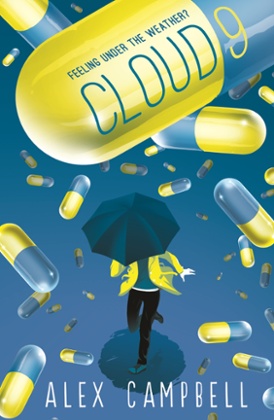
Alex Campbell’s new book Cloud 9 is out now, and available to buy from the Guardian bookshop.