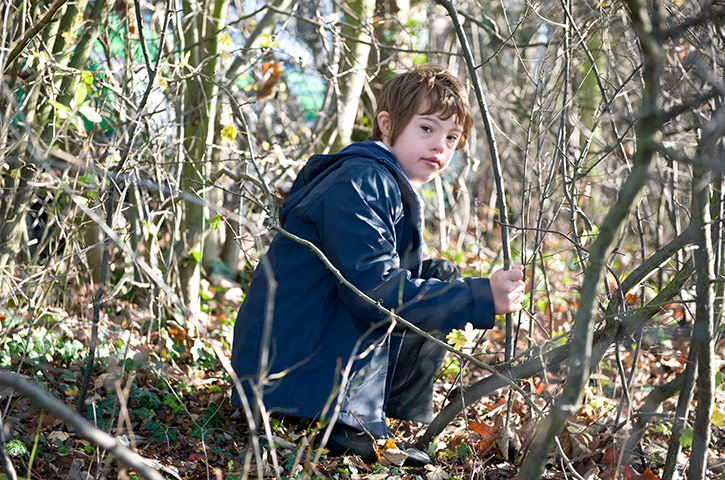
"We knew that Jonathan was different from other children with Downʼs syndrome at about 4 years. He had stopped making progress, he didn’t speak any more or make any sounds away from home. We had no eye contact and he was happier just playing alone. He enjoyed the company of other children but did not interact with them. Jonathan was finally diagnosed when he was 10. Because of Jonathan’s autism he lives in a different world. He has great difficulty communicating; he loves to go to the theatre to see shows like Joseph, the Lion King and Thriller Live. Jonathan is very, very happy, and is loved by everyone he meets. He needs to be watched over all the time, cannot go out with his peers alone. He needs someone assisting him at the after school clubs and activities he takes part in. Our hopes are that Jonathan is happy, well cared for and can learn the skills to attend to his personal care." Photograph: Kayte Brimacombe
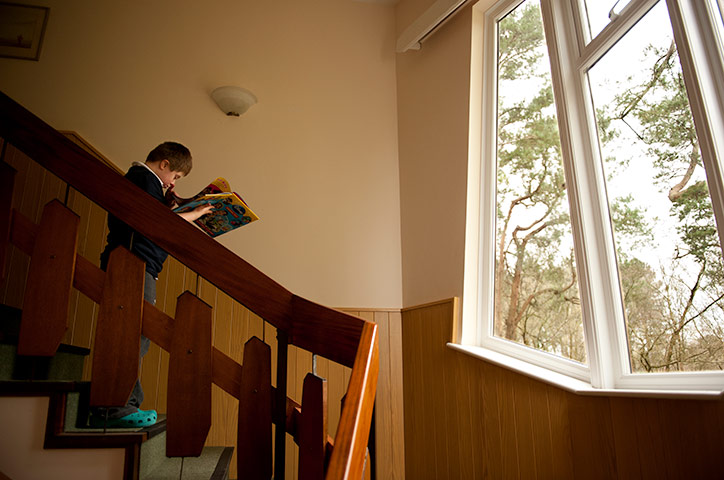
"Our family fell apart after this diagnosis. Support was thin on the ground. Brainwave in Somerset pieced us all back together after identifying that Charles had a severe sensory processing disorder. Because he is 'sociable', smiles a lot and is a bit cheeky, we were initially dismissed as being neurotic. We received the diagnosis of autism when he was seven. We then decided he needed a more specialised 24-hour living-learning environment. We pursued a two-year legal case to win funding for him to attend the Sheiling School, Ringwood. For the first time in our son's life, he has proper friends his own age; he has a completely bespoke timetable and an active, therapeutic lifestyle. He is blossoming into a very content, independent, caring, sociable, intelligent young man, who despite all his problems, now has a decent future ahead of him." Photograph: Kayte Brimacombe
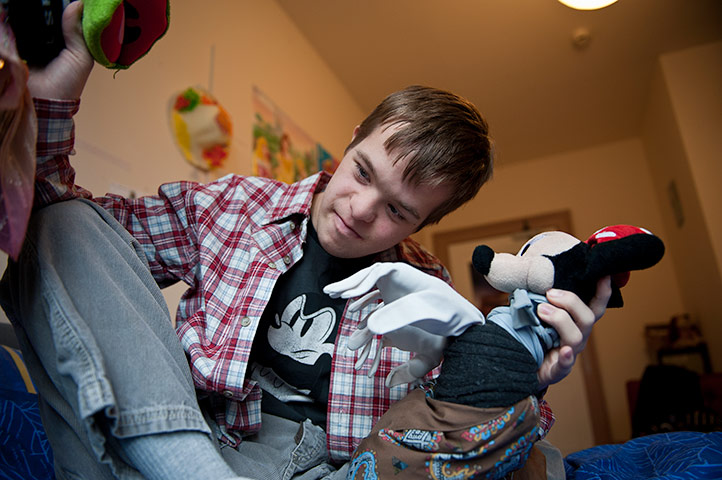
"He developed normally for a child with Down’s syndrome until he was approximately 2–2 ½ years old when he started to lose his speech, become withdrawn and display classic characteristics of autism. Due to his autism, Laurent has very limited speech and is unable to interact with others in a meaningful way. He finds it harder to learn and understand and lives much of the time in a rich internal world inhabited by Disney characters. He does however try more and more to share this world with others and his eyes are full of things to say. Despite his problems, he is a great character, full of fun with a cheeky sense of humour. It is to be hoped that he can live a fulfilled and happy life, as independently as possible but supported by people who understand his needs and enable him to fully participate in the activities he loves."
Photograph: Kayte Brimacombe
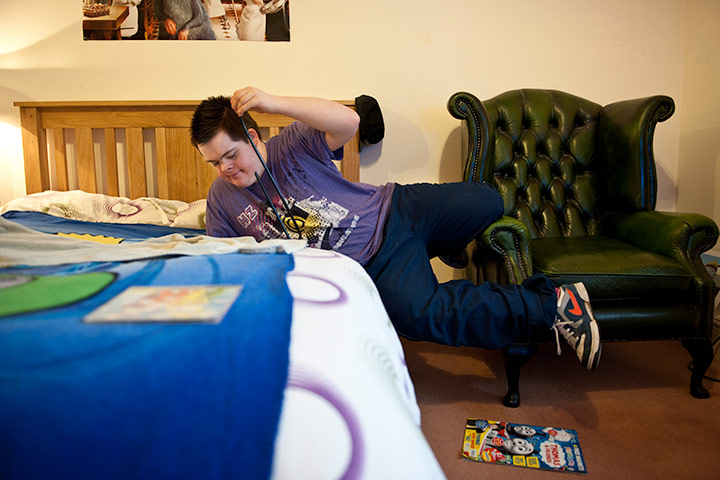
"Henry attended two years at mainstream primary before moving to a special needs school in Haringey. He did not develop any language, and became more and more frustrated in his behaviour, until in 2004 he was given a dual diagnosis of autism. He then moved to a special residential school, Sunfield, in Clent, Warwickshire, where he received fantastic care and education. Following school Henry moved to Ugley last year, nearer to us his family in North London and has settled in very well. We are really happy with his placement which has made the constant pushing and effort over the years to secure suitable diagnoses and provision for Henry seem worthwhile." Photograph: Kayte Brimacombe
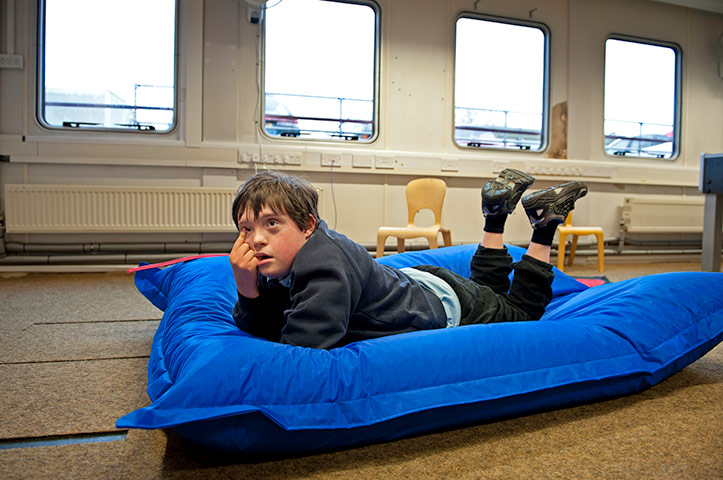
"As a baby and toddler, Dominic was a star, beating the projected milestones with a flourish. Then, all this momentum seemed to stall. When language should have been the next step, there was silence. When he should have run across the room to greet his family, he turned his back. At age four, the difference between Dominic and others of his age with DS was more than apparent. It was a slap in the face. This was not just Dominic being Dominic; it was a child who did not understand the world around him, locked inside, unable to make sense of language and us. His formal diagnosis was made at age seven. The additional burden of autism has meant a rocky path through school, challenges at every stage for our family, but also the ever present sense that we have a live-wire in our midst who loves us and whom we love back without question. The future is frightening. Today is more important. " Photograph: Kayte Brimacombe
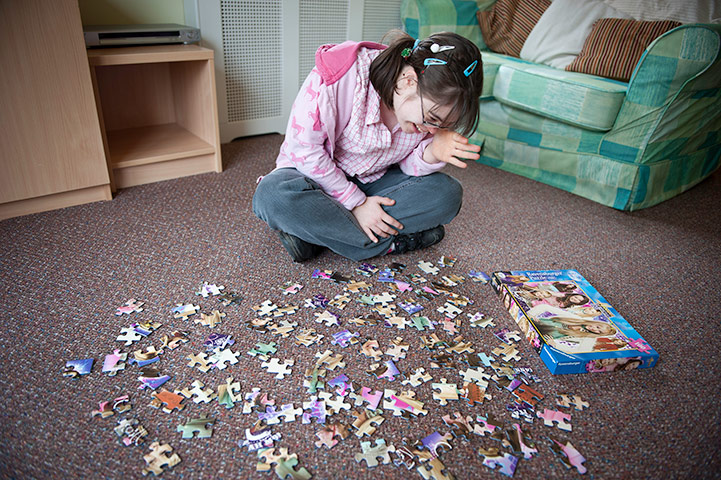
"I realised that Hilary had more significant differences at around a year; this became a major issue for me at 18 months. A specialist speech and language therapist was not concerned, neither was a specialist psychologist who had experience of autism. I observed a regular three-year-old become autistic after chicken pox. Hilary attended a mainstream primary school until she was 11, then she was destined to go to a severe learning difficulties school. Hilary was then diagnosed with autism by a specialist psychiatrist. I was devastated, yet I had been suspicious for years. I still have my ups and downs. Hilary's life and needs have not changed much but we now ʻjoinʼ her and we continue to do our very best for her. Soon we hope she will live with a 'friend' in their own home. We are currently interviewing. Hilary's ideal candidate will have family in north-west London and enjoy music and dancing." Photograph: Kayte Brimacombe
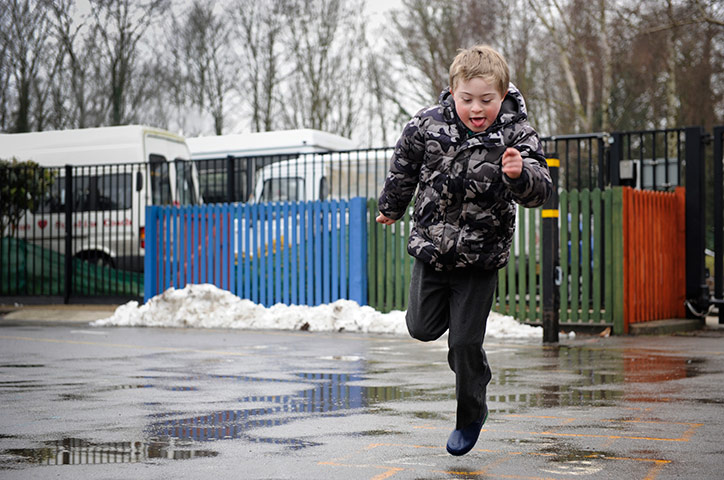
"He has always been a happy and social child, but was different from his Down’s peer group. His speech in comparison was and still is poor. He also displayed ritualistic behaviour with his eating – very few foods, and only in a specific order. He is obsessive about books and DVDs, and certain characters. More alarmingly, he has a dangerous obsession with escaping, whether from home, school or while out and about. There are up sides too. Joseph’s autism can manifest itself in learning strengths – he is good at maths and has an amazing memory. Despite needing to have eyes in the back of our heads, and an endless ‘interest ’ in Joseph’s obsessive and continual re-categorisation of his DVDs, it’s a small price to pay for a little boy who brings such joy. Although Joseph’s future is uncertain, we are optimistic that his engaging nature and sense of humour will assure him of a happy life." Photograph: Kayte Brimacombe
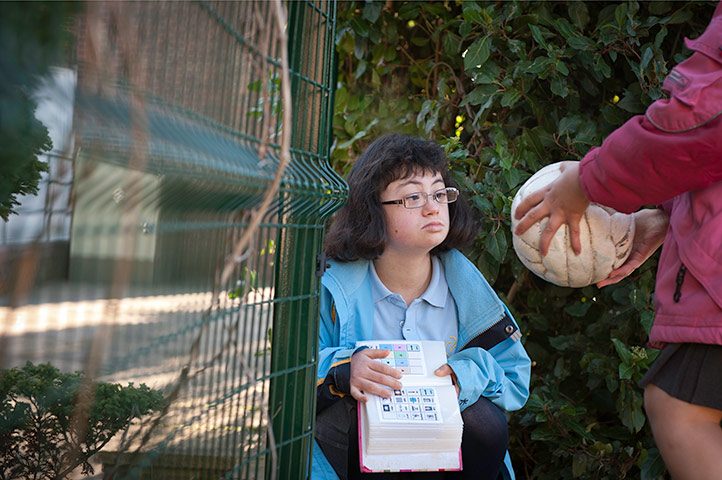
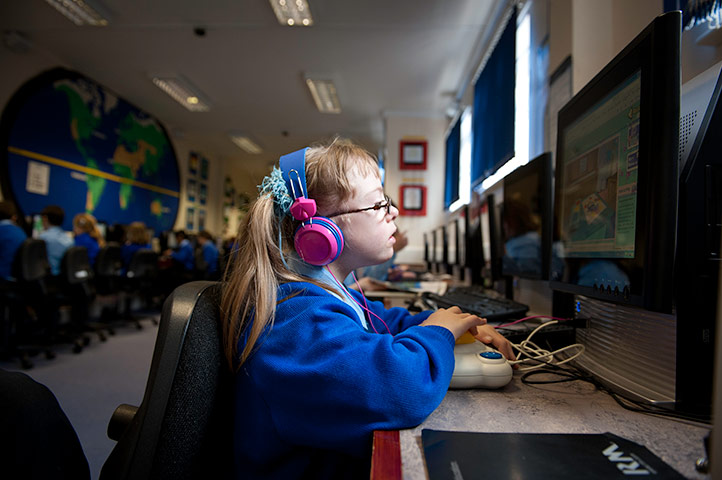
"It was apparent by the age of two that she was not developing like other toddlers we knew who had Down's syndrome alone. She didn't walk until the age of four and has never developed speech beyond a handful of words. She generally prefers to play alone, although this is changing and she is becoming more sociable as she goes through her teens. Susannah is a whizz with computers. Over the past two years she has been learning to use an electronic communication aid. The improved communication has significantly reduced her challenging behaviour. She is very keen to develop her independence. We hope that as an adult, Susannah will be able to live in her own, or shared, home with support and will also engage in meaningful paid employment as well as continuing to enjoy her favourite activities." Photograph: Kayte Brimacombe