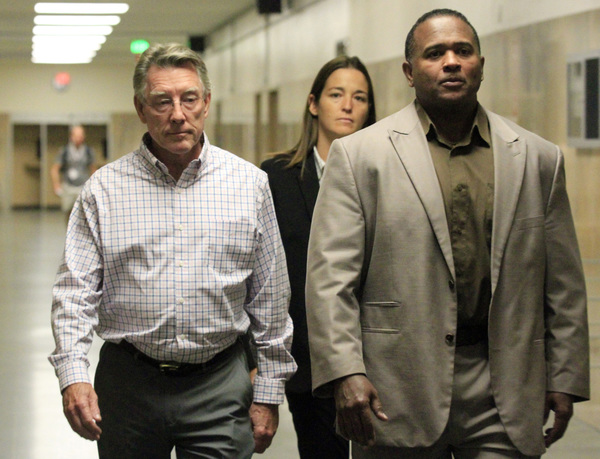
SAN FRANCISCO _ The undocumented immigrant accused of shooting and killing 32-year-old Kate Steinle was aiming toward her and knew what he was doing, a prosecutor argued in her opening statement Monday morning.
But a defense attorney said Steinle's death was the result of an accidental gunshot and a "freakish ricochet" of the bullet that struck her.
Jose Ines Garcia Zarate, who allegedly shot Steinle on San Francisco's Pier 14 in July 2015, is facing second-degree murder charges. The politically charged case kicked off Monday with opening statements and brief but emotional testimony from Steinle's father, who was with her during the shooting.
Garcia Zarate, 45, has pleaded not guilty, and his lawyers argue that the shooting of the Pleasanton native was an accident _ a single shot that ricocheted off the pier into Steinle's back, based on ballistics evidence. The prosecution will try to convince jurors that Garcia Zarate shot recklessly at people.
Assistant District Attorney Diana Garcia started her opening statement by lifting up the gun, a plastic tag through its trigger.
She described the "beautiful summer afternoon" that Steinle, her father and a family friend took a walk in San Francisco's Embarcadero neighborhood. The group passed by Garcia Zarate on the pier, she said.
Garcia Zarate, who was spinning around in a chair on the pier, aimed "towards" Steinle and fired, Garcia argued. Steinle, who was walking with her father, fell forward.
"The only thing she could say was 'Dad, help me, help me,'" Garcia said. "Those would be her last words."
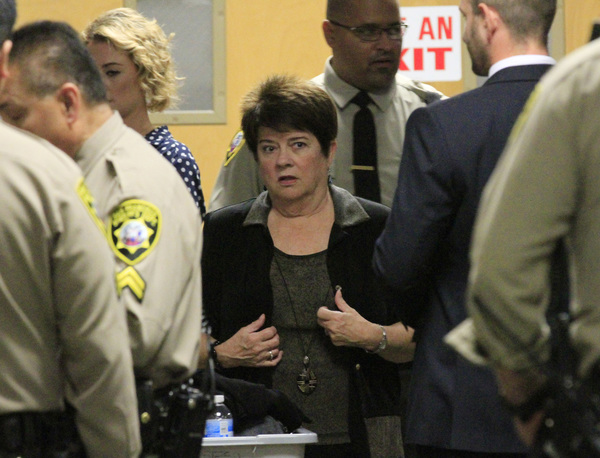
She pointed to her own back, showing where the bullet hit Steinle.
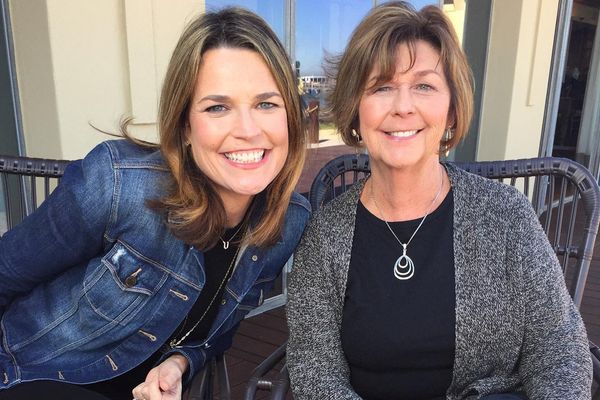
One piece of evidence, Garcia said, will be a selfie Steinle took just minutes before she was killed.
A grainy surveillance video, which will also be presented as evidence, shows the shooting and showed a splash when Garcia Zarate threw the gun into the water, Garcia said.
Previewing what's expected to be a heavy focus on the gun, Garcia spent time explaining how the firearm worked, and discussing how it got into Garcia Zarate's hands. It was issued to a federal Bureau of Land Management agent who was on his way driving with his family from Southern California to Montana, and was stolen from his car. Garcia Zarate told police he found it on the pier.
Defense attorneys have argued that the gun may have misfired, but Garcia said it had been checked by the bureau's armory three months before the shooting and was in perfect working order.
"It's a very reliable, high-quality gun," Garcia said. "It's not the kind of gun that's going to go off by accident."
She acknowledged that the shooting was a ricochet skip shot, hitting the pier about 15 feet from the defendant and then ricocheting almost 80 feet farther to hit Steinle. That's a key piece of evidence the defense points to as proof that Garcia Zarate wasn't trying to hit her. But Garcia said that firearms experts will testify that he could have been aiming toward her while raising the gun and pulled the trigger before the weapon was high enough.
"He knew all along what he was doing," Garcia said.
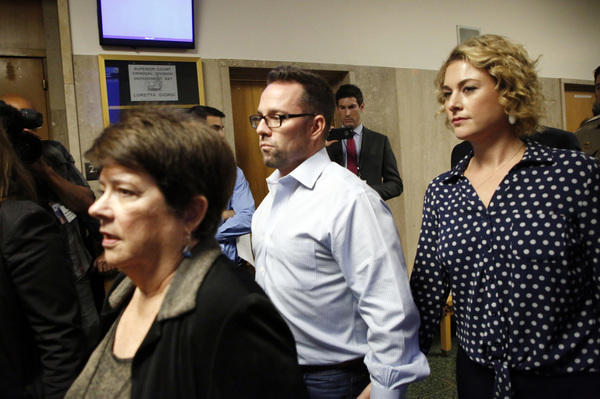
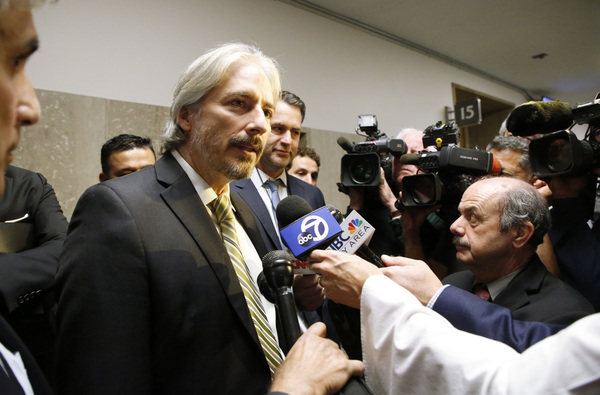
But lead defense attorney Matt Gonzalez argued that Steinle's death was an accident.
"Only a freakish ricochet which altered the course of the bullet caused this tragedy," Gonzalez said.
"An expert marksman could not have made this shot if he or she tried."
He said Garcia Zarate, who was homeless, found the gun wrapped in a cloth on the pier and picked it up. "He did not know he was handling a firearm," he said.
Gonzalez also showed jurors images of the manual of the gun, Sig Sauer P239, which he said has a history of accidental discharges even among law enforcement officials trained to use it.
Gonzalez analyzed individual frames of an extremely grainy surveillance video shot from a nearby fire boat, arguing that it showed Garcia Zarate bending down near his chair on the pier.
Jurors also heard excerpts of the rambling, 4 {-hour interview police had with Garcia Zarate the day of his arrest.
In his brief testimony, Steinle's father James recalled the day of the shooting, when he and a family friend visited his daughter in San Francisco. The group had walked along the Embarcadero and "stopped and watched the birds and the boats," he remembered. Kate snapped photos, including a selfie of the smiling group, which was shown to the jury.
The idyllic scene was ended with a loud bang or pop, James said, and Kate fell forward. At first, as he tried to help her, he didn't realize she had been shot.
"She was having trouble breathing and I couldn't figure out what happened," he said, his lower lip trembling uncontrollably.
The case has attracted attention for its connection to immigration policy, but neither side referenced the political debate surrounding the shooting, and the prosecution's opening never mentioned the defendant's immigration status.
The case became a national political talking point, with Republican presidential candidate Donald Trump and other conservatives using it as an argument for tougher border security and against "sanctuary cities." Garcia Zarate, a Mexican citizen, was released from a San Francisco jail 2 { months before the shooting, instead of being deported, because the city's sanctuary city policy prevented officials from discussing his status with federal immigration authorities. He had previously been deported five times.
Garcia Zarate, wearing a striped button-up shirt, listened to a simultaneous Spanish translation of the proceedings through large headphones.
Steinle's mother and older brother sat in the front row of the stuffy, windowless courtroom. Two of Garcia Zarate's family members were also present.
The jury, which was selected last week, comprises six men and six women, including three immigrants.
The trial is expected to take between six weeks and two months.