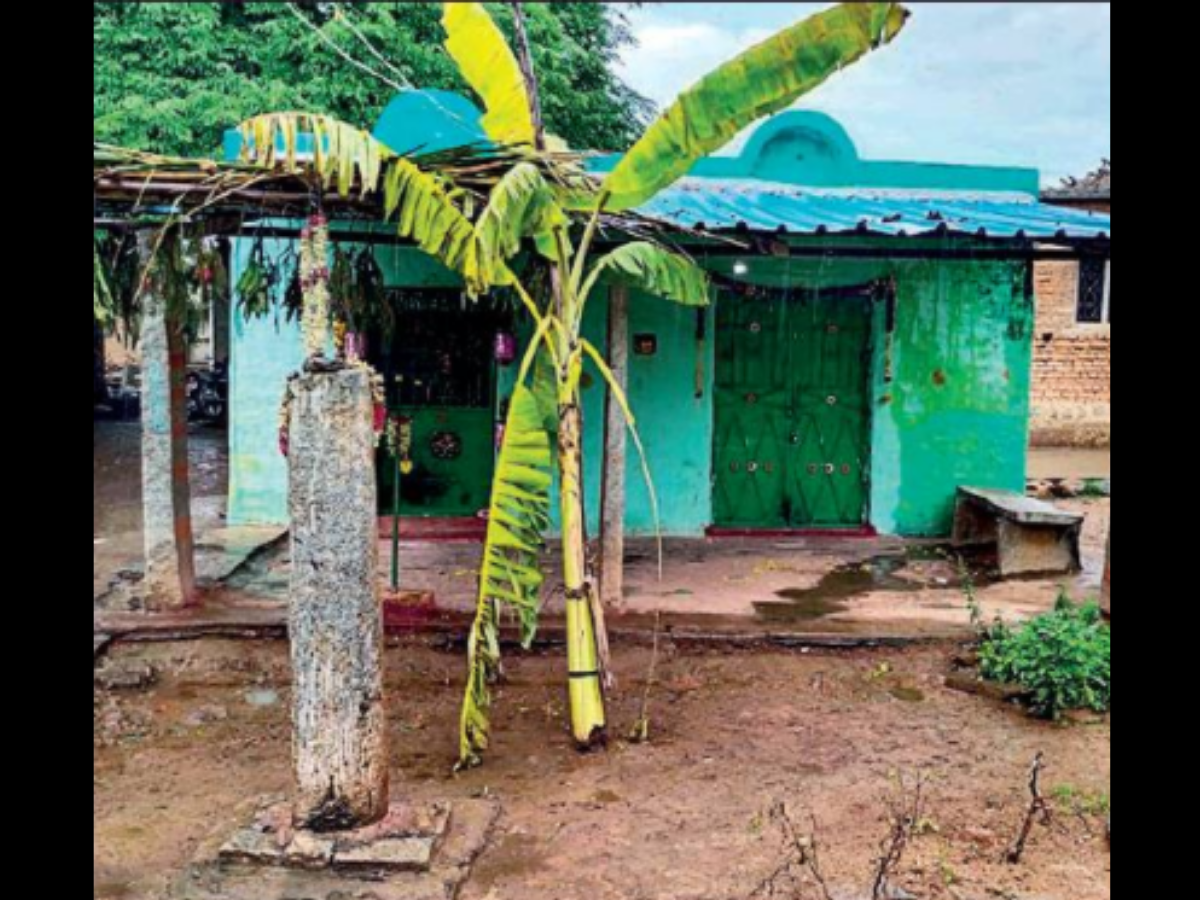
POLENAHALLI (KOLAR DT): When the pandemic first hit the country nearly 18 months ago, residents of Polenahalli in Bangarpet taluk, Kolar district, not only pinned their faith in their gods but also resolved to do all they could to keep the novel coronavirus away from their village.
Whether it was their faith that worked or their discipline, the village, less than 115km from hotspot Bengaluru and with a population of about 500, has not had even a single case of Covid so far. On the night of July 12 (Monday), Polenahalli celebrated its success in keeping the virus at bay by holding a Karaga festival. As usual, all Covid protocols were in place.
As Sathyappa, the priest, carried the Karaga on his head around the village followed by a small group, residents ensured strict social distancing was maintained. Everyone wore a mask too. “There was no way we could have celebrated the occasion without propitiating the gods,” says Venkatesh, a member of the Donimadagu gram panchayat under which Polenahalli falls.
When the first case of Covid was detected in India last year, Polenahalli residents and their leaders offered prayers at the Gangamma temple in the village and pledged to offer a continuous puja. One family was involved every day to ensure there was no break. They also pledged to celebrate a Karaga festival if no one in the village suffers the infection. Venkatesh says the prayers paid off as none were infected. Monday’s thanksgiving exercise was a fulfilment of the vow, he added.
Nearly half of Polenahalli’s population is from the Palliga community, which celebrates the Karaga festival. The rest comprise Kurubas, Bhovis and other communities. Venkatesh said for many years, some rituals including the Karaga festival were halted because of differences among the people, but Covid brought all of them together again.
Residents point out that the Andhra Pradesh border is a stone’s throw away from the village and Polenahalli’s residents often visited the neighbouring state. About 20 youths also travel daily to Bengaluru for work and elders had asked them not to venture out of the village for about six weeks when cases were peaking.
Venkatesh said that an ASHA worker visited every household in the village frequently to advise them on the need to take precautions against the disease. He said the villagers were advised to drink hot water daily and eat more greens grown in the village itself.
Venkatesh said there are nearly 50 collegegoing students in the village, and they instilled confidence among people by educating them on how to protect themselves against the disease. These students also took the lead in the vaccination drive. So far, more than 200 people have been inoculated.
Ramesh, a resident and journalist, said people from neighbouring villages too attended the Karaga festivities which went on till the wee hours on Tuesday.