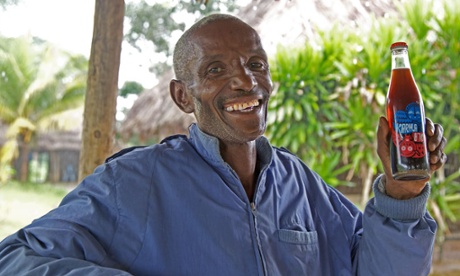
The plan for Karma Cola was always a good one. A delicious, Fairtrade and organic fizzy drink with a purpose: to directly improve the lives of people in Sierra Leone, where the cola tree and her cola nut come from.
“Surprisingly, the world drinks about 1.8bn colas a day – over a million a minute,” explains co-founder Simon Coley. “Even more surprising is that the west African people who discovered cola and still use it everyday don’t make a cent from the world’s most popular fizzy drink. We thought it was about time we did something about that, so we made Karma Cola.”
Since bottling the first batch in 2012, proceeds from every bottle sold have been provided to the people in and around Boma village, where the cola crops are grown, to the value of $30,000 (£19,151).
Coley and partners, Chris and Matt Morrison, have seen progress made as a result of these proceeds , including the building of Makenneh Bridge last year, to join old and new Boma and ensure the safe transportation of supplies. The Karma Cola Foundation also helps send 45 young children to school annually.
All Good Organics, the small company who produces Karma Cola, has its origins in New Zealand. Its range of drinks – which also includes a ginger ale and a lemonade – are sold in independent cafes, restaurants and bars around the UK and retailers like Harvey Nichols.
Having only just launched in the UK (manufacturing in Somerset), it is currently selling around 3,000 bottles of soft drink a week and hopes to triple its sales in the coming year. All Good is certified by the Soil Association and Fairtrade International, and has twice made the Ethisphere Institute’s World’s Most Ethical Companies List. In June, it was named the World’s Fairest Trader by Fairtrade International.
While the decision to source real cola from a forest in west Africa was made with all the right ideas in mind and has led to significant positive change for the local community, it was a decision made three years ago. Today, things are very different.
Sierra Leone is one of the west African countries worst hit by Ebola. The estimated impact on the economy will be $32.6bn (just over £20bn) by the end of 2015, and for Karma Cola this hits at the heart of their reason for being. So what happens next? How does a small independent startup thousands of miles away understand the repercussions of such a crisis, and how can it help?
“The first decision we made was to hang in there,” says Coley. “Now is the time to step up our support, not walk away. At first, when we asked our charity Welthungerhilfe what we could do, they said to not do anything differently. The support we were providing for things like a rice hulling station for the community was giving the village something to work on, focus on, a sense of normality.”
And as the situation worsens?
“We speak with our representatives in Sierra Leone frequently and their overwhelming request has been not to compromise the projects we’ve already undertaken.” Coley explains that they’ve had to rethink how the business can be the most helpful to the community.
“We’ve sent extra funds to be used specifically to prevent Ebola infection and Albert Tucker, who leads our Karma Cola Foundation, is involved in the Sierra Leone UK Ebola Taskforce, which is looking at the economic and other impacts of the Ebola outbreak. We are doing what we can to assess the risks and the reality of the situation.”
The facts are sobering. Schools have been closed for six months - 7,000 schools have been shut, impacting 1.6 million children. There are too few doctors for the numbers of people potentially affected by Ebola in Sierra Leone - 125 Sierra Leonean doctors for six million people.
“We’ll keep building bridges as well as directing funds towards medical supplies to help Welthungerhilfe’s aid effort in Sierra Leone,” Coley explains. “We have also directly funded a sensitisation programme in the eight Tiwai communities, of which Boma village is a part. We’ll also continue to fund existing projects to make sure the work we’re doing doesn’t lose momentum because of the crisis.”
Somewhat miraculously, the people of Boma have avoided infection so far and Coley says the priority for Karma Cola is ensuring they are safe from harm, explaining that the company operates with an underlying belief in doing the right thing.
“We really can’t ignore that the people we trade with need our help, and while we may not be a major contributor to Sierra Leone’s GDP, we believe that trade can be just as effective as aid. Symbolically, continuing to trade is the best form of aid we can offer.”
More from the Fairtrade partner zone:
- There is a solution to the looming chocolate shortage - pay farmers a fair price
- Fairtrade pioneer Clipper Tea visits India to assess impact after 20 years
- Social investment: a powerful tool to affect positive change
Content on this page is paid for and provided by Fairtrade Foundation, sponsor of the supply chain hub