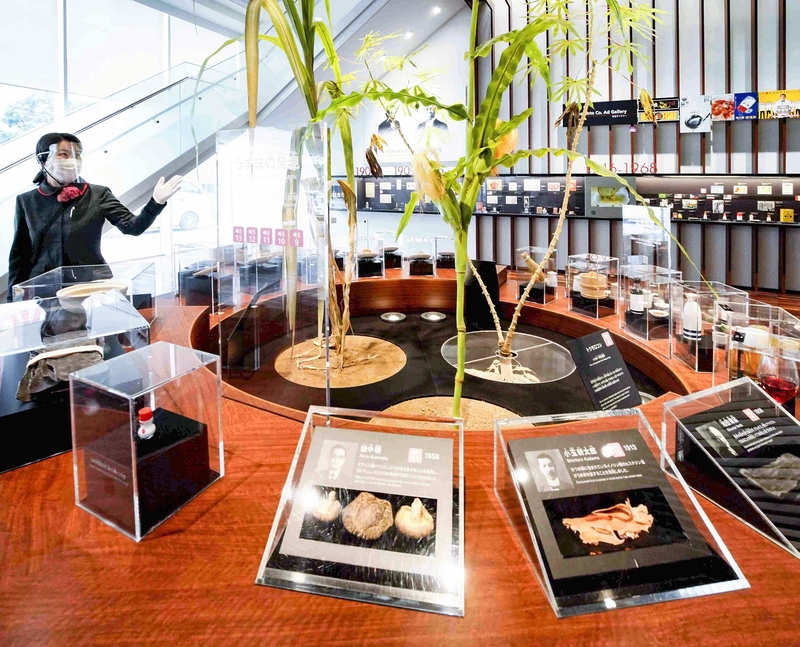
In the past year, I've been cooking more than ever before, and I often come across the word umami in recipe books. Umami is one of the five basic tastes, yet it is more difficult to describe than the other tastes of sweet, bitter, sour and salty.
The umami taste is also distinguished from its homonym umami, which means deliciousness in Japanese. Therefore, what exactly is the taste of umami? I visited Ajinomoto Co.'s Umami Science Square in search of the answer.
Upon arriving at the facility, I first went to the exhibition section. There, visitors can learn about the history of the umami taste and ingredients rich in umami, such as kombu kelp and shiitake mushrooms.
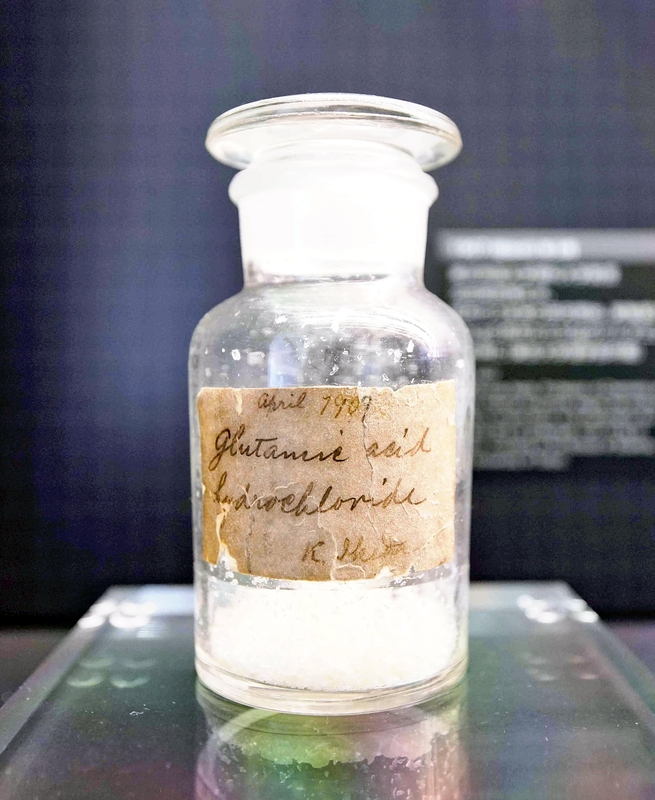
Umami was discovered by Kikunae Ikeda (1864-1936) of Tokyo Imperial University as he was studying kombu dashi broth. In 1908, Ikeda succeeded in extracting a type of amino acid called glutamic acid from the flavor composition of the dashi. He named its taste umami.
Saburosuke Suzuki II (1867-1931), who founded a company that later became Ajinomoto Co., began selling the world's first umami seasoning the following year, in 1909.
The word umami is now used worldwide, including in English.
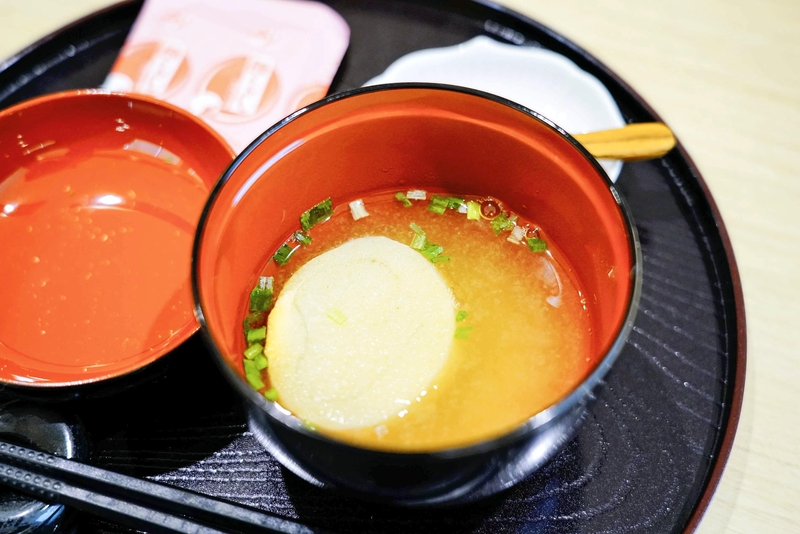
After learning about umami, I tasted miso dissolved in hot water -- with granulated dashi added. I could taste the miso when I tried the one without dashi, but I felt like something was missing. The one containing dashi, on the other hand, was full of flavor.
"Adding umami gives you a sense of satisfaction when eating even if you don't heavily season with salt and other condiments," said Maki Sakamoto, a 50-year-old employee in charge of public relations.
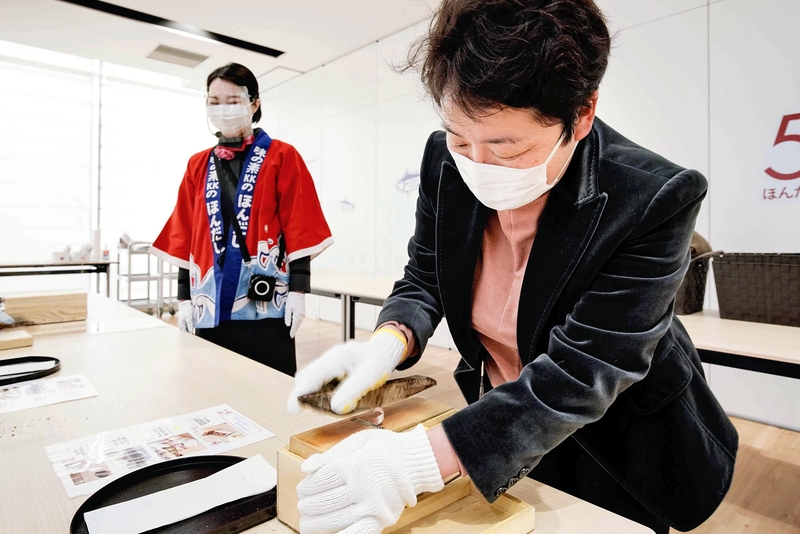
Visitors can also try their hand at shaving dried bonito into flakes. I used a wooden shaver to try it out, but I could not figure out how much force I should apply to the shaver, so I ended up making about a teaspoon of powder-like flakes -- not at all enough to make miso soup.
In the olden days, people used to shave bonito flakes at home for every meal. I am grateful for umami seasoning.
"We hope people will become more interested in food and use the wisdom they have gained [here] at home," Sakamoto said.
Armed with a better understanding of umami, I feel like I can cook better than ever before.
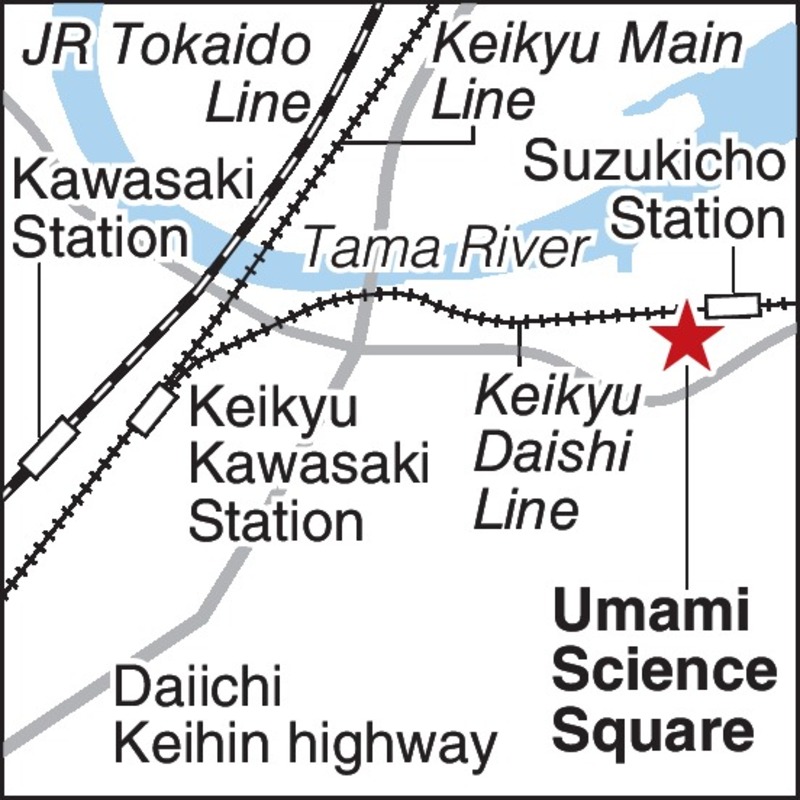
Umami Science Square: 3-4 Suzukicho, Kawasaki Ward, Kawasaki
Read more from The Japan News at https://japannews.yomiuri.co.jp/